
A family can support an injury claim without every relative taking charge. Relatives can help organize information and offer support while keeping decisions with the injured person. That is a practical starting point for how to file a claim without causing family problems.
Relatives may disagree about whether to file a claim, what information to share, or whether an offer is fair. Clear roles and calm, consistent communication can reduce misunderstandings while the injured person focuses on recovery.
Families can coordinate who gathers information, consider whether a claim makes sense, and review an insurer’s offer before deciding. If relatives cannot resolve a disagreement, legal guidance can clarify the claim and keep discussions grounded in evidence.
Key Takeaways
- A lawyer can help organize accident reports, insurer communications, and claim records so key details are handled consistently.
- Agree on who will share updates and gather information to reduce conflicting messages and family tension.
- Medical examinations and vehicle inspections can reveal harm that may not be obvious right after a crash.
- Before accepting a settlement, weigh the documented losses and ongoing effects, not just the insurer’s first offer.
Should a Personal Injury Lawyer Help Me File an Insurance Claim if I’m Not At Fault After a Car Accident?
After a crash, a lawyer can help organize accident reports, insurer communications, and evidence. This can make the process more manageable, even when another driver appears responsible.
Accident Reports to Authorities and Insurers
An accident report records key details about the crash for authorities and insurance companies. A lawyer can help you give a clear, consistent account, including when the collision happened, where it occurred, and what injuries you noticed. Report the accident to relevant authorities and your insurer, and describe emotional distress if it affects you. Accurate early records help reduce confusion later.
Claim Submission and Insurance Negotiations
A claim formally requests compensation for accident-related losses, such as vehicle damage, medical bills, lost income, and pain and suffering. A lawyer can organize supporting records, submit the claim, and handle insurer communications. Keep medical documentation thorough and provide accurate information: false or exaggerated details can undermine credibility. A lawyer can assess an offer against documented losses and negotiate if it falls short. Do not accept an early settlement offer without having a lawyer review the release.
Possible Insurance Rate Increases
A reported accident may affect your insurance premium, even if you were not at fault. The effect depends on the insurer and applicable state law. A lawyer can explain the difference between pursuing a claim and the insurer’s separate pricing decision, but cannot control that decision. New York’s no-fault system also affects how certain accident-related losses are handled, so get legal guidance about how the rules apply to your situation.
Claims Against a Relative’s Home or Auto Policy
A claim against a relative’s policy asks the insurer to consider losses connected to an accident involving that family member. A personal injury lawyer can organize the facts, submit supporting records, and communicate with the insurer, helping keep claim matters separate from family disagreements. For an auto-policy claim, the lawyer can clarify the reported injuries and losses. For a homeowners-policy claim, the lawyer can present the incident details and evidence accurately.
Coordinating family members’ involvement
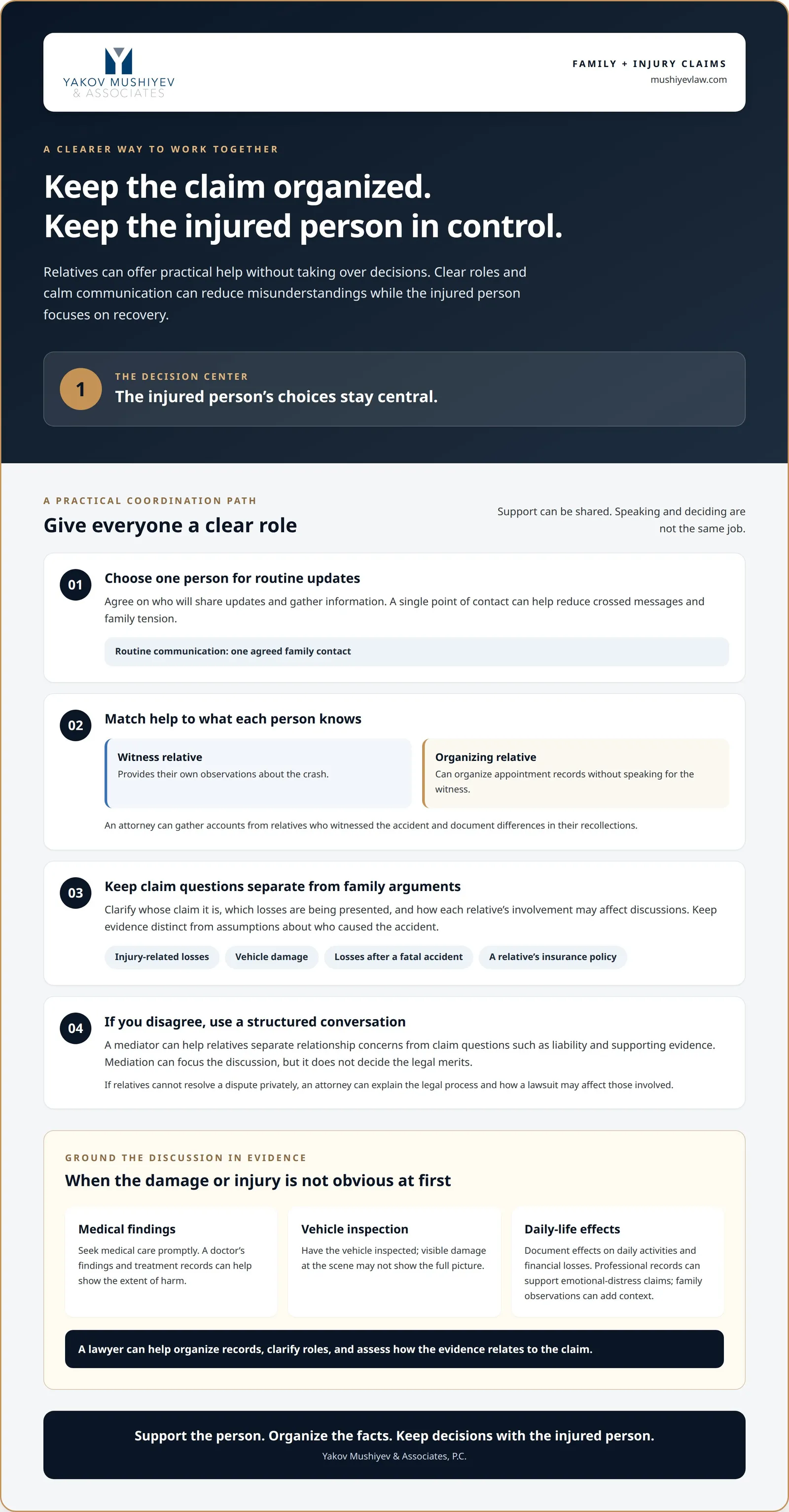
After an accident, relatives may disagree about who should speak for the injured person or whether to pursue compensation. An attorney can clarify each person’s role, identify the injured person’s priorities, and keep claim decisions separate from family arguments. This is especially important if a relative is a witness or has information about liability. Learning how to file a claim without causing family problems starts with keeping the injured person’s choices central.
Claims may seek compensation for accident injuries, vehicle damage, or losses after a fatal accident. A claim involving a relative’s insurance policy can create tension, even when family members want to help. An attorney can explain whose claim it is, which losses are being presented, and how each relative’s involvement may affect discussions. That gives the family a clearer basis for talking about next steps.
Start by choosing one person to handle routine updates, while leaving decisions to the injured person. The attorney can gather accounts from relatives who witnessed the accident and document differences in their recollections. For example, a sibling who saw the crash can provide observations, while another relative organizes appointment records without speaking for the witness. Clear roles help prevent crossed messages.
A mediator can provide a structured setting for discussing disagreements. Mediation may help relatives separate relationship concerns from claim questions, such as liability and supporting evidence. It can focus the conversation, but does not decide the legal merits. When considering how to file a claim without causing family problems, aim for a discussion that respects both the evidence and the injured person’s voice.
If relatives cannot resolve a dispute privately, an attorney can explain the legal process and how a lawsuit may affect those involved. The attorney can help distinguish evidence from assumptions, so disagreement is not mistaken for proof about who caused the accident. For guidance on organizing a claim and family communications, consider personal injury claim guidance.
Doubts about whether damages are serious enough to claim
A crash that seems minor can still cause an injury or vehicle damage that becomes clearer later. After a car accident, seek medical care promptly and have the vehicle inspected. A doctor’s findings and inspection records can help establish the extent of harm, even if symptoms or visible damage seemed limited at first. Do not rely only on what you noticed at the scene.
To assess personal injury damages, an attorney considers medical findings, treatment records, effects on daily activities, and documented financial losses. For example, recurring pain that interferes with work presents different evidence from brief discomfort with no continuing effects. These details help show the injury’s impact and whether pursuing compensation is practical.
Document emotional distress carefully. Records from a qualified mental health professional can support a claim, while notes about changes in mood, behavior, or routine can show the effect on daily life. Family members can describe what they observed, but their accounts are most useful alongside professional documentation. An attorney can gather the records and assess how they relate to the claim.
State rules can also affect whether an injured driver may sue another driver. In states with no-fault auto insurance, a driver may face limits on suing unless state-specific requirements are met, such as a financial-damages threshold or serious-injury definition. Guidance from an attorney can clarify how those factors apply before a family treats a small initial repair estimate as the full picture.
Keep evidence tied to specific effects, such as examination findings, repair records, missed work, or documented limits on daily activities. An attorney can assess how the records connect the accident to your losses. This helps families discuss the claim based on evidence rather than assumptions about whether an injury is “serious enough.”
How a personal injury lawyer submits a claim and evaluates settlement offers
A lawyer builds a claim around records connecting the accident to the injured person’s losses. This usually means organizing medical documentation, repair information, income records, and relevant communications. The lawyer can submit the materials to the appropriate insurer, track responses, and preserve copies. A clear record helps everyone understand what the claim includes and which losses still need support.
Settlement review begins by comparing the insurer’s offer with the documented effects of the injury. A lawyer weighs medical expenses, lost income, pain and suffering, and how symptoms affect daily life. For minor car accident claims handled without an attorney, a pain-and-suffering multiplier may be 1.5 to 5 times special damages, depending on injury severity and duration. That estimate is not a substitute for reviewing the specific evidence.
During negotiations, a lawyer can identify unsupported assumptions, explain gaps in the insurer’s assessment, and provide relevant records. If treatment is ongoing, the available medical information may not yet show the injury’s full effect. The lawyer can explain how that uncertainty affects discussions rather than treating an early offer as a final valuation. Keep communications documented, including the offer, the response, and any revised terms.
Before accepting a settlement, understand what the written agreement resolves and whether it covers the losses included in the claim. Ask the lawyer to explain unfamiliar terms in plain language, including which rights signing may affect. A relative can help organize questions, but should not pressure the injured person to accept or reject an offer. Decide after reviewing the evidence and proposed terms with a lawyer.
If you need help navigating claim filing or negotiations, get legal guidance on your injury claim.
Yakov Mushiyev & Associates, P.C.
Yakov Mushiyev & Associates, P.C. represents injured people in accident-related claims, including car, truck, and motorcycle accidents, as well as slip and fall incidents. For people in Rosedale, Rochdale, and Queens, the firm can help keep claim decisions focused on the injured person’s interests and documented losses.
If family disagreements are making an injury claim harder to manage, contact Yakov Mushiyev & Associates, P.C. to discuss your situation and possible next steps.
Move Forward With a Clear, Shared Plan
Turn uncertainty into a deliberate decision. A practical plan for how to file a claim without causing family problems gives the injured person room to make informed choices while relatives offer support without taking over. Agree on how updates will be shared, keep discussions focused on evidence, and give the injured person time to consider legal advice before deciding what comes next.
Family members may see the situation differently, but the injured person does not have to manage every conversation alone. Legal guidance can clarify the process and keep attention on the person’s interests, not pressure or blame. Yakov Mushiyev & Associates, P.C. can discuss your accident-related legal concerns and help you understand a path forward.
Contact Yakov Mushiyev & Associates, P.C to talk through your situation and take the next step with greater confidence.
Frequently Asked Questions
These answers provide general information, not legal advice for a specific case. The facts, available evidence, and applicable state rules can affect how an individual injury claim proceeds.
Can more than one family member be involved in the case?
Yes. Relatives can offer support, share relevant observations, or help organize information while the injured person remains central to claim decisions. For example, a family member who witnessed a collision can provide their own account, while another helps organize appointment records. Keep each person’s role clear, and do not treat differing family recollections as interchangeable evidence.
How can a personal injury lawyer help me file an insurance claim without creating conflict with family?
A lawyer can handle claim-related communications, helping prevent relatives from sending conflicting messages or making decisions on someone else’s behalf. The lawyer can explain what information is relevant and how family members may contribute. For example, one relative may provide a witness account, while the injured person discusses their own losses and choices.
Can filing a claim affect a family member’s insurance premiums or coverage?
It can have policy implications, but the effect depends on the insurer, the policy, and applicable state law. A family member who is insured under the policy may be affected differently from a relative who is only supporting the claimant. A lawyer can explain how the claim is being presented and what questions to raise about a particular policy, without assuming a premium change will occur.
What documents and evidence should I provide to a personal injury lawyer to file a claim?
Provide records that help establish what happened, the injury, and its effects. These may include accident or incident reports, medical records, insurer correspondence, vehicle inspection or repair information, and documentation of missed work. Photos, witness contact details, and notes about changes to daily activities can add context. Share new records as they arrive so the claim file stays current.
How can a personal injury lawyer help me discuss a claim with family before filing it?
A lawyer can help you explain the claim’s purpose, the losses being considered, and which decisions remain yours. You might tell relatives that you are seeking advice about documented injuries, rather than assigning blame within the family. The lawyer can also help set boundaries around who receives updates and which conversations should remain private.
What can a personal injury lawyer do if a family member pressures me not to file a valid claim?
A lawyer can explain your options, assess the evidence, and speak with you privately so you can consider the claim without family pressure dominating the discussion. The lawyer can clarify that a relative’s disagreement does not replace an evidence-based review of the injury and losses. If communication becomes difficult, legal guidance can keep claim discussions focused on the case and your informed decisions.