
What if the hazard that caused your fall also violated a building code? A relevant violation may help show that an unsafe condition existed, but it matters to a slip and fall claim only if it connects to your injury. Knowing how to find building code violations for a slip and fall case can help you identify evidence supporting that connection.
It’s natural to focus on the visible hazard, such as an uneven step, missing handrail, or slippery floor. But the condition itself is only part of the picture. The applicable code, inspection and maintenance records, and evidence linking the hazard to your fall may all matter.
This article explains how to identify applicable building codes, locate public records, and document a suspected violation. It also describes how code evidence fits into premises liability and why a violation alone doesn’t establish liability. Promptly preserving evidence can matter, especially if the property is repaired or altered.
Key Takeaways
- A building code violation may support a slip and fall claim when it relates directly to the hazard that caused the injury.
- Photographs, witness details, and records can help preserve evidence before the scene changes or repairs are made.
- The applicable building requirements depend on the property and location, and owners, landlords, and businesses may have code responsibilities.
- A code violation alone doesn’t establish premises liability; evidence must connect the unsafe condition to the fall and show why the property owner may be responsible.
Can a Building Code Violation Help Prove My Slip and Fall Claim?
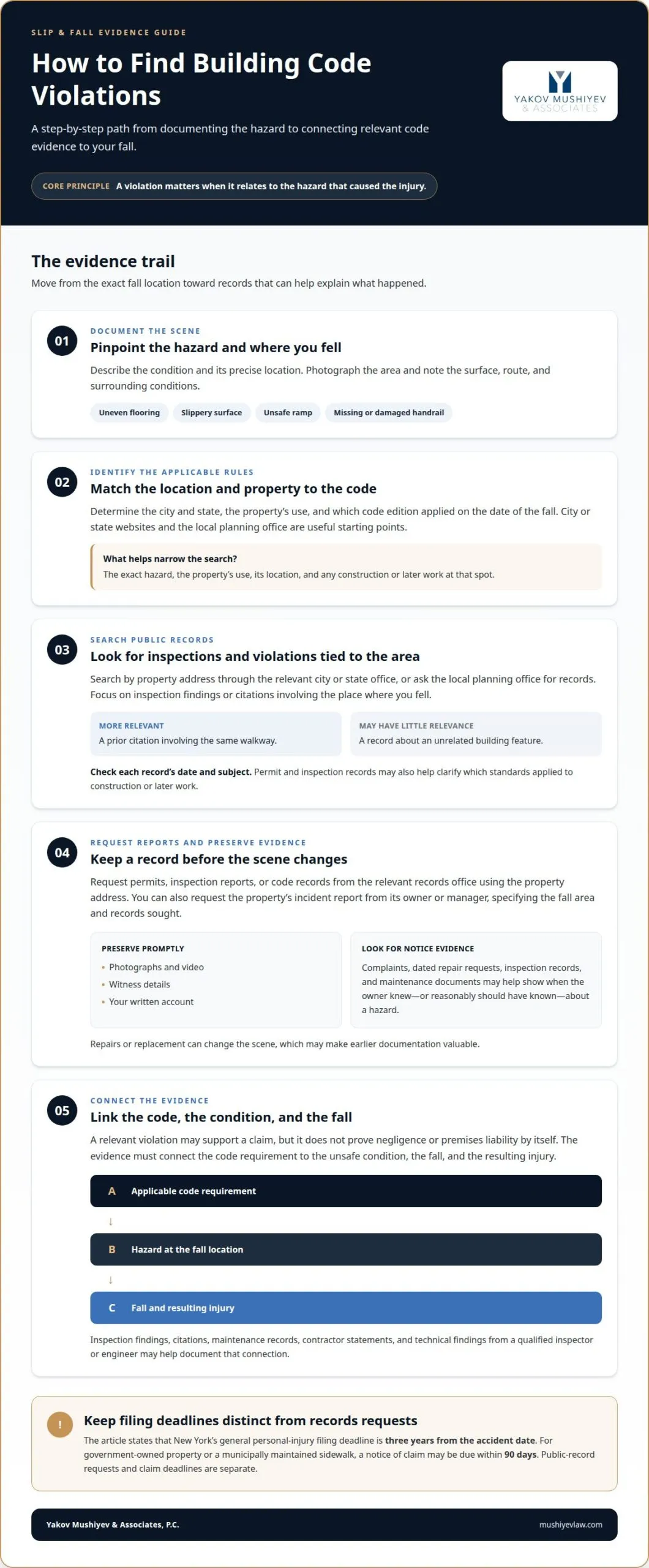
A relevant building code violation may help show that a hazard existed, but it must connect to your injury. Start by identifying the precise condition and where it occurred to understand how to find building code violations for a slip and fall case.
Fall Hazards in Flooring and Walkways
Uneven flooring, abrupt changes in floor level, slippery surfaces, and unsafe ramps can create hazards along a walkway. The exact location and condition matter because the code requirement must relate to the hazard that caused the fall.
For example, a raised edge on a route that becomes wet presents different issues from a loose floor covering inside a building. Photograph the area and note the surface, route, and surrounding conditions so the suspected code issue can be assessed accurately.
Owner Knowledge of Hazardous Conditions
Owner knowledge concerns whether the property owner knew, or reasonably should have known, about a hazard before the accident. Complaints, inspection records, and maintenance documents can help establish when the condition came to the owner’s attention.
A dated repair request about a cracked walkway, for example, may show that the owner received notice before someone fell. A hazard found during regular inspections may also raise questions about whether the owner had a reasonable opportunity to address it.
Identifying Relevant Code Requirements
To identify a specific code section, record where you fell and describe the condition, then determine which city or state code applied to the property. A practical search for building code violations in a slip and fall case starts by matching the hazard to the relevant local requirement.
City or state websites and local planning offices are useful places to look for current codes. The property’s use and any work performed there can help narrow down which requirements apply.
Checking Property Violation Records
To look for open or past violations, search public records by property address through the relevant city or state office, or request records from the local planning office. Focus on inspection findings or citations related to the area where you fell.
When researching building code violations for a slip and fall case, check each record’s date and subject. A prior citation involving the same walkway may help establish notice; a record about another building feature may have little relevance.
Building code violations as evidence in slip and fall claims
A code violation may support a premises liability claim if it concerns the dangerous condition that caused the injury. Its significance depends on evidence connecting the requirement, the hazard, and the accident.
Violations as Negligence Evidence
A relevant violation may help show that a property owner failed to address an unsafe condition. It doesn’t prove negligence by itself; the evidence must connect the code requirement to the fall and resulting injury.
Inspection findings, citations, maintenance records, and contractor statements may help make that connection. A report about a broken stair near the fall, for instance, may matter more than a violation involving an unrelated part of the property. A qualified inspector or engineer can document technical conditions and prepare findings for a claim.
Requesting Reports and Records
To request permits, inspection reports, or code records, provide the property address to the local planning office or relevant city or state records office. Request the property’s incident report from its owner or manager, identifying the fall area and the records you seek.
New York’s general personal-injury filing deadline is three years from the accident date. For government-owned property or a municipally maintained sidewalk, a notice of claim may be due within 90 days. Public-record requests and claim deadlines are separate.
Preserve photographs, video, witness details, and your written account promptly. Conditions can change when owners repair or replace a hazard, making earlier documentation valuable. Understanding how to find building code violations for a slip and fall case includes preserving evidence before that happens. A lawyer can assess records and arrange expert documentation. To discuss how to find building code violations for a slip and fall case in your situation, seek a legal review of your fall claim.
What Are Building Codes and Who Must Follow Them?
Building codes set construction and safety standards for buildings and public spaces. Which requirements apply depends on the property’s location and use, as well as the rules adopted there.
Handrail Conditions and Requirements
A missing, loose, or damaged handrail can leave someone without support on stairs and increase the risk of a fall. If a handrail defect contributed to an injury, its condition and the applicable local standards may be relevant.
Broken or uneven stairs and steps without handrails may violate applicable building codes and contribute to a fall. Document whether a rail was absent, unstable, or damaged so the issue can be reviewed. Required handrail features depend on the code that applies to the property.
Finding Codes for a Property
To find the codes that applied on the date of the fall, identify the property’s city and state, then locate the code edition adopted there at that time. State or city websites and the local planning office are useful starting points.
To search local building codes or ordinances, enter the property address on the relevant municipal website or provide it to the planning office. Permit and inspection records may clarify which standards applied to construction or later work at that location.
Building codes cover more than stairs. They may address electrical systems, smoke alarms, guardrails, windows, and ventilation. State and local rules may apply, with local governments enforcing requirements through permits and inspections. Many jurisdictions follow the International Building Code, which is updated every three years.
Building owners, landlords, and businesses must follow applicable codes in places such as apartment complexes, shopping centers, and office buildings. Builders must also follow state and local requirements during construction. A property built before current rules took effect may be grandfathered, so current standards may not automatically apply. In a claim involving a missing handrail, identify the requirements that applied to that property at the relevant time.
Building code violations and premises liability
Premises liability examines whether an unsafe property condition caused an injury and whether the responsible party failed to address it. A building code violation can support that analysis, but it doesn’t establish liability on its own. The key is connecting the specific rule to the dangerous condition and fall.
Consider a broken stair handrail beside a dimly lit stairwell. An applicable code requirement, inspection record, or repair request may help show that the condition existed and should have been addressed. A violation involving an unrelated part of the property, by contrast, may not explain the fall. The evidence must fit the accident’s location and cause.
Other examples include defective drainage that leaves a walkway wet, flooring that becomes slippery, or construction work that leaves an uneven path. Improper permitting may point to work that needs closer examination, but the permit issue must relate to the fall hazard. Records, photographs, measurements, and witness accounts can help establish the connection.
Owners may dispute whether they knew about a hazard or had time to correct it. Earlier complaints, inspection records, and maintenance logs can help clarify what they knew and when. A lawyer can assess whether the code applied and whether the violation contributed to the injury. This analysis also matters in construction-related falls, where work conditions and property safety requirements may overlap.
The practical takeaway is to build the claim around causation, not just a code citation. An attorney can review the relevant records, identify the responsible parties, and evaluate how the hazard led to the fall. Discuss the evidence in your fall claim with a lawyer.
Yakov Mushiyev & Associates, P.C: Slip and Fall Legal Representation
Yakov Mushiyev & Associates, P.C. represents people injured on unsafe property in slip and fall cases. If a possible code violation, maintenance record, or witness account may help explain your fall, legal guidance can help you understand how that evidence fits your claim.
A lawyer can assess whether a suspected violation relates to the hazard and injury, and how records may support a premises liability claim. That review can clarify which evidence matters and what steps may help protect your claim. The firm also represents people injured in construction accidents.
To discuss your slip and fall, contact Yakov Mushiyev & Associates, P.C.
Take the Next Step Toward Protecting Your Claim
Learning how to find building code violations for a slip and fall case is a starting point, not a complete assessment of responsibility. Consider who controlled the area, what condition existed, and how it contributed to your injuries. This analysis can help guide decisions about a premises liability claim and responses to disputes over responsibility.
Before discussing your case, prepare a brief timeline of the event, related communications, and changes in your daily activities. Separate what you observed yourself from what you learned later. You don’t need to resolve every technical question; an attorney can assess what the information supports and what further investigation may help.
To discuss what happened and consider a way forward, contact Yakov Mushiyev & Associates, P.C.
A clear, informed next step can make a difficult process feel more manageable.
Frequently Asked Questions
These answers provide general information for readers in Rosedale, Rochdale, Queens, and elsewhere. Nothing here is legal advice about your specific case. Consult a lawyer for case-specific guidance.
Can I sue a property owner for a building code violation in California?
A code violation may support a California premises liability claim, but the violation alone doesn’t establish that the owner is liable. California Civil Code Section 1714 requires property owners to use reasonable care in maintaining their property. The claim also needs evidence connecting the unsafe condition to the injury. Whether that connection exists depends on the facts, including where the fall happened and what caused it.
What do building inspectors look for?
Building inspectors check whether a property meets applicable building requirements. Depending on the property and purpose of the inspection, they may examine stairwells, guardrails, windows, ventilation, electrical systems, and smoke alarms. For a fall-related concern in a Rosedale apartment building, for example, an inspection may focus on the stairs or walkway involved, rather than unrelated features. The scope depends on the inspection’s purpose.
What is the difference between a building code violation and normal wear and tear?
Normal wear and tear is gradual deterioration; a code violation is a condition that fails an applicable building requirement. The two can overlap: a worn stair surface may also raise a code issue if it no longer meets the relevant standard. Peeling paint alone, for example, doesn’t establish a fall-related violation, while a damaged stair feature tied to a specific safety requirement may warrant closer review.
How do building code violations affect a slip and fall case?
A relevant violation can strengthen a claim by providing evidence of an unsafe property condition, but it doesn’t decide the case by itself. The key question is whether the condition contributed to the fall and injury. A record about a stairway matters more if the fall happened there than if it concerns an unrelated area. State law also affects how courts consider violations.
Can building code violations be evidence of negligence in a premises liability case?
In New York, a documented violation may support a negligence-per-se argument, but courts don’t apply that doctrine automatically. The evidence must still show that the specific requirement relates to the hazard and injury. A citation about a building feature unrelated to the accident may carry little weight. A lawyer can assess how the rule and incident evidence fit together under applicable law.
What evidence should I collect to document a slip and fall code violation?
Preserve clear photos or video of the exact hazard, wider views showing its location, and images of any visible injuries. Record the date and time, and write down what happened while your memory is fresh. Keep incident reports, relevant messages, medical records, and witness contact details together. For example, a photo of a damaged stair beside a recognizable doorway can help identify the precise location later.