
A passenger may have a claim against the driver after a single-car crash in Rochdale if the driver’s negligence caused the collision. Whether a passenger can sue the driver in a single-car accident in Rochdale also depends on the injuries: according to the New York State Legislature, Insurance Law §5104 sets the serious-injury threshold for a lawsuit seeking damages beyond no-fault benefits.
Being a passenger or knowing the driver doesn’t automatically prevent you from making a claim. New York no-fault benefits may cover eligible losses regardless of who caused the crash. A claim for pain and suffering, however, requires injuries that meet the state’s legal threshold.
After a crash, it can be difficult to know which insurance benefits may apply, whether you can sue, or what evidence could support your account. This article explains when a passenger may sue after a single-car crash in Rochdale, what compensation may be available, and why medical records, income documents, and crash evidence matter. Understand the applicable rules before accepting a settlement or deciding what to do next.
Key Takeaways
- A passenger may have a claim when the driver’s negligence caused the crash, even if no other vehicle was involved.
- New York’s serious-injury threshold can affect whether a passenger may sue for pain and suffering.
- Medical, income, and crash-scene records can help support an injury claim and show how the collision happened.
- Responsibility may extend beyond the driver, and a passenger’s actions could also matter when fault is assessed.
Damages for medical expenses, lost wages, and pain and suffering
In Rochdale, Queens, an injured passenger may seek no-fault benefits after a single-car crash, regardless of who caused it. A lawsuit for additional damages depends on the injuries and evidence of liability.
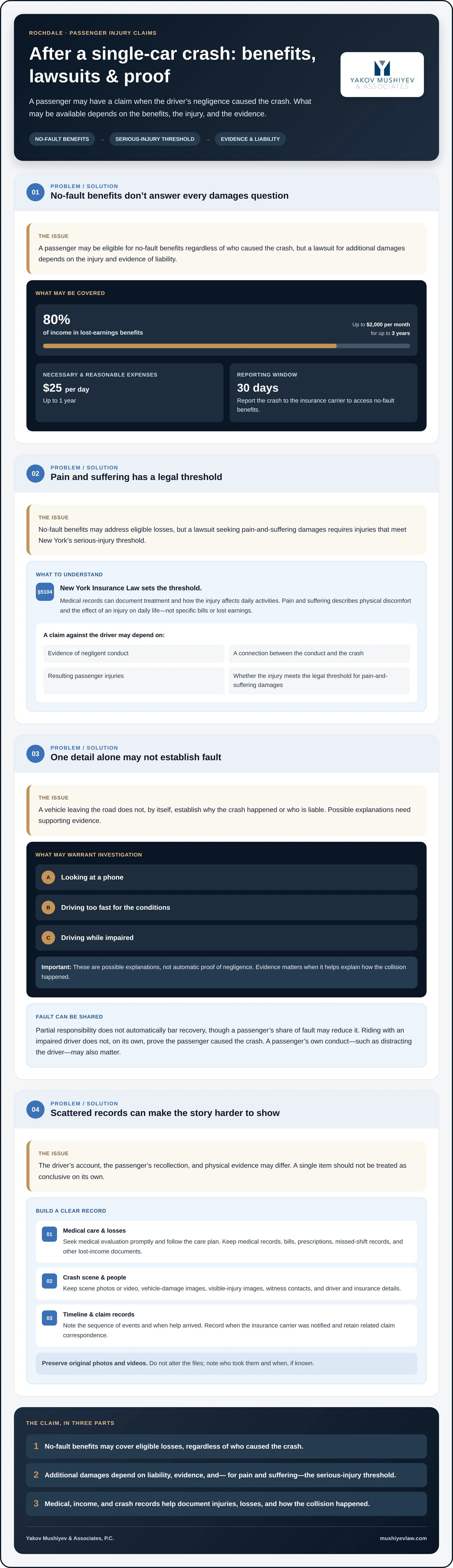
New York no-fault benefits may cover medical expenses and lost earnings. Lost earnings benefits equal 80% of income, up to $2,000 per month for up to three years. Necessary and reasonable expenses may be covered up to $25 per day for up to one year. Passengers should report the crash to the insurance carrier within 30 days to access no-fault benefits.
Partial responsibility doesn’t automatically bar a passenger from recovering damages in New York, though their share of fault may reduce the recovery. Riding with an impaired driver doesn’t, on its own, prove that the passenger caused the crash. The passenger’s own conduct, such as distracting the driver, may matter when fault is assessed. An injured passenger may also make a claim through the vehicle’s driver’s auto insurer.
Medical Care and Loss Documentation
Medical records and documentation of financial losses can help show the treatment received and expenses or income lost after a collision. Seek medical evaluation promptly, even if injuries seem minor, and follow your provider’s care plan.
Keep copies of medical records, bills, prescriptions, and lost-income documents. For example, retain work records showing missed shifts and note related expenses. These details can help connect your treatment and financial losses to the crash in Rochdale.
Pain and Suffering Damages
Pain and suffering damages address physical discomfort and the effect of an injury on daily life, rather than specific bills or lost earnings. A lawsuit seeking these damages requires injuries that meet New York’s serious-injury threshold.
New York Insurance Law § 5104 sets the serious-injury threshold for filing a lawsuit against another driver, according to the New York State Legislature. Medical records can document treatment and the injury’s impact on daily activities. A friend’s liability insurance may be relevant if that friend was driving, but coverage and damages depend on the claim’s facts.
Driver negligence and reckless behavior
A passenger may bring a claim against the driver if negligent conduct caused the single-car crash and resulting injuries. Negligence means failing to use reasonable care. The key question is how the driver’s actions contributed to the collision. A vehicle leaving the road does not, by itself, establish why the crash happened or who is liable.
Conduct that may warrant investigation includes looking at a phone, driving too fast for the conditions, or driving while impaired. These are possible explanations, not automatic proof of negligence. Evidence of distraction matters when it helps explain why the vehicle veered, struck an object, or overturned.
To assess liability, a lawyer examines the sequence of events and how the driver’s conduct relates to the passenger’s injuries. The driver’s account may differ from the passenger’s recollection or the physical evidence. Vehicle damage, the crash location, witness observations, and medical records can help clarify what happened. Consider each detail alongside the others, rather than treating any one piece as conclusive.
Reckless behavior involves especially dangerous conduct, while negligence can involve a careless mistake. Either may be relevant if it caused the crash and resulting harm. Being friends with the driver doesn’t automatically prevent a passenger from making a claim against the driver’s liability insurance. Coverage and responsibility are separate questions: evidence must support the claim, and the policy may affect the recovery available.
Before discussing a settlement, consider whether it accounts for the documented injuries, treatment, and financial losses. A quick offer may not reflect the full impact of an injury. A lawyer can evaluate the available evidence, identify gaps in the driver’s explanation, and explain how those facts may affect liability. For guidance on a potential claim, speak with an accident attorney before accepting a settlement.
Evidence and legal assistance after a crash
Evidence can help establish how the collision happened, who was driving, and what losses followed. Start with the practical details: collect vehicle registration and insurance information for every driver involved. If neither driver has called the police, call them. A clear record of the crash can help preserve key facts while accounts are still fresh.
Witnesses may have seen the vehicle’s movement or what happened just before impact. Collect their contact information, along with each driver’s details. When possible, photograph or video the crash scene, vehicle damage, and visible injuries. For example, images showing damage from several angles may help explain where the vehicle was struck or how it came to rest.
New York passengers should report the collision to the insurance carrier within 30 days to access no-fault benefits. Keep a note of when the report was made and retain any related claim correspondence. This step matters because an injured passenger may need to pursue benefits while evidence about the driving and collision supports questions of fault.
Organize evidence by source: scene photos, witness contacts, driver and insurance details, and claim communications. A timeline can record events, such as when the vehicle left the roadway and when help arrived. Don’t alter original photos or videos. Preserve the files and note who took them and when, if known.
A lawyer can review whether the available evidence supports a clear account of the collision and the passenger’s losses. A consultation can also identify unanswered questions, such as whether a witness can describe the driver’s actions. Legal help can be especially useful when accounts conflict or an insurer disputes liability. Pursuing a claim depends on connecting the evidence to the harm, not simply gathering a large number of files.
Potentially liable parties beyond the driver
A single-car crash doesn’t automatically mean that only the driver’s conduct matters. A claim against someone else requires evidence connecting that person’s actions to the collision or injury. For example, if the passenger distracted the driver, that conduct may be relevant to assessing responsibility. But another person’s mere presence in the vehicle doesn’t establish fault.
New York follows pure comparative fault. An injured passenger may still recover damages when a driver shares responsibility, but the passenger’s own share of fault can reduce compensation. Being friends with the driver doesn’t automatically prevent a claim. The key questions are what each person did and how that conduct relates to the harm.
Keep legal responsibility separate from insurance coverage. A policy may provide a source of payment, but coverage alone doesn’t establish that the policyholder caused the crash. A claim involving the driver’s liability insurance, for instance, still depends on evidence of the driver’s conduct and the passenger’s injuries. Consider these issues separately when reviewing a claim or settlement.
To assess whether anyone besides the driver may be liable, organize the facts around actions and consequences. Identify what the passenger was doing before the vehicle left the roadway, what the driver did next, and how the impact occurred. Compare those details with witness accounts, photographs, and medical records. This can help distinguish a genuine contribution from mere presence in the vehicle.
An injury lawyer can evaluate whether the evidence supports claims involving another person’s conduct, the driver’s responsibility, or both. That review can also clarify how fault may affect the ability to recover compensation and which coverage may apply. If questions remain about who contributed to the crash, get legal help reviewing potential claims before deciding how to proceed.
Yakov Mushiyev & Associates, P.C.
Yakov Mushiyev & Associates, P.C. helps injured passengers assess potential car accident claims and understand the evidence, insurance issues, and legal standards that may apply. Turn to the firm if you’re unsure whether the driver’s conduct caused your injuries, how no-fault benefits relate to a lawsuit, or whether an insurer’s settlement offer accounts for your losses.
The firm’s car accident legal representation can help clarify next steps, review available records, and address disputes about liability or compensation. The firm also represents people injured in slip and fall, truck, and motorcycle accidents. Every claim depends on its facts, including the crash circumstances, documented injuries, and applicable coverage.
For guidance about your passenger injury claim, contact Yakov Mushiyev & Associates, P.C.
Take the Next Step With Clarity
Knowing whether a passenger can sue the driver in a single-car accident in Rochdale is only the beginning. Next, consider how the crash evidence, injury records, and insurance communications fit together. A clear review can help identify unanswered questions and the information that may matter before you respond to an insurer or consider a settlement.
You don’t have to assess the situation alone while recovering from an injury. Yakov Mushiyev & Associates, P.C. can review the circumstances of your crash and explain your legal options. Sharing the facts early can help bring focus to a process that may feel uncertain.
Contact Yakov Mushiyev & Associates, P.C to discuss your situation and decide on a practical next step. You deserve a clear understanding of your rights as you move forward.
Frequently Asked Questions
Can I Sue If I Was A Passenger In A Car Accident?
Yes. An injured passenger may pursue a claim when another party’s negligence caused the crash, subject to New York’s requirements. You don’t need to own the vehicle or have been driving. In Rochdale, Queens, keep insurance correspondence and claim details together so you can track what you reported and how the insurer responded.
Who May Be Responsible for an Injured Passenger?
The driver carrying the passenger or another driver may be responsible if their conduct contributed to the collision. A passenger’s actions may also be considered if they contributed, such as by distracting the driver. Responsibility depends on evidence connecting someone’s conduct to the crash and injury. An insurer handling a claim does not, by itself, determine legal fault.
Can You Make a Claim if the Driver Is a Friend or Family Member?
Yes. A family relationship or friendship doesn’t automatically prevent an injured passenger from making a claim. The claim may involve the driver’s liability insurance rather than a personal demand for payment. Keep communications factual, and don’t assume your relationship with the driver determines whether coverage or legal responsibility applies.
Can You Sue the Driver of the Car You Were Riding In?
Yes, a passenger may sue the driver they were riding with if the driver’s negligence caused the crash and injuries. The driver’s actions before impact and the circumstances of the collision matter. An insurance claim and a lawsuit are different processes, so keep relevant letters and note what each communication says about the claim.
When Can a Passenger Sue a Non-at-Fault Driver?
A passenger may have a claim against another driver when evidence shows that driver contributed to the collision. If the driver played no role in causing it, involvement alone doesn’t establish liability. If multiple drivers contributed, a claim may involve more than one party. For a crash in Queens, the evidence must connect each person’s actions to the passenger’s injury.
Can a passenger sue the driver after a single-car accident in Rochdale, Queens?
Yes, a passenger may sue if the driver’s negligence caused the crash and the passenger’s injuries meet New York’s requirements. The absence of another vehicle doesn’t automatically prevent a claim. The driver’s conduct, evidence of injury, and insurance coverage all matter. These answers provide general information, not legal advice for a specific case.