
Workers’ compensation doesn’t automatically prevent another claim. If someone other than your employer or a co-worker caused your injury, you may sue a third party while receiving workers’ compensation, though specific rules and regional laws apply. While general legal overviews often reference Pennsylvania, injured workers in Rosedale, Rochdale, and Queens can turn to Yakov Mushiyev & Associates, P.C. for local guidance. The key is identifying a potentially responsible outside party and showing that their negligence or a defective product caused the harm, as your employer is generally protected from a separate workplace injury lawsuit.
It’s understandable to think workers’ compensation is your only option after a workplace injury. But a third-party lawsuit may let you seek damages workers’ compensation doesn’t cover, including pain and suffering. This article explains how third-party claims work, how employer immunity applies, and how a lawsuit may affect benefits and reimbursement from a recovery. The facts behind the accident matter, as do the legal issues that shape your options.
Key Takeaways
- Learn which outside parties may be responsible for a work injury and what must be shown to pursue a claim.
- Understand why workers’ compensation generally limits lawsuits against an employer, and where exceptions may apply.
- See how Pennsylvania workers’ compensation can provide benefits while a separate injury claim is pursued.
- Find out how reimbursement claims can affect a third-party recovery and what issues may shape the final amount.
Can I receive workers’ compensation and file a third-party lawsuit at the same time?
Yes. In Pennsylvania, you may pursue workers’ compensation and a separate lawsuit if an outside party caused your workplace injury. Each claim follows a different process and addresses different losses.
Filing Both Claims Together
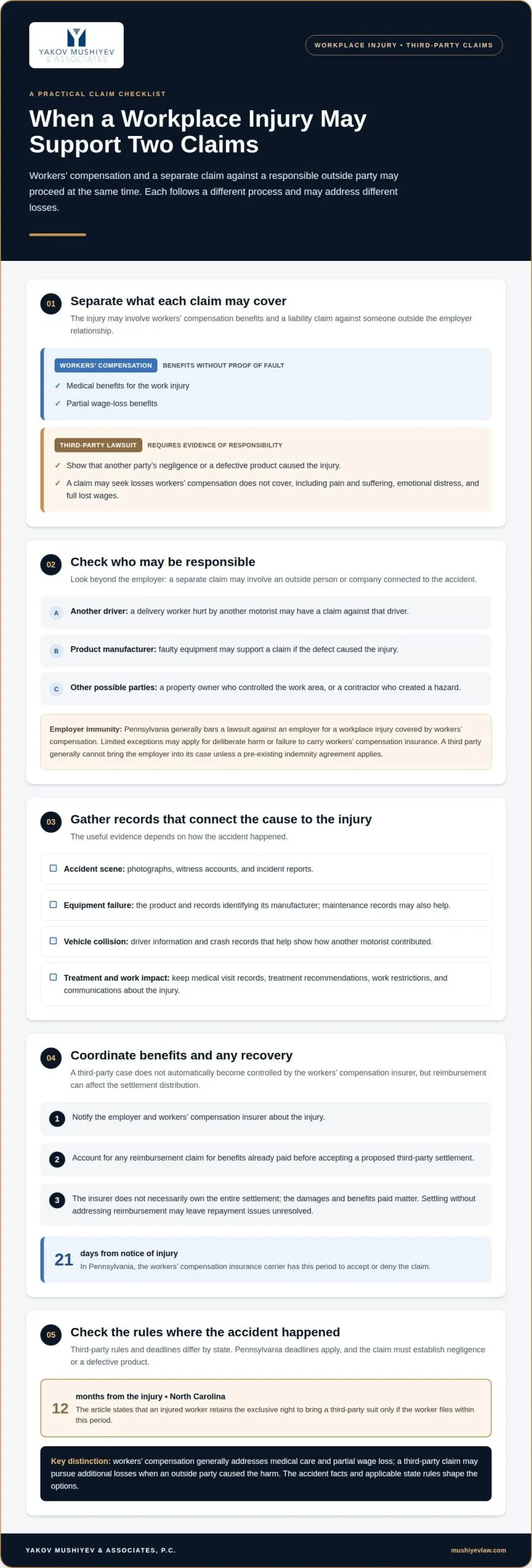
Pursuing both claims means seeking workers’ compensation benefits while bringing a liability claim against an outside party. Workers’ compensation can provide medical and partial wage-loss benefits without proof of fault. A third-party case requires evidence that the other party’s negligence or defective product caused the accident. For example, a worker injured by faulty equipment may have a claim against its manufacturer. Together, the claims may address immediate benefits and losses workers’ compensation doesn’t cover.
Claims Against Employers and Other Parties
Pennsylvania generally bars an employee from suing an employer for a workplace injury, while a claim against a responsible outside party may proceed. The distinction matters: workers’ compensation is generally the route for employer-related workplace injuries, but a negligent driver or product manufacturer may face separate liability. A third-party lawsuit may seek pain and suffering, emotional distress, and full lost wages. A lawyer can assess who caused the accident and which claims fit the evidence.
Insurer Control and Third-Party Settlements
A workers’ compensation insurer doesn’t automatically take over a third-party lawsuit, but it may seek reimbursement from a recovery for benefits already paid. Notify your employer and the insurer about the injury, and account for any reimbursement claim before accepting a proposed settlement. Settling without addressing reimbursement can leave repayment issues unresolved and complicate distribution of the recovery. The insurer doesn’t necessarily own the entire settlement; the damages and benefits paid matter.
State Rules and Claim Deadlines
Third-party rules and deadlines differ by state, so the accident’s location can change the analysis. In Pennsylvania, deadlines apply to work-injury lawsuits, and a worker must establish the other party’s negligence or a defective product. In North Carolina, according to the North Carolina General Assembly, an injured worker retains the exclusive right to bring a third-party suit only if the worker files within 12 months of the injury. A third-party case may also seek damages beyond workers’ compensation, including pain and suffering and full lost wages. Act promptly to preserve both claims.
Employer immunity from workplace injury lawsuits
Pennsylvania generally bars employees from suing their employer for a workplace injury covered by workers’ compensation. The compensation claim is the route to benefits; a personal injury lawsuit may instead target an outside party responsible for the harm. For example, a delivery worker hurt by another driver may pursue a claim against that driver, rather than automatically suing the employer.
Employer immunity has limited exceptions. Pennsylvania law may allow an employee to sue an employer for deliberate harm or if the employer failed to carry workers’ compensation insurance. These situations differ from an ordinary workplace accident, so the circumstances of the injury and the employer’s insurance status matter. A third party also generally cannot bring an employer into its case unless a pre-existing indemnity agreement applies.
Evidence can help establish whether an outside party caused the injury. Useful records may include accident-scene photographs, witness accounts, incident reports, and maintenance records. In a defective-equipment case, the product and records identifying its manufacturer may help connect the defect to the injury. After a vehicle collision, driver information and crash records can help show how another motorist contributed.
A lawyer can assess the evidence, identify potentially responsible parties, and distinguish a third-party lawsuit from a claim against the employer. That distinction matters if a property owner controlled the work area, a contractor created a hazard, or a driver caused a collision. For a work-related crash involving another motorist, car accident legal representation can address the driver’s potential liability. Do not treat the employer’s immunity as protection for every person or company connected to the accident.
Pennsylvania workers’ compensation for workplace injuries
Pennsylvania workers’ compensation provides medical and partial wage-loss benefits without requiring proof of fault. An employee injured while performing job duties may qualify even if the cause of the accident is disputed. For example, a worker hurt by equipment at a jobsite may have a compensation claim while the circumstances of the equipment failure are investigated. Workers’ compensation addresses workplace injury benefits, not every loss connected to the incident.
After an injury, notify the employer and workers’ compensation insurance company. The notice helps the insurer assess the claim and begin its review. In Pennsylvania, the insurance carrier has 21 days from notice of an injury to accept or deny the claim. Keep records of medical visits, treatment recommendations, and communications about work restrictions. Those records document how the injury affects treatment and the ability to work.
Medical and wage-loss benefits serve different purposes. Medical benefits address care for the work injury, while partial wage-loss benefits replace only part of your earnings. If you can’t perform your regular duties, document how the injury affects your work. For instance, a back injury requiring ongoing treatment may affect both your medical needs and your ability to return to a job involving lifting. Those details help explain the compensation claim.
A third-party lawsuit is separate from the workers’ compensation process. Evidence about the accident may matter to both claims, but each has a different focus: workers’ compensation benefits and the outside party’s responsibility for the injury. Preserve relevant incident reports, medical records, and information about any equipment involved. If the claims lead to a settlement or a reimbursement dispute, the benefits paid and the third-party recovery become relevant. Pennsylvania disputes over reimbursement are typically resolved by a Workers’ Compensation Judge.
How does workers’ compensation affect a third-party personal injury lawsuit?
In Pennsylvania, workers’ compensation and a third-party lawsuit address different parts of a workplace injury. Workers’ compensation provides medical and partial wage-loss benefits, while a lawsuit may seek damages from the party responsible. This distinction matters when an injury causes losses beyond covered benefits. For example, a negligent driver who hits a worker performing job duties may face a separate claim over the crash.
A third-party recovery may also trigger reimbursement. The workers’ compensation insurer may seek repayment from the recovery for benefits it has already paid. This can affect how much the injured worker ultimately keeps. The amount depends on the benefits paid and the terms of the recovery. The insurer’s claim doesn’t mean the entire settlement belongs to the insurer.
Pennsylvania law limits an employer’s reimbursement claim to benefits already paid. Compensation for pain and suffering or other non-economic damages remains with the injured worker. A third-party claim may also seek future medical costs not covered by workers’ compensation, loss of consortium, and punitive damages in certain cases. Each category must relate to the claim and the harm caused.
Before accepting a settlement, account for the insurer’s reimbursement interest and benefits already paid. Overlooking these issues can lead to a repayment dispute after the third-party case ends. Keep injury-related records and settlement details organized so the recovery and compensation payments can be evaluated together. In Pennsylvania, a Workers’ Compensation Judge typically resolves disputes over reimbursement from a third-party recovery.
For a work-related collision caused by another driver, discuss a third-party accident claim and how it may affect your recovery. The responsible party’s liability, the injury evidence, and workers’ compensation benefits all shape the claim’s financial picture.
Yakov Mushiyev & Associates, P.C
Yakov Mushiyev & Associates, P.C. represents people injured in accidents, including cases involving a potentially responsible party beyond the employer. If a work injury involved a vehicle collision, unsafe property, or a construction accident, the firm’s personal injury representation may help address a separate claim against the responsible party. Key questions include who caused the harm, what evidence supports liability, and how a recovery may interact with workers’ compensation benefits.
Consider legal representation if another driver, property owner, or outside party may have contributed to your injury. The firm handles car, truck, and motorcycle accident cases, as well as slip and fall claims. Contact Yakov Mushiyev & Associates, P.C. to discuss your situation and potential third-party claim.
Take the Next Step With a Clear Plan
A workplace injury can leave you managing treatment, work changes, and questions about who should answer for the harm. You don’t have to sort through those concerns alone. If you’re asking whether you can sue a third party while receiving workers’ compensation, the next step is to have the facts of your accident and the potential claim assessed together.
Yakov Mushiyev & Associates, P.C. handles car accident, truck accident, and slip and fall cases. The firm can assess whether an outside party may be responsible and explain how a personal injury claim may relate to your circumstances. A careful assessment can help you make an informed decision before taking action.
Contact Yakov Mushiyev & Associates, P.C to discuss your situation and possible next steps. You deserve a clear path forward, with your questions heard and your options explained.
Frequently Asked Questions
These answers are general information, not legal advice about your specific case. Consult a lawyer for case-specific guidance. Yakov Mushiyev & Associates, P.C. represents New York injury victims, including in Rosedale, Rochdale, and Queens; this Pennsylvania overview does not describe representation under Pennsylvania law.
What Is a Third-Party Claim in Pennsylvania?
A third-party claim is a personal injury case against someone other than your employer or a co-worker who caused your work injury. For example, a worker hurt in a crash while driving for work may have a claim involving the other driver. The claim requires evidence connecting that outside party’s negligence or a defective product to the injury, not simply proof that the accident happened at work.
What is subrogation in a Pennsylvania workers’ compensation case?
Subrogation is a workers’ compensation insurer’s effort to recover benefits it paid or owes from money obtained in a third-party case. For example, if an insurer paid medical expenses before a responsible party’s settlement, reimbursement may be addressed when the recovery is distributed. The insurer’s claim concerns workers’ compensation benefits, not every category of damages. A Pennsylvania Workers’ Compensation Judge typically resolves reimbursement disputes.
Can I sue my employer if a co-worker caused my injury?
Usually, a Pennsylvania worker cannot turn an injury caused by a co-worker into a third-party claim against the employer. Workers’ compensation generally provides the remedy for a work-related injury, and a co-worker isn’t treated as an outside third party for this purpose. Deliberate employer harm and failure to carry workers’ compensation insurance are identified exceptions to the usual employer-immunity rule.
Who Counts As A Third Party In An NC Work Injury?
In North Carolina, a third party is a person or business other than the employer or a co-worker that may be legally responsible for an injury. Depending on the accident, this could include another motorist or a company responsible for defective equipment. The claim concerns that outside party’s liability; workers’ compensation addresses benefits through the employment injury system. The facts help identify who may be responsible.
Will You Have To Repay Workers’ Comp Out Of Your Recovery?
In Pennsylvania, a workers’ compensation insurer may seek reimbursement from a third-party recovery for benefits it has already paid. The reimbursement claim is limited to benefits paid, while compensation for pain and suffering and other non-economic damages remains with the injured worker. The amount ultimately distributed depends on the recovery and reimbursement issue; disputes are typically handled by a Workers’ Compensation Judge.
Can I sue a third party while receiving workers’ compensation benefits?
Yes, Pennsylvania allows a worker to pursue workers’ compensation benefits and a third-party lawsuit at the same time if an outside party caused the injury. For example, a worker may receive benefits while pursuing a claim involving a negligent driver or defective product. Coordinate the claims, especially before settling, because the insurer may seek reimbursement from the third-party recovery for benefits paid.