
Bus driver negligence is the core of most bus injury claims in New York. A passenger thrown into a pole, a rider caught in a closing door, a pedestrian struck in a crosswalk: in each case, the claim rises or falls on what the driver did and whether it fell short of the law’s standard. This article cuts to it. What counts as negligence, which legal tests apply, who pays, and how the proof gets built.
The Standard: Reasonable Care From a Common Carrier
Buses are common carriers. They carry the public for a fare. In Bethel v. New York City Transit Authority (1998), New York’s Court of Appeals held that common carriers owe passengers reasonable care under the circumstances.
That’s the yardstick. Not perfection. Not a guarantee of safety. Reasonable care, measured against what a careful bus operator would do in the same situation.
Two consequences follow. First, a bad outcome alone doesn’t prove fault; you need to show a lapse. Second, the standard is flexible. A careful driver in heavy rain on a crowded route behaves differently than one on an empty road on a dry afternoon, and the law expects that.
Seven Common Forms of Bus Driver Negligence
Most claims fit into a handful of patterns. Here are the ones that come up again and again:
- Sudden stops and hard braking. Standing passengers fall. Seated ones get thrown forward.
- Pulling away before passengers are settled. An older rider still walking to a seat is especially exposed.
- Closing doors on people. Caught arms, bags and legs, sometimes followed by the bus moving.
- Speeding. Too fast for traffic, weather or a tight turn.
- Distraction. Phones, fare disputes, anything that pulls eyes from the road.
- Fatigue. Long shifts and too little rest slow reaction time.
- Failing to yield to pedestrians. Wide right turns and left turns across crosswalks are frequent trouble spots.
Each pattern raises its own proof questions. The sudden-stop category has its own special test, covered next.
Doors, Boarding and the Curb
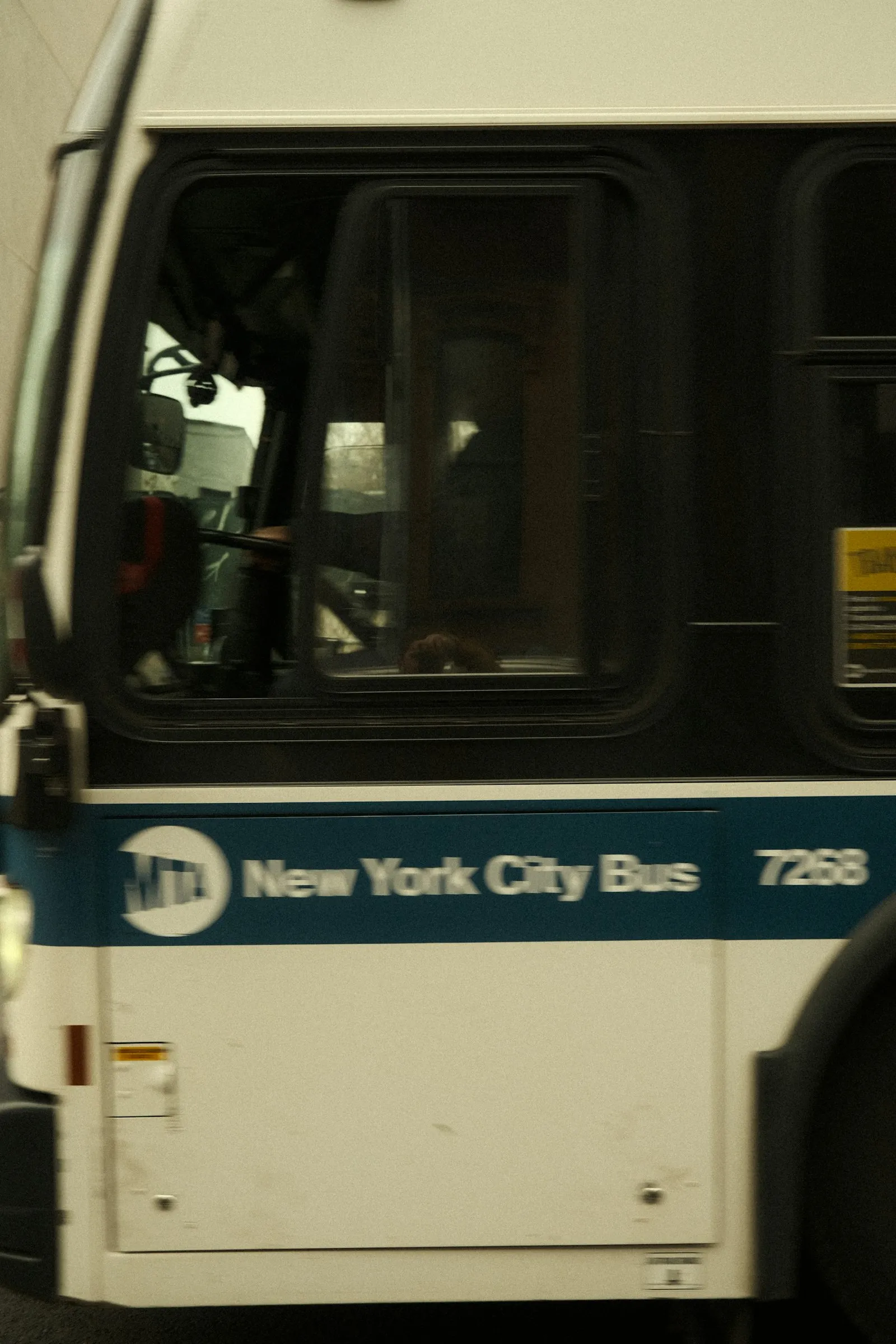
Not every bus injury happens while the bus is rolling. A large share happen at the stop.
The typical scenarios:
- A rider steps on, and the doors close before they clear the threshold.
- A passenger is stepping off when the bus starts moving.
- The bus stops too far from the curb, leaving a gap or an awkward step down into traffic.
- The driver pulls off while a rider is still holding the door or rail.
A careful operator checks the doors and mirrors before moving. When a driver skips that check, it is classic bus driver negligence, and it often shows up clearly on interior cameras. If the door system itself malfunctioned, maintenance records become the focus instead of the driver’s attention.
Riders who board with strollers, canes, walkers or wheelchairs face added risk. A driver who sees a passenger needs more time and doesn’t give it is a strong fact in a claim.
Jolts and Sudden Stops: The “Unusual and Violent” Test
Buses lurch. Everyone who rides knows it. Courts know it too.
So for injuries caused by a sudden stop, start or jolt, New York courts generally require proof that the movement was “unusual and violent.” Ordinary starts and stops, the kind every rider expects, usually aren’t enough.
What helps meet that bar?
- Several passengers falling at once, not just one.
- Objects or people thrown a significant distance.
- Witness descriptions that go beyond “it stopped short.”
- Video showing the force of the movement.
- Data showing a sharp change in speed.
This is where many claims of bus driver negligence succeed or fail. Vague testimony loses these cases. Specific, corroborated detail wins them. That’s why early evidence matters so much in jolt claims.
Who Is Liable in a Bus Accident?
People ask us who is liable in a bus accident almost as often as they ask what happened. The short answer: usually the employer, not just the driver.
The employer
Employers are generally responsible for their employees’ negligence on the job. If a city bus driver was careless while driving a route, the operating authority answers for it. NYC buses are run by MTA New York City Transit and MTA Bus Company. Private charter, tour and coach companies stand behind their own drivers the same way, and they carry commercial insurance.
Other drivers
Many bus crashes involve another vehicle. A car that cuts in front of a bus may share fault, or carry all of it.
School bus contractors and public entities
School buses in NYC are often operated by private contractors. A claim may involve the contractor, the driver, another motorist, and sometimes a school district or the City. See our school bus accident guide for that setting.
One more school bus point. Under VTL § 1174, other drivers must stop for a school bus showing red signals while it loads or unloads, and can’t proceed until it moves or they’re signaled. When a passing car hits a child near a stopped school bus, that motorist may be the main target. Notice of claim rules apply whenever a public entity is involved.
Shared fault
Fault can be split. New York’s pure comparative fault rule, CPLR § 1411, reduces recovery by the injured person’s share of fault but doesn’t bar it.
Speed and Distraction: Harder to See, Still Provable
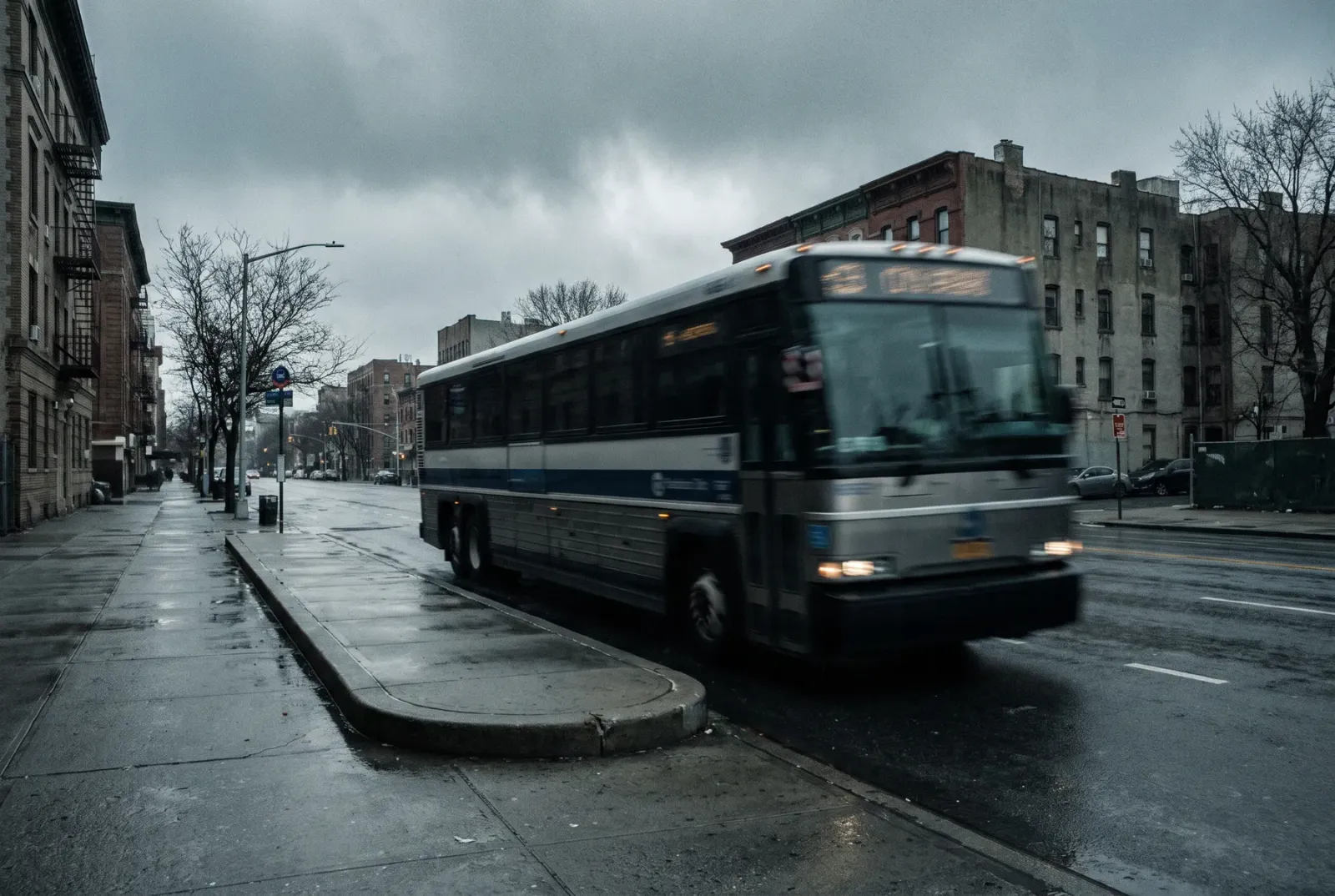
Speeding and distraction rarely announce themselves. No driver admits to either. They get proven indirectly.
For speed, the tools are GPS logs, the distance the bus traveled after braking, the damage pattern in a collision, and street video timed frame by frame. A bus taking a corner too fast for conditions often leaves passengers sliding across seats, and riders remember that.
For distraction, the tools are interior video, phone records where they can be obtained, and witness accounts of a driver looking down, talking or arguing at the fare box as the bus moved. Timing matters: a glance away a second before impact means something very different from a glance at a mirror during a turn.
Neither form of carelessness needs a confession. A consistent set of records usually tells the story on its own.
Proving It: The Evidence That Carries Weight
Negligence is proven with records, not impressions. Here’s where the proof usually comes from.
Video
Buses and surrounding streets often have cameras. Interior footage can show a driver’s attention, the moment a door closed, or how violently passengers moved. Street footage from nearby businesses can show speed and position. Video is often overwritten, so preservation requests need to go out fast.
GPS and vehicle data
Location and speed data can confirm how fast the bus was going and whether it braked hard. In a jolt case, that can be the difference between “ordinary” and “unusual and violent.”
Maintenance records
Brakes, doors and sensors fail. When they do, the question shifts toward whether the operator maintained the bus properly. Inspection and repair logs answer that.
Driver records
Training files, prior incidents, discipline and shift schedules tell you who was behind the wheel and how long they’d been there.
Witnesses
Other passengers are often the best witnesses. Get names and phone numbers at the scene if you can.
Public crash data
For street collisions, NYC Open Data crash records can sometimes help confirm basic facts about a reported crash.

What the Other Side Will Argue
Expect pushback. Bus operators and their insurers defend these claims hard, and the arguments are predictable.
“It was a normal stop.”
In jolt cases, the defense will say the movement was ordinary. The answer is evidence: speed data, video and multiple witnesses describing force beyond the usual.
“Another car caused it.”
Sometimes true. A driver who brakes to avoid a car that cut in may have acted reasonably. But the question is still whether the bus was going too fast or following too closely to stop safely. Both drivers can share fault.
“The passenger wasn’t holding on.”
A common shared-fault argument. Even if it lands, it reduces recovery under comparative fault rather than wiping it out.
“The injury came from something else.”
Insurers often point to prior conditions. Prompt treatment and consistent medical records are the best answer, which is one more reason to see a doctor right away.
Knowing these arguments in advance shapes what evidence gets collected first.
Fatigue and Intercity Buses: Federal Hours Rules
Intercity and charter bus drivers who carry passengers commercially fall under federal hours-of-service rules. The FMCSA hours-of-service summary sets out the limits. Key points:
- a maximum of 10 hours of driving after 8 consecutive hours off duty;
- no driving after 15 hours on duty.
Logs and duty records show whether a driver was over the limit. A violation doesn’t automatically prove the crash was caused by fatigue, but it’s a powerful piece of the picture. These rules apply to passenger-carrying commercial drivers such as intercity and charter operators, not every city route.
Pedestrians Struck by Buses
When a bus hits someone on foot, the negligence questions shift outward. Did the driver check mirrors on the turn? Yield in the crosswalk? Watch for people stepping off the curb near a stop?
Pedestrians hit by a bus get no-fault benefits from the bus as non-occupants under Insurance Law § 5103. That covers basic economic losses. Pain and suffering requires a separate claim against the responsible parties. Our guide on pedestrian claims after being hit by a bus goes deeper, and our pedestrian accident practice handles these cases.
Passengers have their own no-fault rule: they look first to their own household’s auto policy. If there isn’t one, the bus’s insurer pays. Our no-fault insurance guide explains the process.

Deadlines Against the MTA and Transit Authority
These are short. Miss them and the claim can be lost.
Claims against the NYC Transit Authority under Public Authorities Law § 1212 and against the MTA under Public Authorities Law § 1276 generally require:
- a notice of claim within 90 days, complying with GML § 50-e;
- a 30-day waiting period after the notice;
- a lawsuit within 1 year and 90 days.
Wrongful death claims follow a different timeline. The authority may also require sworn questioning about the claim, similar to a 50-h hearing. Claims against private bus companies follow standard deadlines, generally three years for injury suits.
For more on MTA cases specifically, see our MTA bus accident lawyer page. Riders can find route and service information on the MTA’s website.
What to Do Right Now
Short list. Do what you can.
- Get medical care and keep every record.
- Write down the route number, bus number, time and direction of travel.
- Collect names and numbers of witnesses.
- Photograph injuries, the scene and anything that caused your fall.
- Don’t give a recorded statement to an insurer before getting advice.
- Talk to a lawyer early enough to preserve video.
Once a claim is underway, our article on the bus accident settlement process explains what comes next, and our overview of passenger injury claims covers common injuries.
Yakov Mushiyev & Associates handles bus accident cases throughout Queens and New York City. Over $80 million recovered for injured New Yorkers. Free consultation. No fee unless we win. English, Russian and Spanish spoken. We’ll meet at your home, in the hospital or by video. Call 718.775.3110 or use our contact form.
Frequently Asked Questions
Can I sue the bus driver personally?
Usually the claim targets the employer, which is generally responsible for a driver’s negligence on the job. The driver’s conduct is still the center of the case; the employer is simply the party that answers for it.
I fell when the bus stopped. Is that automatically negligence?
No. Courts generally require proof that the stop was “unusual and violent,” more than the ordinary starts and stops of city bus travel. Witnesses, video and speed data help make that showing.
How fast do I need to act against the MTA?
Fast. A notice of claim is generally due within 90 days, and the lawsuit within 1 year and 90 days. Video evidence can disappear even sooner.
Does bus driver negligence work differently for a charter bus?
The basic idea of careless driving is the same, but the parties and rules differ. Charter and intercity operators carry commercial insurance, standard deadlines apply, and federal hours-of-service limits can come into play on fatigue.
What if I was partly at fault?
You can still recover. New York’s pure comparative fault rule reduces your recovery by your share of fault rather than barring it.
Visit Yakov Mushiyev & Associates
Our office is at 1 Cross Island Plaza, Suite 325, Rosedale, NY 11422, just off the Cross Island Parkway on the Queens–Nassau border. If you can’t come to us, we’ll come to you: at home, in the hospital or by video.

Talk to a Queens bus accident lawyer today
Yakov Mushiyev & Associates has recovered over $80 million for injured New Yorkers across the five boroughs and Nassau County. Consultations are free, available in English, Russian and Spanish, and there is no fee unless we win.
Call 718.775.3110 or contact us online for a free case review.
This article is general information, not legal advice. Every case is different. Attorney Advertising.