
A forklift weighs several times what the pallet on its forks weighs, and most of that weight sits in a cast-iron block behind the driver. When something goes wrong, the machine does not give. People do. If you were pinned, struck or dropped by one of these machines in a Queens warehouse, a Nassau distribution center or a stockroom behind a store, a forklift accident lawyer can sort out who besides your employer may owe you money, because in most cases the answer is not only “workers’ comp.” This guide walks through the machine, the common failure points, the paperwork that proves them and the claims that follow.
A Short Tour of the Machine
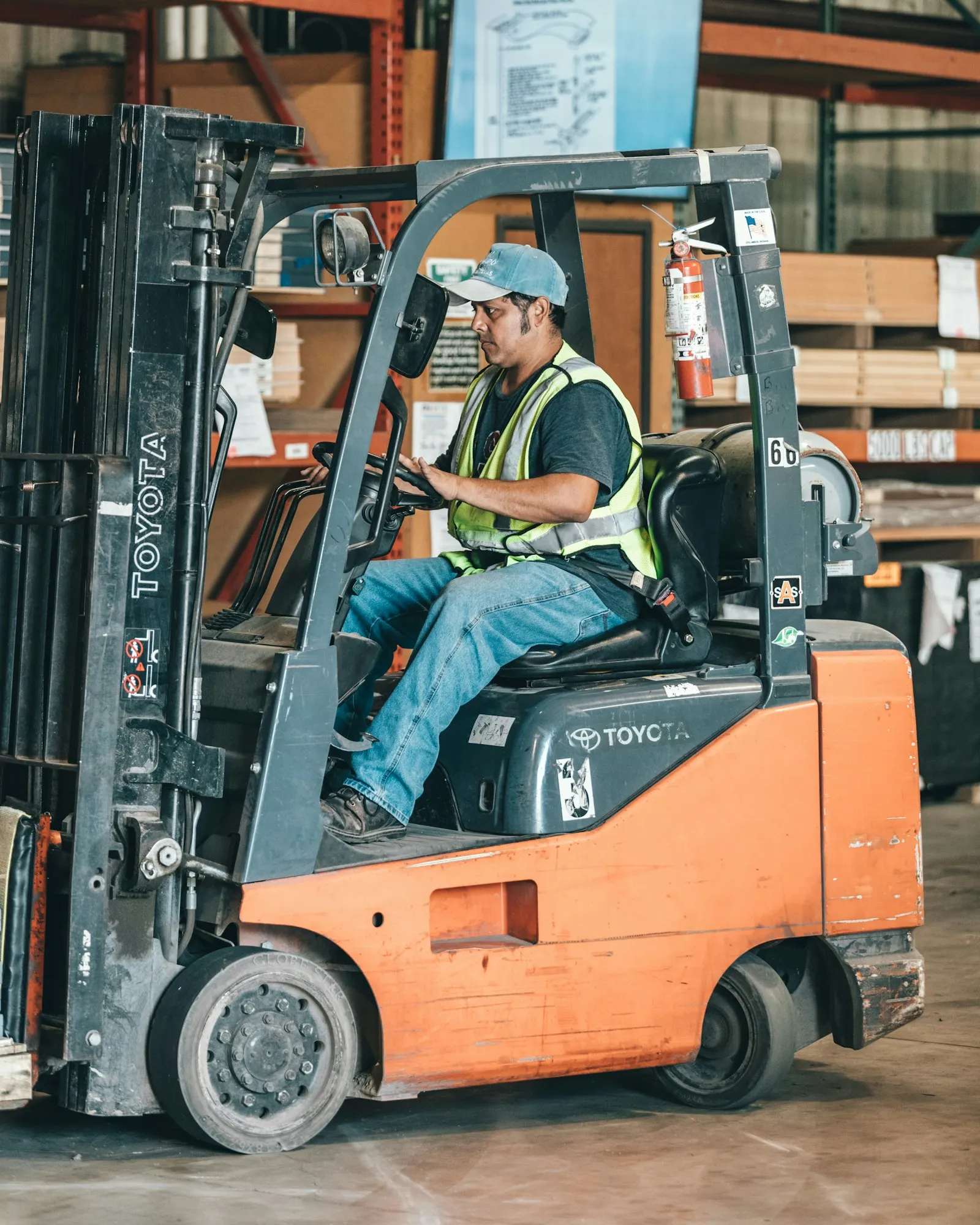
You cannot read an incident report without knowing the parts. Here are the ones that come up in nearly every case:
- Mast: the vertical rails at the front that raise and lower the load. Chains and hydraulic cylinders do the lifting.
- Forks: the two steel tines that slide under a pallet. They should be matched, straight and free of cracks at the heel.
- Counterweight: the heavy mass at the rear that keeps the truck from tipping forward under a load.
- Load center: the distance from the face of the forks to the center of gravity of the load. Push the load farther out and the rated capacity drops.
- Overhead guard: the cage over the operator’s head, built to deflect falling boxes, not to survive a rollover on its own.
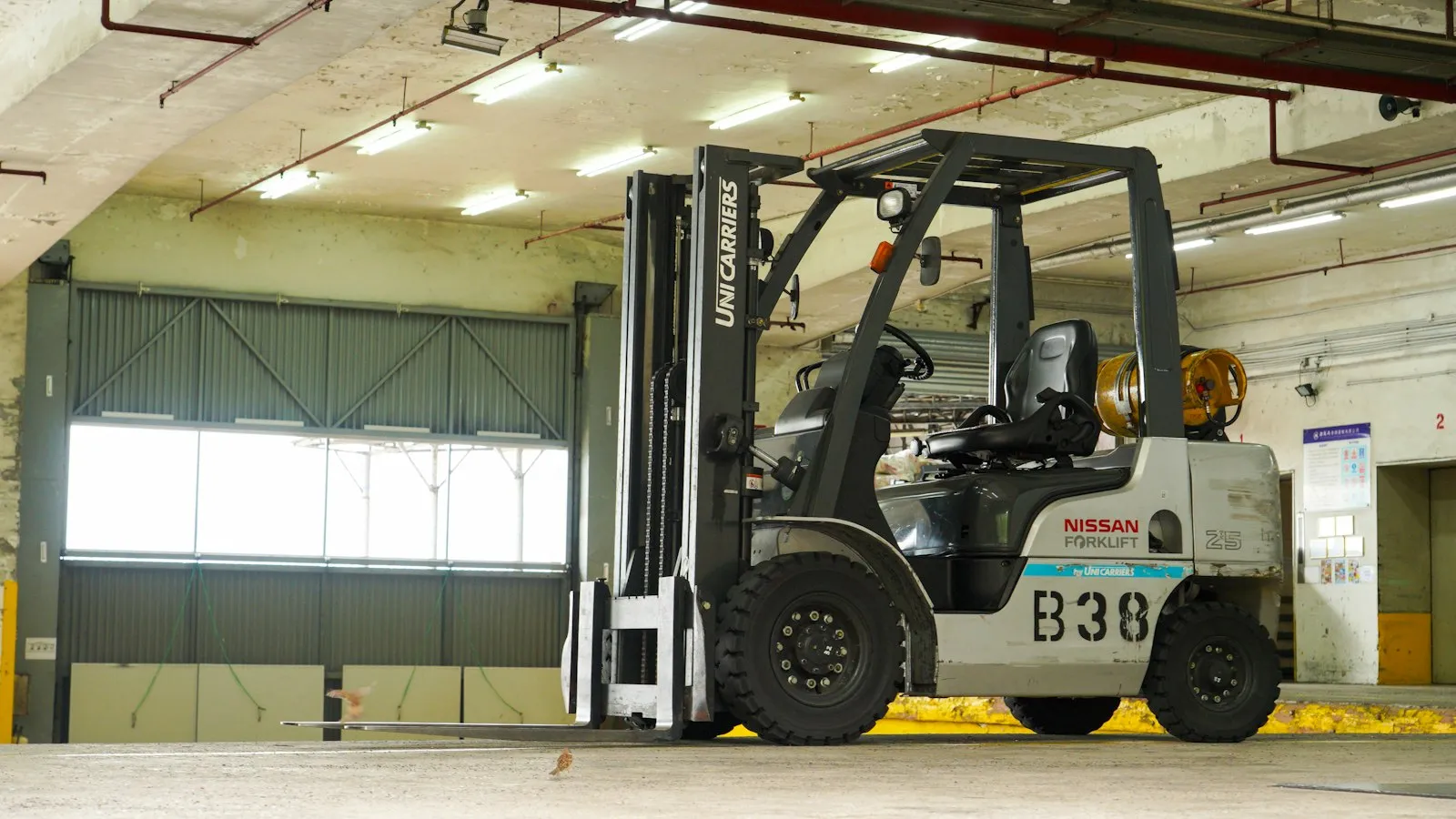
- Dock plate (or dock leveler): the metal bridge between the loading dock and the trailer bed. If it shifts or collapses, the forklift goes with it.
Federal regulators call all of this a “powered industrial truck,” which covers sit-down forklifts, stand-up reach trucks, order pickers and motorized pallet jacks. The label matters because the training rules attach to it.
How Forklifts Hurt People
Walk enough warehouse aisles with a clipboard and the patterns repeat. Most serious injuries fall into one of these:
- Tip-overs. A loaded truck turns too fast, or a driver travels with the forks raised, and the center of gravity moves outside the stability triangle. The operator jumps, the overhead guard lands on him, and the injury is a crush to the chest, pelvis or legs. A seat belt is there to keep the driver inside the guard; when it is missing or broken, that is a fact worth noting.
- Pedestrians struck in aisles. Pickers, temp workers and visiting drivers walk the same lanes the trucks use. Rear-steer machines swing their back end wide, and a driver backing out of a rack bay with the load blocking his view may never see the person behind him.
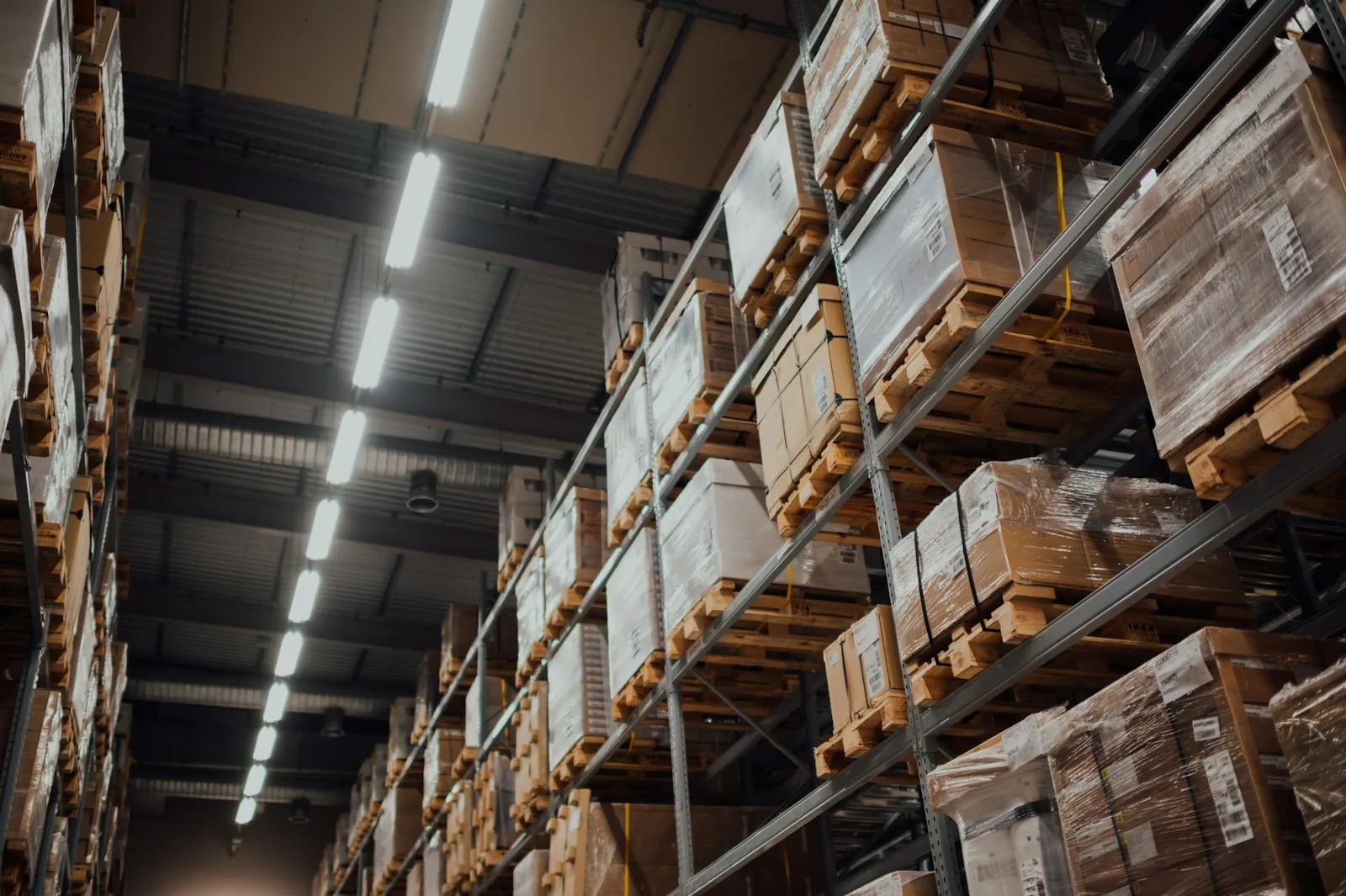
- Falling loads. Product stacked unevenly, a pallet with a broken stringer, or a load lifted past the rated height can come down off the forks or off the top rack.
- Off the edge of the dock. A forklift backs too close to an open dock door with no trailer in place, or a dock plate is not seated, and the truck drops four feet onto the apron.
- Trailer creep. Every time a forklift drives into a trailer and brakes, it nudges the trailer forward. Without wheel chocks or a vehicle restraint, the gap between dock and trailer opens up until the forklift falls through it. A tractor driver pulling away before the unload is finished produces the same result.
- Riders. Someone stands on the forks or on a pallet to reach a high shelf. There is no guard, no rail and nothing to hold.
- Untrained or uncertified operators. A new hire is told to “move a few pallets” on day one. Every other cause on this list becomes more likely.
A forklift accident lawyer sees these in big buildings near JFK, contractors’ yards, supermarket back rooms and job sites.
What OSHA Expects From the Employer
The OSHA standard for powered industrial trucks generally requires that operators be trained and then evaluated on the specific type of truck they will drive and the conditions of the workplace where they will drive it. Training is supposed to combine classroom material with hands-on practice, and refresher training is generally expected after an accident, a near miss or an observed unsafe practice. The rule also expects trucks to be examined before they go into service.
An OSHA violation does not by itself win a civil case, and OSHA does not pay injured workers. What it does is set a baseline. If a company put an untrained temp on a reach truck and that temp ran over your foot, the gap between the standard and what happened tends to be the center of the story.
Workers’ Comp Comes First, but It Is Rarely the Whole Answer
If you were hurt on the job, New York workers’ compensation pays your medical treatment and a portion of your lost wages regardless of whose fault the accident was. The trade-off is in Workers’ Compensation Law § 11: the comp system generally stands in place of any lawsuit against the company you work for. You usually cannot sue the company that signs your paycheck for pain and suffering.
The same section creates a narrow exception for “grave injury.” When a worker suffers one, an outside party that gets sued can seek contribution from the employer. The list is short and literal: it includes losing an arm, leg, hand or foot, losing multiple fingers or toes, and a handful of other catastrophic outcomes. It does not change the fact that you sue the outside party, not your boss. Our page on on-the-job injuries in New York covers comp in more depth.
One more piece of timing that belongs here, because people miss it: comp has its own notice requirement. Tell your employer in writing, promptly, and generally within 30 days. Do not assume the supervisor who saw it happen filed anything.
Who Else Can Be Held Responsible
Warehouses are crowded with companies. The building is owned by one entity, leased by another, staffed partly by an agency, served by a dozen carriers, and the forklifts themselves may be rented and maintained by a dealer. Each of those relationships is a possible third-party claim, and a third-party claim is where compensation for pain, suffering and full lost earnings lives.
- Another company’s operator. A driver employed by a different tenant, a contractor or a staffing agency who hits you is not shielded by your employer’s comp coverage. A business generally answers for the careless driving of its own staff while they are working, so the claim usually runs to the operator’s company.
- Site owners and general contractors. Where the forklift work is part of building, demolition or renovation, Labor Law § 241(6) puts duties on owners and contractors tied to specific Industrial Code rules. Labor Law § 200, a general duty to keep the site reasonably safe, may also apply. See our construction site injury page and the longer piece on Labor Law 240 and 241 claims on Long Island.
- The manufacturer or dealer. Mast chains that snap, brakes that fade, a missing operator restraint, or a design that hides pedestrians from the driver can support a product claim. We have written about defective equipment on job sites before.
- The service company. Many fleets are leased with a maintenance contract. If the outside mechanic signed off on a truck with a leaking lift cylinder, that work order matters.
- The truck driver and the carrier. A tractor that pulls away from the dock early, or a trailer left unchocked by the carrier’s driver, can make the motor carrier responsible for what happens inside. Crashes involving those trucks on the road are covered in our post on JFK cargo truck crashes.
Our heavy machinery injury practice handles many of these defendants together, because in a real case it is common to have two or three of them pointing at each other.
Customers and Visitors Hit by a Forklift
Not everyone run over by a forklift works there. Big-box stores and wholesale clubs move pallets during open hours. A shopper struck in an aisle, or a delivery driver hit while waiting at the dock of a business he does not work for, has no comp claim against that business and no exclusive-remedy bar. The claim is ordinary negligence against the store or the operator’s employer, and spotters, cones, roped-off aisles and posted procedures all become evidence. The approach overlaps with retail cases like those in our grocery store injury article.
The Paper Trail That Proves the Case
A forklift accident leaves records behind, but only for a while. In rough order of how fast they disappear:
- Video. Warehouses are full of cameras, and many systems record over themselves within days or weeks.
- The truck. Fleet trucks get repaired or swapped out. A preservation letter asking that the machine be held in its post-accident condition should go out early.
- Pre-shift inspection checklists for that truck, which show whether anyone flagged the brakes, horn, chains or seat belt.
- Maintenance and repair logs from the in-house shop or the dealer.
- Training and evaluation records for the operator, including whether the evaluation matched the type of truck being driven.
- The incident report and the employer’s OSHA injury log, which records serious workplace injuries.
- Telematics. Many newer trucks log impacts, speed and who badged in to operate them.
Your own record counts too. A running log of pain, sleep and what you can no longer lift helps later, and we have a guide on keeping an injury diary. See a doctor right away and keep every follow-up appointment.
The Injuries These Cases Involve
Forklift injuries are rarely mild. Feet and ankles get crushed under the wheels or the forks. Legs are pinned between the truck and a rack upright. Tip-overs produce pelvic fractures, spinal injuries and head trauma. Loads falling from height cause skull fractures and shoulder damage. Some of these injuries lead to amputation; our page on limb loss claims explains how those are valued, and the article on spinal cord injury and life care plans covers the long-term side. When the injury keeps you off the floor for good, proving you cannot return to work becomes its own project.
Shared Blame and the Clock
Expect the defense to say you walked into the aisle without looking, skipped the vest, or rode the forks yourself. Under CPLR § 1411, New York follows pure comparative fault: your share of the blame shrinks the award by that percentage, and it does not wipe the claim out. A more detailed treatment is in our shared fault explainer.
For the clock, a negligence or product suit against a private company in New York generally has to be started within three years of the injury under CPLR § 214. If a public agency owns the facility, much shorter notice rules can apply. And the comp notice to your employer, as noted above, runs on a different and faster schedule.
Bringing a Forklift Case to Our Office
Yakov Mushiyev & Associates works warehouse, dock and job-site cases from its Rosedale suite at 1 Cross Island Plaza, minutes by car from the JFK cargo buildings and the industrial strips of Nassau. Totaled over all its case types, recoveries for the firm’s clients exceed $80 million. Consultations cost nothing, and you owe a fee only if the case is won. Spanish- and Russian-speaking staff are on hand, and we will meet wherever you are recovering, hospital room and living room included, or on video. The first question a forklift accident lawyer at the firm tends to ask is simple: name every company that had workers or equipment in that building. To start, reach the office online or phone 718.775.3110. Related reading from this series: gas explosion and blast injury claims.
Forklift Injury Questions
Can I sue my employer if a coworker ran me over with a forklift?
Generally no. When the coworker works for the same company you do, workers’ comp is usually your only remedy against that employer. The exception is when another company is involved, such as the forklift’s manufacturer, the outside maintenance contractor, or the operator’s actual employer if he was a staffing agency worker.
I was a temp from an agency. Who is my employer?
It depends on who directed and controlled your work, and sometimes both the agency and the host company are treated as your employer for comp purposes. Sorting that out is one of the first things a forklift accident lawyer will look at, because it decides who can and cannot be sued.
The forklift was being driven by someone from a different tenant in the building. Does that change anything?
Yes. A driver employed by a different company is a third party, so you can collect comp from your own employer and also bring a negligence claim against the other company for the full range of damages.
Does it matter that the forklift had no seat belt?
It can. A missing or disabled operator restraint may point to a maintenance failure, a training failure, or a product claim if the truck was sold without an adequate restraint. Keep the machine from being repaired until it has been inspected.
I was shopping when a store forklift hit me. Is that a workers’ comp case?
No. You were not working, so comp does not apply and there is no exclusive-remedy bar. Your claim is a negligence case against the store or whichever company employed the operator.
Visit Yakov Mushiyev & Associates
Our office is at 1 Cross Island Plaza, Suite 325, Rosedale, NY 11422, just off the Cross Island Parkway on the Queens–Nassau border. If you can’t come to us, we’ll come to you: at home, in the hospital or by video.

Talk to a New York forklift accident lawyer today
Yakov Mushiyev & Associates has recovered over $80 million for injured New Yorkers across the five boroughs and Nassau County. Consultations are free, available in English, Russian and Spanish, and there is no fee unless we win.
Call 718.775.3110 or contact us online for a free case review.
This article is general information, not legal advice. Every case is different. Attorney Advertising.