
You build things for a living. You know how to read a set of plans, work a schedule and get a job done when conditions are not perfect. Then one day the scaffold shifted, the ladder slipped, or something came down from above, and now you are the one who needs a plan. A construction accident lawyer in Queens can help you build it. At Yakov Mushiyev & Associates, P.C., a personal injury firm based in Rosedale, we work with injured laborers, carpenters, ironworkers, electricians, roofers and other tradespeople across Queens. Our role is simple: protect your claim so you can put your energy into getting better.
This page is written like a playbook. Each section is one move you can make now to protect your health, your income and your legal rights. If you want to see how the money side works in detail, including how workers’ compensation and third-party claims fit together, read our in-depth guide to construction accident compensation in Queens.
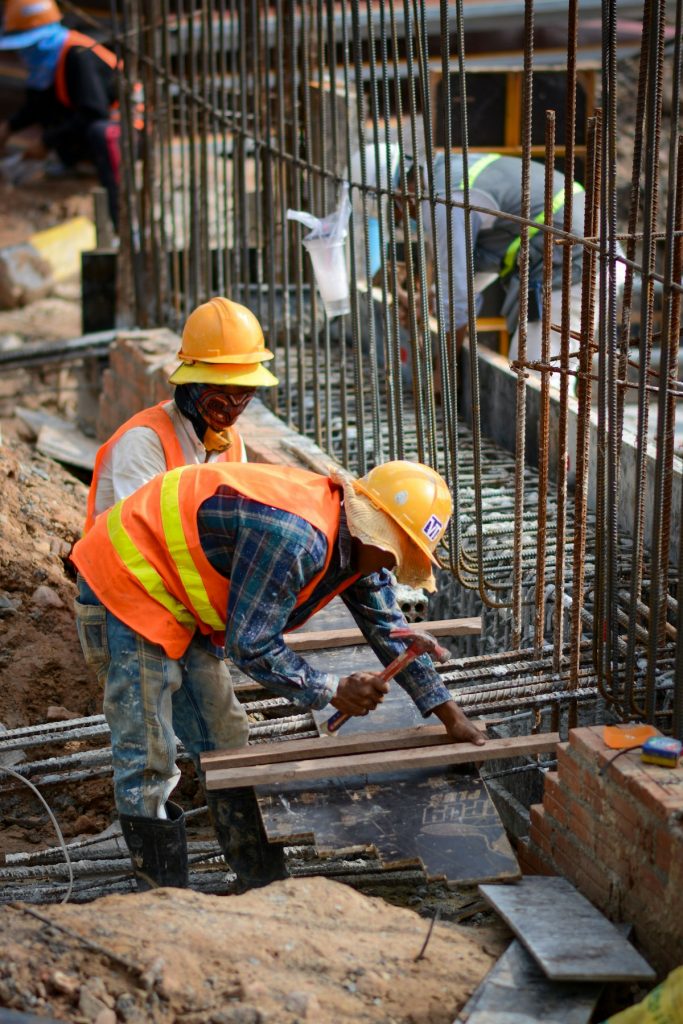
Your Corner: How a Construction Accident Lawyer in Queens Supports Your Recovery
Getting hurt on a job site can make you feel like you have lost control. Your body is not doing what it used to. Your paycheck has changed. Your foreman, the insurance company and maybe a few coworkers are all telling you different things. You do not have to sort it out alone.
When you work with our firm, we:
- Listen first. We want to know what happened, what hurts and what you are worried about.
- Explain your two possible tracks, workers’ compensation and a third-party injury claim, in plain language.
- Identify every company that may be responsible: the property owner, the general contractor, subcontractors, equipment suppliers and drivers.
- Send preservation letters so site photos, incident reports, inspection logs and video are not lost.
- Coordinate with your medical providers to build a clear record of your injuries.
- Keep you informed at every step, so you are never guessing.
You can see the full range of cases we handle on our practice areas page.
Play One: Put Your Health First and Put It on the Record
Tough people tend to work through pain. On a construction site, that instinct can hurt you twice: once physically, and again when an insurer argues that you could not have been hurt that badly if you finished the shift.
Your move:
- Get medical care right away, even if the injury seems minor. Back, shoulder, knee and head injuries often worsen over the following days.
- Tell every provider exactly how the injury happened at work. “I fell about ten feet when a plank gave way” is far more useful than “I hurt my back.”
- Follow the treatment plan. Go to physical therapy. Take the follow-up appointments.
- If something is not improving, say so. Ask about specialists, imaging or a second opinion.
Your recovery is the priority. The record is the proof. Doing the first well takes care of the second.
Play Two: Report It the Right Way
Workers’ compensation has its own notice and filing deadlines, and they are strict. Report the injury to your employer in writing as soon as you can, and keep a copy. Do not rely on a conversation with a foreman, a text message that might be deleted, or the assumption that someone else filed the paperwork.
A strong written report includes the date, time and exact location on the site, what you were doing, what failed or fell, who was nearby, and what body parts were injured. Stick to facts. You do not need to guess at causes or assign blame in the report.
If you are pressured not to report, or told to say it happened somewhere else or at home, that is a red flag. Write down who said it and when. Then call a lawyer.
Play Three: Understand Your Two Tracks
This is where many injured workers leave value on the table, simply because nobody explained it to them.
Track one: workers’ compensation
Workers’ compensation provides medical treatment and partial wage replacement for on-the-job injuries, without needing to prove anyone was at fault. In exchange, Workers’ Compensation Law section 11 generally bars you from suing your own employer, except in cases of a “grave injury” as the statute defines it. You can read the statute on the New York State Senate website.
Track two: a third-party injury claim
The bar on suing your employer does not protect anyone else. On a typical Queens job site, there are many other parties: the property owner, the general contractor, other subcontractors, equipment rental companies, and drivers of delivery trucks and other vehicles moving through the site. If any of them caused or contributed to your injury, you may have a separate personal injury claim against them.
A third-party claim can include damages that workers’ compensation does not pay, such as pain and suffering and the full value of lost earnings. The two tracks can run at the same time. Coordinating them correctly is part of the job.
Play Four: Learn the Laws That Were Written for You
New York has some of the strongest construction worker protections in the country. Knowing they exist is half the battle.
Labor Law section 240(1): the Scaffold Law
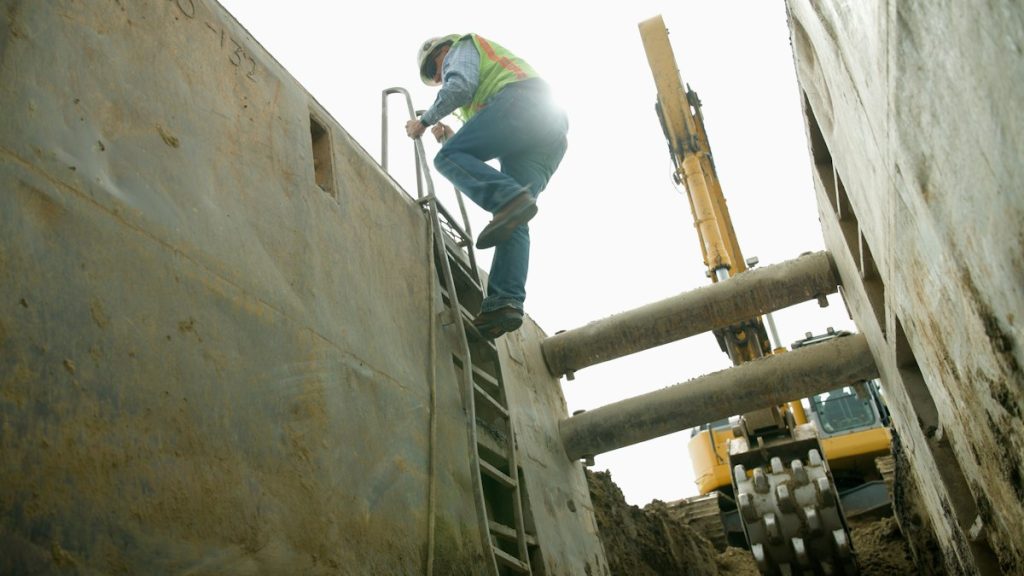
Section 240(1) covers gravity-related accidents: falls from heights, and objects falling on workers. It places responsibility on owners and contractors to provide proper safety devices such as scaffolds, ladders, hoists, harnesses and braces. When it applies and the required protection was missing or inadequate, the focus is generally on that failure rather than on whether the worker could have been more careful, unless the worker’s own conduct was the sole cause of the accident. The text is on the Senate’s Labor Law 240 page.
Labor Law section 241(6)
Section 241(6) requires owners and contractors to provide reasonable and adequate protection on construction, excavation and demolition sites. Claims under this section are tied to specific Industrial Code violations, such as rules about tripping hazards, slippery surfaces, falling debris and equipment. The statute is posted on the Senate’s Labor Law 241 page.
Labor Law section 200
Section 200 codifies the general duty to provide a reasonably safe workplace. It often applies when a dangerous site condition or the way work was supervised caused the injury.
One important exception
Owners of one- and two-family homes who do not direct or control the work are generally exempt from sections 240 and 241. If you were hurt renovating a private house in Bayside or Howard Beach, the analysis is different, and other parties, like the contractor, become more important.
Federal safety standards also shape what a safe site looks like. The OSHA fall protection resources describe the equipment and practices expected on many jobs, and violations can be useful evidence even though OSHA itself does not provide a private lawsuit.
Play Five: Capture the Scene Before It Changes
Construction sites change daily. The broken plank gets replaced. The missing guardrail gets installed. The ladder gets taken back to the rental yard. If you can do so safely, or if a coworker can help, collect:
- Photos and video of where you fell or were struck, including the equipment involved.
- Photos of the surrounding area showing missing railings, holes, debris or wet surfaces.
- Names and phone numbers of coworkers and anyone else who saw it.
- The name of the general contractor and any subcontractors on site, often posted on a sign or permit at the entrance.
- Your own notes, written as soon as possible, describing what happened step by step.
Do not put yourself at risk to get evidence. If you cannot do it, tell your lawyer quickly so preservation letters can go out to the companies that control the site, its records and any cameras.
Play Six: Don’t Let Pressure Talk You Out of Your Claim
Injured workers face real pressure: worry about losing the job, about being labeled a complainer, about letting the crew down. Those feelings are human. But the laws exist because construction is dangerous, and using them is not disloyal.
Watch out for these common pressure points:
- “Just use your health insurance.” Work injuries generally belong under workers’ compensation, and using the wrong system can create problems later.
- “Come back on light duty right away.” Only return when your doctor clears you, and make sure the restrictions are written down and followed.
- “Give us a recorded statement.” An insurer for the owner or general contractor is not on your side. Talk to a lawyer first.
- “Sign this to get paid.” Read everything. Do not sign releases or broad authorizations without advice.
Construction injuries also happen off the scaffolding: slipping on debris, tripping over materials, or falling on an icy walkway near the site. Our page for slip and fall injuries in Queens covers how property owners’ duties work in those situations.
Play Seven: Keep Your Deadlines in Front of You
Missing a deadline is the one mistake that cannot be fixed by working harder later. Know these:
- Workers’ compensation: notice to your employer and a claim filing, each with its own strict deadline. Act right away.
- Third-party injury claims: generally three years under CPLR 214(5).
- Claims against New York City or many public authorities: a Notice of Claim generally within 90 days and a lawsuit generally within one year and 90 days. This can apply on public projects or when a city-owned vehicle was involved.
- Wrongful death: generally two years from the date of death.
2026 update: Legislation signed in late May 2026, effective May 26, 2026, changed fault and serious injury rules for motor vehicle personal injury actions only. Construction site claims under the Labor Law and general negligence remain under New York’s pure comparative fault rule, which reduces recovery by the injured person’s share of fault without barring it. If a vehicle struck you in a work zone, however, the new motor vehicle rules, including the more-than-50-percent bar under CPLR 1411 and the removal of the “90/180-day” serious injury category, may apply to that part of the case.
Vehicles are a real hazard on Queens sites, from concrete mixers to material deliveries. Our page for people hurt in box truck crashes in Queens explains how those claims are handled.
Three Queens Landmarks Surrounded by New Construction
The Bowne House in Flushing
The Bowne House, on Bowne Street in Flushing, dates to the 1660s and is among the oldest surviving houses in New York City. It is closely tied to the colony-era struggle for religious freedom, when its owner hosted Quaker meetings in defiance of the authorities, and it now operates as a historic house museum. Today it sits within one of the most intense construction zones in the borough. Downtown Flushing has seen tower after tower rise in recent years, bringing cranes, sidewalk sheds, excavations and concrete deliveries to crowded streets around Northern Boulevard and Main Street. Workers there face falling-object and fall-from-height risks every day.
The Unisphere in Flushing Meadows Corona Park
The Unisphere, a giant stainless steel globe built for the 1964 to 1965 World’s Fair, is the signature landmark of Flushing Meadows Corona Park and a designated city landmark. The park around it hosts festivals, sports leagues, museums and the US Open, which means a near-constant cycle of stage builds, maintenance work and event setup. Crews working on temporary structures, lighting rigs and park improvements face the same gravity-related hazards as workers on high-rise sites. The park is ringed by the Grand Central Parkway, the Van Wyck and the Long Island Expressway, so material deliveries move through heavy traffic.
Citi Field
Citi Field, home of the New York Mets since 2009, sits in Willets Point at the edge of Flushing Meadows Corona Park. The area immediately around the ballpark is undergoing a large-scale redevelopment that includes new housing and a soccer stadium, turning the former auto-repair district into one of the biggest active construction areas in Queens. Game days add tens of thousands of fans to roads such as Roosevelt Avenue, Northern Boulevard and 126th Street, right alongside construction traffic. Workers on these sites contend with heavy equipment, vehicle movements and work at height, all in a crowded setting.
Directions to Our Rosedale Office from the Bowne House
From the Bowne House in Flushing, take Northern Boulevard east through Murray Hill, Auburndale and Bayside to the Cross Island Parkway. Head south on the Cross Island, passing the Long Island Expressway and Grand Central Parkway interchanges, and continue through Bellerose and Queens Village toward Rosedale. Exit near the Belt Parkway interchange and follow local streets to 1 Cross Island Plaza, Suite 325.
Questions Injured Construction Workers Ask Us
I finished my shift after I got hurt. Does that weaken my case?
Not necessarily. Many injured workers keep going out of habit, adrenaline or worry about the job, and doctors understand that some injuries do not fully show themselves for hours or days. What matters most is getting medical care promptly once symptoms appear, describing how the injury happened at work, and following the treatment plan. Expect an insurer to raise the point, and be ready to explain it honestly.
My foreman told me not to report the injury. What should I do?
Report it anyway, in writing, and keep a copy. Workers’ compensation has strict notice and filing deadlines, and an unreported injury can put benefits at risk. Write down who told you not to report it, when and what was said. Retaliating against workers for claiming benefits is restricted under New York law. A lawyer can help you report correctly and respond if pressure continues.
I’m employed by a subcontractor. Can I make a claim against the general contractor?
Often, yes. Workers’ compensation generally prevents you from suing your own employer, but the general contractor and the property owner are separate parties. Under Labor Law sections 240(1) and 241(6), owners and general contractors can be responsible for certain safety failures on the site, even when a subcontractor directly employed you. Whether these sections apply depends on the type of work and how the accident happened.
I fell from a ladder I set up myself. Can I still have a claim?
Possibly. Section 240(1) focuses on whether proper safety devices were provided and adequate for the work. A ladder that was defective, unsecured, the wrong height for the job, or not backed up by other protection where needed can support a claim. The facts matter a great deal, including what equipment was available and what instructions were given. Photos of the ladder and the area are valuable.
Can I get workers’ comp and also bring a lawsuit?
Yes, if a third party, someone other than your employer, was responsible. The two claims run on separate tracks. Workers’ compensation may have a right to be repaid from a third-party recovery for benefits it paid, and it must usually consent to a third-party settlement. Coordinating the two avoids problems and helps protect the net amount you receive.
What if I was hurt on a public project, like a school or city building?
Claims against New York City and many public authorities generally require a Notice of Claim within 90 days and a lawsuit within one year and 90 days. Public projects also involve private contractors, who may be responsible under the usual three-year deadline. Because the 90-day window is so short, contact a lawyer quickly if a public agency owns the site or was involved.
Does OSHA decide whether I win my case?
No. OSHA enforces federal workplace safety standards, but it does not award compensation to injured workers. An OSHA inspection, citation or report can still be useful evidence in a third-party claim, because it may document conditions on the site. New York’s Labor Law and Industrial Code provisions, along with general negligence principles, are what govern the injury claim itself.
I was injured doing a renovation at a private home. Does the Scaffold Law apply?
It depends on the home. Owners of one- and two-family homes who do not direct or control the work are generally exempt from Labor Law sections 240 and 241. In those cases, claims may focus on the contractor who ran the job or other parties. If the home was a larger building, a commercial property, or the owner directed the work, the analysis can change.
How long will I be out of work, and how do I cover my bills?
Recovery time depends on your injury and your doctors’ guidance. While you are out, workers’ compensation generally provides partial wage replacement and pays authorized medical care. If a third party is responsible, a separate claim can seek the lost earnings that comp does not cover. Keep pay stubs, tax returns and union or employer records to document your earnings.
Will hiring a lawyer cause trouble with my union or employer?
Asserting your legal rights after an injury is normal, and a third-party claim is usually directed at companies other than your employer. Many injured workers worry about this, and the worry is understandable. Talk through your specific situation with a lawyer, including any union representation, so you can make an informed choice. Answers to more general questions are on our firm’s FAQ page.
Take the Next Step With a Construction Accident Lawyer in Queens
You have already shown that you can handle hard work. Protecting your claim is one more job, and you do not have to do it alone. A construction accident lawyer in Queens at our firm can explain your options, identify every responsible party and keep your deadlines on track while you focus on healing. Call Yakov Mushiyev & Associates, P.C. at 718.775.3110 or reach out to our Rosedale office online. We are at 1 Cross Island Plaza, Suite 325, Rosedale, NY 11422. Workers from eastern Queens and the Nassau border can also visit our Bellerose construction accident attorney page.
Related reading: How construction accident compensation works in Queens.
General information, not legal advice. Attorney Advertising. Prior results do not guarantee a similar outcome.