
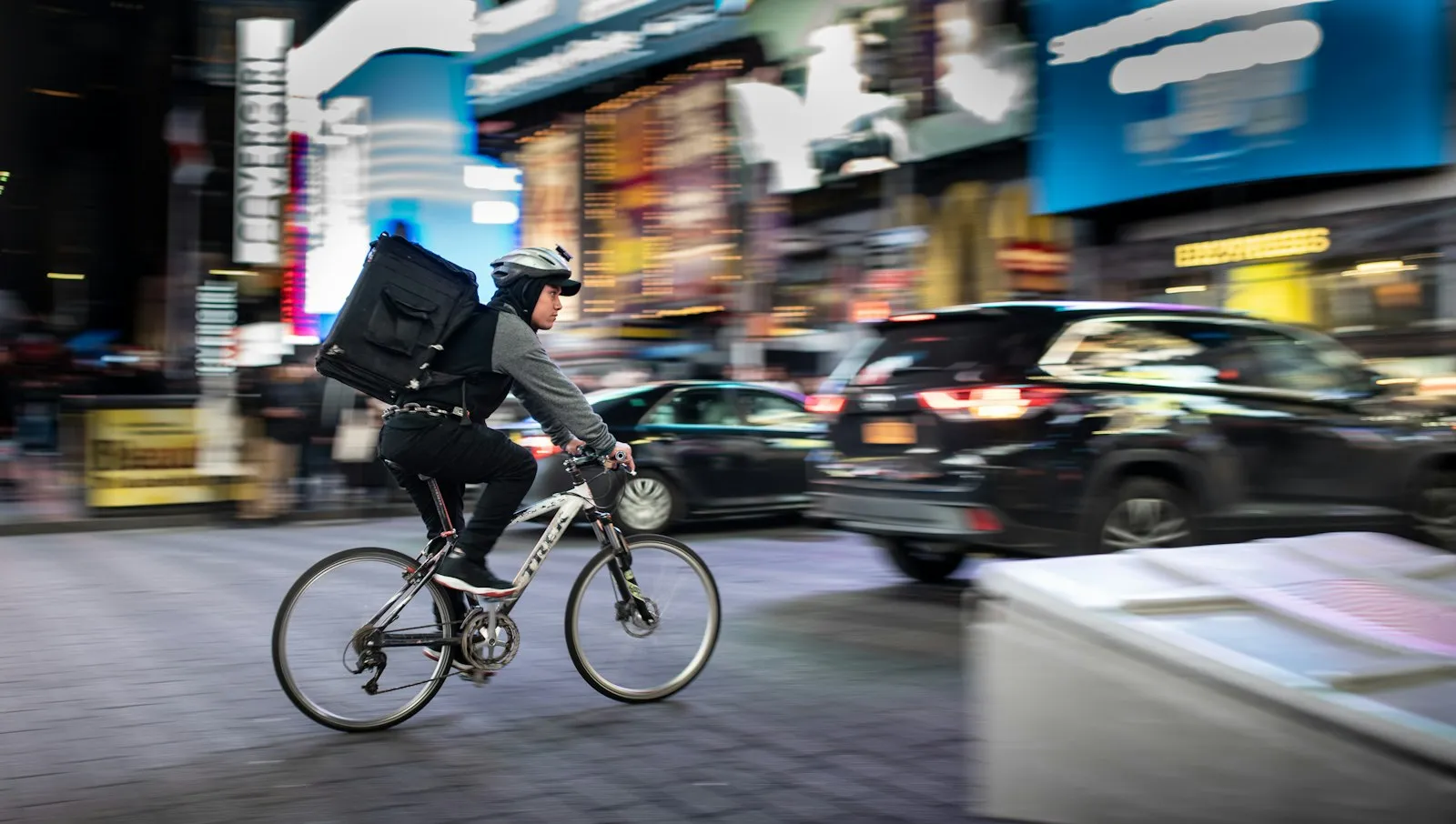
Picture a weekday evening on Lefferts Boulevard in Kew Gardens. A rider on a pedal-assist e-bike is heading home, keeping to the right, well under the speed limit. A parked driver swings a door open without looking. The rider hits it, flies over the handlebars and lands hard on the pavement. The driver apologizes, someone calls 911, and an ambulance takes the rider to the hospital with a sore wrist and a pounding headache.
This person is imaginary, but the situation is common. So what happens next? Below, we follow that hypothetical rider step by step through the legal process, so you can see how a real claim tends to unfold.
Step One: At the Scene
In our scenario, the rider is lucky enough to be conscious and able to talk. The best things to do in those first minutes are small ones. Get the driver’s name, plate and insurance. Ask for the police report number. Snap photos of the open door, the bike, the street and any bleeding or swelling. If a shop owner or passerby saw it, get a phone number.
New York law generally prohibits opening a car door into traffic unless it is safe to do so (VTL § 1214). That rule will matter later, when fault is discussed.
Step Two: Medical Care and the First Insurance Claim
At the emergency room, doctors find a fractured wrist and a concussion. The hospital bills start arriving within days. Who pays them?
Because the rider was struck by a car, New York generally treats them as a non-occupant of that car. Under Insurance Law § 5103, the car’s no-fault insurance generally covers medical bills and part of lost wages, whoever was at fault. The rider generally needs to file the no-fault application within 30 days. Our no-fault claims guide explains the forms and what to expect.
Step Three: What if the Rider Was Working?
Change one detail. Suppose our rider was on a delivery shift. Now there may be a second source of benefits. Employees generally get workers’ compensation. Riders who work through apps are sometimes classified as independent contractors, which affects what benefits are available. Either way, a separate claim against the careless driver may still exist. The New York Workers’ Compensation Board has information for workers, and our work injury practice handles these overlapping claims.
Step Four: Going Beyond No-Fault
No-fault never pays for pain, lost enjoyment of life or long-term limits. To pursue those from the driver, New York generally requires a “serious injury” under Insurance Law § 5102(d). In our imagined case, the broken wrist is a fracture, which is one of the listed categories. That opens the door to a full claim against the driver’s liability insurance.
This is usually the point where people call an e-bike accident lawyer in Kew Gardens. The early benefits are flowing, but the bigger question of full compensation is still open.
Step Five: The Fault Discussion
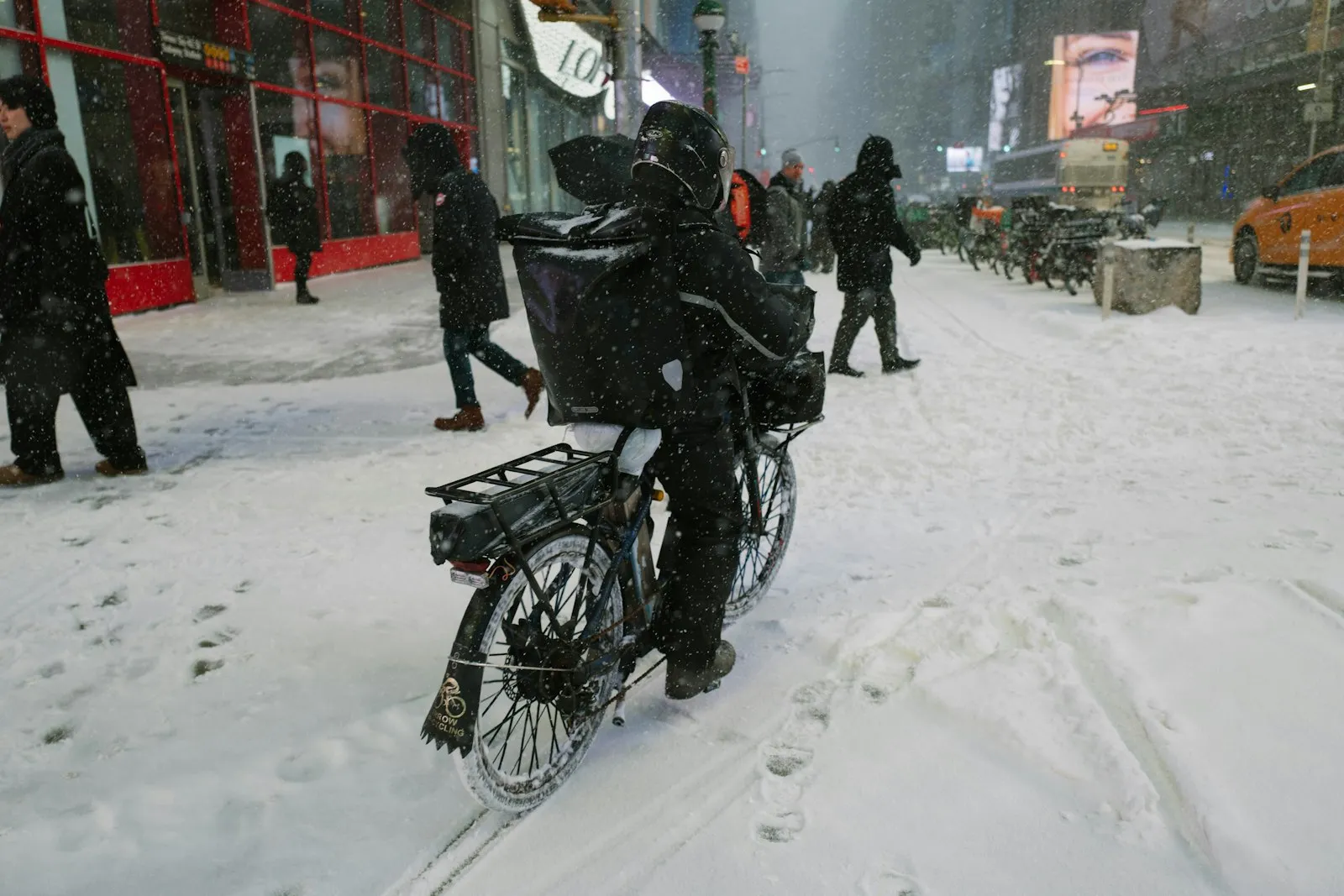
The driver’s insurer will look for anything to shift blame. Was the rider going too fast? City rules cap e-bikes at 15 mph on every street. Was there a helmet? Helmets are required for Class 3 riders and for anyone riding for work.
Even if the insurer scores a point, the case does not end. New York uses pure comparative fault, so a rider found partly responsible has their award reduced by that share rather than wiped out. Our guide to comparative negligence gives examples.
Step Six: A Twist, the Driver Leaves
Suppose, instead, that the driver shut the door and sped off before anyone got a plate. Hit-and-run cases feel hopeless but often are not. The rider’s own household auto policy may include uninsured motorist coverage, and MVAIC may apply if there is no household policy. The deadlines here are strict and early, so speed matters. Our article on hit-and-run and drunk driving claims has more.
Step Seven: Building and Settling the Case
With treatment ongoing, the e-bike accident attorney collects hospital records, orthopedic notes, wage records and video from nearby buildings, such as the apartment buildings near Austin Street or shops along the boulevard. Once the rider’s recovery levels off, the lawyer can value the claim and negotiate. Many claims settle. If not, a lawsuit generally must be filed within three years under CPLR § 214. Having an electric bike accident lawyer track those dates from the first week keeps the rider from losing a claim to the calendar.
Your Story Will Be Different
Real crashes do not follow a script. Yours might involve a pothole near the eastern edge of Forest Park, a pedestrian stepping off a curb, or a battery that failed. Each twist changes the path, and that is where experienced help counts. You can read more about how we approach these matters on our scooter and e-bike accident page, or visit our Kew Gardens accident lawyer page.

Yakov Mushiyev & Associates has recovered over $80 million for injured New Yorkers. We offer a free consultation, work on a no fee unless we win basis, and speak English, Russian and Spanish. If getting around is hard right now, we will see you at home, in the hospital, or over video.
We also help riders in the surrounding neighborhoods. Just to the west, there is our page for an e-bike accident lawyer in Forest Hills; a little farther along are pages for an e-bike accident lawyer in Rego Park and an e-bike accident lawyer in Ridgewood, while to the east is the page for an e-bike accident lawyer in Briarwood.
You will find us at 1 Cross Island Plaza, Suite 325, Rosedale, NY 11422. This map lays out the trip from Kew Gardens.
Tell us what happened to you, and a Kew Gardens e-bike accident lawyer on our team will walk you through your own next steps. Dial 718.775.3110, or write to us through the contact page.
The scenario above is hypothetical and the page is general information, not legal advice for your case. Attorney Advertising.