
If you were hurt in a taxi or rideshare crash in Astoria, you probably have more questions than answers right now. Whose insurance pays for the ER visit? What if the cab driver says it was your fault? Does it matter that you were in an Uber instead of a yellow cab? We hear these questions every week from people across Western Queens, and we want to walk you through the answers in plain English before you sign anything or talk to an adjuster.
At Yakov Mushiyev & Associates, P.C., we represent passengers, pedestrians, cyclists and other drivers injured by yellow and green taxis, Uber and Lyft cars, black cars and other TLC-licensed vehicles. We offer free consultations in English, Russian and Spanish, we can come to your home or hospital room or meet by video, and you pay no fee unless we win. If you’d rather talk now, call us at 718.775.3110; our phone intake runs 24/7.
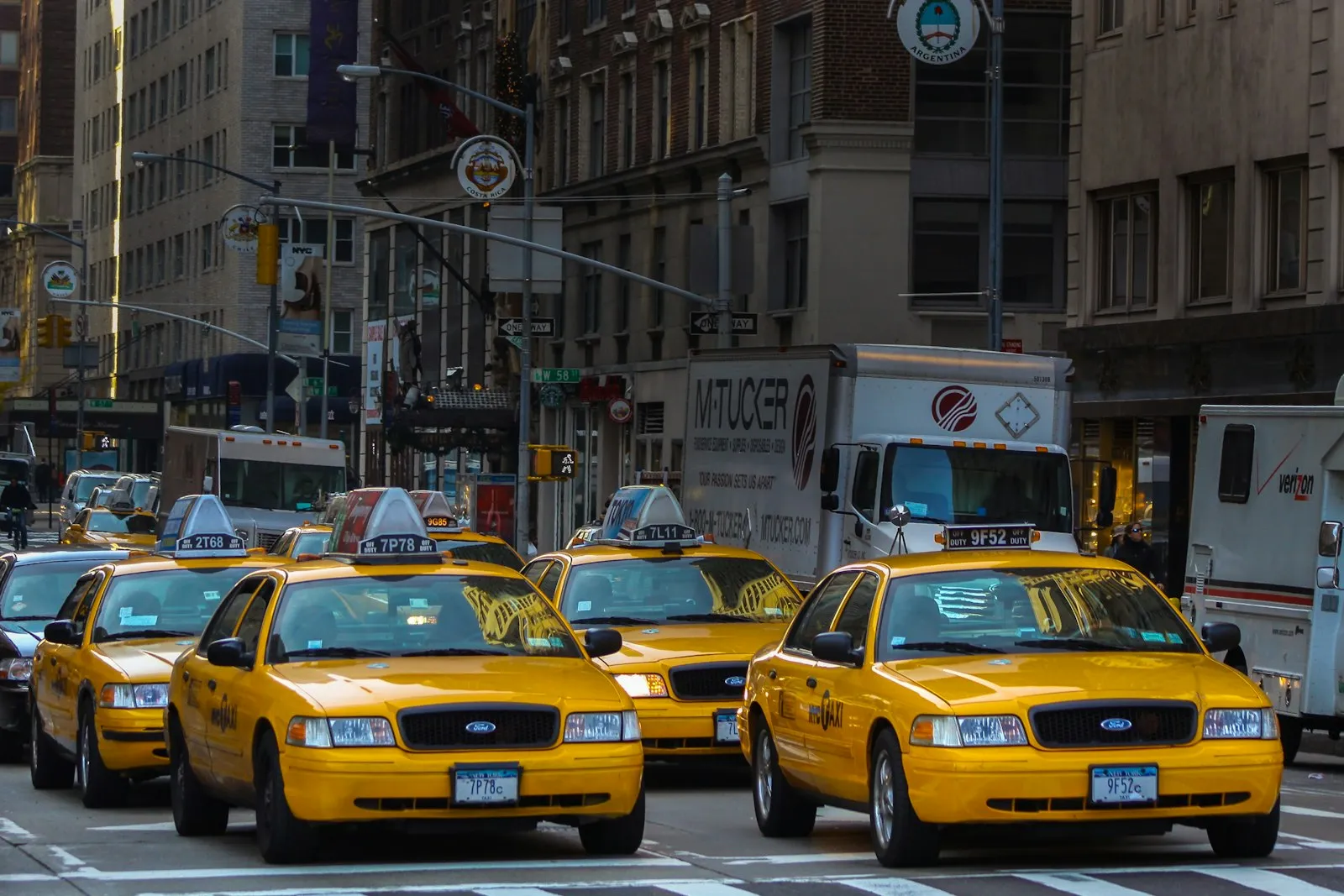
Why Taxi Crashes in Astoria Are Different From Ordinary Car Accidents
A fender bender between two private cars is usually a story about two drivers and two insurance policies. A taxi crash tends to pull in more players. The vehicle is licensed by the NYC Taxi & Limousine Commission, the driver may lease the car from someone else, the insurance may be held by a fleet or a base, and an app company may be part of the picture. Each of those details can change who pays and how much coverage is available.
Astoria adds its own twist. This is a neighborhood where a lot of people don’t own cars, so taxis and for-hire vehicles fill the gaps: late rides home from Ditmars Boulevard, trips to and from LaGuardia, and quick hops across the RFK Bridge into Manhattan or the Bronx. That means a lot of pickups and drop-offs on busy commercial strips, and that’s where many of the injuries we see actually happen.
Who Pays After a Taxi Accident? The Short Version
New York is a no-fault state. Under Insurance Law § 5102, personal injury protection (PIP) pays your medical bills, a portion of lost earnings and other basic economic loss no matter who caused the crash. The ordinary state minimum is $50,000 per person. For TLC-licensed vehicles, which include yellow and green taxis, Uber and Lyft cars, black cars and limousines, the required PIP is $100,000 per person, effective March 1, 2026.
Which policy you turn to first depends on where you were:
| Where you were | Whose no-fault (PIP) you usually claim | What to keep in mind |
|---|---|---|
| Passenger in a taxi or rideshare | The vehicle you were riding in | Keep your trip receipt or app record; it identifies the car and driver. |
| Pedestrian hit by a taxi | The vehicle that struck you | Get the medallion or TLC plate number if you can. |
| Cyclist hit by a taxi | The vehicle that struck you | Photograph the bike and your gear before repairs. |
| Driver of another car | Generally your own policy | Fault still matters for the injury claim beyond no-fault. |
No-fault only covers economic loss. Pain, suffering and the loss of things you used to enjoy are part of a separate claim against the at-fault driver and owner, and that claim has its own rules, which we cover next. For medallion taxis, the TLC requires liability coverage of at least $100,000 per person and $300,000 per occurrence.
The 2026 Changes You Should Know About
New York changed several important rules for car-accident lawsuits in 2026. If someone gave you advice about a crash a few years ago, some of it may no longer hold. Here is what’s different now:
- The serious injury threshold got narrower. To sue for pain and suffering in a car case, you need a “serious injury” under § 5102(d). The 2026 state budget removed the category that was based on days missed from usual activities. The eight categories that remain are death; dismemberment; significant disfigurement; fracture; loss of a fetus; permanent loss of use of a body organ, member, function or system; permanent consequential limitation of use of a body organ or member; and significant limitation of use of a body function or system.
- A new fault cutoff for car cases. Under the new CPLR 1411(b), in motor-vehicle injury lawsuits started on or after May 26, 2026, a person whose share of fault is greater than the defendant’s (or all defendants combined) recovers nothing. If your share is 50% or less, your recovery is reduced by that percentage.
- Fault gets decided first. Under Insurance Law § 5104, the judge or jury now decides fault before deciding whether there was a serious injury.
- A cap in narrow situations. An at-fault claimant who was driving uninsured, was convicted of impaired driving, or was convicted of a felony committed while driving faces a $100,000 cap on non-economic damages. It doesn’t cap economic damages, other people’s claims, or wrongful death.
These rules apply to lawsuits filed on or after May 26, 2026, even if the crash happened earlier. For a taxi passenger, the fault cutoff rarely hurts you, because passengers usually aren’t steering anything. For a pedestrian crossing mid-block on Steinway Street, or a cyclist on 31st Street, the insurer may try hard to push your share of the blame up. That’s exactly where careful evidence work pays off.
With the new fault cutoff, the first story told about your crash matters more than ever. We’d much rather help you tell it accurately from day one than try to fix it later.
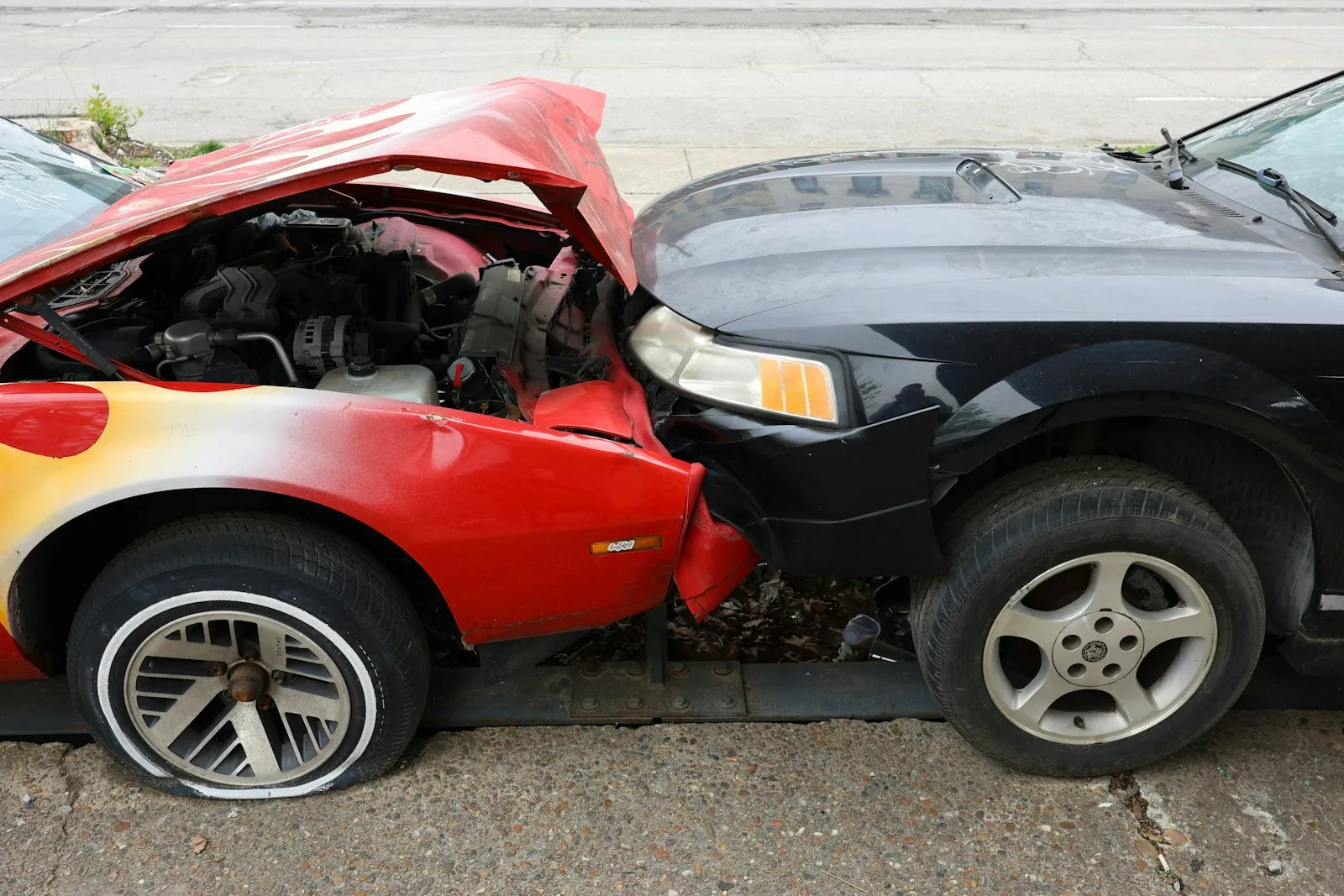
Deadlines That Can Quietly End a Claim
We’ve talked with people who had a perfectly good case and simply waited too long on one piece of paperwork. Please don’t let that be you. The key dates:
- 30 days from the accident to file your no-fault application (11 NYCRR 65-1.1). Miss this and your medical bills can be denied.
- 90 days to serve a notice of claim if a City or MTA vehicle was involved (General Municipal Law 50-e). This comes up when an MTA bus or a City vehicle is part of a multi-car crash.
- 2 years to bring a wrongful death action (EPTL 5-4.1). New York wrongful death recovery remains limited to pecuniary damages.
- 3 years to file a personal injury lawsuit under CPLR 214(5).
Separately, if a crash involves injury, drivers may need to file a report with the New York DMV on form MV-104. We can help you figure out whether that applies to you.
Where Taxi Crashes Tend to Happen Around Astoria
We won’t throw crash statistics at you. What we can tell you is which kinds of streets create the situations that lead to the claims we handle:
- Under the elevated N/W line on 31st Street. The el’s support columns cut sight lines, and cars turning across 31st Street can lose sight of pedestrians stepping out from behind them.
- Steinway Street, 30th Avenue and Ditmars Boulevard. Dense shopping and dining strips where taxis and app cars stop wherever there’s a gap, often double-parked, and passengers open doors into bike traffic.
- Astoria Boulevard and the Grand Central Parkway. Fast traffic heading toward LaGuardia and the RFK Bridge, with merges and service-road exits that catch drivers off guard.
- 21st Street and Broadway. Busy bus and truck routes where taxis weave between lanes to make time.
If you were hurt in one of these spots, a nearby business camera may have caught it. That footage is often recorded over quickly, so it’s worth asking for right away.
Top Destinations: Astoria Park, the Hell Gate Bridge and the Museum of the Moving Image
Astoria Park sits right on the East River, with the RFK (Triborough) Bridge and the Hell Gate railroad bridge passing over or beside it. People come for the big outdoor public pool in summer, the running track, the tennis courts and the long waterfront lawns with views toward Manhattan. Shore Boulevard runs along the water’s edge, and on warm evenings it fills up with walkers, joggers and families.

A short ride inland, the Museum of the Moving Image on 35th Avenue, next to the Kaufman Astoria Studios complex, draws film fans, school groups and evening screening crowds. The closest trains are the M and R at Steinway Street and the N and W at 36th Avenue, but plenty of visitors arrive by cab or app car.
Here’s the traffic pattern we watch for around these destinations. Near the park, drivers drop riders along Shore Boulevard and the surrounding side streets, then make quick U-turns or three-point turns on narrow blocks to head back toward Astoria Boulevard or Ditmars. Pedestrians carrying pool bags and strollers cross wherever it’s convenient. Near the museum, taxis stop on 35th Avenue or the side streets around 36th and 37th Streets, sometimes in the travel lane, and passengers step out into traffic. After a screening lets out, several cars may pull up at once. When we investigate a crash in these areas, we look closely at where the driver stopped, whether the passenger was let out on the street side, and whether the driver checked mirrors before pulling away.
How We Build an Astoria Taxi Accident Case
Every case is different, but the process usually looks like this:
- We listen first. A free conversation, in English, Russian or Spanish, about what happened and how you’re feeling.
- We lock down the no-fault claim. We make sure your application goes to the right insurer within 30 days so your treatment isn’t interrupted.
- We identify every policy. The cab’s owner, the driver, the fleet or base, an app company if one was involved, and any other vehicle in the crash.
- We gather the evidence. Police reports, the TLC license and medallion details, trip records, photos, witness names and camera footage from nearby storefronts.
- We document your injuries against the serious injury categories, working with your own doctors.
- We negotiate, and file suit when needed, well inside the three-year deadline.

Want more background first? Our car accident practice page explains how motor-vehicle claims work in general, our FAQ page covers common questions, and our settlements page shows the kinds of matters we’ve handled. We also wrote a separate guide for pedestrians, cyclists and passengers hurt in an Astoria taxi accident, and you can find all of our Astoria accident resources in one place.
Taxi Accident FAQs
I was a passenger. Do I have to prove the cab driver was at fault?
Not for your no-fault benefits. As a passenger you generally claim PIP from the vehicle you were in, regardless of fault. For pain and suffering, you’ll need to show who caused the crash and that your injury meets a serious injury category. Sometimes the at-fault driver is the cab driver, sometimes it’s another motorist, and sometimes it’s both.
Is an Uber or Lyft crash handled like a yellow cab crash?
In New York City, Uber and Lyft cars are TLC-licensed for-hire vehicles, so the same $100,000 PIP requirement for TLC vehicles applies. The liability side, which covers pain and suffering, can involve more than one policy, so we look at the trip records and insurance details case by case.
How much time do I have to file a taxi accident lawsuit?
Generally three years for personal injury and two years for wrongful death. But the no-fault application is due within 30 days, and claims involving City or MTA vehicles need a notice of claim within 90 days, so don’t wait on the long deadline.
What if I was partly at fault?
For motor-vehicle lawsuits filed on or after May 26, 2026, you can still recover if your share of fault is 50% or less, though your award is reduced by that share. If your share is greater than the defendant’s, you recover nothing. That’s why it matters to push back early on unfair blame.
Does a soft-tissue injury count as a “serious injury”?
It can, if it fits one of the eight categories, for example a permanent consequential limitation of use of a body member or a significant limitation of use of a body function or system. That usually takes solid medical documentation, which is why consistent treatment matters.
Should I talk to the taxi company’s insurance adjuster?
You’ll need to cooperate with your no-fault claim, but we suggest speaking with a lawyer before giving a recorded statement about fault or your injuries to the other side’s insurer. Offhand remarks can be used to raise your share of blame.
What does it cost to hire your firm?
Nothing up front. We work on a contingency basis: no fee unless we win.
About Astoria: Local FAQs
Which subway lines serve Astoria?
The N and W run on the elevated line above 31st Street, with stops including Astoria–Ditmars Boulevard, Astoria Boulevard, 30th Avenue, Broadway and 36th Avenue. The M and R stop at Steinway Street and 46th Street along Broadway.
What neighborhoods border Astoria?
Long Island City lies to the south and southwest, Woodside to the southeast, and Jackson Heights and East Elmhurst to the east. If your crash happened just over the line, see our Long Island City taxi accident page or our Jackson Heights taxi accident page.
What are Astoria’s ZIP codes?
Astoria is mainly covered by 11102, 11103, 11105 and 11106.
Is there a hospital in Astoria?
Yes. Mount Sinai Queens is on 30th Avenue in Astoria. In an emergency, always call 911 and go where EMS takes you.
Where would an Astoria taxi accident lawsuit be filed?
Astoria is in Queens County, so injury lawsuits are typically filed in the Supreme Court of the State of New York, Queens County. You can find general court information on the New York State Unified Court System website.
Any tips for getting around Astoria safely by cab?
Ask your driver to pull over to the curb rather than stopping in the travel lane, exit on the sidewalk side, and look back for cyclists before opening the door. On streets under the el, give yourself an extra second before stepping out from between parked cars.
Talk With an Astoria Taxi Accident Lawyer Today

You shouldn’t have to sort out insurers, TLC records and new 2026 rules while you’re trying to heal. Let us take that on. Call 718.775.3110 any time, day or night, or send us a message for a free case review. Our office is at 1 Cross Island Plaza, Suite 325, Rosedale, NY 11422, open Monday through Friday, 9 to 6, and we’re glad to come to you in Astoria.
Attorney Advertising. This is general information about New York law, not legal advice, and reading it does not create an attorney-client relationship. Every case depends on its own facts. Prior results do not guarantee a similar outcome.