
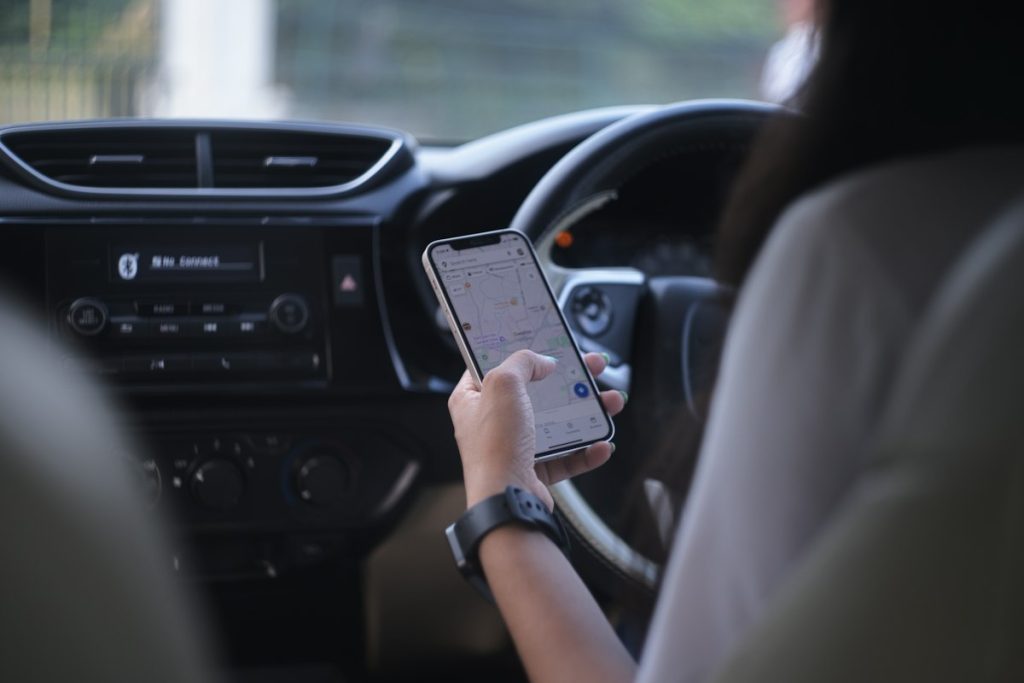
The driver who hit you was looking at a phone, a GPS screen, a delivery app or a passenger instead of the road. Now an insurance company is deciding what your injuries are worth, and it has a playbook. Yakov Mushiyev & Associates, P.C., a Rosedale personal injury firm, works as a distracted driving accident lawyer in Queens for people who would rather understand that playbook than be surprised by it. We build the proof of distraction, document your losses, and push back on each tactic designed to shrink your claim.
This page pulls back the curtain on how adjusters typically evaluate distracted driving claims, and what we do to counter each move. Knowing the game does not guarantee a result, but it puts you on much more equal footing.
What a Distracted Driving Accident Lawyer in Queens Does That an Adjuster Won’t
An adjuster works for the insurer. Their job is to resolve claims for as little as the facts allow. That is not a moral failing; it is the business model. Our job is the opposite: to make sure the facts are fully developed before anyone puts a number on your case.
- We prove the distraction. Insurers rarely volunteer that their driver was texting. We seek phone records, app data, vehicle data and witness accounts that show where the driver’s attention was.
- We document the full injury. We coordinate with your providers so the medical record reflects what you are actually experiencing, not a rushed note from the first visit.
- We calculate the whole loss. Medical costs, lost earnings, future treatment, and the human cost of pain and limitation.
- We handle every conversation. Once you are represented, adjusters talk to us, not to you.
Inside the Claim File: How Insurers Score a Distracted Driving Case
When a claim comes in, the insurer opens a file and starts assessing three things: liability (who caused the crash and by how much), damages (how serious and how well documented the injuries are), and risk (how likely the claimant is to push the case into litigation). Many insurers use software and internal guidelines to help value injury claims, and those tools depend on the information fed into them. Gaps in treatment, vague diagnoses and missing records generally push valuations down. Clear documentation pushes in the other direction.
In a distracted driving case, the liability piece has a special twist. Distraction is often invisible after the fact. The phone is back in a pocket before anyone gets out of the car. Unless someone proves otherwise, the insurer may treat the crash as an ordinary collision with disputed facts. That is the first gap we close.
Seven Adjuster Tactics and How We Counter Them
Tactic 1: The friendly early phone call
Within days of the crash, the other driver’s insurer may call to “check on you” and ask for a recorded statement. The questions sound routine: How are you feeling? Did you see the other car before impact? Were you in a hurry? Answers given while you are medicated, sore and shaken can be quoted later to suggest you were not badly hurt or that you were partly to blame.
The counter: You are not required to give the other driver’s insurer a recorded statement. Politely decline and refer them to your attorney. Your own insurer may require cooperation under your policy for no-fault purposes; we can help you manage that without volunteering more than necessary.
Tactic 2: “There’s no proof our driver was on the phone”
Without proof of distraction, the insurer can frame the crash as a judgment call: two drivers, two stories. That lets it argue shared fault.
The counter: We look for objective evidence. That can include a demand to preserve the driver’s phone and records, subpoenas for carrier records showing calls, texts or data use at the time of the crash, surveillance or traffic video from nearby businesses, dashcam footage, and witnesses who saw the driver looking down. New York’s hand-held phone and portable electronic device bans, VTL §1225-c and §1225-d, can be relevant when evidence shows a violation. For commercial drivers, employer dispatch and app records can add another layer.
Tactic 3: Spotlighting your own “distraction”
Expect the insurer to ask whether you were on your phone, adjusting the radio, or talking to a passenger. If they can shift even part of the fault to you, they reduce what they pay.
The counter: We get ahead of it. Your own phone records, if they show no activity at the moment of impact, can be powerful. So can video showing you stopped at a light, signaling, or traveling at a reasonable speed.
2026 update: For motor-vehicle personal injury actions commenced on or after May 26, 2026, amended CPLR 1411 bars recovery for a claimant whose fault is greater than the defendants’ combined fault (more than 50%); at 50% or less, recovery is reduced by the claimant’s share. The 90/180-day category was also removed from the serious injury definition. Insurers can be expected to lean even harder on comparative fault arguments under this rule, which makes early evidence of your own careful driving especially valuable.
Tactic 4: “Low property damage means low injury”
Adjusters often point to repair estimates. If your bumper was barely scratched, they argue, you could not have been seriously injured. This is especially common in rear-end crashes, which distracted drivers cause frequently because they never see traffic slowing ahead.
The counter: Vehicle damage and human injury are not the same thing. Modern bumpers are designed to absorb impact without visible damage, while the occupant’s body still absorbs force. We let the medical evidence, including imaging and treating physician opinions, speak for the injury. In rear-end crashes, New York courts also generally presume the rear driver was negligent under the following-too-closely rule in VTL §1129 unless that driver offers a non-negligent explanation, which helps keep the liability focus on the distracted driver.
Tactic 5: Treatment gaps and “pre-existing conditions”
If you skipped appointments for a few weeks, or if you had a sore back before the crash, the insurer will say your current problems are unrelated or exaggerated.
The counter: Life gets in the way of treatment, and there are often good reasons for gaps, such as childcare, transportation, or insurance delays. We document those reasons. As for prior conditions, New York law allows recovery when a crash aggravates or worsens an existing condition. Your doctors can compare before and after, and we make sure that comparison is in the record.
Tactic 6: The serious injury threshold fight
To recover for pain and suffering after a car crash in New York, you generally must show a “serious injury” under Insurance Law §5102(d). Insurers frequently hire their own doctors to examine you and conclude that your injury has “resolved” or is minor.
The counter: We build the threshold case deliberately: objective testing, range-of-motion measurements, imaging, and treating physician opinions that explain how your limitations connect to the crash. We also prepare you for any insurer-requested exam so you know what to expect.
Tactic 7: The quick, quiet settlement offer
Sometimes the first offer arrives fast, before you know whether you will need surgery or months of therapy. It can be tempting, especially when bills are piling up.
The counter: A settlement is final. Before evaluating any offer, we want to understand your prognosis and future needs. No-fault benefits are designed to keep medical bills and part of your lost wages moving in the meantime, which can relieve some of the pressure to accept too little too soon.
The Coverage Map: Which Policies Pay and in What Order
Adjusters know the coverage rules cold. You should know the basics too.
- No-fault benefits. New York no-fault generally pays basic economic loss up to $50,000 per person regardless of fault: medical expenses, 80% of lost earnings up to $2,000 per month, and up to $25 a day for other reasonable expenses. The application is generally due within 30 days of the crash. Pedestrians and bicyclists hit by a car usually claim through that car’s insurer. Motorcyclists are not covered by New York no-fault.
- The distracted driver’s liability policy. For pain and suffering (once the serious injury threshold is met) and for economic losses beyond no-fault.
- The vehicle owner. Under VTL §388, an owner can be vicariously liable when a permissive user drives negligently. This matters when someone borrowed a car, or when a company vehicle is involved.
- Employers of working drivers. If the distracted driver was making deliveries or driving for work, the employer or a contracting company may also be responsible, depending on the relationship.
- Your own SUM coverage. If the at-fault driver is uninsured or underinsured, your own supplementary uninsured/underinsured motorist coverage may help. If no other coverage exists, MVAIC may apply, with strict notice requirements.
The New York State Department of Financial Services publishes consumer information about auto insurance in New York if you want to review your own policy terms.
Where Distraction Costs Queens Drivers the Most
Distraction is dangerous everywhere, but certain Queens settings magnify it. Stop-and-go traffic on the Long Island Expressway, the Van Wyck and the Grand Central Parkway tempts drivers to check messages, and a two-second glance at highway speed covers a lot of ground. Multi-lane arterials such as Queens Boulevard, Northern Boulevard and Woodhaven Boulevard combine turning lanes, service roads, buses and pedestrians, so a driver who looks away can miss a changing signal or a person in the crosswalk. Busy commercial strips along Jamaica Avenue, Main Street in Flushing and Steinway Street put delivery drivers, rideshare drivers checking apps and shoppers in the same tight space.
In southeast Queens near our office, Merrick Boulevard, Francis Lewis Boulevard, Sunrise Highway and the Belt and Cross Island Parkways see daily commuter crashes where distraction is a common thread. Location matters to your claim because it tells us where to look for cameras and witnesses.
Three Queens Landmarks Where Drivers Need Their Eyes Up
Fort Tilden
Fort Tilden is a former U.S. Army coastal defense post on the western Rockaway peninsula, now part of the Gateway National Recreation Area managed by the National Park Service. Its quiet beach, dunes and old gun batteries draw visitors who want a wilder alternative to the busier Rockaway beaches. Getting there usually means driving Rockaway Point Boulevard, a road where summer weekend traffic, cyclists and people walking from parking areas share space. Drivers searching phones for directions or parking information are a real hazard here, and a crash far out on the peninsula can leave witnesses and cameras scarce, which makes early evidence collection even more important.
The Calvary Cemetery Skyline View
Calvary Cemetery, in western Queens near Maspeth and Blissville, is famous for one of the most photographed views in the city: rows of historic headstones in the foreground with the Manhattan skyline rising behind them. Much of that view is visible from the Long Island Expressway and the Brooklyn-Queens Expressway, which border the cemetery, and from the approach to the Kosciuszko Bridge. That is exactly the problem. Drivers slow down to look, lift a phone to snap a picture, or glance away at the wrong moment in heavy highway traffic. If you were rear-ended near the cemetery, ask whether the other driver may have been photographing the view.
The Queens Museum
The Queens Museum sits in Flushing Meadows Corona Park in the New York City Building, a structure built for the 1939 World’s Fair. It is best known for the Panorama of the City of New York, a vast scale model of the five boroughs. The museum is near the Unisphere and is reached by roads that connect to the Grand Central Parkway, the Van Wyck and the Long Island Expressway. On event days and weekends, drivers circling for parking or following navigation apps through the park’s roadways can be dangerously distracted, and families walking between attractions are especially exposed.
Directions to Our Rosedale Office from Fort Tilden
From Fort Tilden, head east on Rockaway Point Boulevard and continue onto Beach Channel Drive toward Cross Bay Boulevard. Take Cross Bay Boulevard north over the bridge through Broad Channel and Howard Beach, then get on the Belt Parkway eastbound. Follow the Belt Parkway east toward the Cross Island Parkway interchange in Rosedale; Cross Island Plaza sits just off the parkway near Brookville Boulevard, and our office is in Suite 325.
The Deadlines Insurers Hope You Miss
Time is one of an insurer’s quiet allies. The longer a claim sits, the more evidence disappears: phone carriers’ records become harder to obtain, video is overwritten, and witnesses move on. Formal deadlines matter too. Most New York personal injury lawsuits must be filed within three years under CPLR 214(5). Claims involving a city vehicle or public authority generally require a Notice of Claim within 90 days and a lawsuit within one year and 90 days. The no-fault application is generally due within 30 days, and drivers must generally file a DMV MV-104 report within 10 days when someone is injured.
If your crash happened in northeast Queens, see our page for a distracted driving accident attorney in Bellerose. For a side-by-side look at how distracted driving claims differ from other car crash claims, read our detailed guide to distracted driving accident claims in Queens. Distraction often plays a role in other crash types, too, including a head-on collision on a Queens road when a driver drifts across the center line, and we handle every kind of car accident claim in Queens. You can see the full range of our personal injury practice areas and the communities we serve on our site.

Straight Answers: Questions About Distracted Driving Claims
Can my lawyer get the other driver’s cell phone records?
Often, yes, but not automatically. Phone records are generally obtained through the litigation process, such as a discovery demand or subpoena, and courts may limit requests to a narrow window around the time of the crash to protect privacy. Building a basis for the request, such as a witness who saw the driver looking down or video of erratic driving, helps. Sending a preservation letter early also reduces the risk that relevant data is lost.
What counts as distracted driving besides texting?
Distraction is anything that takes a driver’s eyes off the road, hands off the wheel, or mind off driving. Examples include using navigation or delivery apps, watching video, eating, grooming, reaching for objects, attending to children or pets, and intense conversations. Some of these are specifically prohibited by statute, such as hand-held phone use; others may still be careless conduct that supports a negligence claim.
The adjuster says I was partly at fault. What does that do to my claim?
New York uses comparative fault, which means your recovery can be reduced by your share of responsibility. For motor-vehicle injury actions commenced on or after May 26, 2026, a claimant found more than 50% at fault recovers nothing. An adjuster’s opinion is not a finding. We gather evidence to challenge unfair fault assignments, and the final allocation, if a case goes to trial, is decided by a judge or jury.
Will the insurer send me to its own doctor?
Very possibly. No-fault insurers commonly schedule independent medical examinations, and in a lawsuit the defense can request an examination too. These doctors are chosen by the insurer. Go to the appointment, be honest, and do not exaggerate or minimize. Afterward, write down how long the exam took and what was tested. Your own treating doctors’ records remain central evidence.
Does a ticket for using a phone prove the driver was negligent?
A traffic ticket can be useful evidence, and a guilty plea may carry weight, but neither automatically decides your civil case. The ticket shows the officer believed a violation occurred; your claim still has to connect the distraction to the crash and prove your injuries and damages. If no ticket was issued, a claim can still succeed with other evidence.
The driver who hit me was working for a delivery app. Who pays?
It depends on the driver’s relationship with the company, the insurance in place, and what the driver was doing at the time. App-based and contracted delivery arrangements vary, and liability may involve the driver, a contracting company, or the brand, depending on the facts. We investigate those relationships and the available coverage so no potential source of recovery is overlooked.
Should I sign the medical authorization the insurer sent me?
Be careful. Some authorizations are broad enough to let the insurer collect your entire medical history, which it may use to argue your problems pre-date the crash. Certain authorizations are required for no-fault processing, while others are optional or can be narrowed. Have your attorney review any form before you sign it.
How do insurers decide what my pain and suffering is worth?
There is no fixed formula in New York. Insurers consider the type and permanence of your injury, the treatment you needed, how well the injury is documented, its effect on work and daily life, and how a jury in the venue might view the case. Detailed, consistent medical records and credible descriptions of your limitations generally carry the most weight.
What if the distracted driver fled the scene?
Report the crash to police right away; leaving the scene of an injury crash is a violation of New York law. If the driver is never identified, your own SUM coverage or MVAIC may provide a route to recovery, but both require prompt notice and a police report. Video from nearby businesses and traffic cameras can sometimes identify the vehicle, so speed matters.
Do I need a lawyer if the insurer already accepted liability?
Accepting liability is only half the equation. The insurer can still dispute the severity of your injuries, the serious injury threshold, causation, and the value of your losses. Many disputes after a distracted driving crash are about damages, not fault. A consultation can help you understand whether an offer reflects the full picture before you sign anything final.
Get a Distracted Driving Accident Lawyer in Queens in Your Corner
The insurer has professionals working its side of your claim. You deserve the same. If a distracted driver injured you or someone you love, a distracted driving accident lawyer in Queens can help you level the playing field. Call Yakov Mushiyev & Associates, P.C. at 718.775.3110 or reach our team online to schedule a consultation. Our office is at 1 Cross Island Plaza, Suite 325, in Rosedale.
Related reading: Distracted Driving Accident Lawyer in Queens: how these claims differ from other crashes.
General information, not legal advice. Attorney Advertising. Prior results do not guarantee a similar outcome.