
A taxi crash in College Point rarely looks complicated at the scene. A yellow cab, a green Boro Taxi or an app-based car bumps another vehicle on College Point Boulevard, someone is hurt, and everyone exchanges information. The complications come later, because New York runs taxi injury claims through several layers of rules that each exist for a specific reason. At Yakov Mushiyev & Associates, P.C., we explain those reasons to our clients plainly, because a person who understands why a rule exists is far less likely to be caught off guard by it. This page walks through who pays after a College Point taxi accident, which deadlines matter, what changed in 2026, and how our firm handles these cases from start to finish.
If you were hurt as a passenger, a pedestrian, a cyclist or the driver of another car, you can call us any time at 718.775.3110. The first review of your case is free, and you pay no fee unless we win.
Why Taxi Claims Work Differently From Ordinary Car Claims
Most people expect a crash claim to be a single demand against the at-fault driver. In New York, a taxi accident claim usually runs on two tracks at once, and the reason is a policy choice the state made decades ago: injured people should get their medical bills and lost wages paid quickly, without first fighting over who caused the crash. That is the idea behind the no-fault system in Insurance Law § 5102.
- Track one, no-fault (PIP): Personal injury protection pays medical care, lost earnings and other basic economic loss regardless of who was at fault.
- Track two, the injury lawsuit: Pain and suffering, and economic losses above what PIP covers, come from a claim against the driver or company that caused the crash. That claim is only available if the injury meets New York’s serious injury threshold.
The trade-off is deliberate. You get faster payment of basic costs, and in exchange the law limits who can sue for pain and suffering. Understanding that trade-off explains almost every rule that follows.

Who Pays After a College Point Taxi Accident
The answer depends mostly on where you were when the crash happened. The no-fault rules attach coverage to a vehicle, and the reason is practical: insurers can identify the vehicle quickly, while fault can take months to establish.
| Your position | Where no-fault (PIP) usually comes from | Where the injury claim is aimed |
|---|---|---|
| Taxi or for-hire passenger | The vehicle you were riding in | Whichever driver or drivers caused the crash, which may include your own taxi driver |
| Pedestrian or cyclist | The vehicle that struck you | The driver who struck you and, where applicable, the vehicle owner |
| Driver of another car | Generally your own policy | The taxi driver and owner, if they were at fault |
The TLC insurance numbers, and why they matter
Vehicles licensed by the NYC Taxi and Limousine Commission, including yellow and green taxis, app-based cars and limousines, must carry PIP above the state minimum of $50,000 per person. Effective March 1, 2026, the TLC requirement is $100,000 per person, cut from the higher figure that applied before. For a seriously hurt passenger, that reduction means PIP may run out sooner, which puts more weight on the injury claim against the at-fault party.
For medallion taxis, the TLC liability minimum is $100,000 per person and $300,000 per occurrence. Those are floors, not ceilings, and the actual policy in a given case has to be confirmed. We do not guess at coverage amounts for app-based companies; we find out through the claim itself.
Deadlines, and the Reason Behind Each One
Deadlines in injury law exist because evidence fades and defendants are entitled to investigate while facts are fresh. Missing one can end a claim no matter how strong it is.
- 30 days: file the no-fault application. The insurer needs prompt notice to verify treatment and wage loss, so the regulation requires the application within 30 days of the accident.
- 90 days: notice of claim against a city or MTA vehicle. If a city-owned vehicle or an MTA bus was involved, General Municipal Law § 50-e requires a notice of claim within 90 days so the public agency can investigate.
- 2 years: wrongful death. A family’s wrongful death action must be filed within two years, and New York still limits these claims to pecuniary (financial) losses.
- 3 years: personal injury lawsuit. Under CPLR 214(5), most injury lawsuits must be filed within three years of the crash.
The three-year lawsuit deadline gets the attention, but the 30-day no-fault deadline is the one people miss. It controls whether your medical bills are paid while the rest of the case moves forward.
What Changed in 2026, and Why It Affects College Point Claims
New York’s 2026 budget rewrote several parts of the motor-vehicle injury rules. The stated aim was to reduce insurance costs; the practical effect is that claims now turn more sharply on fault and on the kind of injury involved. These changes apply to lawsuits filed on or after May 26, 2026, regardless of when the accident happened.
A narrower serious injury definition
To sue for pain and suffering, your injury must fit one of eight categories in Insurance Law § 5102(d): death; dismemberment; significant disfigurement; fracture; loss of a fetus; permanent loss of use of a body organ, member, function or system; permanent consequential limitation of use of a body organ or member; or significant limitation of use of a body function or system. A category based on being unable to perform daily activities for a set period was removed. That is why medical documentation now matters even more: the claim depends on showing the injury fits one of the remaining categories.
A fault cutoff for motor-vehicle cases
Under new CPLR 1411(b), in a motor-vehicle injury action commenced on or after May 26, 2026, a claimant whose fault is greater than the fault of the defendant (or defendants combined) recovers nothing. A claimant who is 50% or less at fault has the recovery reduced in proportion. Claims that do not involve motor vehicles keep the older proportional rule. The reason this matters in taxi cases is that insurers now have a strong incentive to argue a passenger-side driver or a pedestrian was mostly at fault.
Fault is decided first
Insurance Law § 5104 now requires the fact-finder to decide fault before deciding serious injury. A new subsection caps non-economic damages at $100,000 for an at-fault claimant who was driving uninsured (with a narrow exception for a lapse of under 30 days that was not the driver’s responsibility), convicted of impaired driving, or convicted of a felony committed while driving. That cap does not limit economic damages, other people’s claims or wrongful death.
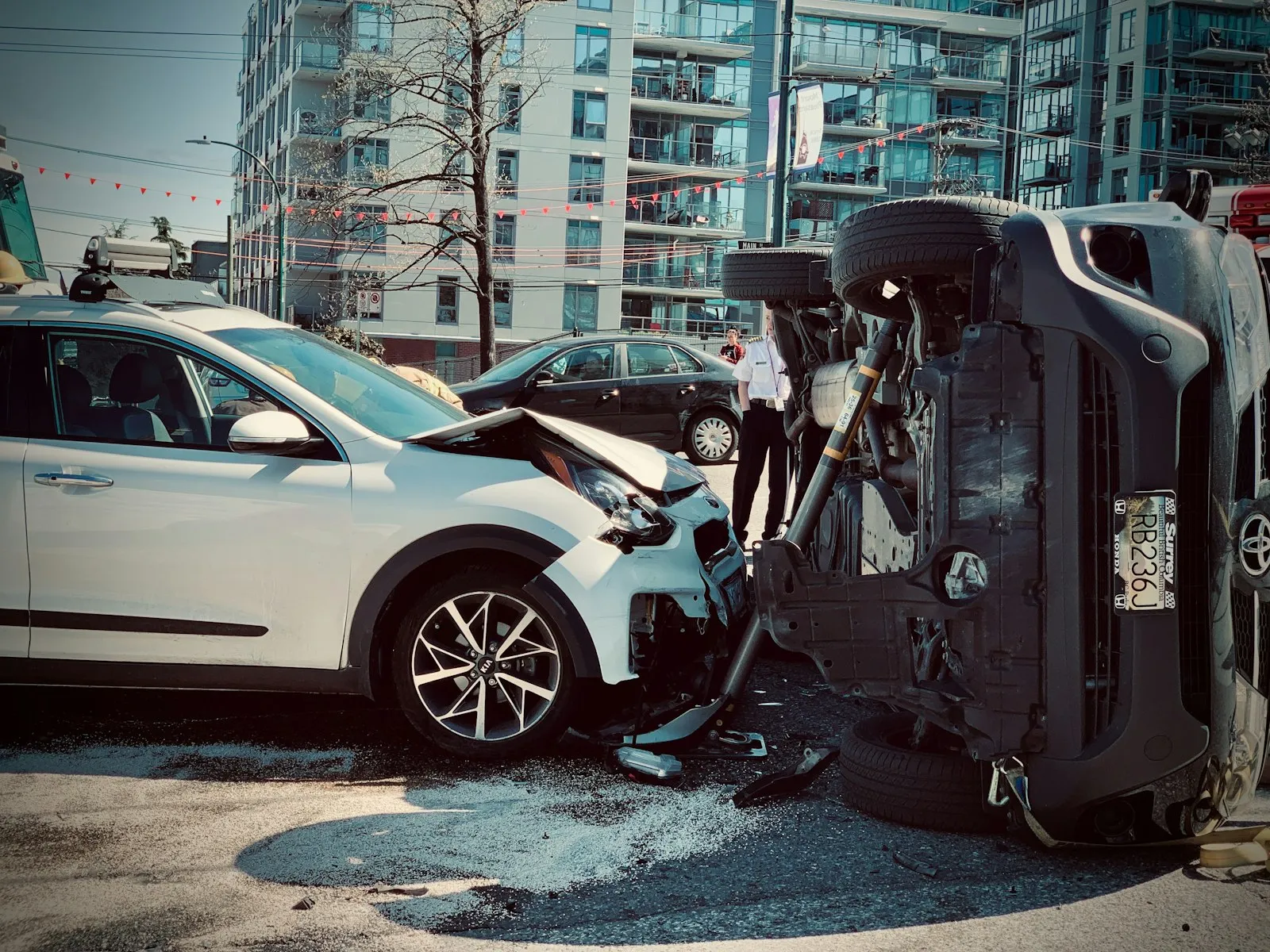
Road Hazards Around College Point
College Point sits on the north shore of Queens, bounded by water on several sides, with Flushing to the south and Whitestone to the east. It has no subway station of its own, which is one reason taxis and app-based cars are a regular part of local traffic: residents rely on them to reach the 7 train at Flushing–Main Street, LaGuardia Airport across Flushing Bay, and the highways. A few patterns show up repeatedly.
- Whitestone Expressway service roads. The Whitestone Expressway (I-678) runs along the area’s eastern side. Merging between the service roads and the expressway creates speed differences and lane changes, a setting where rear-end and sideswipe crashes are common.
- College Point Boulevard. This main north-south corridor carries through traffic toward Flushing along with local deliveries, so double-parking and sudden stops are part of the landscape.
- Commercial strips and the corporate park. Shopping centers and the businesses in the College Point Corporate Park bring trucks, delivery vans and passenger pickups into the same lanes.
- Residential side streets. Narrow streets with parked cars on both sides limit sight lines, which matters when a cab pulls out from a curb or turns quickly at a corner.
Knowing where and why crashes happen helps us know what evidence to look for, from nearby business cameras to the positions of vehicles in a merge lane.
MacNeil Park and the Whitestone Bridge Views
MacNeil Park is College Point’s best-known open space, a waterfront park on the neighborhood’s northern shore. People go for the lawns, the shoreline paths and the open views across the water, including the Bronx–Whitestone Bridge to the east. On warm evenings and weekends it draws families, walkers and visitors from other parts of Queens who come specifically for the waterfront.
That pattern matters for traffic. Visitors who do not drive often arrive by taxi or app-based car, and drop-offs tend to happen on the residential streets around the park rather than in a dedicated pickup area. The result is a familiar mix: cars stopping in travel lanes, passengers stepping out on the street side, and children crossing toward the park entrance. Riders coming from Flushing or the expressway pass through local streets to get there, so the same driver who was on a highway minutes earlier is now navigating a quiet block where people do not expect fast-moving traffic.

If you were hit while getting into or out of a cab near the park, the details of where the vehicle stopped, whether the driver checked for traffic, and whether the door was opened into a lane can all affect fault. Those details are worth recording while they are fresh.
How We Build a College Point Taxi Case
Our process follows the two-track structure of New York law, so that the no-fault side keeps paying while the injury claim is developed.
- Protect the no-fault claim. We confirm the correct insurer and make sure the application is filed on time, because medical bills depend on it.
- Identify every vehicle and policy. Taxi and for-hire crashes can involve a driver, a vehicle owner, a base or fleet, and another motorist. Each may carry its own coverage.
- Gather fault evidence early. Police reports, the MV-104 report filed with the DMV, witness information and video are collected before they disappear, since fault now matters more than ever.
- Document the injury against the statute. We work with your treating doctors so the records describe the injury in terms that track the serious injury categories.
- Negotiate or file suit. We pursue settlement where it is fair and file in court when it is not, keeping the three-year deadline in view.

Why College Point Clients Choose Mushiyev Law
- Queens-based. Our office is at 1 Cross Island Plaza in Rosedale, and we handle cases throughout the borough, including our Queens accident lawyer practice.
- Three languages. Consultations are available in English, Russian and Spanish.
- We come to you. Home, hospital and video visits are available when getting to an office is not realistic.
- No fee unless we win. You do not pay attorney fees out of pocket to start.
- Phone intake 24/7. Office hours are Monday through Friday, 9 to 6, but you can reach intake at any hour.
Taxi claims are one part of our broader car accident practice. You can review how the firm approaches outcomes on our settlements page, and our general FAQ covers questions that come up in every injury case. For a closer look at the passenger-versus-pedestrian question, read our article on taxi accidents in College Point and why your seat decides who pays. We also help clients next door, including those who need a taxi accident lawyer in Whitestone or a taxi accident lawyer in Flushing.
Taxi Accident FAQs
I was a passenger. Can I bring a claim against my own taxi driver?
Yes, if your driver caused or contributed to the crash. Passengers are rarely at fault, which is one reason passenger claims are often more straightforward on liability. Your PIP generally comes from the vehicle you were riding in, and the injury claim is aimed at whichever driver or drivers were responsible.
How much PIP coverage does a taxi carry now?
For TLC-licensed vehicles, the PIP requirement is $100,000 per person as of March 1, 2026. The state minimum for ordinary vehicles is $50,000 per person.
Do I have to meet the serious injury threshold?
To recover pain and suffering, yes. The threshold exists because the no-fault system pays basic economic loss without regard to fault, and the legislature reserved lawsuits for more significant injuries. The eight categories are listed in Insurance Law § 5102(d).
What if the insurer says I was mostly at fault?
For motor-vehicle lawsuits commenced on or after May 26, 2026, a claimant found more at fault than the defendants combined recovers nothing, while a claimant who is 50% or less at fault has damages reduced proportionally. That makes early fault evidence especially important.
How long do I have to file?
Generally three years for a personal injury lawsuit, 30 days for the no-fault application, and 90 days for a notice of claim if a city or MTA vehicle was involved. Wrongful death actions have a two-year deadline.
Does the 2026 law apply if my accident happened in 2025?
The new rules apply to lawsuits filed on or after May 26, 2026, regardless of the accident date, according to DFS guidance. The date your lawsuit is filed is what counts.
Where can I check auto insurance rules myself?
The New York State Department of Financial Services publishes consumer information on auto insurance, and the TLC posts its rules for licensed vehicles.
About College Point: Local FAQs
What ZIP code covers College Point?
College Point is in ZIP code 11356.
Is there a subway station in College Point?
No. The nearest subway is the 7 train at Flushing–Main Street. Residents typically reach it by bus, car or taxi, which helps explain why for-hire vehicles are so common on local streets.
Which police precinct covers College Point?
The NYPD’s 109th Precinct, which also covers Flushing and Whitestone. A police accident report for a crash in the neighborhood would typically come from that precinct.
Which hospital is nearest?
NewYork-Presbyterian Queens in Flushing is the major hospital closest to College Point. In an emergency, call 911 and let responders decide where to take you.
Which court would hear a College Point injury lawsuit?
College Point is in Queens County, so an injury lawsuit filed in state court would usually go to Queens County Supreme Court. General court information is available from the New York State Unified Court System.
What are the main roads in and out of the neighborhood?
The Whitestone Expressway (I-678) runs along the east side and connects north to the Bronx–Whitestone Bridge and continues south toward the Van Wyck Expressway. College Point Boulevard is the main route south toward Flushing.
Any practical traffic tips?
Expect slowdowns near the expressway ramps at rush hour, give extra room to stopped cabs and delivery vehicles on College Point Boulevard, and when taking a cab to MacNeil Park, ask to be let out on the curb side of a quiet block rather than in a travel lane.
Get a Free Case Review
Every rule on this page exists for a reason, and every one of them can be used against an injured person who does not know it is there. A short conversation can tell you which deadlines apply to you, where your no-fault benefits should come from, and whether your injury may qualify for a pain-and-suffering claim.

Call 718.775.3110 or send us a message. Yakov Mushiyev & Associates, P.C. is located at 1 Cross Island Plaza, Suite 325, Rosedale, NY 11422. Consultations are available in English, Russian and Spanish, with home, hospital and video visits on request.
Attorney Advertising. This is general information about New York law, not legal advice, and reading it does not create an attorney-client relationship. Laws change, and every case depends on its own facts. Prior results do not guarantee a similar outcome.