
The moment you report an injury in a parking garage, a file opens somewhere with your name on it. An adjuster is assigned. A reserve, the insurer’s internal estimate of what the claim might cost, is set. And a set of well-worn techniques begins, all aimed at closing that file for as little as possible. Yakov Mushiyev & Associates, P.C. is a Rosedale personal injury firm, and as a parking garage accident lawyer in Queens we spend our days on the other side of those files. This page pulls back the curtain on how garage injury claims are evaluated and minimized, and how each tactic can be countered.
If you want a neighborhood-by-neighborhood look at where Queens garage injuries happen and the legal rules behind them, read our tour of parking garage injury law in Queens. This page is about the insurance game itself.
Why a Parking Garage Accident Lawyer in Queens Matters Once the Adjuster Calls
Parking garages produce two very different kinds of injury claims. Some involve vehicles: a car speeding down a ramp, a driver backing into a pedestrian, a collision at a blind turn between levels. Others are premises claims: a fall on an oil slick, a trip over a wheel stop in poor lighting, a stairwell with a broken handrail, a falling piece of concrete, or an assault in a garage with broken security. Each type triggers different insurance policies, different legal rules and different adjuster strategies.
Our firm represents people hurt in the hospital garages, shopping center decks, residential building garages, commuter facilities and public lots across Queens. We identify every responsible party and policy, preserve the evidence garages tend to lose, and take over communication with insurers so you are not negotiating against professionals while injured. For garage injuries in eastern Queens near the Nassau line, see our page on parking garage accident claims in Bellerose. You can also learn about our firm and its attorney.
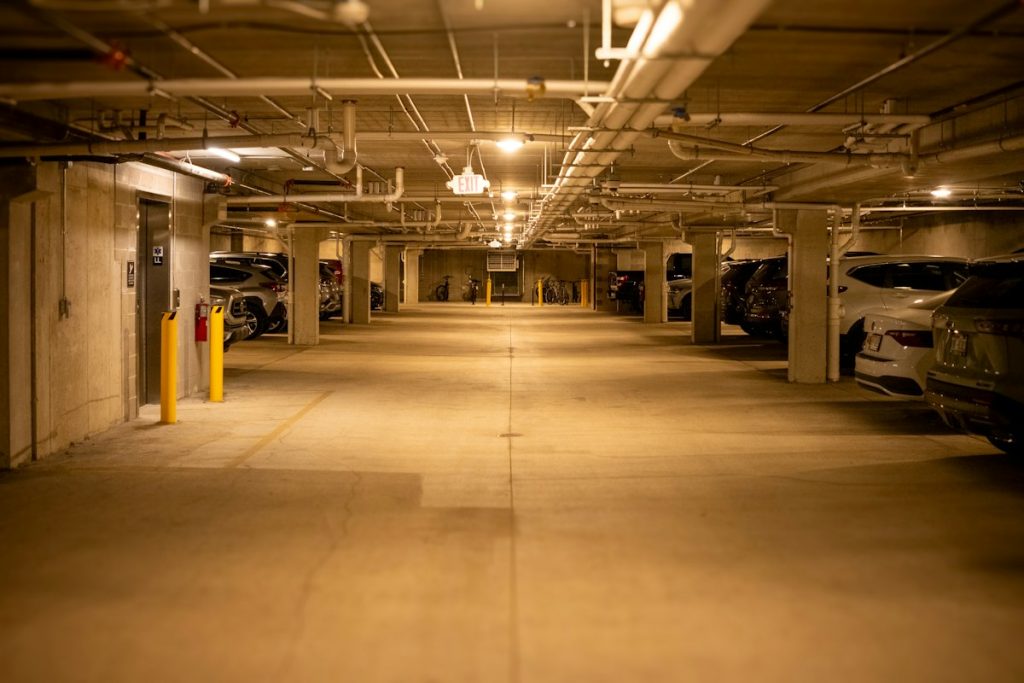
Inside the Claim File: What Happens After You Report a Garage Injury
Understanding the process makes the tactics easier to spot. In a typical garage claim, the insurer’s early steps look something like this:
- Coverage check. The adjuster confirms whose policy applies: the building owner, the garage operator, a management company, a security contractor, or a driver’s auto policy.
- First contact. A call to you, often within days, to get your account on the record.
- Evidence gathering. Incident reports, video, maintenance logs and employee statements, collected by the insurer for its own use.
- Medical review. Requests for authorizations so the insurer can review your medical history, sometimes going back years.
- Valuation. An internal estimate based on liability strength, injury type, treatment, and the likelihood you will hire a lawyer or file suit.
- Offer or denial. An early, low offer or a denial built on the weaknesses the adjuster found.
The tactics below fit into these steps.
Tactic 1: The Friendly Early Call
How it works: The adjuster calls quickly, sounds sympathetic, and asks to “just get your side of the story” on a recorded line. Questions are framed to invite helpful admissions: “You were in a bit of a hurry, right?” “The lighting was okay, wasn’t it?” “You’ve had back problems before?”
The counter: You are generally not required to give a recorded statement to the garage’s or another party’s insurer. Be polite, take their name and claim number, and refer them to your lawyer. Your own insurer may have different cooperation rules, so ask your lawyer before speaking with your own carrier about a recorded statement as well.
Tactic 2: “It Was Open and Obvious”
How it works: In premises claims, the insurer argues that the oil stain, the wheel stop, the speed bump or the pothole was plainly visible, so you should have avoided it. In New York, a property owner generally must keep premises reasonably safe, and you typically must show the owner created the hazard or had actual or constructive notice of it. Adjusters attack notice and visibility at the same time.
The counter: Garages are dim by design, and the human eye takes time to adjust when you walk in from sunlight. Lighting levels, burned-out fixtures, glare from headlights, the color contrast of a gray wheel stop on gray concrete, and placement in a walking path all matter. Maintenance and sweeping logs, prior complaints, work orders for leaking pipes or drainage, and video showing how long a slick sat on the floor can establish notice. Even when a hazard is visible, that generally goes to comparative fault rather than ending the claim.
Tactic 3: The Shell Game Over Who Controls the Garage
How it works: The building owner says the operator runs the garage. The operator says the owner is responsible for the structure. The security company says it only monitors cameras. Each insurer points elsewhere, and months pass.
The counter: Leases, management contracts, operating agreements and security contracts spell out who was responsible for what. Structural problems such as spalling concrete and failing drainage often trace to the owner. Daily cleaning, lighting replacement and traffic flow often trace to the operator. A claim that names all potentially responsible parties early prevents the shell game from running out the clock.
Tactic 4: Pointing to the Fine Print on the Ticket
How it works: The adjuster, or a garage employee, points to the back of the parking ticket or a sign at the entrance stating that the garage is “not responsible” for injuries or damage.
The counter: Those disclaimers are often far less powerful than they look. New York law generally voids clauses in which a garage or parking operator that is paid for parking tries to exempt itself from liability for its own negligence. A sign does not change the duty to keep the premises reasonably safe. Do not assume you have no claim because of what is printed on a ticket stub; keep the ticket and the receipt, since they also prove you were there.
Tactic 5: Shrinking the Injury
How it works: Adjusters categorize injuries in ways that drive value down. A herniated disc becomes a “soft tissue strain.” A gap of two weeks between the accident and the first doctor’s visit becomes “evidence the accident didn’t cause this.” Old records showing a prior back complaint become “a pre-existing condition.” In vehicle cases, the insurer will also argue that you do not meet New York’s serious injury threshold.
The counter: Prompt treatment, consistent follow-up and objective testing. MRI findings, range-of-motion measurements, surgical recommendations and a treating physician’s opinion connecting the injury to the accident are the evidence that resists shrinking. A pre-existing condition does not bar recovery when the accident aggravated it; the medical records simply need to explain what changed. Limit medical authorizations to relevant providers and time periods rather than handing over an open-ended release.
If a car hit you in the garage, pain and suffering generally requires a “serious injury” under Insurance Law Section 5102(d), such as a fracture, significant disfigurement, a permanent consequential limitation or a significant limitation of use. No-fault benefits, generally applied for within 30 days, cover basic economic loss up to $50,000 regardless of fault, and pedestrians struck by a car generally claim through the vehicle’s insurer.
Tactic 6: Shifting the Fault Percentage
How it works: If the insurer cannot deny the claim outright, it tries to assign you a share of the blame. In a pedestrian case: you walked behind a reversing car, you cut across a ramp, you were looking at your phone. In a fall case: you wore the wrong shoes, you were carrying too much, you took a shortcut.
The counter: Facts. Where were the marked walkways, if any? Were there mirrors at blind corners? Was the ramp speed posted and enforced? Was the reversing driver checking mirrors and cameras? In vehicle cases, VTL Section 1146 requires drivers to exercise due care to avoid pedestrians, and under VTL Section 388 a vehicle owner is generally liable for a permissive driver’s negligence, which matters when a valet or employee was driving.
2026 update: Which fault rule applies depends on the type of garage claim. For motor-vehicle personal injury actions commenced on or after May 26, 2026, such as a pedestrian struck by a car on a garage ramp, CPLR 1411 now applies modified comparative fault (no recovery if you are more than 50 percent at fault), and the 90/180-day serious-injury category was removed. Premises claims, such as a fall on an oil slick or a stairwell injury, remain under pure comparative fault, where your recovery is reduced by your share of fault but not barred. Insurers know the difference, and in vehicle cases they now have a stronger incentive to push your percentage above 50.
Tactic 7: Watching You
How it works: In claims with significant value, insurers may review your public social media and, in some cases, hire investigators to observe you in public. A photo of you carrying groceries or attending a wedding is presented as proof that your injuries are exaggerated.
The counter: Be consistent and honest about your limits with your doctors and in your testimony. Set social media to private and avoid posting about activities, the accident or your recovery. Good days happen even with real injuries; what matters is that your account of your limits matches what you actually do.
Tactic 8: The Lowball Offer and the Deadline Squeeze
How it works: An early offer arrives before your treatment is complete, sometimes with a short expiration date. Meanwhile, time passes. If a public entity is involved, such as a municipal garage or a facility operated by a public authority, the short notice deadlines may pass while you are still talking to an adjuster.
The counter: Do not evaluate a settlement until your doctors can describe your long-term outlook. Know your deadlines: the general personal injury limit is three years under CPLR 214(5), while claims against the City and many public authorities generally require a Notice of Claim within 90 days and a lawsuit within one year and 90 days. Negotiations do not stop those clocks.
How a Parking Garage Accident Lawyer in Queens Flips the File
| Insurer tactic | What it aims to do | Our counter |
|---|---|---|
| Friendly early call | Lock in damaging statements | All communication through counsel |
| Open and obvious | Deny notice and duty | Lighting, logs, prior complaints, video |
| Shell game | Delay and confuse | Contracts and leases; name every party |
| Ticket fine print | Discourage a claim | Disclaimers often do not bar negligence claims |
| Shrinking the injury | Lower value or threshold | Prompt, consistent, objective treatment records |
| Fault shifting | Reduce or bar recovery | Scene evidence, VTL duties, witness accounts |
| Surveillance | Undermine credibility | Consistency and social media discipline |
| Lowball and delay | Settle cheap or run out the clock | Calendar deadlines; value only after treatment |
Garage injuries often involve the same insurers and commercial carriers that handle truck and delivery claims. If a commercial vehicle hit you in a garage or loading area, see our pages on Queens truck accident claims and Queens taxi accident claims for taxis entering or leaving a garage.
Three Queens Landmarks, Three Parking Pictures
Where you park in Queens varies enormously from neighborhood to neighborhood. Here are three landmarks with very different parking realities.
The Louis Armstrong House Museum
The Louis Armstrong House Museum in Corona preserves the modest brick home where the jazz legend lived for decades, with its rooms kept much as they were. A newer visitor center across the street expanded its exhibits and archives. The surrounding residential blocks rely heavily on street parking, and visitors often park in nearby lots and garages serving Corona and the Flushing Meadows Corona Park area. Event days at the nearby stadium and tennis center make garages and lots in the area especially crowded.
The Museum of the Moving Image
The Museum of the Moving Image in Astoria, located on the historic Kaufman Astoria Studios campus, is devoted to film, television and digital media, with exhibits, screenings and hands-on displays. Astoria’s mix of apartment buildings and studios means parking is often found in private garages and small lots with tight ramps and narrow aisles. Low clearances and sharp turns in older garages are exactly where pedestrians and drivers can come into conflict.
Breezy Point
Breezy Point sits at the western tip of the Rockaway peninsula and is largely a private cooperative community with its own gates, beaches and narrow lanes. Parking and access are tightly controlled, and much of the neighborhood is reached by walkways rather than wide streets. Private communities like this raise their own ownership and maintenance questions when someone is hurt in a parking area, which is a reminder that identifying who controls the property is always the first step.
Directions to Our Rosedale Office from Corona
From the Louis Armstrong House Museum, head east to the Grand Central Parkway and follow it eastbound past Flushing Meadows Corona Park and Kew Gardens Hills. Continue to the Cross Island Parkway and take it south toward the Belt Parkway, then exit in Rosedale and follow local streets to Cross Island Plaza, Suite 325. The Van Wyck Expressway south to the Belt Parkway eastbound is a common alternative when the Grand Central is congested.
Questions About Dealing With Garage Insurers
Why does the garage’s insurer want my medical records from years ago?
Insurers request broad medical histories to look for prior injuries or conditions they can blame for your current symptoms. That is why their authorization forms are often open-ended. You can usually limit what you sign to relevant providers and a reasonable time period. A pre-existing condition does not prevent recovery if the garage accident made it worse, but the insurer will use any gap in the explanation.
The garage’s ticket says it is not responsible for injuries. Is that true?
Not necessarily. New York law generally does not allow a garage or parking operator that charges for parking to exempt itself from liability for its own negligence through a ticket, sign or agreement. The real question is whether the garage was negligent in maintaining the premises or operating vehicles. Keep the ticket anyway, since it proves where and when you were there.
What is a reservation of rights letter?
A reservation of rights letter is a notice from an insurer to its own policyholder saying it will handle a claim while reserving the right to deny coverage later. You may learn about one if the garage operator’s insurer questions whether the policy applies. It does not end your claim, but it signals a coverage dispute that can affect who ultimately pays, which is another reason to identify every potentially responsible party early.
The adjuster called my injury “soft tissue.” What does that mean for my claim?
“Soft tissue” is a broad label for injuries to muscles, ligaments and tendons, and insurers often use it to suggest an injury is minor. Some soft tissue injuries heal quickly; others, like ligament tears or disc injuries, can be lasting. Objective testing, specialist evaluation and consistent treatment records are what show the true nature of the injury, regardless of the label an adjuster uses.
Should I accept the first settlement offer?
Usually not before your treatment has progressed enough for doctors to describe your long-term outlook. Early offers are often based on early, incomplete information. Once you accept and sign a release, the claim is generally over, even if you later need surgery. Have any offer reviewed against your full medical picture, lost earnings and future needs before you decide.
Two insurance companies keep blaming each other. What can I do?
This is common in garages, where the building owner, operator and contractors each carry separate policies. You do not need to resolve their dispute. A properly prepared claim or lawsuit can name each potentially responsible party, and the insurers can sort out allocation among themselves. What matters for you is not letting the dispute delay you past your deadlines.
Will the insurer really look at my social media?
Often, yes. Public posts are easy to find, and photos or check-ins can be taken out of context to suggest you are more active than your injuries allow. Set accounts to private, avoid posting about the accident or your activities, and do not delete existing posts without talking to your lawyer, since deleting content after a claim starts can create its own problems.
What is a defense medical exam?
Once a lawsuit is filed, the defense is generally entitled to have you examined by a doctor of its choosing. That doctor is hired by the defense, not to treat you, and the report is often used to argue your injuries are minor or unrelated. Attend, answer honestly, describe your symptoms consistently, and let your lawyer know about the exam in advance.
Why is the adjuster asking whether I have hired a lawyer?
Insurers know that represented claimants tend to have their claims documented and valued more thoroughly. Asking whether you have a lawyer helps them decide how to approach the file and whether to make a quick offer. You are free to tell them you are speaking with an attorney and to direct further contact there.
Does it matter whether the garage was public or private?
Yes. A privately owned garage is generally handled through ordinary negligence and premises rules, with the three-year general deadline. A garage owned or operated by the City or certain public authorities usually requires a Notice of Claim within 90 days and a lawsuit within one year and 90 days. Find out who owns and operates the facility as early as possible.
Put a Queens Parking Garage Accident Lawyer Between You and the Adjuster
The insurer has professionals working its side of the file. You should too. Call Yakov Mushiyev & Associates, P.C. at 718.775.3110 or contact our Rosedale office online to talk about your garage injury. We will identify who may be responsible, explain the deadlines and insurance rules that apply, and take over the conversations with the adjusters so you can focus on recovering.
Related reading: Parking Garage Accident Lawyer in Queens: a tour of where garage injuries happen and the law behind them.
General information, not legal advice. Attorney Advertising. Prior results do not guarantee a similar outcome.