
Intersections are where Queens moves: cars, buses, trucks, bikes and thousands of people on foot, all trying to share the same few square yards at once. When that system breaks and you get hurt, it can feel like everything is out of your hands. A lot of it is not. Yakov Mushiyev & Associates, P.C. is a Rosedale personal injury firm, and as an intersection accident lawyer in Queens we help people take back control of what comes next: the evidence, the insurance claims, the deadlines and the decisions.
Consider this your roadmap. It is honest about what you are facing and clear about where your effort counts. You bring the commitment to recovering. We bring the legal work.
How an Intersection Accident Lawyer in Queens Lightens Your Load
Intersection crashes come in many forms: a red-light runner, a driver turning left into you, a car that rolled a stop sign, a bus or truck making a wide turn, a pedestrian or cyclist struck in a crosswalk. What they share is a dispute over who had the right to be there. Our job is to win that dispute with facts, and to handle the insurance machinery while you heal.
- Evidence first. We move quickly to request video from businesses, buses and buildings near the intersection, collect witness accounts, and document the scene and vehicles.
- Every coverage source. No-fault, the at-fault driver’s liability policy, owner and employer coverage, and your own SUM coverage when needed.
- Medical proof. We work with your providers’ records to establish your injuries and, after a motor vehicle crash, meet New York’s serious injury threshold.
- Deadlines handled. No-fault, DMV, Notice of Claim, SUM, MVAIC and statute of limitations, all tracked for you.
- A steady voice. Clear updates, plain answers, and decisions that stay in your hands.
Set Your Starting Line: Where You Stand Right Now
Every comeback starts with an honest look at the starting line. After an intersection crash, take stock of three things.
Your body
Have you been fully evaluated? Intersection crashes often involve side impacts or angled collisions that cause neck, back, shoulder and head injuries, and pedestrians and cyclists can suffer fractures and head trauma. If you have not seen a doctor since the emergency room, schedule a follow-up now. Tell your providers about every symptom, even ones that seem small.
Your evidence
What do you already have? Photos from your phone, the police report number, the other driver’s information, witness names, a dashcam file. Gather it all in one place. Whatever you don’t have, we can often still obtain, but the clock on video is short.
Your deadlines
The no-fault application is generally due within 30 days. Drivers must generally file a DMV MV-104 report within 10 days when someone is injured. If a city vehicle or MTA bus was involved, a Notice of Claim is generally due within 90 days. Most personal injury lawsuits must be filed within three years under CPLR 214(5). Knowing these dates lets you breathe; missing them can cost you.
Phase One: Protect the Proof of Who Had the Right of Way
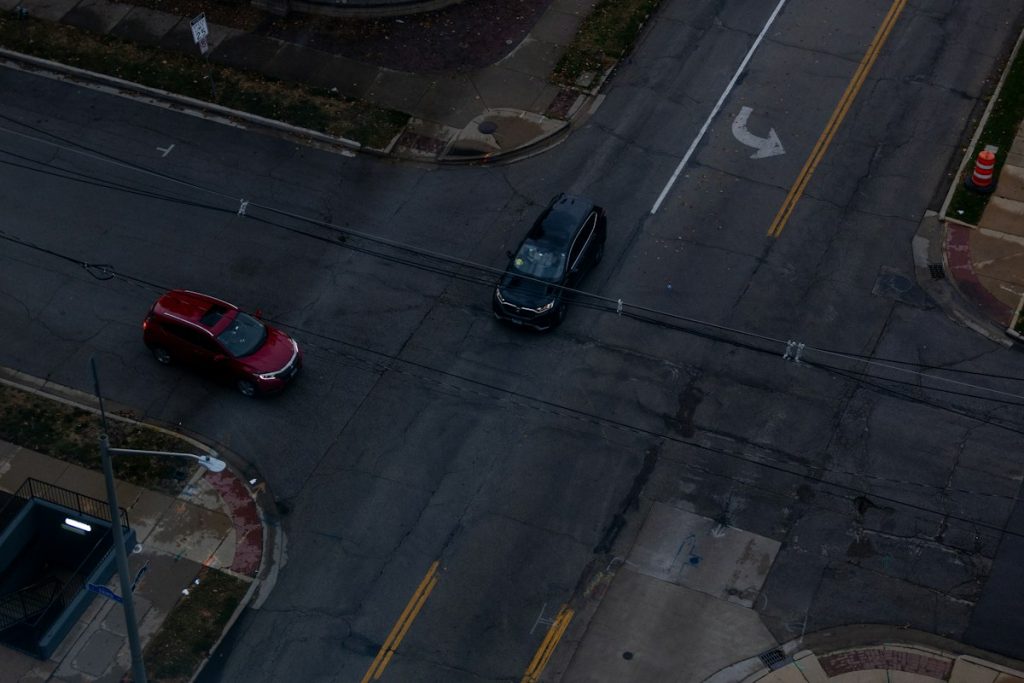
In intersection cases, the right of way is the whole ballgame. Common scenarios include:
- A driver entering on a red light or a stale yellow.
- A left-turning driver failing to yield to oncoming traffic.
- A driver rolling through a stop sign at a residential corner.
- A turning driver striking a pedestrian or cyclist in the crosswalk.
- A truck or bus making a wide turn into an adjacent lane.
New York law requires drivers to exercise due care to avoid colliding with pedestrians, bicyclists and others under VTL §1146, which is especially relevant when a turning driver strikes someone in a crosswalk. Beyond the statutes, what decides most intersection disputes is evidence: video, independent witnesses, the damage pattern on the vehicles, and the final positions of the cars.
Coach’s note: You do not have to prove your case on day one. You do have to keep the proof from disappearing. A quick call that results in preservation letters can save footage that would otherwise be overwritten.
Phase Two: Get the Benefits Flowing
Bills arrive fast. Your first line of support is no-fault. New York no-fault generally pays basic economic loss up to $50,000 per person regardless of fault, covering medical bills, 80% of lost earnings up to $2,000 a month, and up to $25 a day for other reasonable expenses. If you were a pedestrian or cyclist hit by a car, you generally claim through that vehicle’s insurer. If you were on a motorcycle, New York no-fault does not cover you, and other coverage must be explored.
If the driver who hit you was uninsured or fled, your own supplementary uninsured/underinsured motorist coverage may help, and when no other coverage exists, MVAIC may apply. Both have strict notice rules, so act as soon as possible.
Coach’s note: Give every provider your no-fault claim number. Keep copies of everything you submit. Organized paperwork means fewer denials and fewer delays.
Phase Three: Build the Injury Case That Unlocks Full Compensation
No-fault keeps you moving. It does not compensate you for pain, suffering and the way an injury changes your life. After a motor vehicle crash, recovering those damages generally requires a “serious injury” under Insurance Law §5102(d), such as a fracture, significant disfigurement, permanent loss of use, or a permanent consequential or significant limitation of a body function or system. Economic losses above no-fault can be pursued against the at-fault driver regardless.
This is where your daily effort pays off. Consistent treatment, honest reporting of symptoms, completing therapy, and following medical advice create a clear record. Insurers look for gaps and inconsistencies; a steady record leaves them fewer openings.
2026 update: For motor-vehicle injury actions commenced on or after May 26, 2026, the “90/180-day” category was removed from the serious injury definition. Amended CPLR 1411 also changed comparative fault for these cases: a claimant more than 50% at fault recovers nothing, and a claimant at 50% or less has recovery reduced by their share. Intersection crashes often involve dueling accounts of who had the light, so evidence showing your own careful conduct is more important than ever.
Coach’s note: Keep a simple recovery log. A few lines each day about pain, sleep, work and activities you missed can help your doctors and, later, help tell your story accurately.
Phase Four: Finish Strong Through Negotiation or Court
When your treatment has progressed enough to understand your prognosis, the case moves toward resolution. We assemble the medical records, bills, wage documentation and evidence of fault, and present a demand to the insurer. Many cases resolve through negotiation. Some require a lawsuit, and a few go to trial. Each stage involves decisions about timing, offers and risk. We explain your options clearly, give you our honest assessment, and respect that the final decision on settlement is yours.
Patience is part of the strategy. Settling before you know whether you need surgery or long-term care can mean accepting less than your losses. No-fault benefits are designed in part to relieve the pressure to settle too early.
Who May Share Responsibility at a Queens Intersection
- The driver who ran the light, failed to yield, or turned without care.
- The vehicle owner, under VTL §388, when a permissive driver was negligent.
- An employer or contractor, when the driver was working, such as a delivery or service vehicle.
- A bus operator, including MTA buses, where the 90-day Notice of Claim rule generally applies.
- A commercial trucking company, when a truck making a turn or running a light caused the crash.
- Multiple drivers, in chain-reaction crashes where one collision pushes a car into another.
The Queens Intersections That Demand Your Full Attention
Some of the borough’s most challenging crossings are on its biggest roads. Queens Boulevard’s main lanes and service roads create multiple conflict points at each intersection. Northern Boulevard, Woodhaven Boulevard, Hillside Avenue and Jamaica Avenue combine heavy turning traffic with buses and pedestrians. Main Street in Flushing and Roosevelt Avenue in Jackson Heights are packed with people on foot. In southeast Queens near our office, Merrick Boulevard, Francis Lewis Boulevard, Springfield Boulevard and the Sunrise Highway and Conduit Avenue corridors carry fast traffic through busy crossings. The federal pedestrian safety guidance from NHTSA offers useful reminders for anyone crossing these streets.
Three Queens Landmarks Where Crossings Get Crowded
Flushing’s Main Street
Main Street in Flushing is one of the busiest commercial corridors in New York City, lined with shops, restaurants, banks and offices, and anchored by the Flushing–Main Street station at the end of the 7 line. The crossing at Main Street and Roosevelt Avenue is famously crowded, with dense crowds of pedestrians, buses, delivery vehicles and drivers hunting for parking. Turning vehicles and people crossing on the walk signal compete for the same space all day long. If you were hurt at a Main Street crossing, the many storefront cameras on the strip can be valuable, but only if someone asks for footage quickly.
The New York Hall of Science
The New York Hall of Science is a hands-on science museum in Flushing Meadows Corona Park, near the Corona side of the park. Its original building was constructed for the 1964 World’s Fair, and today it welcomes school groups and families from across the region. School buses, family cars and visitors walking from the 111th Street area converge on nearby intersections, especially on weekday mornings and weekends. With children crossing in groups and drivers looking for the parking entrance, intersections around the museum call for extra caution from everyone behind the wheel.
Gantry Plaza State Park
Gantry Plaza State Park sits on the Long Island City waterfront along the East River, named for the restored railroad gantries that once loaded rail cars onto barges. Its piers offer some of the best views of the Manhattan skyline. The surrounding neighborhood has filled with high-rise apartments, bringing more pedestrians, strollers, cyclists and delivery traffic to intersections along Center Boulevard, Vernon Boulevard and the side streets near the park. Drivers coming from Queens Plaza and the Queensboro Bridge area add to the mix. Distracted visitors and turning vehicles make these crossings a place to slow down.
Directions to Our Rosedale Office from Flushing’s Main Street
From Main Street in Flushing, head south to the Long Island Expressway and take it east toward the Cross Island Parkway. Take the Cross Island Parkway south past Bellerose and Queens Village to its southern end in Rosedale near the Belt Parkway. Cross Island Plaza sits just off the parkway near Brookville Boulevard, and our office is in Suite 325. Outside rush hour, the drive generally takes about 25 minutes.
If your crash happened in northeast Queens, our page for the intersection accident lawyer serving Bellerose covers that area. For a deeper look at why intersections are where Queens crashes happen and the first questions a lawyer asks, read our comprehensive guide to intersection accident claims in Queens. Many intersection crashes involve large vehicles: see our pages on a Queens bus accident lawyer and a commercial truck accident lawyer in Queens. Explore all of our injury practice areas or our frequently asked questions for more.
Your Intersection Accident Questions, Answered
I was crossing on the walk signal when a turning car hit me. Do I have a claim?
Very likely, though every case depends on its facts. Drivers turning at intersections must yield to pedestrians lawfully in the crosswalk and must exercise due care to avoid hitting pedestrians. As a pedestrian struck by a car, you would generally claim no-fault benefits through that car’s insurer and could pursue the driver for losses beyond no-fault, subject to the serious injury threshold for pain and suffering.
Does it matter if the traffic signal was malfunctioning?
It can. If a signal was dark, stuck or showing conflicting lights, drivers generally must treat the intersection with extra caution, and responsibility may extend beyond the drivers. Claims involving city-maintained equipment can trigger the 90-day Notice of Claim requirement and other special rules. Report the malfunction and photograph it if you safely can.
The crash happened at an intersection with no lights or signs. Who had the right of way?
Uncontrolled intersections follow general right-of-way rules, and drivers must approach with care. Determining fault depends on factors such as who entered first, speed, visibility and each driver’s conduct. These cases are especially evidence-driven, so photos of sightlines, parked cars and road conditions are helpful.
I was on a bicycle when a driver turned into me. What coverage applies?
Cyclists struck by a motor vehicle generally claim no-fault benefits through the vehicle’s insurer for medical bills and lost earnings. Claims against the driver for additional losses may also be possible. If you were on an e-bike or e-scooter, coverage questions can be more complex and depend on the vehicles and policies involved, so get advice early.
Can I still recover if I entered on a yellow light?
Possibly. Entering on a yellow is not automatically negligent, but the other side may argue you should have stopped. Fault can be shared, and your recovery may be reduced by your percentage. For motor-vehicle actions commenced on or after May 26, 2026, a claimant more than 50% at fault recovers nothing. Evidence of timing and speed matters.
How do I get video from businesses near the intersection?
Start by noting every camera you can see. Many businesses will share footage only with police or in response to a lawyer’s request, and many systems overwrite recordings within days or weeks. A preservation letter asks the owner to keep the footage. If needed, a subpoena may follow once a lawsuit is filed.
What if more than one car hit me?
Multi-vehicle intersection crashes can involve several drivers and insurers. Responsibility may be divided among them. Sorting out the sequence of impacts, and which impact caused which injury, takes careful investigation and medical documentation. All potentially responsible parties should be put on notice early.
I feel better now. Should I stop treatment?
Follow your doctor’s advice, not the calendar. If your doctor discharges you, that is fine. If you stop on your own while symptoms remain, the insurer may argue you recovered or that later problems are unrelated. If cost or transportation is the barrier, tell us; no-fault may cover transportation-related expenses.
How long does an intersection accident case take?
It varies with the severity of your injuries, how clear fault is, the number of insurers, and whether a lawsuit is needed. Cases usually should not resolve until your medical picture is clear. We will give you realistic expectations at each stage rather than a fixed promise.
What is the most important thing I can do this week?
Two things: keep up with your medical care, and make sure someone is preserving the evidence from the intersection. Everything else, including insurance calls and paperwork, can be handled by your lawyer. Those two actions protect both your health and your claim.
Take the Next Step With an Intersection Accident Lawyer in Queens
You have more control over your recovery than it may feel like today. An intersection accident lawyer in Queens can protect the evidence, keep the benefits flowing, and fight for fair compensation while you focus on getting stronger. Call Yakov Mushiyev & Associates, P.C. at 718.775.3110 or get in touch with our team online. Our office is at 1 Cross Island Plaza, Suite 325, in Rosedale.
Related reading: Intersection Accident Lawyer in Queens: why intersections are where crashes happen.
General information, not legal advice. Attorney Advertising. Prior results do not guarantee a similar outcome.