
Pull up a chair. Let’s talk about what actually happens after a crash in the middle of a Queens intersection, because the version you hear from the insurance company is not the whole story.
We have sat across the desk from a lot of people in your position. Somebody turned left in front of them on Northern Boulevard. Somebody blew a stop sign in Jackson Heights. Somebody tried to beat a yellow on Queens Boulevard and lost. As an Intersection Accident Lawyer in Queens, we can tell you this: intersection cases are winnable, but they are rarely simple. Two or more vehicles, sometimes a pedestrian, a traffic signal, and everyone swearing they had the right of way. The case is decided by whoever nails down the facts first.
So we are going to walk you through it the way we would in a first meeting. No sales pitch. Just how these cases work, what we look for, and what you should be doing right now.
Why Intersections Are Where Queens Gets Hurt
Think about what an intersection is. It is the one place on the road where traffic is designed to cross paths. Every other stretch of road keeps vehicles moving in parallel. At an intersection, they point at each other, and the only thing keeping them apart is a light, a sign, and the hope that everybody follows the rules.
Queens has more than its share of complicated crossings. We are talking about:
- Wide boulevards with service roads. Queens Boulevard, Woodhaven Boulevard and Cross Bay Boulevard have main lanes, service lanes, medians and turn bays. A driver can be crossing six or more lanes in a single signal cycle.
- Diagonal and offset crossings. Where avenues and boulevards cut across the grid at angles, as on parts of Jamaica Avenue, Hillside Avenue and Rockaway Boulevard, sight lines get awkward and signals get complicated.
- Highway ramps meeting local streets. Exits off the Van Wyck, the Long Island Expressway and the Grand Central drop fast traffic straight into neighborhood intersections.
- Busy commercial corners. Main Street in Flushing, Merrick Boulevard in Jamaica, Steinway Street in Astoria. Pedestrians, double-parked trucks, buses pulling out and drivers hunting for parking all share the same few square yards.
Put that together with heavy traffic and impatient drivers and you get a lot of crashes in a lot of different shapes. We see right-angle collisions, left-turn crashes, rear-end hits at the stop line, sideswipes in turn lanes, and pedestrians struck in the crosswalk.
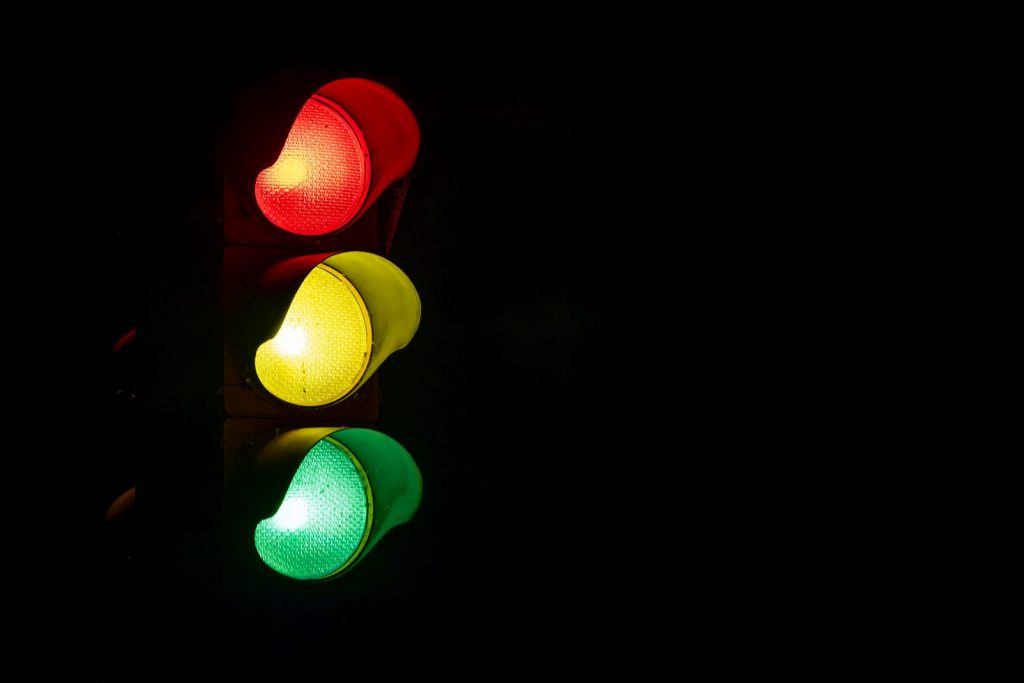
The First Question an Intersection Accident Lawyer in Queens Asks: Who Had the Right of Way?
Every intersection case boils down to this. Somebody had the right to be there, and somebody was supposed to wait. New York’s Vehicle and Traffic Law lays out the rules for signals, stop signs, yield signs, and turns. Our job is to prove which driver broke them.
Here’s a quick rundown of the crash types we see most, and how fault usually breaks down. Treat this as a starting point, not a verdict. The facts of your case are what count.
| Crash type | Who is usually on the hook | What the other side will argue |
|---|---|---|
| Red-light running | The driver who entered on red | “It was yellow,” or “the other car was speeding” |
| Left turn across traffic | The turning driver, who generally must yield to oncoming traffic | The oncoming driver was going too fast or ran the light |
| Stop sign violation | The driver who failed to stop and yield | “I stopped and the other car came out of nowhere” |
| Rear-end at the light | The rear driver, who is generally presumed negligent | The front car stopped suddenly for no reason |
| Pedestrian in the crosswalk | The driver, who owes a duty of care to pedestrians | The pedestrian was crossing against the signal or distracted |
A couple of these deserve more explanation.
Rear-end hits at the stop line
You are stopped at the light on Francis Lewis Boulevard. The car behind you doesn’t stop. Under New York law, VTL §1129 prohibits following too closely, and courts generally presume the rear driver was negligent unless they come up with a non-negligent explanation. That presumption is a real advantage. But don’t assume it wins the case by itself. Defense lawyers will try “sudden stop” or “brake lights were out.” We get ahead of those arguments with photos, repair records and, when it exists, video.
Pedestrians and cyclists
If you were on foot or on a bike, the driver had a duty under VTL §1146 to exercise due care to avoid hitting you. Turning drivers in particular have to watch for people in the crosswalk. In Queens, a lot of pedestrian crashes happen exactly that way: a driver making a left or right turn, focused on finding a gap in car traffic, never looks at the crosswalk. If that’s what happened to you, your medical bills generally go through the no-fault coverage of the car that hit you.
What the Other Side Is Going to Say
We’ll be straight with you. The other driver’s insurance company is not your friend, even if the adjuster is pleasant on the phone. Their job is to pay as little as possible. In intersection cases, they have a familiar playbook:
- “Your client was speeding.” Even a few miles over the limit gets spun into a reason you couldn’t stop.
- “The light was yellow.” Or “the light had just turned.” Without independent proof, it’s your word against theirs.
- “Your client wasn’t paying attention.” They will ask about your phone, your passengers, your radio.
- “The injuries aren’t from this crash.” They’ll dig into your medical history looking for an old back problem to blame.
- “There was a gap in treatment.” If you missed appointments, they’ll say you weren’t really hurt.
Every one of these has an answer. But the answer has to be built on evidence, and evidence has a shelf life.
How We Build an Intersection Case
When you hire us, here is roughly what happens in the first weeks. Not every case needs every step, but this is how we think.
- Lock down video. Bodegas, banks, gas stations, apartment lobbies and car dealerships along busy corners often have cameras pointed at the street. Many systems overwrite footage in days or weeks. We move fast to request it be preserved.
- Find the witnesses. The person waiting to cross, the driver stopped in the opposite lane, the delivery worker on the corner. Their names are sometimes in the police report. Sometimes we have to go knock on doors.
- Get the reports. The police accident report, and the DMV MV-104 report that New York drivers generally must file within 10 days when someone is hurt or property damage exceeds $1,000.
- Examine the vehicles. Where the damage is and how deep it goes tells a story about angles and speeds. If the vehicle is about to be repaired or scrapped, we want photographs first. Newer cars may also have event data recorders that store pre-crash speed and braking.
- Look at the intersection itself. Was a stop sign knocked down or hidden behind a tree? Was a signal malfunctioning? Was the view blocked by a construction shed or a badly parked truck? That can bring other parties into the case.
- Bring in experts when the case calls for it. A reconstruction expert can turn damage, data and video into a clear picture of who entered the intersection when.
You don’t have to do any of this yourself. What you can do is hold on to your photos, write down the names of anyone who stopped to help, and get your treatment on track.
When the City Is Part of the Problem
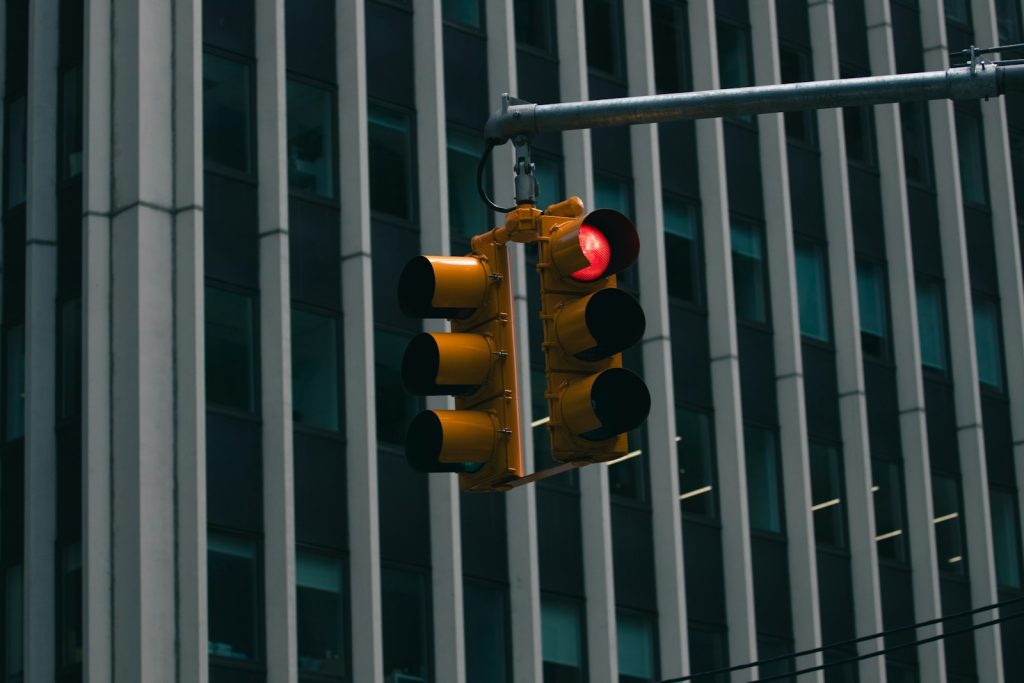
Here’s something people don’t always think about. Sometimes the intersection itself contributed to the crash. A signal stuck on one color. A stop sign that was missing for weeks. A pothole in the crosswalk that sent a cyclist down in front of a turning car. In some of those situations, the City of New York or another public entity may share responsibility.
And if a city vehicle hit you, like a sanitation truck, or an MTA bus, the same special rules come into play.
Listen carefully, because this is where people lose cases before they start. Claims against the City and many public authorities generally require a Notice of Claim within 90 days under General Municipal Law §50-e. The lawsuit itself generally has to be filed within one year and 90 days. The City can also demand a hearing, called a 50-h hearing, where you are questioned under oath before you can sue. Miss the 90-day window and you may need court permission to file late, which is never guaranteed.
If there’s any chance a government vehicle or a city-maintained signal or roadway was involved, call a lawyer now, not in three months.
The Insurance Picture, in Plain English
Most intersection crashes involve cars, so New York’s no-fault system is where the money starts.
- No-fault first. Basic economic loss up to $50,000 per person, regardless of fault. That covers medical bills, 80% of lost earnings up to $2,000 a month, and up to $25 a day for other reasonable expenses. File the application within 30 days. Don’t wait on this one.
- Serious injury to go further. To sue for pain and suffering after a motor vehicle accident, you need a “serious injury” under Insurance Law §5102(d), such as a fracture, significant disfigurement, permanent loss of use, a permanent consequential or significant limitation, or death. Economic loss above no-fault can be pursued regardless.
- Owner liability. The owner of the car that hit you is generally liable for a permissive driver’s negligence under VTL §388. Borrowed cars and company vehicles bring more insurance into the picture.
- Uninsured or hit-and-run. Look at your own SUM coverage. If there’s no other coverage, MVAIC may apply, but its notice requirements are strict. Report to police and act as soon as possible.
- Motorcyclists, take note. Motorcycle operators and passengers are not covered by New York no-fault. Health insurance and other coverage become critical, and the liability claim matters even more.
2026 update: For motor-vehicle personal-injury actions commenced on or after May 26, 2026, CPLR 1411 now uses modified comparative fault. If your fault is more than 50%, meaning greater than the defendants’ combined fault, you recover nothing. At 50% or less, your recovery is reduced by your percentage. The same law removed the “90/180-day” category from the serious-injury definition. In intersection cases, where both drivers usually point at each other, that 50% line is now the battleground.
Shared Fault Is Where Intersection Cases Are Won or Lost
We said it earlier and we’ll say it again: in intersection crashes, everybody thinks they had the right of way. So shared fault comes up constantly. Maybe you were a few miles over the limit. Maybe you entered on a yellow. That doesn’t automatically sink you.
Under the current rules, your share of fault reduces your recovery, and for motor-vehicle cases filed on or after May 26, 2026, a share above 50% bars recovery. So the fight is over percentages. That’s why we don’t just argue fault in the abstract. We build a timeline: where each car was, how fast, what color the light was, and when each driver could have reacted. The more precise the timeline, the harder it is for the other side to shift the blame onto you.
One more thing. Don’t argue fault at the scene, and don’t give a recorded statement to the other insurer. Be polite, exchange information, call the police, and let the evidence do the talking.
Three Queens Landmarks and the Roads Around Them
Our clients come from all over the borough, from the Rockaways to St. John’s. Here are three places you probably know, and what the traffic around them looks like.
Fort Tilden
Out on the western end of the Rockaway peninsula, Fort Tilden is a former U.S. Army coastal defense post that is now part of Gateway National Recreation Area. People go for the quiet beach, the dunes, the old concrete gun batteries and the view from the observation deck. Getting there means Rockaway Point Boulevard, a road that gets busy on summer weekends with beachgoers, cyclists and drivers looking for parking near the Breezy Point and Riis Park area. Turning traffic, people on bikes and pedestrians crossing to the beach make the intersections along that stretch worth extra care.
Jacob Riis Park
Right next door, Jacob Riis Park is another Gateway beach, known for its historic Art Deco bathhouse and its long boardwalk. On hot days, a huge number of visitors come in from Brooklyn over the Marine Parkway Bridge and from across Queens along Beach Channel Drive and Cross Bay Boulevard. The approaches, the parking lot entrance and the crossings near the beach handle a heavy mix of cars, bikes and people on foot. That’s the kind of setting where turning crashes and pedestrian knockdowns happen when drivers are in a hurry to find a spot.
St. John’s University
Up in Jamaica Estates and Hillcrest, the Queens campus of St. John’s University sits near Utopia Parkway and Union Turnpike, a short hop from the Grand Central Parkway. During the school year, students, faculty and visitors crowd the surrounding intersections at class changes and game days. Union Turnpike in particular carries a lot of traffic, and drivers pulling in and out of campus gates and side streets meet pedestrians who may be looking at their phones. If you’re coming from campus to see us, the Rosedale office is a straight shot southeast.
Directions to Our Rosedale Office from Fort Tilden
From Fort Tilden, head east on Rockaway Point Boulevard, which becomes Beach Channel Drive. Turn onto Cross Bay Boulevard and take it north across Jamaica Bay through Broad Channel and Howard Beach to the Belt Parkway. Take the Belt Parkway east toward Rosedale and exit near Francis Lewis Boulevard, then follow local streets to 1 Cross Island Plaza, Suite 325. Expect roughly 25 to 40 minutes depending on traffic and the season.
What You Should Do This Week
Here is the short list we give clients on day one:
- Get medical care, and keep going. Follow-up visits matter as much as the ER trip.
- File your no-fault application within 30 days.
- Write down the exact intersection, the direction you were traveling, the signal color as you remember it, and the time.
- Take a walk back to the corner, if you’re able, and note every camera you see on nearby buildings.
- Keep your car as-is until it’s photographed, or make sure the body shop takes detailed photos first.
- Don’t talk to the other driver’s insurer about fault or your injuries.
- If a city vehicle, bus, or city-maintained signal is involved, put the 90-day notice deadline on your calendar today.
If your crash happened near the Nassau line, our page for an intersection crash in Bellerose covers that area specifically. If your crash happened on the expressway rather than at a crossing, read our guide for a highway accident in Queens. And for a broader look at car crash claims, see our page for a Queens car accident lawyer.
Your Questions, Answered Straight
Who is at fault when two cars collide in an intersection?
Usually the driver who violated the right of way: running a red light, ignoring a stop sign, or turning left without yielding to oncoming traffic. But fault can be split between drivers, and insurers will look hard for anything you did wrong, like speeding or entering on a late yellow. Evidence such as video, witness accounts, vehicle damage and event data decides these disputes. The facts of your specific crash will determine how fault is assigned.
I was turning left and got hit. Is it automatically my fault?
Not automatically, though turning drivers generally must yield to oncoming traffic, so you start in a tougher spot. If the oncoming driver ran a red light, was speeding significantly, or was distracted, they may bear some or most of the fault. For motor-vehicle cases filed on or after May 26, 2026, if your fault is 50% or less, you can still recover, reduced by your share. Getting the timeline right is critical in left-turn cases.
What if a broken traffic light or missing stop sign caused my crash?
Then the City of New York or another public entity may share responsibility, in addition to the drivers. These claims have a short fuse: a Notice of Claim is generally required within 90 days of the incident, and a lawsuit generally within one year and 90 days. Take photos of the signal or sign condition right away if you can, and talk to a lawyer quickly so the notice deadline isn’t missed.
Does no-fault insurance cover me after an intersection crash in Queens?
If you were in a car, or were a pedestrian or cyclist struck by one, no-fault generally pays basic economic loss up to $50,000 per person regardless of who caused the crash. That includes medical bills, 80% of lost earnings up to $2,000 per month, and up to $25 a day in other reasonable expenses. The application is generally due within 30 days. Motorcycle operators and passengers are not covered by New York no-fault.
Can I recover for pain and suffering?
After a motor vehicle accident in New York, you need to show a “serious injury” under Insurance Law §5102(d) to recover for pain and suffering. That includes a fracture, significant disfigurement, permanent loss of use of a body part, a permanent consequential or significant limitation, or death. Economic losses above no-fault, such as wages beyond the cap, can be pursued regardless. Consistent treatment and good medical records make the difference.
How long do I have to sue after an intersection accident?
Generally three years from the date of the accident under CPLR 214(5). But if a city vehicle, an MTA bus, or a city-maintained road or signal is involved, you generally need to file a Notice of Claim within 90 days and sue within one year and 90 days. If someone died, a wrongful-death action generally must be brought within two years of the death. Don’t wait until the end of any of these windows.
The police report blames me. Is my case over?
No. A police report is important, but the officer usually arrives after the crash and relies on what the drivers and any witnesses say in the moment. Reports can be incomplete or wrong. Video, independent witnesses, vehicle damage and data from the cars can tell a different story. We review the report carefully and look for evidence that either confirms or corrects it. Your case is decided on all the evidence, not one document.
Are there red light cameras that could help my case?
New York City operates red light cameras at certain intersections, but those systems are designed for issuing violations, and whether usable footage or data exists for a particular crash varies. Private cameras on nearby businesses and homes, and dashcams in passing cars, are often more useful. Either way, the key is acting fast, because a lot of private video is recorded over within days or weeks.
I was hit by a driver heading to Rockaway Beach. Does the beach traffic matter?
The setting can matter as context. Summer traffic around Fort Tilden, Jacob Riis Park and Beach Channel Drive brings congestion, drivers unfamiliar with the area, cyclists and pedestrians crossing to the beach. A driver who was hunting for parking or rushing a turn may have been distracted. That doesn’t change the legal rules, but it can help explain how the crash happened and what the other driver was focused on.
Where is your office, and how do I get there?
We are at 1 Cross Island Plaza, Suite 325, Rosedale, NY 11422, near the Belt Parkway and Cross Island Parkway. From the Rockaways, take Cross Bay Boulevard north to the Belt Parkway east. From the St. John’s area, head south and east toward the Cross Island Parkway. If your injuries make the trip hard, call us at 718.775.3110 and we’ll talk about other ways to meet.
Related: For a full overview of how our firm handles these claims, visit our Intersection Accident Lawyer in Queens page.
Talk to an Intersection Accident Lawyer in Queens
That’s the conversation. Now you know how these cases work, what the other side will try, and what the clock looks like. If you want us to look at your case, call Yakov Mushiyev & Associates, P.C. at 718.775.3110 or send us a message online. Our office is at 1 Cross Island Plaza, Suite 325, Rosedale, NY 11422. You can read more about our firm and attorney Yakov Mushiyev, or check the neighborhoods and communities we serve. Talking to an Intersection Accident Lawyer in Queens early is how you keep your options open.
General information, not legal advice. Attorney Advertising. Prior results do not guarantee a similar outcome.