
A driver’s answer at the scene is only a starting point. To find out if the other driver has insurance in Nassau County, ask for their insurance details and preserve information about the crash. A personal injury attorney can help identify coverage and request information through a crash report or self-report.
It’s reasonable to want clear answers before dealing with insurers or deciding what to do next. This article explains what information to request, how a crash report or self-report may help, and how an attorney from Yakov Mushiyev & Associates, P.C. can assist when the other driver’s coverage is unclear. Finding an insurance policy does not, by itself, establish who was responsible or what compensation may be available. The goal is to move from uncertainty toward verified information while keeping your recovery and legal options in view.
Key Takeaways
- A crash report may contain the other driver’s insurance details if they were obtained at the scene; an attorney can use the report to help clarify coverage.
- If insurance information wasn’t exchanged, an attorney can pursue it through the available crash-report or self-report process and follow up with the driver or vehicle owner.
- Insurance status and crash responsibility are separate questions; identifying a policy is only one part of assessing a potential claim.
- A conviction for operating without insurance in Nassau County carries a civil penalty of $750, according to the Nassau County Traffic and Parking Violations Agency.
How an Attorney Can Help Exchange Proof of Financial Responsibility After a Crash
A personal injury attorney can help obtain, organize, and communicate proof of insurance after a Nassau County crash. The attorney can also assess how the policy information relates to a bodily injury claim, vehicle damage, and resulting expenses.
Getting Help Exchanging Insurance Proof After a Crash
Exchanging proof of financial responsibility means sharing information that identifies the insurance coverage connected to a vehicle and crash. An attorney can help obtain the other driver’s details, organize the records, and communicate with insurers so the claim starts with clear documentation. This matters when the driver’s account, vehicle information, or insurance records don’t match.
For example, counsel can compare the vehicle identified in insurance documents with the vehicle involved in the collision. This can matter if the driver was using someone else’s car. Clear records help distinguish questions about coverage from questions about responsibility, injuries, and repair expenses.
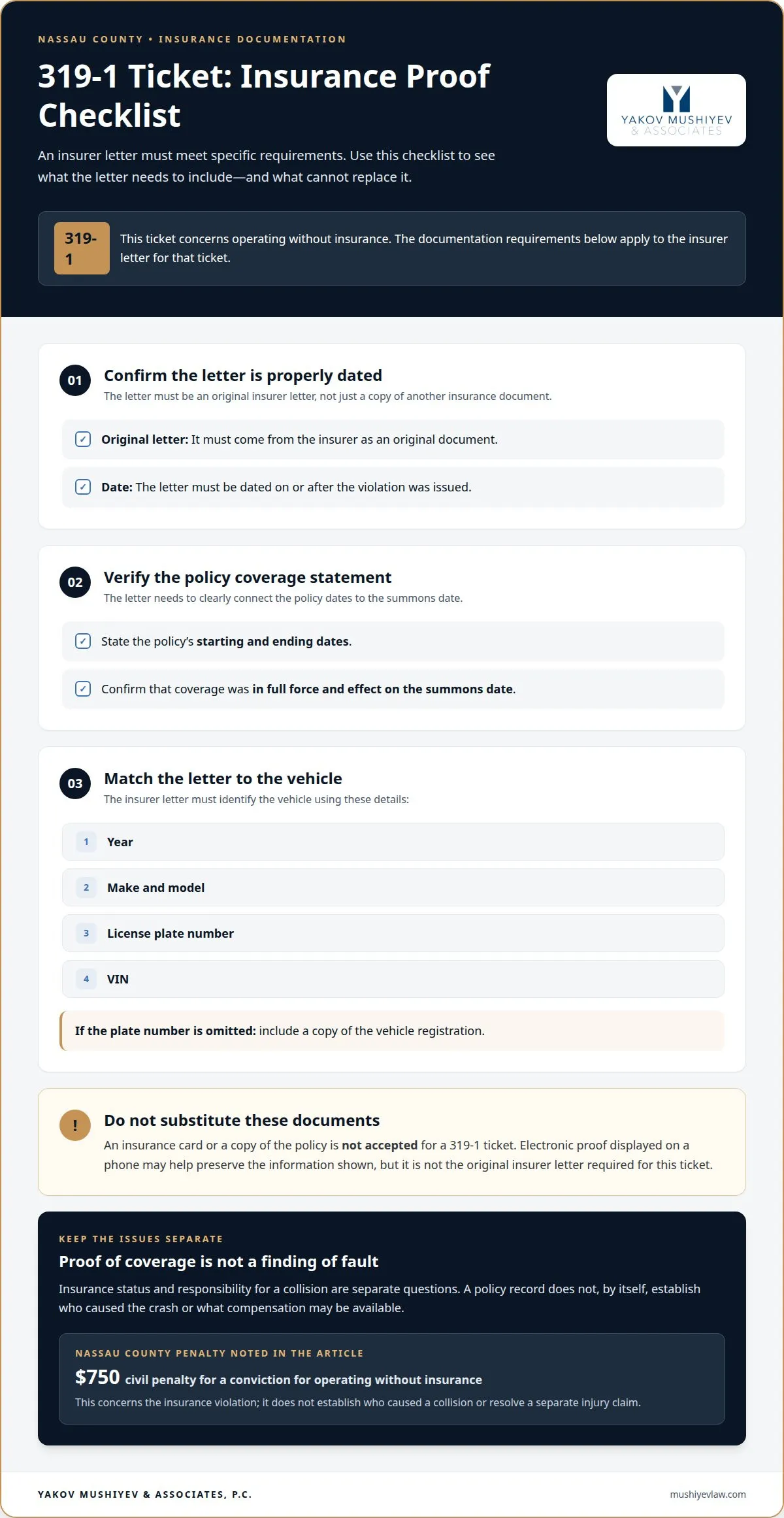
A 319-1 ticket concerns operating without insurance. For that ticket, an attorney can help assemble the required insurer letter: it must be an original, dated on or after the violation was issued, and state the policy’s starting and ending dates. It must also confirm coverage was in full force and effect on the summons date.
The letter must identify the vehicle by year, make, model, license plate number, and VIN. If the plate number is omitted, include a copy of the vehicle registration. An insurance card or policy copy isn’t accepted for this ticket. Counsel can review the documents for these details before submission.
Reviewing Electronic Proof of Insurance With an Attorney
Electronic proof is insurance information displayed on a phone or another digital screen. An attorney can review the displayed information, note the insurer and vehicle details shown, and identify gaps that may need follow-up with the driver or insurer. A readable image can help preserve what was presented, but it shouldn’t be confused with the original insurer letter required for a 319-1 ticket.
If the screen shows a different vehicle or incomplete policy details, counsel can flag the issue while organizing the crash records. This review keeps the insurance question separate from fault and helps ensure the records used to evaluate a personal injury claim are accurate.
State-specific insurance rules
Insurance requirements and claim procedures depend on the state connected to the crash. In Nassau County, distinguish proof of coverage from responsibility for an injury or property damage. An attorney can identify which state’s rules apply and organize insurance records and witness accounts in light of the crash location.
A conviction for operating without insurance in Nassau County carries a civil penalty of $750, according to the Nassau County Traffic and Parking Violations Agency. That penalty concerns the insurance violation; it does not establish who caused a collision or resolve a separate injury claim. Keeping the ticket, crash report, and insurance correspondence together helps distinguish these issues.
Witness statements can preserve details that insurance documents cannot show. An attorney can record each witness’s contact information and firsthand account, including what they saw before impact, how the vehicles moved, and statements made afterward. For example, a bystander may describe which vehicle entered an intersection first. Keeping firsthand observations separate from assumptions helps preserve their value.
State lines can complicate a claim if a driver recently moved or a vehicle has out-of-state registration. An attorney can note the crash location, the vehicle’s registration state, and the insurer named in available records. These details help identify which state’s insurance rules and records matter, rather than assuming the license plate alone answers the coverage question.
A move can leave personal records out of sync: a new address, an old policy document, and registration associated with another state. Counsel can organize these records by date and connect each document to the vehicle involved. This timeline can clarify which policy information relates to the crash without treating an address change as proof that coverage did or didn’t exist.
For a Nassau County crash involving injury, witness accounts and insurance details serve different purposes. Statements may help establish how the collision happened; policy records help identify potential coverage. An attorney can bring those strands together and address questions about car accident legal representation as the claim develops.
Keep the crash report, ticket, insurance correspondence, and relevant policy and registration records together. An attorney can identify which state’s rules apply and organize the records and witness accounts to support your claim.
How an Attorney Can Request Insurance Information Using a Crash Report or Self-Report
A personal injury attorney can use crash records to help identify the other driver’s insurer and pursue missing policy information. In Nassau County, the report and any self-report may connect vehicle details, the collision, and potential liability.
Getting Help Finding Another Driver’s Insurance Status
An attorney can review crash records and available documents to determine whether they identify an insurance policy. This can help when a driver’s refusal or incomplete information leaves you unsure where to direct an injury claim.
Counsel can compare the report’s vehicle description, driver identity, and insurer details with information gathered after the collision. If the report names an insurer but lacks policy details, the attorney can use those records to guide follow-up requests. A report can support the search, but it doesn’t establish liability or prove which losses a policy covers.
Requesting Insurance Information Through a Report With an Attorney’s Help
A crash report or self-report can document the collision and connect it to the vehicles involved. An attorney can identify the relevant report, gather documents needed for a request, and pursue the available process for obtaining insurance information.
For a New York State motor vehicle accident report, counsel can use details about the crash to locate the proper record and request it through the applicable channel. The report may show whether an insurer’s name or other coverage information was recorded. If a self-report supplies details missing from another record, the attorney can consider both documents together rather than relying on an incomplete account.
These records also help distinguish questions about the insurance policy, liability, repair costs, and personal injury protection. Each affects a different part of evaluating a claim.
Getting Help When a Driver Refuses to Share Insurance Details
If the other driver refuses to provide insurance information, an attorney can use available crash records and vehicle details to pursue it through appropriate channels. A refusal shouldn’t leave an injured person without a documented path forward.
Counsel can document the refusal, review the report for identifying details, and direct follow-up to the driver, vehicle owner, or insurer when identifiable. If ordinary requests don’t produce the policy information, the attorney can assess formal legal options based on the case documents. This allows the coverage search to continue without treating silence as proof that insurance does or doesn’t exist.
How an Attorney Can Help Obtain the Other Driver’s Insurance Details
If the other driver is uninsured or coverage cannot be verified, a personal injury attorney can investigate available records and assess potential paths to compensation. Counsel can review the crash report, vehicle information, and insurance documents to determine whether an identified policy may address bodily injury or property damage.
Finding an insurer is only the first step. An attorney can compare the policy information with the accident date, vehicle involved, and reported losses. This helps distinguish a policy that may apply from one that doesn’t match the vehicle or incident. It also separates liability from coverage: proof of insurance alone doesn’t establish who was responsible for the crash.
If the driver has no verifiable insurance, counsel can review your own policy for applicable uninsured or underinsured motorist coverage. That protection may help pay vehicle damage and medical costs for the insured and passengers when an uninsured or underinsured driver causes an accident. Whether coverage applies depends on the policy terms and claim circumstances.
An attorney can also organize evidence of losses tied to the collision. For example, repair estimates document property damage, while medical records and bills connect treatment expenses to bodily injury. A passenger may have a separate injury claim, so the attorney can identify each person affected and the records relevant to their losses.
If the other driver is known but refuses to provide policy details, counsel can pursue information from the driver or vehicle owner and assess formal legal options. A lawsuit may be used to seek insurance information if the vehicle is insured. Not every case requires litigation; the available records and responses to information requests help guide the next step.
Bring the crash report, insurer correspondence, vehicle details, and loss records together for a focused review. Discuss your car accident insurance questions and the steps available for identifying coverage and protecting your claim.
Yakov Mushiyev & Associates, P.C.
Yakov Mushiyev & Associates, P.C. helps injured people pursue answers when the other driver’s insurance details are missing, disputed, or unclear. The firm can review crash-related records, assess available coverage information, and help determine what steps may support a personal injury claim.
Consider seeking legal guidance if the driver refuses to share policy details, the crash report does not identify an insurer, or you’re unsure how insurance information relates to your injuries and losses. A focused review can help distinguish whether a policy may apply from who bears responsibility for the collision. It can also clarify which records may matter to your next decisions.
For help understanding your options after a crash, contact Yakov Mushiyev & Associates, P.C.
Take the Next Step Toward Clearer Answers
Understanding how to find out if the other driver has insurance in Nassau County can help you make informed decisions after a collision. If the available information leaves you uncertain, an attorney can review the records and explain how they relate to a potential claim. Your options depend on the facts and documents in your case.
Yakov Mushiyev & Associates, P.C. represents people in car accident, truck accident, and slip and fall matters. If you’re considering what to do next, gather the crash information and any insurance correspondence you already have. A conversation about those materials can clarify which questions need attention and whether legal representation fits your situation.
Contact Yakov Mushiyev & Associates, P.C to discuss your circumstances and possible next steps. You deserve a clear path forward, and seeking answers is a practical place to begin.
Frequently Asked Questions
How Can a Personal Injury Attorney Help Find Out If Someone Has Car Insurance?
An attorney can help you understand how to find out if the other driver has insurance in Nassau County by examining crash records and matching vehicle details with available policy documents. This can help when the driver’s account is incomplete or policy information appears inconsistent. For someone in Rosedale or nearby Queens, sharing the crash date and documents already received can help focus the coverage inquiry.
What Information Can a Personal Injury Attorney Help You Exchange After a Nassau County Car Accident?
An attorney can help organize the driver’s identity, license and registration details, insurance information, and witness contacts. These records connect the people and vehicles involved to the collision. For example, if the other driver was using a relative’s vehicle, the registration may help identify its owner. Keeping these details together gives the attorney a clearer basis for reviewing what happened and communicating about the claim.
Can Nassau County Police Provide the Other Driver’s Insurance Information in an Accident Report?
A Nassau County accident report may include insurance information if an officer obtained and recorded it. The report may not answer every coverage question, especially if information wasn’t available at the scene. An attorney can review it for an insurer’s name, vehicle details, and missing information. Treat the report as a useful record, not a final determination that a policy covers your losses.
Can a Personal Injury Attorney Help Verify a New York Vehicle’s Insurance Using Its License Plate or VIN?
An attorney can use a license plate or VIN to help identify a vehicle in relevant records and compare it with insurance documents. For instance, a mismatch between the vehicle described in a policy and the car involved in the crash warrants closer review. These identifiers can support an inquiry, but they don’t independently establish whether coverage applied on the accident date.
How Can a Personal Injury Attorney Help Verify Insurance Coverage After a Car Accident?
If you’re unsure how to find out if the other driver has insurance in Nassau County, an attorney can review the crash date, vehicle identity, policy details, and insurer correspondence together. This comparison can show whether the documents relate to the collision and which policy terms need attention. Confirming a policy’s relevance can guide claim decisions, but it doesn’t determine who caused the accident.
What Are New York’s Minimum Auto Insurance Requirements and Uninsured Motorist Rules?
New York’s minimum auto insurance requirements and uninsured motorist rules concern different aspects of financial protection. An attorney can explain how the applicable requirements relate to policy documents and whether uninsured or underinsured motorist coverage may help with losses. The policy language, vehicles involved, and crash circumstances all matter. Consult a lawyer for guidance about your specific situation.
These answers provide general information, not legal advice about your specific case. Consult a lawyer for case-specific guidance.