
A private social media account can still become part of an accident case. Attorneys or insurance adjusters may find posts and photos, and use them to challenge your account of the crash or the severity of your injuries. That’s why you should not post on social media after an accident: even an ordinary update can be taken out of context and used against your claim.
It’s understandable to want to tell friends what happened or share a glimpse of your recovery. But online posts can reach people beyond your intended audience, and privacy settings don’t eliminate the risks. This article explains why you should not post on social media after an accident, who may find your accounts, and how posts could affect a claim. You’ll also learn what to do about tags, friend requests, and existing posts while your claim is ongoing, so you can protect your privacy without making a difficult situation harder.
Key Takeaways
- Assume posts may reach insurance adjusters or opposing attorneys, even when your profile is private.
- Avoid sharing accident details, recovery updates, medical information, photos, or location tags that could be taken out of context.
- Ask friends and family not to tag or post about you, and review your privacy settings and friend requests.
- Don’t delete or edit a post that may relate to your claim; get legal guidance before taking action online.
1. Will an Attorney or Insurance Adjuster Find My Social Media Accounts?
Assume an insurance adjuster or opposing attorney may find material connected to your profile. Public posts are easy to view, but private settings do not make content unreachable during a case. In litigation, a court can compel the release of relevant private social media posts. Followers or mutual friends may also screenshot and share content beyond your intended audience.
Can insurance companies use social media posts as evidence after an accident? Yes. An insurer may review posts and photos to challenge the nature or severity of claimed injuries, or compare your online activity with statements about the crash. A photo showing you at an event, for example, may be presented without context about your pain or limitations.
Courts have considered social media content in personal injury cases. In Romano v. Steelcase Inc., the court ruled that content showing a plaintiff out and about could be used to challenge the severity of her claimed injuries. In Nucci v. Target Corp., a court allowed access to a slip-and-fall plaintiff’s private Facebook images because they might show activity inconsistent with her injury claims.
Do social media rules after an accident vary by state or type of claim? The practical answer can depend on the state, the claim, and the issues in dispute. A car accident claim may focus on different activities than a slip-and-fall claim, but relevant posts can matter in either case.
Protect your claim by limiting what you share. Avoid posting accident details, injury photos, treatment updates, or comments about how you’re feeling. Don’t accept friend requests from people you don’t know; an unfamiliar account could be seeking information about your case. Set your profile to the most secure visibility settings available, and ask friends to get your approval before tagging or posting about you. Privacy settings reduce exposure, but they cannot prevent screenshots or a court’s access to relevant content.
2. How insurers and defense attorneys may use social media posts
An insurer may compare your posts with your account of the crash. A photo or update that seems inconsistent can be used to question your claimed injuries or compensation. A friend’s share can widen the audience and preserve a version of events you didn’t intend to publish. Treat every post about the accident, your activities, or your recovery as material the opposing side may examine.
Don’t delete or edit a post because you’re worried it looks damaging. Removing content may be viewed as an attempt to suppress relevant information, and it won’t ensure that copies disappear. Friends may have saved or shared the original. If a Facebook post concerns the collision or your injuries, pause before changing it and seek legal advice about how to handle it.
Keep accident details, medical information, and recovery updates off social media. An online check-in at a restaurant or event can look like evidence of ordinary activity, even if you were in pain or needed help. A photo of a medical visit may reveal private information without explaining the treatment or its effect on daily life. Tight privacy settings can limit casual viewing, but they don’t make a post harmless.
Consider what you posted before the crash, too. For example, an update about drinking or emotional distress could be presented to suggest impairment before the accident. Avoid discussing pre-accident events online while a claim is active. Don’t comment on accident-related news or share someone else’s post with your own explanation; a brief reaction can be separated from its context.
Ask friends not to post or share updates about you, and review pending tags before they appear. Keep a private record of symptoms and recovery details for your own documentation instead of publishing them. If an insurer is using your online activity to dispute your claim, seek legal guidance about the claim before responding or changing posts.
3. Posts and photos that could be misinterpreted as evidence of no injuries
A snapshot rarely tells the whole story, but an insurer may use it to question an injury claim. A photo of someone skiing the following week, for example, could be presented as evidence that they were unharmed. The image may not show pain afterward, physical limitations, or help from others. Context can disappear when a single photo is separated from the rest of your recovery.
Gym check-ins, workout posts, and pictures at social events can create a similar impression. Even an activity you managed briefly may look like proof of full ability. Avoid posting photos of yourself while a personal injury case is ongoing, including ordinary outings that reveal little about your symptoms. Don’t assume a caption will explain what the image leaves out.
Keep crash-scene photos, vehicle damage, and injury images off social media. Avoid posting details about medical procedures or treatment, and don’t share recovery updates that could be read as proof that you feel well. Memes or jokes about car crashes can also be misunderstood as suggesting you weren’t seriously affected. These risks apply to car accident victims and people pursuing a slip-and-fall claim.
Old photos can cause problems, too. An undated image may be mistaken for a current picture, so avoid posting old photos during an active case. Ask friends not to post about your activities, and review tag requests before anything appears on your profile. Remove tags from friends’ photos if they show activities that could be taken out of context.
The safest approach is to pause public posting while your personal injury case is ongoing. Avoid posting on social media about the accident, your injuries, treatment, or legal matters until the claim is settled. If you keep using social media, don’t check in at locations or events, and don’t let a quick update stand in for a complete account of your condition. This restraint helps prevent a misleading online picture from overshadowing evidence about your injuries.
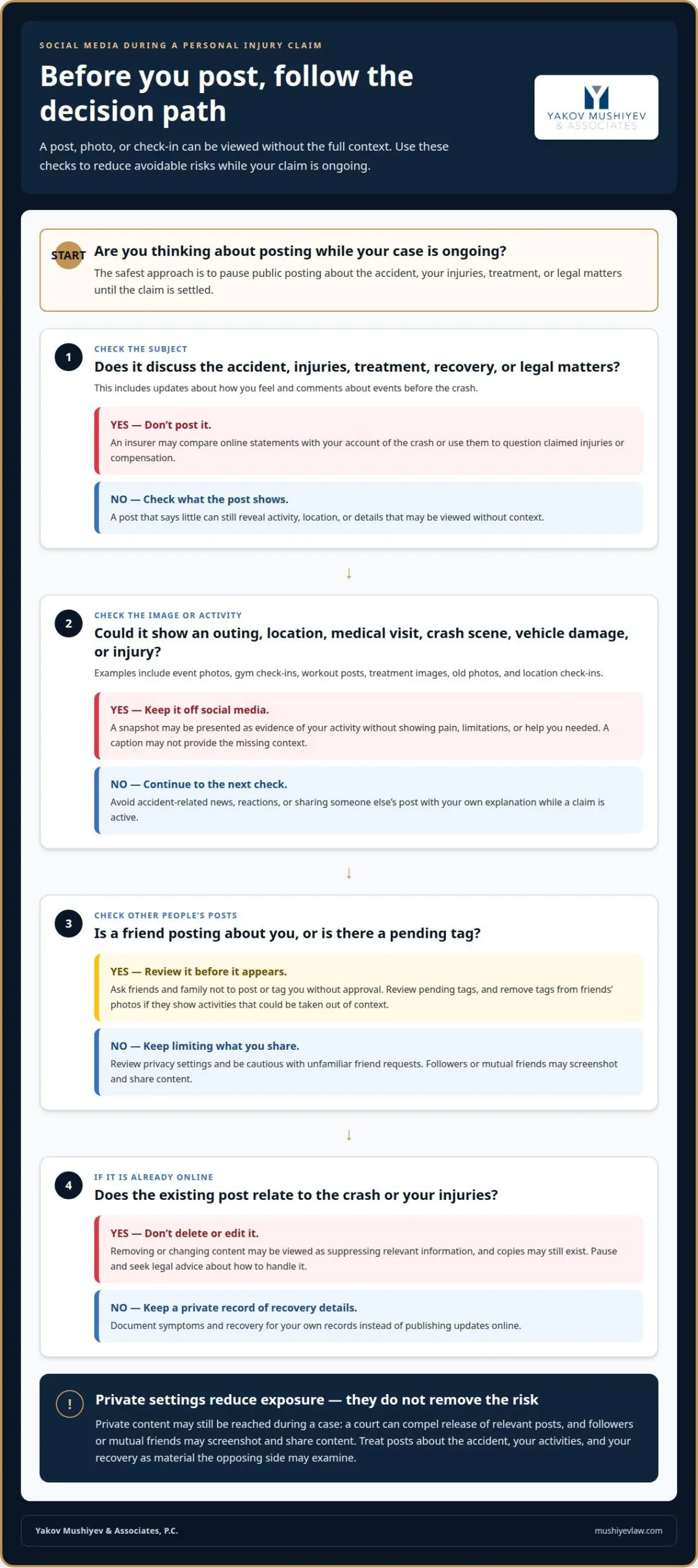
4. Social media dos and don’ts after a car accident
Knowing why you should not post on social media after an accident can help you avoid choices that complicate an injury case. Don’t publish anything about the crash, your health, or the people involved. A serious claim can be affected by a short comment, picture, or location tag. If you’re unsure whether a post could be misunderstood, leave it unpublished and ask your lawyer before discussing the case online.
- Do secure your accounts. Set each profile to its most private available settings. Review visibility for old posts, tagged pictures, and location sharing. These settings can limit casual access, but they cannot prevent screenshots or lawful access to relevant content.
- Don’t comment on the crash. Avoid posts suggesting you caused the collision, even as a joke or apology. Don’t speculate about fault, describe what happened, or reply to news articles and comments about the accident.
- Do control tags. Ask friends to get your approval before posting pictures or tagging you. Remove tags from posts that identify you at an event or location during your injury case.
- Don’t vent about the other driver, insurance company, or lawyers. An angry comment can distract from the facts and become part of the dispute. Keep case concerns for private conversations with your legal representative.
- Do consider a break. If you’re tempted to post updates, log out or deactivate your account while your claim is pending. Keep personal notes about your symptoms and recovery instead of sharing them publicly.
Remember why you should not post on social media after an accident: even a well-meant update can be separated from its context. These steps don’t require you to hide a serious injury or give up your rights. Tell close friends directly that you don’t want accident-related pictures or updates posted. If you’ve already shared something, don’t edit or delete it without legal advice. Get legal guidance about your car accident claim before responding to an insurer’s questions about social media.
Yakov Mushiyev & Associates, P.C.
Yakov Mushiyev & Associates, P.C. helps injured people understand how social media activity may affect why you should not post on social media after an accident. If an insurer questions your posts, photos, or account of your injuries, legal guidance can help you respond carefully and protect the facts supporting your case. The firm represents people in car, truck, and motorcycle accident claims, as well as slip-and-fall cases. An attorney can review the circumstances of your injury and address concerns about online material as part of your claim. Avoid deleting or changing potentially relevant posts before getting advice. Keep records of insurer communications and explain any online content that could be misread. Contact Yakov Mushiyev & Associates, P.C. to discuss your accident claim and social media concerns.
Take Your Next Step With Confidence
Understanding why you should not post on social media after an accident can help you make deliberate choices while your claim moves forward. Keep communication about the case focused and consistent. If an insurer raises questions about something online, avoid responding impulsively or offering explanations in a public comment. A careful, private conversation with legal counsel can help you understand how to address the concern and what to do next.
Yakov Mushiyev & Associates, P.C can discuss your accident claim and the questions you have about social media. If you’re ready to talk through your situation, contact Yakov Mushiyev & Associates, P.C. You don’t have to sort through every decision alone. Take the next step when you’re ready, and keep your attention on moving forward.
Frequently Asked Questions
Will an Attorney or Insurance Adjuster Find My Social Media Accounts?
Insurers and opposing attorneys may find public posts, and private content can also become relevant in a legal case. A mutual friend could share a screenshot, or account information could be requested through the legal process. For example, a public profile using a nickname may still be connected to you through tagged photos or comments. Don’t assume an unfamiliar account or private setting makes your activity invisible.
How can social media posts affect an accident claim or lawsuit?
Posts can give the other side material to question your description of the crash, your injuries, or your daily limitations. A caption that seems inconsistent with information provided during a claim may prompt further questions. An insurer may also use a post to argue that your account lacks credibility. Save case-related communications and discuss disputed online material privately with your lawyer.
What kinds of posts can hurt a personal injury claim?
Posts about blame, what happened before the crash, or how you feel afterward can be misread without context. Public arguments with the other driver or an insurer may also distract from the evidence. Even a joke about the incident could appear dismissive. Before sharing anything related to the collision or claim, consider whether someone could interpret it differently from what you intended.
Can photos or check-ins contradict an injury or damage claim?
Yes. A check-in at a venue or a photo showing an activity can be used to question reported limitations, even if it doesn’t show the full circumstances. Images of vehicle damage may also be interpreted without details about the collision. If you’re documenting evidence, preserve original photos privately with their dates and context rather than posting them publicly.
Should you delete social media posts after an accident, or could that be spoliation of evidence?
Don’t delete or alter a post that may relate to a claim without first getting legal guidance. A deletion could raise questions about whether relevant material was removed, and copies may still exist. Spoliation concerns depend on the circumstances and applicable legal rules. If you’re in Rosedale, Rochdale, or Queens, consult a lawyer about preserving potentially relevant account content.
What should you avoid saying online while an accident claim is pending?
Avoid discussing fault, giving a detailed account of the collision, criticizing people involved, or commenting on negotiations and legal advice. Don’t respond publicly to questions about your injuries or treatment. Move case discussions to a private conversation with your legal representative. These FAQs provide general information, not legal advice about your specific case; consult a lawyer for guidance about your circumstances.