
Pull up a chair. If you are reading this, you were probably in a crash somewhere in this borough in the last few days or weeks, your neck or back still hurts, and an insurance adjuster has already left you a voicemail that sounded friendly. Before you call anyone back, let us talk the way we would if you were sitting across the desk from us. As a car accident lawyer in Queens, our office in Rosedale hears the same questions every week, and most of them have straight answers. Some of them do not, and we will tell you which is which.
This is not a sales pitch. It is the conversation we have with people on their first visit: how New York’s no-fault system really works, when you are allowed to sue, how fault gets argued, what changed in 2026, and what you should and should not do while your case is fresh. Read it once, then call us with what is left.
What We Tell Every Client on Day One
Three things. First, your health comes before your claim. Go to a doctor, follow up, and tell the doctor everything that hurts, even the parts that seem minor. Gaps in treatment are the single easiest thing for an insurance company to use against you later.
Second, deadlines in New York are real and some are short. Your no-fault application generally has to be filed within 30 days of the accident. If a city vehicle was involved, a Notice of Claim is generally due within 90 days. The general lawsuit deadline is three years, but nobody should be planning around the last day.
Third, do not give a recorded statement to the other driver’s insurer before you talk to a lawyer. You are not required to, and nothing good comes from it. The adjuster is doing a job, and that job is to pay as little as possible. That is not a moral judgment. It is just how the business works.
Who Pays First: No-Fault, Explained Plainly
New York is a no-fault state. That phrase confuses people, because it sounds like nobody is ever at fault. That is not what it means. It means that for basic economic losses, your own car’s insurance policy (or the policy covering the car you were riding in) pays first, regardless of who caused the crash.
Under Insurance Law Article 51, no-fault covers what the law calls basic economic loss, up to $50,000 per person. In practice that means:
- Necessary medical bills, billed according to the state fee schedule
- 80% of lost earnings, up to $2,000 a month
- Up to $25 a day for other reasonable and necessary expenses, like getting to and from appointments
We want to be clear about what no-fault does not pay. It does not pay for pain. It does not pay for the fact that you cannot pick up your kids, sleep through the night, or get through a shift without your shoulder screaming at you. For that, you need a claim against the driver who caused the crash, and to bring that claim you have to clear a bar the law calls the serious injury threshold.
And remember the 30-day rule for the no-fault application. We have seen people lose benefits they plainly deserved simply because the paperwork went in late. If you were a passenger in an Uber, a yellow cab or a friend’s car, the claim usually goes to that vehicle’s insurer. If you were a pedestrian or a bicyclist hit by a car, you generally claim no-fault through the car’s insurer.
When a Car Accident Lawyer in Queens Can Take Your Case to Court
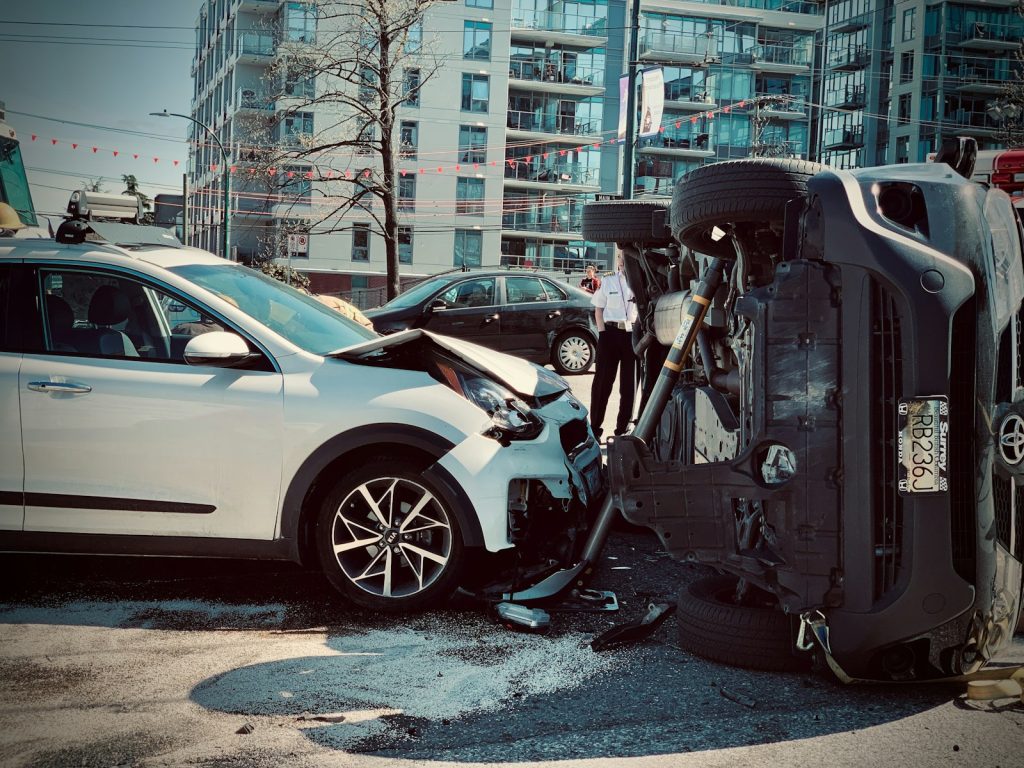
Here is the part every client wants to know: can I sue? In a car accident case in New York, you can sue the at-fault driver for pain and suffering only if your injury meets the definition of “serious injury” in Insurance Law §5102(d). The categories include, among others:
- A fracture
- Significant disfigurement
- Permanent loss of use of a body organ, member, function or system
- Permanent consequential limitation of use of a body organ or member
- Significant limitation of use of a body function or system
- Death
A broken wrist is easy. A herniated disc in the lower back is where the real fight happens. The defense will hire a doctor to examine you once, for fifteen minutes, and that doctor will often say your problem is degenerative, meaning you had it before the crash. Our job is to answer that with your treating doctors’ findings, range-of-motion testing, imaging, and a clean timeline showing you were fine before and not fine after.
One more thing people miss: economic losses above the no-fault limit, such as lost wages beyond what no-fault pays or medical costs past $50,000, can be pursued against the at-fault driver regardless of the threshold. So even a case that looks small on the pain-and-suffering side may still have value.
2026 update: For motor-vehicle personal-injury actions commenced on or after May 26, 2026, New York removed the “90/180-day” category from the serious-injury definition. That category used to cover injuries that kept you from your usual daily activities for 90 of the first 180 days. Cases filed before that date are handled under the prior rule, which is one more reason to talk with us about timing.
Fault, Rear-End Crashes, and the New Comparative Fault Rule
Insurance companies love to say “you were partly at fault.” Sometimes that is true. Sometimes it is a negotiating tactic. Either way, you need to understand how New York treats it.
For years New York used pure comparative fault. If you were 30% responsible, your recovery dropped by 30%. That is still the rule for a lot of cases. But for motor-vehicle injury cases, the law changed in 2026.
2026 update: Under amended CPLR 1411, for motor-vehicle personal-injury actions commenced on or after May 26, 2026, a claimant whose fault is greater than the defendants’ combined fault (more than 50%) recovers nothing. At 50% or less, the recovery is reduced by the claimant’s share.
What does that mean for you, sitting here today? It means the fight over percentages matters more than it used to. A case where the insurer can push your share past the halfway mark is a case they will try to push. So we build fault evidence early: photos, video, the police report, witness names, the data from the cars, and the physical damage pattern.
Rear-end crashes are a good example of where the law helps you. Under Vehicle and Traffic Law §1129, drivers must not follow too closely, and New York courts generally presume the rear driver was negligent unless that driver has a non-negligent explanation. “He stopped short” is the explanation we hear most. Sometimes it works for them. Usually, on the Long Island Expressway at rush hour, it does not, because stopping short is exactly what traffic does there and drivers are expected to leave room for it.
Owners matter too. Under Vehicle and Traffic Law §388, the owner of a car is generally responsible for the negligence of anyone driving it with permission. If the driver who hit you was in a relative’s car or a company car, the owner’s policy is very often in play.
The Roads Where We See These Cases
Every borough has its own traffic personality. Queens has several, because it is really a collection of very different neighborhoods stitched together by some of the busiest roads in the city. Where your crash happened tells us a lot about how the other side will try to defend it.
Queens Boulevard. Wide, fast in places, with service roads, medians, and pedestrians crossing at long intervals. Lane changes between the main lanes and the service roads cause a steady stream of sideswipes and turning crashes. The city has redesigned sections of it over the years, which means the lane markings at your intersection today may not match a map from a few years ago. We pull the layout as it existed on the day of your crash.
Northern Boulevard and Hillside Avenue. Long commercial corridors with buses, double-parked delivery vans, and left turns across heavy traffic. Left-turn cases often come down to who had the light and whether the turning driver yielded. Store cameras along these stretches can settle that, but only if someone asks for the footage before it is recorded over.
Woodhaven Boulevard and Cross Bay Boulevard. Heavy, fast, and busy with buses. Bus lanes and changing lane configurations create merge conflicts, and the stretch toward the Rockaways is a summer-traffic magnet.
The expressways and parkways. The Long Island Expressway, the Van Wyck, the Grand Central, the Cross Island, the Belt and the Clearview carry most of our highway rear-end and chain-reaction cases. Multi-car crashes raise a specific problem: figuring out which impact caused which injury. That is a reconstruction question, and it is worth getting right early.
Local streets around Jamaica Avenue, Merrick Boulevard and Rockaway Boulevard. Intersections near transit hubs, schools and shopping strips, where speed is lower but conflicts with pedestrians, turning drivers and parked cars are constant.
If you were hurt in a crash somewhere near the eastern edge of the borough, our page on working with a car accident lawyer in Bellerose covers that corner of Queens specifically. And if your case involves more than one county or a crash outside the city, our overview for a car accident attorney in New York lays out the statewide picture.
What We Actually Do on Your File
People sometimes imagine that hiring a lawyer means a letter goes out and then everyone waits. That is not how we work. Here is roughly what happens in the first weeks after you hire us.
- We lock down the evidence. Requests for video from businesses, buses, and building cameras go out right away, because a lot of footage is overwritten within days or weeks. We get the police report, the other driver’s insurance information, and the MV-104 reports drivers must file.
- We get you into the no-fault system correctly. Applications on time, wage verification from your employer, and records organized so the carrier cannot claim it never received them.
- We identify every policy. The driver’s policy, the owner’s policy under VTL §388, an employer’s policy if the driver was working, and your own supplementary uninsured/underinsured motorist (SUM) coverage if the other driver’s limits are low.
- We follow your medical picture. Not to tell your doctors what to do, but to make sure what they find gets documented in a way that a court can understand.
- We value the case honestly. We tell you what we think the case is worth and why, and we tell you when we think an offer is fair and when it is not.
- We file suit when it makes sense. Many cases resolve without a lawsuit. Some do not. When an insurer will not be reasonable, we are prepared to file in Queens County Supreme Court and take the case forward.
About that police accident report: drivers in New York must file their own report with the DMV, form MV-104, within 10 days if anyone was injured or killed or if property damage exceeds $1,000. A lot of people do not know that the police report and the driver’s own MV-104 are separate things. Missing it can create problems with the DMV, so do not ignore it.
The Mistakes That Cost People Money
We would rather you hear these from us now than learn them the hard way.
- Waiting to see a doctor. “I thought it would go away” is understandable. But a two-week gap between the crash and your first visit gives the defense its first argument.
- Posting about the crash or your activities. A photo of you at a family barbecue, smiling, can be held up in a deposition as proof you are fine. Keep it offline.
- Signing medical authorizations for the other insurer. They want your entire medical history, going back years, to find something to blame. Do not sign without advice.
- Accepting a quick property-damage check with a release attached. Read what you sign. Property damage and bodily injury claims should be kept separate.
- Not keeping a record. A short daily note about pain, missed work and things you could not do is easy to keep and hard to argue with later.

Three Queens Landmarks and the Traffic Around Them
We work with people from every corner of the borough. Here are three places our clients know well, and what the roads near them are like.
Hell Gate Bridge from Astoria Park
The Hell Gate Bridge is the massive steel arch railroad bridge that crosses the East River at the strait known as Hell Gate, connecting Astoria to Randalls and Wards Islands. It opened in 1917 and still carries passenger and freight trains, and the best view of it is from Astoria Park, the waterfront park along Shore Boulevard that also has the large public Astoria Pool. On summer weekends the streets around the park fill with visitors circling for parking, families crossing to the waterfront, and drivers heading to and from the nearby approaches to the RFK Bridge and the Grand Central Parkway. Slow down along Shore Boulevard and Ditmars Boulevard, where people step out between parked cars.
Ridgewood Reservoir in Highland Park
Ridgewood Reservoir sits inside Highland Park on the Brooklyn–Queens border. It was built in the nineteenth century to supply water to what was then the City of Brooklyn, and after it was taken out of service its basins grew back into woods and wetlands that now attract birdwatchers and walkers. The park sits right beside the Jackie Robinson Parkway, a narrow, winding road with tight curves and short merges that produces its share of single-car and rear-end crashes. Like other New York parkways, it is closed to commercial vehicles, so the traffic is mostly cars, but the curves leave little margin for speed or distraction.
Jackson Heights’ Diversity Plaza
Diversity Plaza is the pedestrian plaza on 37th Road between 73rd and 74th Streets in Jackson Heights, a block the city converted from roadway into public space. It sits steps from the busy 74th Street–Broadway and Roosevelt Avenue subway hub, surrounded by restaurants, grocers and shops that reflect the neighborhood’s mix of South Asian, Latin American and other communities. The streets around it, especially Roosevelt Avenue under the elevated 7 train and Broadway, carry heavy foot traffic, double-parked delivery vehicles and turning cars. Crashes here frequently involve pedestrians, which brings Vehicle and Traffic Law §1146 and a driver’s duty of due care into the picture.
Directions to Our Rosedale Office from Astoria Park
From Astoria Park, head to the nearby Grand Central Parkway and drive east past LaGuardia Airport and Flushing Meadows–Corona Park. Continue onto the Cross Island Parkway heading south along the eastern edge of Queens toward the Belt Parkway and Southern State interchange. Our office at 1 Cross Island Plaza, Suite 325, sits just off the parkway in Rosedale near the Nassau County line. Traffic on the Grand Central can be heavy at rush hour, so give yourself extra time and check live conditions before you go.
The Harder Cases: Hit-and-Runs, Uninsured Drivers and City Vehicles
Not every crash comes with a cooperative driver and a decent insurance policy. These are the situations where people most often need a lawyer early.
Hit-and-run. Leaving the scene of an accident involving injury is a crime under Vehicle and Traffic Law §600, but that does not help you pay your medical bills. If the driver is never found and you have no other coverage available, the Motor Vehicle Accident Indemnification Corporation, known as MVAIC, may step in. MVAIC has strict notice requirements, including a police report and timely notice to MVAIC itself. Report the crash to police right away and talk to us as soon as possible, because those deadlines are not forgiving.
Uninsured or underinsured drivers. Check your own policy for supplementary uninsured/underinsured motorist (SUM) coverage. If the at-fault driver’s limits are too low to cover a serious injury, your own SUM coverage may make up some of the difference. Most people have no idea what their SUM limits are until we look.
City vehicles. If a city-owned vehicle hit you, such as a Department of Sanitation truck or another city agency vehicle, the rules change. A Notice of Claim is generally required within 90 days under General Municipal Law §50-e, and the lawsuit generally has to be filed within one year and 90 days. The city may also demand a hearing, called a 50-h hearing, before the case can go forward. MTA buses follow similar transit-authority rules. The 90-day clock is the one that hurts people.
The general deadline. For an ordinary claim against another driver, New York’s statute of limitations is generally three years under CPLR 214. Three years sounds like plenty. It is not, once you account for treatment, records and negotiation.
Car crashes also tend to overlap with other kinds of cases. If you were on a bike, our page for a bicycle accident lawyer in Queens covers the rules that change for riders. If your crash involved a van, SUV or other passenger vehicle, our guide for an auto accident attorney serving Queens goes deeper into those claims.
Your Questions, Answered Plainly
Do I need a car accident lawyer in Queens if the crash was minor?
Not always. If you were not hurt and only your bumper was damaged, you can usually handle the property claim yourself. But if you are still in pain a few days later, or you missed work, talk to a lawyer before you give any statement or sign anything. Soft-tissue injuries can turn out to be disc injuries, and early decisions about treatment and paperwork affect whether you can ever bring an injury claim at all.
How long do I have to file a no-fault application?
Generally 30 days from the accident. The application goes to the insurer of the vehicle you were in, or, if you were a pedestrian or bicyclist, usually to the insurer of the car that hit you. Late applications can be denied. If you are past 30 days, do not give up, but call us right away so we can look at whether there is a reasonable justification for the delay.
What does the serious injury threshold mean for my case?
It is the legal bar you must clear to sue for pain and suffering after a car crash in New York. Examples include a fracture, significant disfigurement, permanent loss of use, or a permanent consequential or significant limitation of a body part or system. Whether your injury qualifies depends on medical evidence, including imaging and objective testing. Economic losses beyond no-fault can be pursued regardless of the threshold.
The other driver says I stopped short. Am I at fault for being rear-ended?
Usually not. New York courts generally presume that the driver who hits a car from behind was negligent, because drivers must keep a safe distance under VTL §1129. The rear driver can try to offer a non-negligent explanation, and a sudden stop is the one they try most. Whether it works depends on the facts, which is why video, witness statements and vehicle damage matter.
How does the 2026 comparative fault change affect me?
For motor-vehicle injury lawsuits commenced on or after May 26, 2026, a person found more than 50% at fault recovers nothing. At 50% or less, the recovery is reduced by that share. Lawsuits commenced before that date are generally treated under the earlier pure comparative fault rule. Either way, evidence on how the crash happened matters more than ever.
What if the driver who hit me was in someone else’s car?
Under VTL §388, the owner of a vehicle is generally liable for the negligence of a driver using it with permission. That often means the owner’s insurance policy covers the crash. If the driver was working at the time, an employer may also be responsible. We look at every potential policy so you are not limited to whatever the driver personally carries.
I was hit by a city sanitation truck. Is the deadline different?
Yes, and it is much shorter. For claims against New York City and its agencies, including Department of Sanitation vehicles, a Notice of Claim is generally due within 90 days of the crash, and a lawsuit generally must be filed within one year and 90 days. The city may require a 50-h hearing before suit. Do not wait on these cases.
Where do most car crashes in Queens happen?
We see cases from every neighborhood, but certain corridors come up again and again: Queens Boulevard, Northern Boulevard, Woodhaven Boulevard, Hillside Avenue, and the highways, including the Long Island Expressway, Van Wyck, Grand Central and Cross Island Parkways. Each has its own patterns, from service-road merges to highway chain reactions, and those patterns shape the evidence we look for.
Should I talk to the other driver’s insurance adjuster?
You can give basic information, like your name and the fact that you were in the crash. Avoid recorded statements, opinions about fault, and descriptions of your injuries before you have spoken with a lawyer and a doctor. Adjusters may ask questions designed to minimize your claim, and anything you say can be used later.
How far is your office from where I live in Queens?
Our office is at 1 Cross Island Plaza, Suite 325, in Rosedale, right off the Cross Island and Belt Parkway area near the Nassau line. Most of Queens can reach us by the parkways. If getting to us is difficult because of your injuries, call us and we will talk about how to make the first meeting work for you.
For more general questions, our main personal injury FAQ page covers topics beyond car crashes, and you can see the neighborhoods and counties we handle on our service areas page.
Related: For a full overview of how our firm handles these claims, visit our Car Accident Lawyer in Queens page.
Talk With a Car Accident Lawyer in Queens Today
If you have read this far, you already know more about your case than most people do when they walk in our door. The next step is a conversation about your specific crash, your injuries and your deadlines. Bring the police report number, your insurance card, photos if you have them, and the names of the doctors you have seen.
Call Yakov Mushiyev & Associates, P.C. at 718.775.3110, or reach our office online. We are in Rosedale, at 1 Cross Island Plaza, Suite 325, and we work with people across Queens. A car accident lawyer in Queens should be someone you can talk to straight, and that is what we aim to be.
General information, not legal advice. Attorney Advertising. Prior results do not guarantee a similar outcome.