
An insurer’s investigation can take 30-60 days, but an injury claim’s first deadline can come much sooner. If you’re learning how to make a claim against my own insurance in Valley Stream, notify your insurer promptly and provide a clear account of the accident and supporting records. In New York, written notice of a No-Fault claim is generally due within 30 calendar days after an auto accident.
It’s reasonable to expect your own insurer to make the claims process straightforward. In practice, policy requirements, deadlines, and requests for information can make a claim difficult to manage while you recover or deal with vehicle damage.
This article explains what information to gather, how to report an accident, and which New York No-Fault deadlines may apply. It also covers what to expect during an insurer’s investigation and when legal help from Yakov Mushiyev & Associates, P.C. may be useful if the insurer denies your claim or disputes the amount.
Key Takeaways
- Keep a clear record of insurer communications, accident details, and documents that support your claim.
- Notify your insurer promptly after an accident, and provide the police report when it becomes available.
- Identify which No-Fault insurer should receive your claim, since the right insurer can depend on where you were and how the accident happened.
- Legal assistance may help you address a denied claim, a disputed settlement, or questions about your coverage and next steps.
Information and documentation a lawyer may gather for an insurance complaint
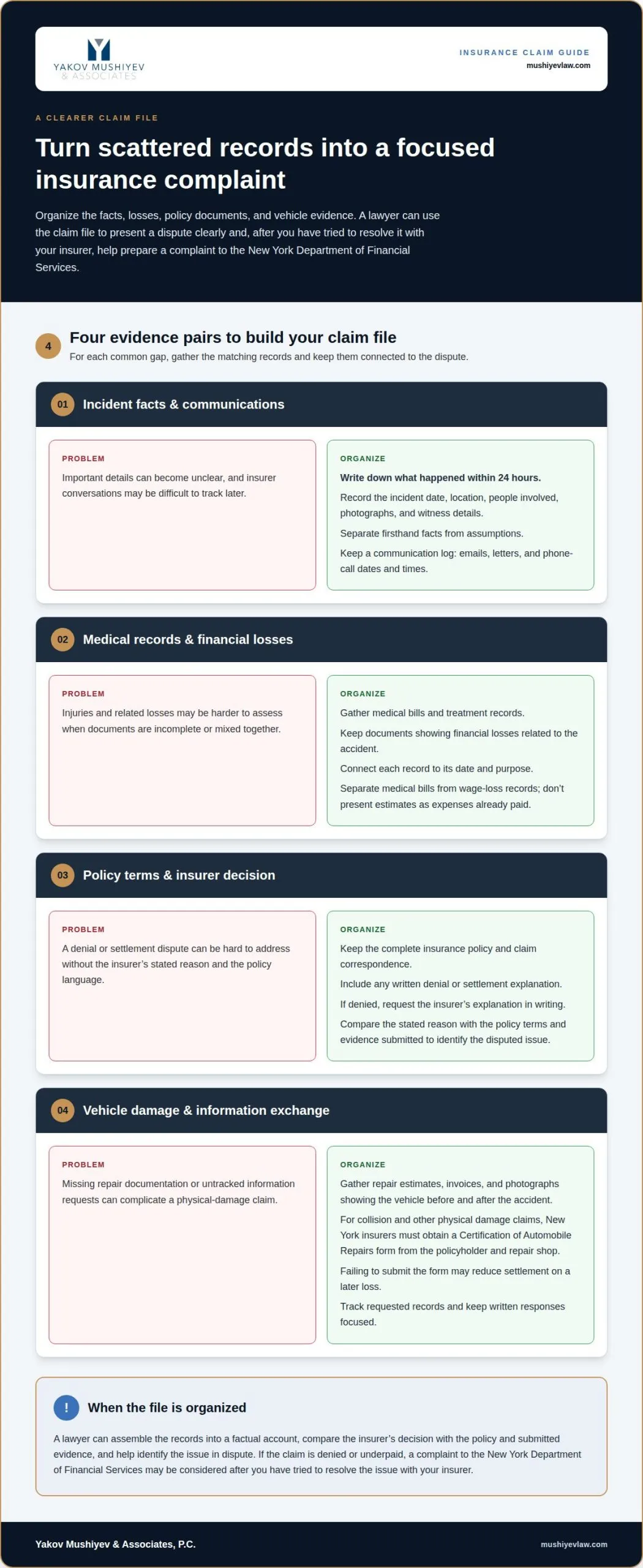
Give your lawyer the claim file and key records so the dispute can be presented clearly. If your claim is denied or underpaid, a lawyer can organize the evidence and help prepare a complaint to the New York Department of Financial Services after you have tried to resolve the issue with your insurer.
-
How a Lawyer Gathers Incident Information and Records
Provide your lawyer with the incident date, location, people involved, and any photographs or witness details. A lawyer can assemble these records into a factual account and keep a communication log with the insurer, including emails, letters, and phone-call dates and times. Write down what happened within 24 hours, while details remain clear, and separate firsthand facts from assumptions.
-
How a Lawyer Compiles Medical and Financial-Loss Documents
Give your lawyer medical bills, treatment records, and documents showing financial losses related to the accident. The lawyer can organize and submit them with the claim so the insurer can investigate the reported injuries and losses. Keep each record connected to its date and purpose. For example, separate medical bills from wage-loss records, and don’t present estimates as expenses you have already paid.
-
How a Lawyer Reviews Policy and Denial Documents
Give your lawyer the complete policy, claim correspondence, and any written denial or settlement explanation. The lawyer can compare the insurer’s stated reason with the policy language and the evidence submitted, then identify the disputed issue. If the insurer denied the claim, request its explanation in writing. This creates a clear record for a complaint and helps focus any response on specific policy terms.
-
How a Lawyer Documents Damage and Handles Information Exchange
Provide repair estimates, invoices, and photographs showing the vehicle’s condition before and after the accident. For collision and other physical damage claims, New York insurers must obtain a Certification of Automobile Repairs form from the policyholder and repair shop. Failing to submit it may reduce settlement on a later loss. A lawyer can track requested records and organize written responses so information exchanges stay focused.
How a lawyer can help report an auto accident to your insurer and the police
After a Valley Stream crash, a lawyer can help organize the police report, insurer notice, and supporting evidence, while distinguishing a claim under your own policy from a liability claim against another driver.
-
How a Lawyer Can Advise You About Calling the Police After an Incident
Tell your lawyer whether anyone was injured, damage occurred, or a crime may have taken place. Call 911 if someone is injured, a crime occurred, or significant damage happened. In New York, an accident report must be filed with the Department of Motor Vehicles when damage exceeds $1,000 or anyone is injured. A police report isn’t always required to file an insurance claim.
-
How a Lawyer Can Help Obtain the Police Report
Give your lawyer the crash date, location, and any report or incident number, so they can help obtain and review the report. A full police report is usually available within 5-10 business days. The lawyer can compare its account with your records and flag errors or missing details. For Valley Stream damage documentation, they can organize local incident details and repair records without assuming a police report proves liability.
-
How a Lawyer Can Help Report the Accident to Your Insurer
Share your insurance policy and accident facts so your lawyer can help notify your insurance company and present a first-party claim. If another driver may be liable, gather their name, insurer, and policy number; you may also need to notify your own insurer. New York drivers may choose their repair shop. A payout depends on coverage, deductible, and vehicle value; collision or comprehensive payment is limited to the lower of damage or actual cash value. A complaint differs from a claim: an insurer cannot discriminate against you for filing a complaint. For help with an accident claim, consider car accident legal representation.
Legal assistance with insurance claims
A lawyer can review your policy, the insurer’s decision, and your options before you pursue a disputed payment. If you’re asking, “How do I make a claim against my own insurance in Valley Stream?” legal guidance can clarify the process and help you decide what to do next.
- Ask for a review of the coverage and decision. Provide the full insurance policy, claim correspondence, and any denial or settlement offer. A lawyer can compare the insurer’s explanation with the policy terms and submitted evidence, then identify whether the dispute concerns coverage, documentation, or the amount offered. If the claim was denied, request the insurer’s explanation in writing and keep it with the claim file.
- Discuss possible next steps before accepting or rejecting payment. You may accept or reject a proposed settlement, while an unresolved dispute may require a lawsuit. In New York, an insured may need to exhaust available administrative remedies before filing a civil lawsuit. A lawyer can assess the stage of the dispute and explain how a complaint to the New York Department of Financial Services may fit into the process.
- Clarify legal fees and case expenses in writing. Ask the lawyer to explain the fee arrangement, how expenses are handled, and what happens if the case does not result in a recovery. Yakov Mushiyev & Associates, P.C. handles personal injury cases on a contingency basis, with no fee unless the firm obtains a recovery. Review the written agreement so you understand its terms before representation begins.
- Bring a detailed file when seeking legal help. Gather the policy, claim number, insurer’s letters, proof of damage, and records of payments or other losses. If you’re considering how to make a claim against your own insurance in Valley Stream, these materials help a lawyer understand what happened, what remains disputed, and which legal route may apply. Include records related to the accident and its effects.
No-Fault claim deadlines and benefits
New York No-Fault benefits can help cover accident-related medical expenses, but the notice deadline is strict. First identify which insurer should receive the claim, then track each required form and response.
- Send written notice promptly. In New York, an injured person generally must give written notice of a No-Fault claim within 30 calendar days after an auto accident. Late notice may be excused when written proof gives a clear and reasonable justification. Keep a copy of the notice and its delivery record.
- Identify the correct No-Fault insurer. For an accident in New York, the claim generally goes to the insurer of the vehicle occupied by the injured person. A pedestrian generally applies to the insurer of the vehicle that struck them. If you’re injured outside New York while riding in someone else’s vehicle, which insurer to contact may depend on the circumstances.
- Apply special rules to bus, uninsured-vehicle, and hit-and-run accidents. An injured bus passenger generally seeks benefits under their own auto policy or a household member’s policy; if neither exists, the bus insurer provides benefits. A person without auto insurance injured by or while in an uninsured vehicle, or by a hit-and-run driver, should apply through MVAIC. If you’re seeking benefits after an accident involving an uninsured vehicle or a hit-and-run, report the accident promptly.
- Track forms and medical-claim decisions. The insurer or MVAIC must send a No-Fault application and explanatory letter within five business days after receiving claim notice. Unless it requests additional verification, an insurer must pay a medical claim within 30 days after receiving the provider’s claim and supporting proof. Late payment carries interest at 2% per month on unpaid amounts.
If the deadline, insurer, or medical payment is disputed, discuss your No-Fault claim with an attorney.
Yakov Mushiyev & Associates, P.C
Yakov Mushiyev & Associates, P.C. represents people injured in accidents and can help explain how insurance issues affect your next steps. If an insurer disputes coverage, delays a decision, or offers less than your documented losses support, legal guidance can help you assess the policy, records, and available options.
The firm provides legal representation for injuries involving car, truck, and motorcycle accidents, as well as slip and falls. Bring relevant insurer letters, claim documents, and accident records so the discussion can address your specific concerns.
If you need legal guidance about an accident-related insurance claim, contact Yakov Mushiyev & Associates, P.C.
Choose a Clear Path Forward
If you’re deciding how to make a claim against your own insurance in Valley Stream, take the next step with a clear view of your goals and the unresolved issues. You don’t have to accept an insurer’s position without understanding how it relates to your policy and circumstances. Legal guidance can help you assess your options and protect your interests while you focus on moving forward.
Yakov Mushiyev & Associates, P.C provides legal representation for car accidents, truck accidents, and slip and fall injuries. If an accident or injury has left you facing difficult insurance questions, take the next step at a pace that feels right for you. Contact Yakov Mushiyev & Associates, P.C to discuss your situation. A clear conversation can help you move forward with greater confidence.
Frequently Asked Questions
How Long Does an Insurance Company Have to Investigate a Claim?
Insurers typically have 30-60 days to investigate a claim after it is made, although the time can depend on the evidence and issues under review. For example, missing records or disputed facts may require further investigation. Keep a dated record of requests and responses so you can see what remains outstanding and provide relevant information without guessing or speculating.
What is my insurance company’s claim reporting deadline in New York?
Your policy may set a specific deadline for notifying your insurer, so review its notice requirements and report the incident promptly. For an injury-related No-Fault claim in New York, written notice is generally due within 30 calendar days of the auto accident. A late filing may jeopardize benefits; written proof explaining the delay may provide a basis for accepting late notice.
What information and documents can a lawyer use to file an auto or homeowners insurance claim?
A lawyer may use your policy and claim number, a dated account of the incident, insurer correspondence, photographs, repair records, and relevant bills or receipts. For a homeowners claim, examples include images of damaged rooms or belongings, an itemized list of affected property, and repair estimates. In Rosedale, Rochdale, or elsewhere in Queens, organize records by date and connect each document to the reported loss.
How can a lawyer help file a New York auto insurance claim after a car accident?
A lawyer can help present the accident facts to your insurer, organize supporting records, and address questions about coverage or a disputed payment. For example, if the insurer questions how damage occurred, photographs and repair documents can help clarify the claim. The lawyer can also distinguish a claim under your own policy from one against another driver’s insurer and keep communications focused on the relevant issues.
What are New York insurance claim response and payment deadlines?
For collision or comprehensive claims, the insurer may need to inspect the vehicle before making an offer, so make it available for inspection. After settlement agreement, payment is due within five business days. No-Fault medical claims have separate timing rules. These general answers aren’t legal advice for a specific case.
Can my insurer raise my rates or cancel my policy after I file a claim in New York?
Frequent small or expensive homeowners insurance claims can lead to higher rates or dropped coverage. However, an insurer cannot use the filing of a complaint as a basis for future discrimination.