
If you were hurt on the Van Wyck, the Long Island Expressway, the Grand Central, the Belt or the Cross Island, you have probably heard a dozen unfamiliar terms in the past few days: no-fault, serious injury threshold, comparative fault, vicarious liability. A highway accident lawyer in Queens should be able to explain every one of them in plain English before asking you to make a single decision. That is how we work at Yakov Mushiyev & Associates, P.C. Our office sits at 1 Cross Island Plaza in Rosedale, a short drive from the southern end of the Cross Island Parkway, and much of our day is spent helping injured drivers, passengers and families understand how New York law treats a crash at highway speed.
This page is organized like a short course. Each section takes one idea, defines it, and then shows how it plays out on a Queens expressway or parkway. By the end you should know what questions to ask, what documents matter, and where the real deadlines are. If you want a different angle on the same subject, focused on the insurance company’s playbook, read our in-depth guide to highway crash claims and insurer tactics in Queens.
Who We Are and How We Help After a Highway Crash
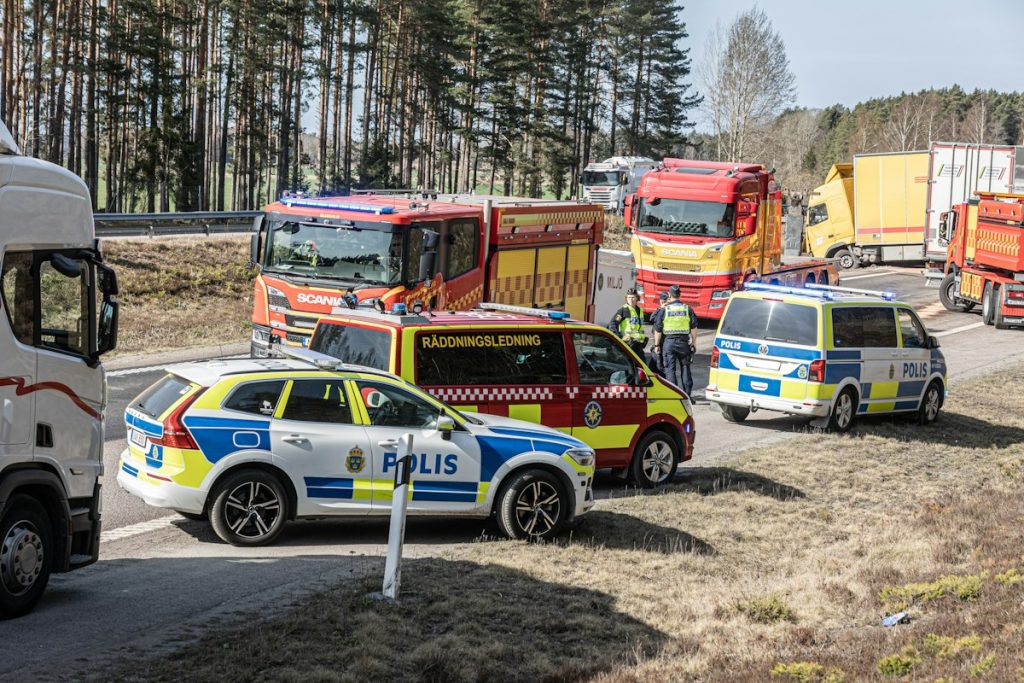
Yakov Mushiyev & Associates, P.C. is a personal injury firm based in Rosedale, Queens. We represent people injured in motor vehicle collisions across the borough and the surrounding region, including multi-vehicle crashes on limited-access roads. When you call us, the first conversation is about you: what happened, what hurts, who is paying your medical bills right now, and what you are worried about. The legal analysis comes second.
In a highway case, our work typically falls into four tasks:
- Stabilizing the paperwork. We help make sure your no-fault application, police report information and medical records are in order, because missing an early deadline can cost you benefits you are otherwise entitled to.
- Identifying every responsible party. On a highway, that can include more than one driver, a vehicle owner who lent the car, a trucking company, or a government agency responsible for a vehicle.
- Preserving evidence. Dashcam footage, vehicle event data, traffic camera clips and commercial driver logs can be overwritten or discarded. We move quickly to request that they be kept.
- Measuring your losses honestly. We document medical treatment, lost income and the ways the injury has changed daily life, and we explain how New York’s injury threshold affects what can be claimed.
You can learn more about the attorneys and staff on our firm overview page, and see the full list of injury matters we handle on our practice areas page.
Lesson One: What Makes a Road a “Highway” in Queens
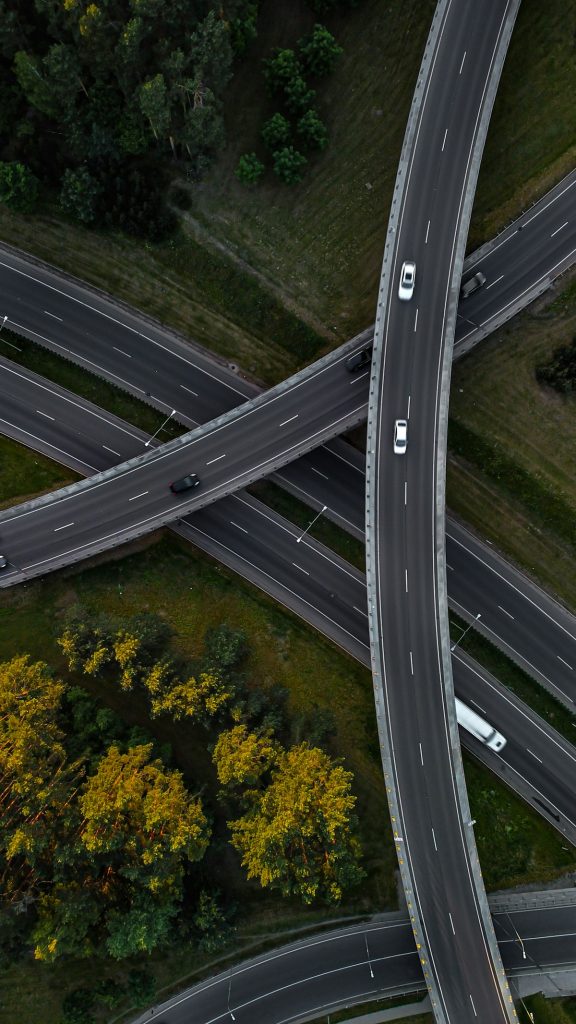
Lawyers and engineers use the word highway loosely, so let us be precise. In everyday Queens usage, a highway means a limited-access road: a roadway you can only enter or leave at designated ramps, with no traffic lights, no driveways and no pedestrian crossings. The borough has two families of these roads.
Expressways are built to carry all kinds of traffic, including tractor-trailers and box trucks. In Queens that means the Long Island Expressway, the Van Wyck Expressway, the Clearview Expressway, the Brooklyn-Queens Expressway and the Nassau Expressway corridor near the airport.
Parkways were designed for passenger cars. The Grand Central, the Cross Island, the Belt and the Jackie Robinson are parkways, and commercial vehicles are banned from New York parkways. Low stone overpasses, tight curves and short merge lanes reflect that original design. When a truck ends up on a parkway anyway, whether because a driver followed a consumer GPS route or ignored the signs, the result can be a bridge strike or a collision with the cars behind it.
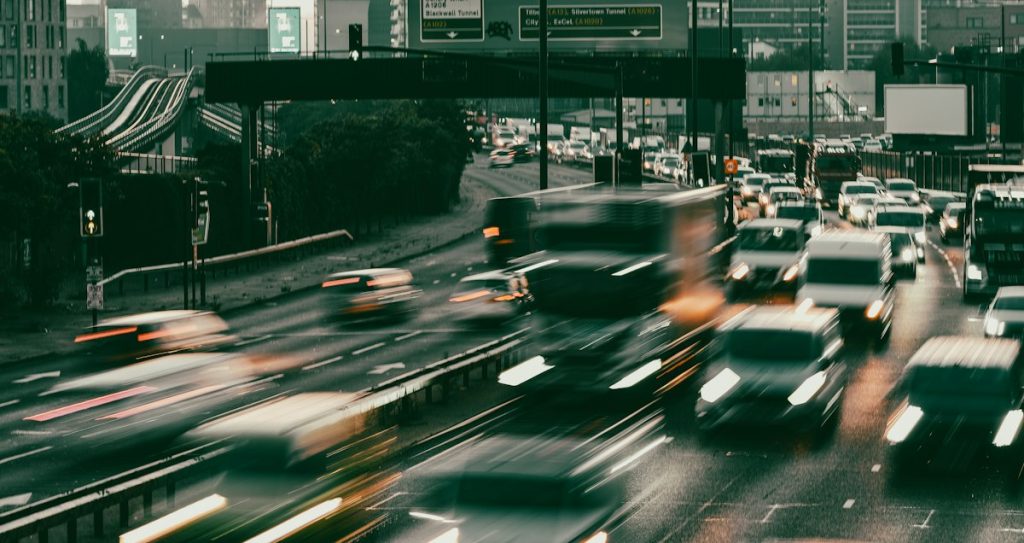
Why should the definition matter to you? Because the type of road shapes the type of crash. Expressways tend to produce truck-involved collisions, high-speed rear-end impacts and lane-change crashes in heavy merges like the Kew Gardens Interchange. Parkways tend to produce crashes tied to narrow shoulders, abrupt exits, weaving traffic and, occasionally, an illegal truck. Each pattern points to different evidence and different defendants.
Why a Highway Accident Lawyer in Queens Starts With Vocabulary
Most of the confusion after a crash comes from a handful of terms that insurance adjusters use as if everyone already knew them. Here is a short glossary, written the way we would explain it across a conference table.
| Term | Plain-English meaning | Why it matters on a Queens highway |
|---|---|---|
| Negligence | Failing to use the care a reasonable person would use in the same situation. | Speeding in a work zone on the Van Wyck or tailgating on the LIE can be negligence. |
| No-fault | New York’s system that pays basic economic losses from your own (or the vehicle’s) auto policy, regardless of who caused the crash. | Covers early medical bills and part of lost wages while fault is still being sorted out. |
| Serious injury threshold | A list of injury categories you must meet before suing for pain and suffering after a motor vehicle crash. | High-speed impacts often cause fractures or lasting limitations that may qualify. |
| Comparative fault | Dividing responsibility among everyone who contributed to the crash, by percentage. | Multi-car chain collisions on the Belt often involve several drivers sharing blame. |
| Vicarious liability | Holding one person responsible for another’s negligence because of their relationship, such as an owner and a permissive driver. | Lets you reach the owner’s insurance when someone borrowed the car. |
| Statute of limitations | The deadline to file a lawsuit. | Generally three years for personal injury in New York, much shorter against the City. |
| Spoliation | Destruction or loss of evidence that should have been preserved. | Truck logs and dashcam video can be overwritten unless someone asks for them early. |
Lesson Two: Negligence, Broken Into Its Four Parts
Negligence is the legal theory behind nearly every highway injury claim. Courts break it into four elements, and you need all four.
- Duty. Every driver owes everyone else on the road a duty to drive with reasonable care. This is rarely disputed.
- Breach. The driver fell short of that care, for example by speeding, changing lanes without looking, driving while impaired, or using a hand-held phone.
- Causation. The breach actually caused the crash and your injuries. A driver who was speeding but was stopped dead in traffic when you hit him may have breached a duty without causing anything.
- Damages. You suffered a real, measurable harm: medical treatment, lost income, pain, limitation.
New York statutes help fill in what “reasonable care” means. Section 1129 of the Vehicle and Traffic Law, for instance, requires drivers not to follow more closely than is reasonable and prudent given speed and traffic. That rule is the backbone of most rear-end cases. Courts generally presume that the driver who strikes the rear of another vehicle was negligent unless that driver can offer a non-negligent explanation, such as a sudden mechanical failure. You can read the statute itself on the New York State Senate’s legislation site.
Lesson Three: No-Fault and the Serious Injury Threshold
New York is a no-fault state. The term confuses people because it sounds as if nobody can be blamed. That is not what it means. No-fault is simply a first layer of insurance that pays certain economic losses quickly, regardless of who caused the crash.
Under Article 51 of the Insurance Law, no-fault generally pays basic economic loss up to $50,000 per person. That includes necessary medical expenses, 80 percent of lost earnings up to $2,000 per month, and up to $25 per day for other reasonable and necessary expenses, such as help around the house. The application is generally due within 30 days of the accident, which is one of the first deadlines we check when a new client calls. If you were a passenger in someone else’s car, you typically claim through that vehicle’s policy. One important exception: motorcycle operators and passengers are not covered by New York no-fault.
No-fault does not pay for pain and suffering. To recover those damages from the at-fault driver after a motor vehicle crash, you must show a serious injury as defined in Insurance Law section 5102(d). The categories include death, a fracture, significant disfigurement, permanent loss of use of a body organ, member, function or system, a permanent consequential limitation, and a significant limitation of use of a body function or system. The full definition is available on the State Senate’s posting of Insurance Law section 5102.
Two practical points follow. First, economic losses above what no-fault pays, such as wage loss beyond the no-fault cap, can be pursued against the at-fault party regardless of the threshold. Second, the threshold is proved with medical evidence: imaging, objective range-of-motion testing, and treating physicians who can connect the limitation to the crash. That is why consistent treatment after a highway collision matters so much.
Lesson Four: Comparative Fault and What Changed in 2026
Comparative fault means responsibility can be shared. If a jury finds that you were 20 percent responsible for a crash, for example because you were driving somewhat over the limit, your recovery is reduced by that 20 percent. For decades New York applied a “pure” version of this rule to every kind of case: even a plaintiff who was mostly at fault could recover a reduced amount.
2026 update: Legislation signed in late May 2026, effective May 26, 2026, changed two rules for motor vehicle personal injury actions commenced on or after that date. Under amended CPLR 1411, a claimant whose fault is greater than the combined fault of the defendants (more than 50 percent) recovers nothing; at 50 percent or less, recovery is reduced by the claimant’s share. The same legislation removed the “90/180-day” category from the serious injury definition in Insurance Law section 5102(d). Non-motor-vehicle cases remain under pure comparative fault.
For highway crashes, the new rule raises the stakes of the fault analysis. In a chain-reaction pileup on the Belt Parkway, an insurer may try to push a larger share of blame onto you, knowing that crossing the 50 percent line would now eliminate your claim entirely in a qualifying case. Careful reconstruction, including where each car was, how fast it was moving, and who changed lanes first, becomes central. The current text of the statute is published on the Senate’s page for CPLR 1411.
Lesson Five: Vicarious Liability, Trucks and Multiple Defendants
Vicarious liability is the idea that the law sometimes holds one party responsible for another’s carelessness. Two versions come up constantly on Queens highways.
Owner liability under VTL section 388
In New York, a vehicle owner is generally liable for the negligence of anyone driving the vehicle with the owner’s permission. If a cousin borrows a car and causes a crash on the Cross Island, the owner’s insurance can be on the hook. This matters because the owner’s policy may provide coverage that the driver alone would not.
Employers and commercial carriers
When a driver is working, the employer may also be responsible. On expressways like the Van Wyck and the LIE, which carry heavy freight traffic to and from JFK and Long Island, that often means a trucking company or delivery contractor. Commercial carriers operate under federal rules. For property-carrying drivers, the Federal Motor Carrier Safety Administration limits driving to 11 hours after 10 consecutive hours off duty, within a 14-hour on-duty window, with a 30-minute break required after 8 hours of driving. The details are on the FMCSA hours-of-service page. Electronic logging device records can show whether a driver was over those limits. Federal law also sets minimum liability coverage for interstate general freight carriers at $750,000, which can make a real difference when injuries are severe.
If you were hit by a large commercial vehicle, our page for 18-wheeler crash victims in Queens goes deeper into tractor-trailer evidence. Crashes involving a city bus on a highway service road raise a separate set of public-agency rules, which we cover for riders and drivers hurt in MTA bus collisions.
Lesson Six: Evidence, Spoliation and Deadlines
Evidence on a highway disappears faster than on a city street. There are no shopkeepers to ask about cameras, debris is swept within hours, and the vehicles are towed to separate yards. Here is what typically matters and why.
- The police report and accident report. Drivers must file DMV form MV-104 within 10 days if anyone is injured or killed or property damage exceeds $1,000.
- Vehicle data. Many modern cars and nearly all heavy trucks record speed, braking and throttle data in the seconds before a crash.
- Video. Dashcams, commercial fleet cameras and some traffic cameras may have captured the event, but footage is often overwritten on a schedule.
- Photographs of the scene and the cars. Crush patterns help reconstruct the angle and order of impacts.
- Medical records from day one. An emergency room visit or prompt follow-up ties the injury to the crash.
Spoliation is the legal term for losing or destroying evidence that should have been preserved. A preservation letter, sent early, puts a trucking company or vehicle owner on notice that the evidence matters. Courts can impose consequences when a party destroys evidence after being told to keep it.
The statute of limitations for most personal injury claims in New York is three years under CPLR 214(5), which you can read on the State Senate website. But if a City-owned vehicle, such as a sanitation truck, or a transit vehicle was involved, a Notice of Claim is generally required within 90 days, and a lawsuit generally within one year and 90 days. That shorter clock is the single most important exception to remember.
Choosing a Highway Accident Lawyer in Queens: Questions Worth Asking
Whoever you hire, a good consultation should leave you understanding your case better than when you walked in. Here are questions we encourage people to ask any firm, including ours.
- Which deadlines apply to my case, and which is the earliest?
- Who are all of the potential defendants and insurance policies?
- What evidence should be preserved right now, and who will request it?
- Does the serious injury threshold apply, and what medical documentation will we need?
- Does the 2026 change to comparative fault affect my case, given when it would be filed?
- How will you keep me informed, and who will I speak with when I call?
Clients from eastern Queens and the Nassau border often reach us first through our Bellerose highway accident page, since the Cross Island Parkway runs right along that neighborhood. Wherever the crash happened, the same principles apply.
Three Queens Landmarks Where Highways Meet the Neighborhood
Fort Totten Park
Fort Totten Park occupies a peninsula at the northern edge of Bayside, where Little Neck Bay meets the East River near the Throgs Neck Bridge. The site began as a military installation, and its Civil War-era stone fort and historic buildings still stand inside what is now a city park, used for walking, events and waterfront views. Getting there means using the Cross Island Parkway or the Clearview Expressway, both of which end or curve nearby. Those approaches carry bridge-bound traffic merging at speed, and visitors unfamiliar with the ramps sometimes slow abruptly to find their exit, a classic setup for rear-end collisions on the parkway shoulder lanes.
The USTA Billie Jean King National Tennis Center
The USTA Billie Jean King National Tennis Center in Flushing Meadows Corona Park hosts the US Open each year in late summer. During the tournament, tens of thousands of visitors arrive daily, many by car via the Grand Central Parkway, the Van Wyck Expressway and the Whitestone Expressway, while others ride the 7 train or the Long Island Rail Road. The roads around the park already carry some of the heaviest traffic in the borough, and event days add rideshare drop-offs, out-of-town drivers and late-night departures. Sudden lane changes near the park exits are a recurring hazard during the tournament weeks.
Juniper Valley Park
Juniper Valley Park is a large neighborhood park in Middle Village, with ballfields, a running track, tennis and handball courts, and playgrounds that draw families from across central Queens. It sits a short distance south of the Long Island Expressway, and many visitors arrive by exiting the LIE onto local streets such as 69th Street or Woodhaven Boulevard. The transition from expressway speed to residential blocks full of children and joggers is exactly where drivers need to reset their attention. Crashes at the bottom of expressway exit ramps, where drivers carry too much speed onto city streets, are a pattern worth knowing about.
Directions to Our Rosedale Office from Fort Totten Park
From Fort Totten Park, head out to the Cross Island Parkway and take it south. The parkway follows the shoreline of Little Neck Bay, then continues past the Northern Boulevard, Long Island Expressway and Grand Central Parkway interchanges and through Bellerose. Stay on the Cross Island toward its southern end near the Belt Parkway and Southern State interchange in Rosedale, exit, and follow local streets to 1 Cross Island Plaza, Suite 325. Allow extra time during the evening rush, when the parkway often slows near the Grand Central and Hempstead Avenue interchanges.
Highway Crash Questions, Answered Plainly
Is there a legal difference between a crash on an expressway and one on a parkway?
The same negligence and no-fault rules apply to both. The difference is practical. Commercial vehicles are banned from New York parkways, so a truck on the Grand Central or the Belt may itself be evidence of a rule violation by the driver or the company. Expressways like the LIE and Van Wyck legally carry trucks, so those cases usually focus on federal driving-hour rules, maintenance and driver conduct instead. The road type tells us which records to request first.
What does “permissive use” mean if the driver who hit me was in a borrowed car?
Permissive use means the driver had the owner’s permission, express or implied, to operate the vehicle. Under Vehicle and Traffic Law section 388, the owner is generally liable for that driver’s negligence. In practice, this usually means the owner’s insurance policy responds to your claim. Owners sometimes argue the driver lacked permission, and the law presumes permission in many situations, so the facts of how the driver got the keys can become important.
What is a preservation letter, and does my case need one?
A preservation letter is a written demand asking a person or company to keep specific evidence, such as dashcam footage, electronic logging records, vehicle data or maintenance files. It matters most when a commercial vehicle or fleet car is involved, because those records are often stored for a limited time and then overwritten. Sending the letter early creates a clear record that the other side knew the evidence was relevant, which can matter if it later goes missing.
My car was pushed into the car ahead in a chain collision. Can I be blamed for hitting it?
Usually, a driver who was stopped or stopping safely and was propelled forward by an impact from behind is not considered the cause of the second collision. The analysis focuses on who failed to keep a safe distance and why. Photographs of the damage to the front and rear of your car, along with witness accounts and the police report, help show the order of impacts. Each multi-car case turns on its own facts, so careful documentation is important.
What changes if a City vehicle was involved in my highway crash?
Claims against New York City and many public authorities follow a shorter, stricter timeline. A Notice of Claim is generally required within 90 days of the accident, and a lawsuit generally must be filed within one year and 90 days. The City may also demand an examination, often called a 50-h hearing, before a lawsuit proceeds. If a sanitation truck or other municipal vehicle was involved, contact a lawyer promptly so the 90-day window is not missed.
What does “basic economic loss” mean under no-fault?
Basic economic loss is the category of expenses that New York no-fault insurance pays, up to $50,000 per person. It includes necessary medical and rehabilitation costs, 80 percent of lost earnings up to $2,000 per month, and up to $25 per day for other reasonable expenses caused by the injury. It does not include pain and suffering. Losses beyond these limits may be pursued against the at-fault driver, subject to the rules of the case.
I was going a little over the speed limit. Can I still recover?
Possibly. Speeding may make you partly responsible, and your recovery would be reduced by your percentage of fault. For motor vehicle injury actions commenced on or after May 26, 2026, a claimant found more than 50 percent at fault recovers nothing, while a claimant at 50 percent or less recovers a reduced amount. Whether modest speeding actually contributed to the crash is a separate question, and it is often contested with physical evidence.
The driver who hit me on the highway drove off. What happens now?
Leaving the scene of an injury crash violates Vehicle and Traffic Law section 600. For you, the priorities are a police report, prompt medical care and a no-fault claim under your own policy if you have one. If no other coverage is available, the Motor Vehicle Accident Indemnification Corporation, known as MVAIC, may apply, but it has strict notice requirements, so act as soon as possible. Your own supplementary uninsured motorist coverage may also help.
Do I have to report the crash to the DMV myself?
New York requires drivers involved in a crash to file DMV form MV-104 within 10 days if anyone was injured or killed, or if property damage to any one person exceeds $1,000. A police report does not replace your own filing obligation. Keep a copy of what you submit, because the details you report may later be compared with what you tell insurers and doctors. If you are unsure how to describe the crash, ask for guidance before filing.
How is a highway accident case different from a local-street crash case?
The legal framework is the same, but highway cases more often involve higher speeds, more severe injuries, several vehicles and commercial carriers. That usually means more insurers, more evidence to preserve and a heavier medical record. Local-street cases more often involve pedestrians, cyclists and intersection signals. Because highway evidence is harder to recover after the scene is cleared, the first days after the crash tend to matter even more.
Talk With a Highway Accident Lawyer in Queens Today
You do not need to master every term on this page before you call. You only need to know that deadlines are real, evidence fades, and you are entitled to clear answers. A highway accident lawyer in Queens at our firm can review the police report, explain how no-fault and the serious injury threshold apply to you, and identify every potential source of recovery. Call Yakov Mushiyev & Associates, P.C. at 718.775.3110 or reach our Rosedale office online. We are at 1 Cross Island Plaza, Suite 325, Rosedale, NY 11422, minutes from the Cross Island and Belt Parkways.
Related reading: How insurers evaluate highway accident claims in Queens, and how to respond.
General information, not legal advice. Attorney Advertising. Prior results do not guarantee a similar outcome.