
Most people meet the law of auto accidents at the worst possible moment: on the side of the road, in an emergency room, or on the phone with an adjuster who uses words like “threshold,” “subrogation” and “permissive user” as if everyone knows what they mean. This page is meant to be the class you never had to take. As an auto accident lawyer in Queens, Yakov Mushiyev & Associates, P.C. spends much of its time translating New York’s crash rules into plain English for clients, and we have organized this page the way a good teacher would: one concept at a time, each term defined before we use it.
Meet the Firm: How an Auto Accident Lawyer in Queens Helps You
We are a personal injury firm with our office at 1 Cross Island Plaza in Rosedale, Queens. Our clients include drivers, passengers, pedestrians and cyclists injured in collisions on every kind of road in the borough, from residential side streets in Woodhaven to the Van Wyck Expressway. When you hire us, we take over the parts of the case that require legal knowledge so you can focus on recovery.
Concretely, that means four jobs. First, we diagnose the case: which insurance policies apply, which deadlines are running, and whether any government entity is involved. Second, we preserve evidence before it disappears. Third, we document your injuries and losses in a way that meets New York’s legal standards. Fourth, we advocate, first in negotiations with insurers and, when needed, in court. You can review the broader areas of personal injury law we practice and read what clients have said about working with us.
Now, on to the lessons. Each section below takes one legal idea, defines it, explains why it exists, and shows how it plays out after a crash on Queens roads.
Lesson One: Negligence, the Engine of Every Auto Claim
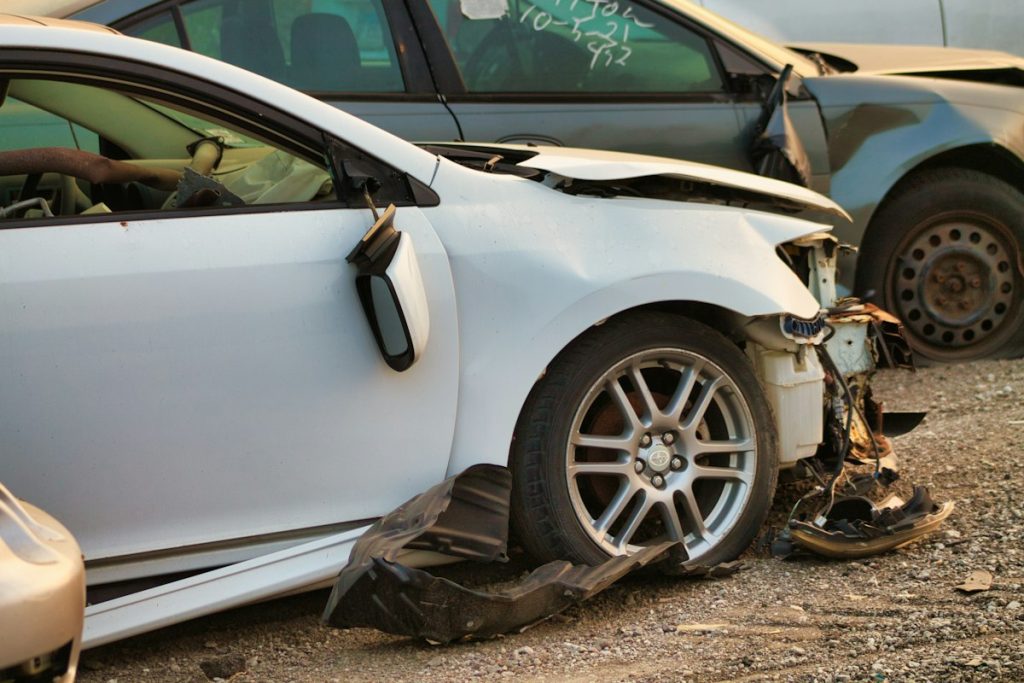
Negligence is the legal word for carelessness that causes harm. Almost every auto accident case in New York is a negligence case. To win one, an injured person (the plaintiff) must prove four things about the person being sued (the defendant):
- Duty. The defendant owed you a duty of reasonable care. Every driver owes that duty to everyone else on the road. Some duties are spelled out in statutes; for example, Vehicle and Traffic Law §1146 requires drivers to exercise due care to avoid colliding with pedestrians and bicyclists.
- Breach. The defendant failed to meet that duty. Running a red light, following too closely, or looking at a phone are typical breaches.
- Causation. The breach caused the crash and your injuries. This sounds obvious, but insurers often argue that an injury came from something else, like an old condition or a later event.
- Damages. You suffered real, provable losses, such as medical bills, lost wages, or pain and suffering.
Think of these four elements as a chain. If any link is missing, the claim fails. Much of what a lawyer does is gather evidence for each link: the police report and witness accounts for breach, medical opinions for causation, bills and records for damages.
One special rule deserves mention because it comes up so often on Queens highways. In a rear-end collision, New York courts generally presume that the rear driver was negligent, reflecting Vehicle and Traffic Law §1129’s ban on following too closely. A presumption is a legal starting point that shifts the burden: the rear driver must come forward with a non-negligent explanation, such as a sudden and unexpected stop, to escape liability.
Lesson Two: “No-Fault” Does Not Mean “Nobody Was at Fault”
This is the most misunderstood phrase in New York auto law. No-fault insurance means that certain basic losses are paid by your own side’s insurance without anyone having to prove who caused the crash. It does not mean fault is irrelevant. Fault still matters a great deal for everything beyond those basic benefits.
The technical term is first-party benefits: benefits paid to you by the insurer of the vehicle you occupied (or, for a pedestrian or cyclist, generally the insurer of the vehicle that struck you), rather than by the other driver’s insurer. Under Insurance Law §5103 and the rest of Article 51, these benefits cover basic economic loss up to $50,000 per person:
- necessary medical and rehabilitation expenses;
- 80% of lost earnings, up to $2,000 per month;
- up to $25 per day for other reasonable and necessary expenses, such as help with household tasks you cannot do while injured.
Why does the system exist? The idea is a trade. Injured people get quick payment of medical bills and wages without a lawsuit, and in exchange, lawsuits for pain and suffering are limited to more serious cases. That limit is the subject of the next lesson.
Two practical warnings. The no-fault application is generally due within 30 days of the accident, so do not wait. And not everyone is covered: motorcycle operators and passengers are not covered by New York no-fault, which changes the analysis entirely for riders.
Lesson Three: “Serious Injury” Is a Legal Category, Not a Medical Opinion
Your doctor may describe your injury as serious. The law may not, and the difference matters. To sue an at-fault driver for non-economic damages (pain and suffering, loss of enjoyment of life), you must show a “serious injury” as defined in Insurance Law §5102(d). This requirement is called the serious injury threshold, because your case must step over it before a jury can award pain and suffering.
The statute lists categories. In plain terms, they include:
- death;
- dismemberment or significant disfigurement;
- a fracture;
- loss of a fetus;
- permanent loss of use of a body organ, member, function or system;
- a permanent consequential limitation of use of a body organ or member, meaning a lasting restriction that is more than minor;
- a significant limitation of use of a body function or system.
A fracture is fairly easy to prove with imaging. The “limitation” categories are where disputes live. Courts generally look for objective medical evidence, such as measured loss of range of motion compared to normal, and an explanation of how the limitation affects daily life. That is why consistent treatment matters so much: the evidence for the threshold is built visit by visit.
Notice what the threshold does not block. If your economic losses exceed what no-fault pays, for example lost earnings above the $2,000 monthly cap, you can pursue that excess from the at-fault driver regardless of the threshold.
Lesson Four: Comparative Fault, and the Line Drawn in 2026
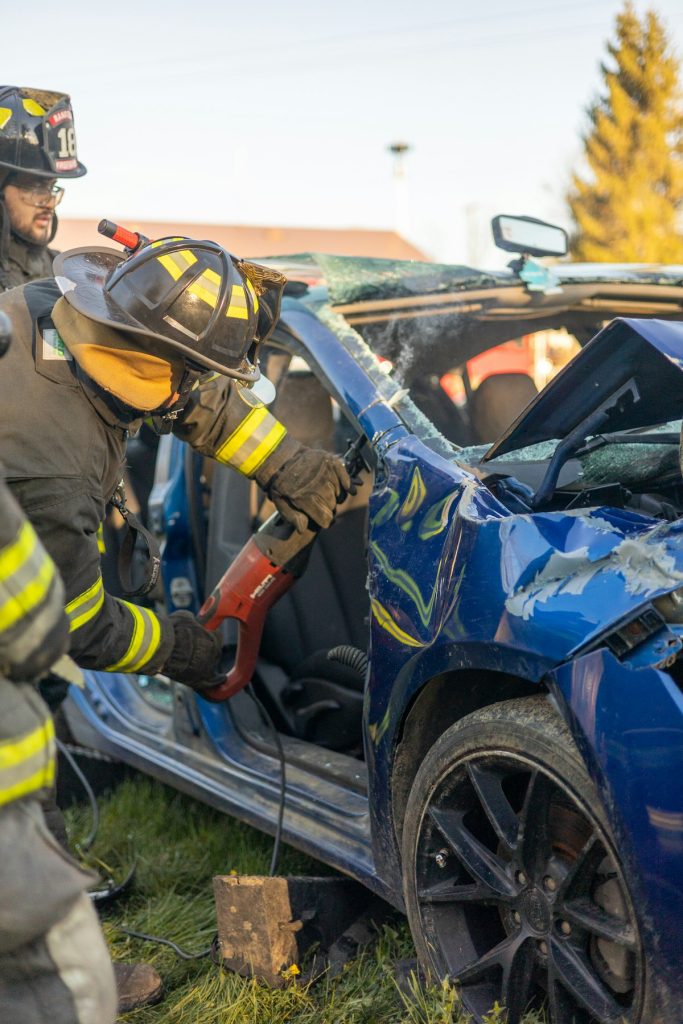
Comparative fault is the rule that answers a common question: what happens when both drivers made mistakes? Instead of an all-or-nothing outcome, New York assigns each party a percentage of responsibility and adjusts the recovery accordingly.
For many years New York used pure comparative fault. Under that approach, a plaintiff’s recovery is reduced by the plaintiff’s own percentage of fault, but never eliminated. If you were 30% at fault and your damages were found to be $100 (to use a simple teaching number, not a real case value), you would recover $70. Even a plaintiff who was mostly at fault could recover a reduced share.
2026 update: For motor-vehicle personal injury actions commenced on or after May 26, 2026, New York changed the rule. Under amended CPLR 1411, these cases now use modified comparative fault: if your fault is greater than the combined fault of the defendants (more than 50%), you recover nothing; at 50% or less, your recovery is reduced by your share. The same 2026 legislation removed the “90/180-day” category from the serious injury definition. Non-motor-vehicle cases, such as slip-and-falls, remain under pure comparative fault.
The teaching point: the line at 50% turns fault into a high-stakes argument. An insurer that can push your share from 40% to 55% does not just reduce your recovery; it erases it. That is why early evidence, like video and independent witnesses, has become even more important in auto cases.
Lesson Five: Vicarious Liability, or Why the Car’s Owner Can Be Responsible
Vicarious liability means being legally responsible for someone else’s negligence, even if you did nothing careless yourself. New York applies this idea to vehicle owners through Vehicle and Traffic Law §388. Under that statute, the owner of a vehicle is generally liable for injuries caused by the negligence of anyone driving it with the owner’s permission, express or implied. The driver in that situation is called a permissive user.
Why does this matter to you? Because it can add a second insurance policy, or a better-funded defendant, to your case. Suppose the driver who hit you on Woodhaven Boulevard was borrowing a relative’s car, or driving a vehicle registered to a business. The owner’s policy may respond even though the owner was miles away.
A related idea, respondeat superior (Latin for “let the master answer”), can make an employer responsible for an employee’s negligence while the employee is working. It is one reason commercial vehicle cases, from delivery vans to tractor-trailers, often involve corporate defendants. Our page on truck accident claims in Queens explains how this works when a commercial driver causes a crash, and our Queens rideshare accident page covers the insurance layers that apply to TLC-licensed Uber and Lyft drivers.
Lesson Six: Damages, Defined
Damages are the money a court can award to compensate for harm. They fall into two broad families.
Economic damages are losses you can measure with receipts and pay stubs: medical expenses, future medical care, lost wages, lost earning capacity, and out-of-pocket costs. In an auto case, the first $50,000 of basic economic loss is handled by no-fault, so the lawsuit focuses on economic losses above that amount.
Non-economic damages are real but harder to measure: physical pain, emotional suffering, loss of enjoyment of activities, and the effects of permanent limitations or scarring. These are the damages guarded by the serious injury threshold.
A spouse may also have a derivative claim, sometimes called loss of consortium, for the loss of companionship and services caused by the injury. And when a crash causes death, a separate set of rules applies: the wrongful death statute, EPTL 5-4.1, allows a claim generally within two years of the death, with damages focused mainly on economic losses to the family, alongside a survival claim on behalf of the estate for the person’s conscious pain and suffering before death.
Lesson Seven: Time Limits, and Why the Clock Matters
A statute of limitations is a deadline for filing a lawsuit. Miss it, and the claim is usually barred forever, no matter how strong it was. In New York, the general deadline for personal injury is three years from the date of the accident, under CPLR 214(5).
Some deadlines are much shorter. A Notice of Claim is a formal written notice that must be served on a government entity before you can sue it. For claims against New York City, its agencies and many public authorities, including NYC Transit, the notice is generally due within 90 days, and the lawsuit generally within 1 year and 90 days. That covers crashes with city-owned vehicles, such as a sanitation truck, and MTA buses. After receiving the notice, the city may demand a 50-h hearing, a sworn question-and-answer session about the claim.
When the at-fault driver is uninsured or fled the scene, the Motor Vehicle Accident Indemnification Corporation (MVAIC) may provide coverage if no other insurance applies. MVAIC has strict notice requirements, including a police report and prompt written notice, so treat it as urgent. Your own SUM coverage (supplementary uninsured/underinsured motorist coverage) may also apply, and it has its own notice requirements in the policy.
A Pocket Glossary From Your Auto Accident Lawyer in Queens
Bookmark this table. These are the terms you are most likely to see in letters from insurers and in court papers after a Queens car crash.
| Term | Plain-English meaning |
|---|---|
| Adjuster | The insurance company employee who evaluates and negotiates your claim on the insurer’s behalf. |
| Basic economic loss | The no-fault benefits package: medical bills, 80% of lost wages up to $2,000 a month, and up to $25 a day in other expenses, capped at $50,000 per person. |
| Bodily injury liability | The part of an at-fault driver’s policy that pays for injuries the driver causes to others. |
| Comparative fault | The rule that divides responsibility by percentage and adjusts recovery accordingly. |
| Discovery | The pretrial process in which each side exchanges documents and information and takes testimony. |
| MV-104 | The DMV accident report form drivers must file within 10 days when someone is injured or killed or property damage exceeds $1,000. |
| Notice of Claim | A formal notice required before suing the city or many public authorities, generally due within 90 days. |
| Permissive user | A person driving someone else’s vehicle with the owner’s permission. |
| Serious injury threshold | The legal test in Insurance Law §5102(d) that must be met to sue for pain and suffering after a motor vehicle accident. |
| Statute of limitations | The deadline to file a lawsuit; three years for most New York personal injury claims. |
| SUM coverage | Coverage on your own policy that can pay when the at-fault driver has no insurance or too little insurance. |
If you would like to see these ideas applied to a single case timeline, read our detailed blog guide for Queens auto accident victims, which follows a claim from the first 72 hours through the medical file and the deadlines that apply.
Three Queens Landmarks: A Field Trip for the Lesson
Every good class ends with a field trip. These three Queens landmarks are worth a visit on their own, and each one illustrates a traffic lesson from the material above.
Forest Hills Stadium
Forest Hills Stadium, on the grounds of the West Side Tennis Club, opened in the 1920s and hosted the U.S. national tennis championships for decades before the tournament moved to Flushing Meadows. Today it is best known as an outdoor concert venue tucked inside a quiet residential neighborhood near Forest Hills Gardens. On show nights, thousands of concertgoers arrive and leave within a narrow window, filling local streets with rideshare pickups and pedestrians walking toward Queens Boulevard, the subway at 71st Avenue and the Forest Hills LIRR station. It is a living example of Vehicle and Traffic Law §1146: drivers must take extra care around crowds on foot. Transit is the smart choice on concert nights.
The Poppenhusen Institute in College Point
The Poppenhusen Institute, built in 1868 by industrialist Conrad Poppenhusen, is one of College Point’s historic treasures and is often noted as the home of one of the country’s first free kindergartens. It still serves the community as a cultural and educational center. College Point mixes old residential blocks with an active commercial and industrial area, so visitors share local roads with delivery vehicles and trucks moving to and from the Whitestone Expressway and College Point Boulevard. That mix is a reminder of Lesson Five: when a commercial vehicle causes a crash, the employer or vehicle owner may share responsibility.
Neir’s Tavern in Woodhaven
Neir’s Tavern, on 78th Avenue near Forest Park in Woodhaven, traces its history to 1829 and is widely described as one of the oldest bars in the country; film fans may recognize it from scenes in Goodfellas. It is a beloved neighborhood institution, and a good place to remember Lesson One’s most obvious breach of duty: driving while impaired, which is prohibited by Vehicle and Traffic Law §1192. Woodhaven’s nearby corridors, including Jamaica Avenue under the elevated J train and busy Woodhaven Boulevard, call for full attention. Plan a ride home before the evening begins.
Directions to Our Rosedale Office from Forest Hills Stadium
From Forest Hills Stadium, head east to the Van Wyck Expressway, which you can reach via Queens Boulevard or Union Turnpike. Take the Van Wyck south toward JFK Airport, then merge onto the Belt Parkway heading east toward Long Island. Our office at 1 Cross Island Plaza, Suite 325, is in Rosedale near the junction of the Belt and Cross Island Parkways; use the Rosedale exits and the map below for the final turns. Outside rush hour, the drive typically takes about 20 to 30 minutes.

Questions and Definitions: Office Hours
What is the difference between an insurance claim and a lawsuit?
A claim is a request for payment made directly to an insurance company, such as a no-fault application or a bodily injury claim against the other driver’s insurer. A lawsuit is a formal case filed in court against the people responsible. Many auto cases begin as claims and resolve through negotiation. A lawsuit becomes necessary when the insurer will not pay fair value or when a deadline, like the three-year statute of limitations, is approaching. Filing suit does not mean the case will go to trial.
What does “SUM” coverage mean on my policy?
SUM stands for supplementary uninsured/underinsured motorist coverage. It is part of your own auto policy and can pay for your injuries when the at-fault driver has no insurance or not enough insurance to cover your losses. Many people do not realize they bought it, or how much they bought. Because SUM claims have their own notice requirements under the policy, it is wise to tell your insurer promptly if you think the other driver’s coverage may be inadequate.
What is an examination under oath in a no-fault claim?
An examination under oath, often shortened to EUO, is a recorded session in which a no-fault insurer’s attorney asks you questions under oath about the accident, your injuries and your treatment. Insurers may require it as a condition of paying benefits, and failing to appear can lead to a denial. It is not a trial, but your answers can be used later. Prepare with your lawyer, bring any documents requested, and answer truthfully and precisely.
What is a deposition?
A deposition is sworn testimony taken during a lawsuit, usually in a lawyer’s office or by video, with a court reporter recording every word. In New York, it is often called an examination before trial, or EBT. Each side’s attorneys question the parties and sometimes witnesses. Depositions lock in each person’s version of events, which is why consistency with your medical records and earlier statements matters. Your lawyer attends with you and can object to improper questions.
What is a bill of particulars?
In a New York personal injury lawsuit, a bill of particulars is a document the plaintiff serves that spells out the details of the claim: the injuries, the claimed acts of negligence, and categories of damages such as medical expenses and lost earnings. It gives the defense notice of what the plaintiff intends to prove. In auto cases, it typically also identifies which serious injury categories the plaintiff is relying on, so accuracy and completeness matter.
Who counts as the “owner” of a car under Section 388?
Generally, the owner is the registered owner of the vehicle, though the term can extend to others in certain situations, such as some lessees. The key question under Vehicle and Traffic Law §388 is whether the driver was using the vehicle with the owner’s permission. New York law generally presumes that a driver had the owner’s permission, and the owner then has to offer evidence to the contrary. Rental and leasing companies are treated differently under federal law, so those cases need a closer look.
What is a 50-h hearing?
A 50-h hearing, named for General Municipal Law §50-h, is a sworn examination that New York City and other public entities may demand after receiving a Notice of Claim. Before you can sue the city, it can question you under oath about the accident and your injuries, and may also request a physical examination. It works much like a deposition. Attending is generally required before a lawsuit can proceed, so do not ignore the notice scheduling it.
What does it mean when I sign a release?
A release is a contract in which you give up your right to pursue a claim in exchange for payment. Once signed, it is usually final, even if your injuries turn out to be worse than you thought. Read the scope carefully: a release meant only for property damage to your car should not waive your personal injury claim. Never sign a release from the other side’s insurer about your injuries before talking to a lawyer.
What is a lien on a settlement?
A lien is a legal claim by someone else to be repaid from your recovery. In injury cases, health insurers, Medicare, Medicaid or other benefit providers that paid for crash-related treatment may assert repayment rights, depending on the type of plan and the law that governs it. Liens are resolved before settlement funds are distributed, and the amounts can sometimes be negotiated. Identifying them early prevents surprises at the end of the case.
What is the “preponderance of the evidence”?
It is the standard of proof in most civil cases, including auto accident lawsuits. It means the plaintiff must show that each element of the claim is more likely true than not. That is a lower standard than “beyond a reasonable doubt,” which applies in criminal cases. So a driver who was never convicted of a traffic offense can still be found negligent in a civil case, and a criminal acquittal does not automatically defeat an injury claim.
Class Dismissed: Speak With an Auto Accident Lawyer in Queens
Knowing the vocabulary helps, but applying it to your own crash is a different task. If you or a family member were hurt, an auto accident lawyer in Queens can review your policies, deadlines and evidence and explain your options in plain language. Call Yakov Mushiyev & Associates, P.C. at 718.775.3110 or send us a message through our contact page; our office is in Rosedale. If you live just across the Nassau line, our page for an auto accident lawyer in Bellerose covers your area as well.
Related reading: Auto Accident Lawyer in Queens: a step-by-step look at a claim’s timeline and medical file.
General information, not legal advice. Attorney Advertising. Prior results do not guarantee a similar outcome.