
Insurance companies have a script for trip and fall claims, and most of it is built on assumptions that sound like common sense but do not match New York law. Yakov Mushiyev & Associates, P.C. is a Rosedale-based personal injury firm, and as a trip and fall accident lawyer in Queens we hear those assumptions repeated by adjusters, by property managers and sometimes by injured people themselves. This page takes the most common myths one at a time and sets them against the facts, so you can see where an insurer’s position is weaker than it sounds.
If you would rather see how these rules apply to specific situations, such as a raised sidewalk flag or a torn stair runner, our scenario-by-scenario guide to trip and fall cases in Queens works through several examples in detail.
Who We Are and How a Trip and Fall Accident Lawyer in Queens Helps
A trip and fall is what happens when your foot catches on something it should not: an uneven sidewalk slab, a broken stair tread, a pothole in a crosswalk, a loose mat, an extension cord, a pallet left in an aisle. The injuries are often worse than people expect, because a trip usually sends you forward onto outstretched hands, knees or face. Wrist fractures, shoulder injuries, knee damage, broken teeth and head injuries are common.
Our firm helps people throughout Queens and neighboring communities identify who was responsible for the hazard, preserve the evidence, meet the deadlines that apply, document their injuries and losses, and deal with the insurance company so they can focus on recovery. If your fall happened in eastern Queens near the Nassau line, see our page on trip and fall claims in Bellerose. You can learn more about Yakov Mushiyev and our firm as well.
Now, the myths.
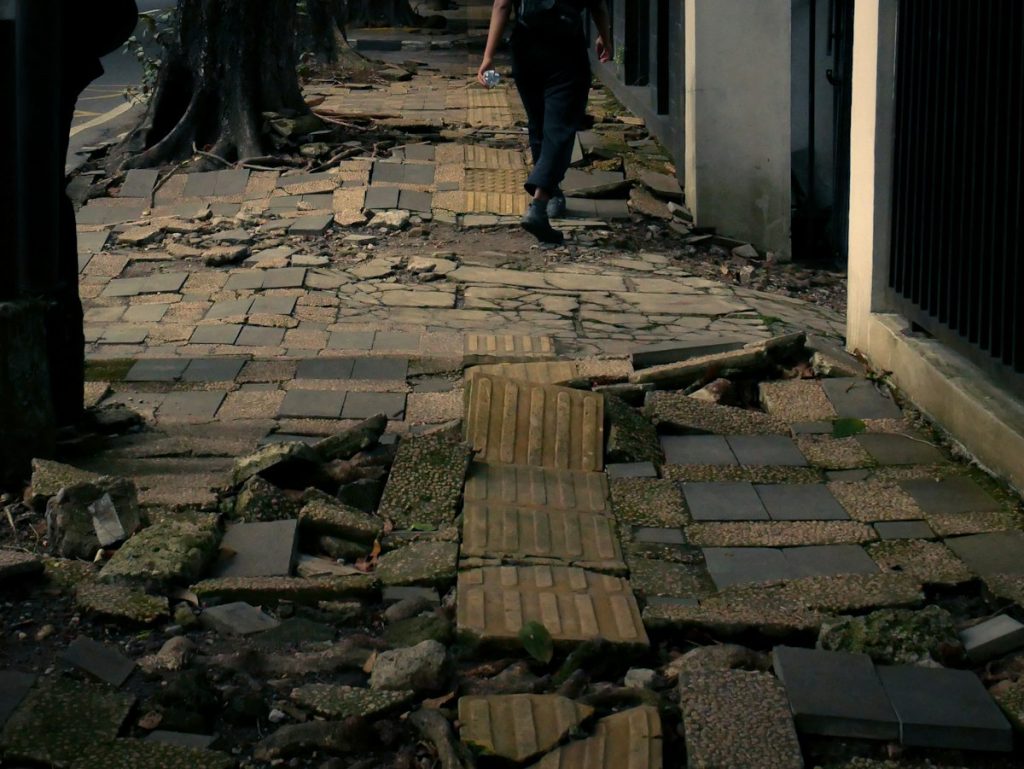
Myth 1: “You Should Have Watched Where You Were Going”
The myth: If you tripped over something, it must have been your fault for not looking down.
The fact: Nobody walks through Queens staring at the pavement. People look at traffic signals, oncoming cyclists, store signs, children and the person they are walking with. The law expects pedestrians to use reasonable care, not to scan every inch of the ground. Property owners, meanwhile, have a duty to keep their premises reasonably safe.
Even when a hazard was visible, New York courts have generally treated the fact that a condition was “open and obvious” as relevant to the injured person’s comparative fault rather than as an automatic bar to recovery. An owner’s duty to warn may be reduced for an obvious hazard, but the duty to maintain property in reasonably safe condition remains. Under CPLR 1411, any share of fault assigned to you reduces your recovery proportionally in a premises case. It does not erase it.
Myth 2: “That Defect Was Too Small to Matter”
The myth: A crack or height difference of an inch or less is “trivial,” so there is no case.
The fact: New York does not have a fixed minimum height rule. Courts look at the whole picture: the width, depth, elevation and irregularity of the defect, as well as the time, place and circumstances of the fall. A small lip at the top of a dark stairwell can be far more dangerous than a larger crack in an open plaza. Lighting, foot traffic, whether the defect was hidden by debris or shadow, and whether it sat in a spot where people naturally look elsewhere (such as the curb at a busy crossing on Main Street in Flushing) can all matter.
That is why measurements and photographs taken soon after the fall are so valuable. A photo with a ruler or a coin next to the defect, taken from several angles and from a standing eye level, often does more to answer the trivial-defect argument than any amount of description.
Myth 3: “The City Owns the Sidewalk, So the City Pays”
The myth: Every sidewalk trip in Queens is a claim against the City of New York.
The fact: Under NYC Administrative Code Section 7-210, the owner of property abutting a sidewalk is generally responsible for keeping it reasonably safe and is liable for injuries caused by failing to do so. The major exception is owner-occupied one-, two- and three-family homes, where the City generally remains responsible, subject to prior written notice rules under Admin Code Section 7-201. Commercial strips along Steinway Street, Jamaica Avenue or Liberty Avenue, apartment buildings and mixed-use properties usually fall under the abutting-owner rule.
Getting this wrong is costly. A claim filed against the wrong party can burn months, and a claim that should have gone to the City can miss its notice deadline. Tree-root damage, curb cuts, utility covers and bus stop pads can add more potential parties. Part of our job is sorting out exactly who owned, controlled or altered the spot where you fell.

Myth 4: “You Have Three Years, So There Is No Rush”
The myth: The statute of limitations is three years, so you can wait and see how your injury heals.
The fact: The general personal injury deadline in New York is three years under CPLR 214(5), but that is only the general rule. If the City of New York, one of its agencies, or many public authorities may be responsible, a Notice of Claim generally must be served within 90 days under General Municipal Law Section 50-e, and the lawsuit generally must be filed within one year and 90 days. Trips on subway stairs or at bus stops may involve New York City Transit, where similar 90-day notice rules apply under Public Authorities Law Section 1212.
There is also a practical deadline. Property owners fix defects, sometimes within days of a fall. Once a step is replaced or a slab is ground down, proving what it looked like becomes much harder. Waiting rarely helps a trip and fall claim.
Myth 5: “No Video Means No Case”
The myth: If there is no camera footage of your fall, nobody will believe you.
The fact: Video is helpful, but many successful premises claims are built without it. Evidence that can carry a trip and fall claim includes photographs of the defect, measurements, witness statements, the incident report, 311 complaints or prior repair requests, the property’s maintenance and inspection records, emergency room records describing how you fell, and expert analysis of the surface. In sidewalk cases, City records about prior complaints and repairs may also be relevant.
If footage does exist, though, it must be requested quickly. Stores and buildings commonly overwrite recordings on a short cycle. A preservation letter sent early asks the owner to keep footage, logs and the defective item itself, and failing to preserve evidence after notice can carry consequences in litigation.
Myth 6: “If the Store Offers to Pay Your ER Bill, Take It and Move On”
The myth: A quick offer to cover your emergency room visit is a generous gesture with no downside.
The fact: Early offers sometimes come with paperwork, and that paperwork may include a release of all claims. Once you sign a general release, you usually cannot come back later if your “sprained” wrist turns out to be fractured or your knee needs surgery. Trip injuries often reveal themselves over weeks: a torn meniscus that did not show on a first X-ray, a concussion whose symptoms build, a shoulder that will not lift after the bruising fades. Read anything you are asked to sign, and do not sign a release before you know the full extent of your injury.
Myth 7: “You Can See a Doctor Later if It Still Hurts”
The myth: It is fine to wait a week or two and see if the pain goes away on its own.
The fact: Delays in treatment are one of the arguments insurers rely on most. A gap between the fall and the first medical visit invites the claim that something else caused your injury, or that it was minor. Getting checked promptly, describing exactly how you fell, and following through on referrals and therapy protects both your health and your claim. Falls are a leading cause of injury in the United States according to the CDC’s fall injury resources, especially for older adults, and injuries that seem minor at first can be serious.
Myth 8: “A Quick Recorded Statement Will Speed Things Up”
The myth: If you just tell the adjuster what happened, they will process your claim faster.
The fact: An adjuster for the property owner’s insurer works for the property owner. Recorded statements are used to lock in details, such as “I was in a hurry” or “I didn’t see it,” that can later be used to increase your share of fault. You are generally not required to give a recorded statement to the other side’s insurer. Referring the adjuster to your lawyer is a common and reasonable step.
Myth 9: “Trip and Fall Cases Are Always Small Cases”
The myth: Tripping is a minor event, so these claims are worth very little.
The fact: The value of a claim depends on the injury, not the type of accident. A trip that causes a hip fracture in an older adult, a wrist fracture requiring surgical plates, a torn rotator cuff, a knee injury needing arthroscopy, or a traumatic brain injury can change someone’s life and work for years. Compensation in a premises case can include medical expenses, lost earnings, future care, and pain and suffering, all reduced by any share of fault assigned to the injured person. We do not predict values without reviewing the medical records, and no responsible lawyer should.
Myth 10: “The 2026 Law Changes Cut Everyone’s Rights”
The myth: New York changed its fault rules in 2026, so anyone who was partly at fault now gets nothing.
The fact: The changes were narrower than that.
2026 update: Amendments effective May 26, 2026 created a modified comparative fault rule under CPLR 1411 and removed the 90/180-day category from the serious-injury definition, but only for motor-vehicle personal injury actions commenced on or after that date. A trip and fall on a sidewalk, stairway or store floor is a premises case, and it remains under pure comparative fault: your recovery is reduced by your percentage of fault, not barred because you were more than 50 percent responsible.
If your trip was connected to a vehicle, for example catching your foot while stepping out of a car in a parking lot, the analysis can become more complicated. Our page on Queens parking lot accident claims covers how those cases differ, and if a moving car was involved, see our Queens car accident lawyer page.
What the Facts Mean for Your Trip and Fall Claim in Queens
Put together, the facts suggest a simple plan that cuts against nearly every myth above:
- Get medical care right away and tell every provider exactly how you fell.
- Photograph the hazard from several angles, with something for scale, and photograph your shoes and the lighting.
- Get names and numbers of witnesses and ask whether an incident report was made.
- Do not sign releases or give recorded statements to the property owner’s insurer.
- Assume a 90-day deadline may apply until a lawyer confirms otherwise.
- Keep records of every bill, missed workday and out-of-pocket cost.
Every case turns on its own facts, but following these steps keeps your options open while the responsible parties are identified.

Three Queens Landmarks Where Footing Matters
From the beach to the parks to historic neighborhoods, Queens has places where surfaces, crowds and ownership questions make trip hazards worth understanding.
Jacob Riis Park
Jacob Riis Park sits on the western end of the Rockaway peninsula and is part of Gateway National Recreation Area, managed by the National Park Service. It is known for its long beach, its boardwalk and its historic bathhouse. Boardwalks, ramps and parking areas near beaches see sand, warped boards and uneven transitions that can catch a foot. Because Riis Park is federal property, injury claims there can involve federal procedures with their own strict administrative deadlines that differ from the City’s 90-day rule, so it is important to get advice quickly about which rules apply.
Kissena Park
Kissena Park in Flushing is a large City park known for Kissena Lake, its walking paths, its historic trees and its velodrome. Joggers, families and older residents use its paths daily. Park paths, steps and lighting can develop cracks, heaved pavement and raised edges from tree roots. Kissena Park is City parkland, so a trip caused by a defect there may require a Notice of Claim against the City, generally within 90 days, and the City may raise prior written notice requirements. That makes early photographs and fast action especially important.
Forest Hills Gardens
Forest Hills Gardens is a planned community in Forest Hills, known for its Tudor-style homes, winding streets and Station Square near the Long Island Rail Road station. Many of its streets are privately maintained through a community corporation rather than by the City in the usual way. Brick, stone and older paving surfaces add character but can loosen and shift over time. A trip in a private community like this raises a different set of ownership and maintenance questions than a typical City sidewalk, which is exactly why identifying the right responsible party comes first.
Directions to Our Rosedale Office from Jacob Riis Park
From Jacob Riis Park, head east along the Rockaway peninsula and take Cross Bay Boulevard north over the bridge through Broad Channel and Howard Beach. Merge onto the Belt Parkway eastbound and follow it toward the Cross Island Parkway interchange. Exit in Rosedale and follow local streets to Cross Island Plaza, Suite 325. Travel time varies with beach-season and rush-hour traffic, so plan ahead.
Trip and Fall Questions Queens Clients Ask Us
What if the property owner repaired the defect right after I fell?
A repair made after an accident generally cannot be used to prove the owner was negligent, but it does not end your claim. What matters is the condition at the time of your fall. That is why photos taken immediately afterward, by you, a friend or a witness, are so valuable. Records showing when the repair was ordered can sometimes be relevant for other purposes, such as showing who controlled the property.
I tripped on a broken step in my own apartment building. Can I bring a claim against my landlord?
Often, yes. Landlords generally must keep common areas such as stairways, hallways, lobbies and entrances reasonably safe. You would typically need to show that the landlord created the condition or knew or should have known about it, for example through prior complaints, work orders or the condition’s obvious, long-standing nature. Keep copies of any texts, emails or complaints you or neighbors sent about the step.
Does it hurt my case if I was wearing sandals or heels?
Footwear can be raised by the defense as a factor in comparative fault, but it rarely defeats a claim on its own. People are entitled to wear ordinary shoes, and the main question is whether the hazard was unreasonably dangerous. Keep the shoes you were wearing, unwashed and unrepaired, and photograph them. If a heel snapped or a sole caught, the shoe itself can be evidence of how the fall happened.
There were no witnesses. Can I still bring a claim?
Yes. Many falls happen when no one is watching. Your own testimony, photographs, measurements, medical records describing the mechanism of injury, the incident report, and evidence that the defect existed before your fall can all support a claim. Check whether nearby businesses or homes have cameras facing the area, and ask quickly, since footage is often overwritten.
I tripped on the stairs at a subway station. Who handles that?
Subway stations are generally operated by New York City Transit, part of the MTA, and claims against it usually require a Notice of Claim within 90 days of the incident. Station stairs, platforms and entrances can involve other parties as well, such as contractors working on site or the owner of a building with a connected entrance. Report the fall to station personnel, photograph the step, and speak to a lawyer promptly because of the short deadline.
What if I did not go to the doctor until a few days after I tripped?
A short delay does not automatically ruin a claim, especially if pain or swelling got worse over time, which is common with soft tissue and joint injuries. Explain the timeline honestly to your doctor and to your lawyer. From that point forward, consistent treatment matters. The longer the gap, the more the defense will argue another cause, so get evaluated as soon as you can.
Can I claim for a trip over a hose or cord at a construction site I was walking past?
Possibly. Contractors and property owners must keep sidewalks and walkways around construction work reasonably safe for passersby, including covering or securing hoses, cables and materials and providing safe sidewalk sheds or detours where required. If you were a pedestrian rather than a worker, your claim would typically be a general negligence or premises claim against the contractor, owner or both, depending on who controlled the area.
Should I sign the medical authorization the insurance company mailed me?
Be cautious. Insurers sometimes send broad authorizations that allow them to collect your entire medical history, not just records related to the fall. They can then search for older conditions to blame. It is generally wiser to have a lawyer review any authorization and, where appropriate, limit it to relevant providers and time periods.
Will my trip and fall case have to go to trial?
Not necessarily. Many premises claims resolve through negotiation or mediation, either before or after a lawsuit is filed. Others go further because the insurer disputes liability or the value of the injury. Preparing the claim as if it might go to trial usually puts you in the strongest position for any settlement discussion, because the insurer can see the evidence is organized and ready.
How do I know who owns the property where I tripped?
Ownership is not always obvious. A storefront tenant, the building owner, a management company and the City may each control part of the same area. Property records, lease information, permits and maintenance contracts can help identify the right parties. This is one of the first things we investigate, since naming the wrong party or missing a public entity’s notice deadline can seriously harm a claim.
Speak With a Trip and Fall Accident Lawyer in Queens Today
The insurance company’s version of your fall is not the only version. If you were hurt tripping on a sidewalk, stairway, store aisle, parking area or park path anywhere in Queens, call Yakov Mushiyev & Associates, P.C. at 718.775.3110 or reach our Rosedale office online. We will listen to what happened, identify the deadlines that apply, and explain your options plainly. You can also browse the neighborhoods and communities we serve.
Related reading: Trip and Fall Accident Lawyer in Queens: three real-world scenarios explained.
General information, not legal advice. Attorney Advertising. Prior results do not guarantee a similar outcome.