
A sidewalk fall in Rego Park almost never comes down to whether the concrete was broken. It usually was. The real fight is over a narrower question: who owned that particular square of sidewalk, and did the law require them to fix it? In New York City the answer can be a co-op board on 63rd Drive, a commercial landlord on Queens Boulevard, a utility company that owns a metal cover, or the City itself, and each of those defendants comes with different rules and different deadlines.
Yakov Mushiyev & Associates, P.C. represents people hurt on Queens sidewalks, and this page is written for anyone looking for a sidewalk accident lawyer in Rego Park who wants to understand how these claims actually work before the property owner’s insurer calls. We cover the City’s sidewalk law, the exceptions that trip people up, the 90-day trap that applies when the City is responsible, and the evidence that wins or loses these cases. To talk through your fall, call 718.775.3110. The consultation is free and there is no fee unless we recover.
Why a Rego Park Sidewalk Fall Is Different From Other Falls
Most injury claims start with an obvious defendant: the driver who ran the light, the store where you slipped. Sidewalk cases start with a map. New York City sidewalks are public walkways, but since 2003 the City has shifted most of the legal responsibility for them onto the owners of the buildings next to them. That means the person responsible for a cracked flag in front of a Queens Boulevard storefront is usually not the City and not the tenant who runs the store, but the owner of the building.
Rego Park makes this especially complicated because of how the neighborhood is built. Within a few blocks you have six-story prewar and postwar apartment buildings, large co-ops along 63rd Drive and the streets off Queens Boulevard, rows of attached one- and two-family homes south of Queens Boulevard toward Forest Hills, big-box retail around Rego Center near Junction Boulevard and the Long Island Expressway, and busy commercial frontage near the 63rd Drive–Rego Park M/R station. Each kind of property is treated differently under the law, so the first thing a Rego Park sidewalk accident lawyer has to do is identify exactly where you fell, down to the flag.
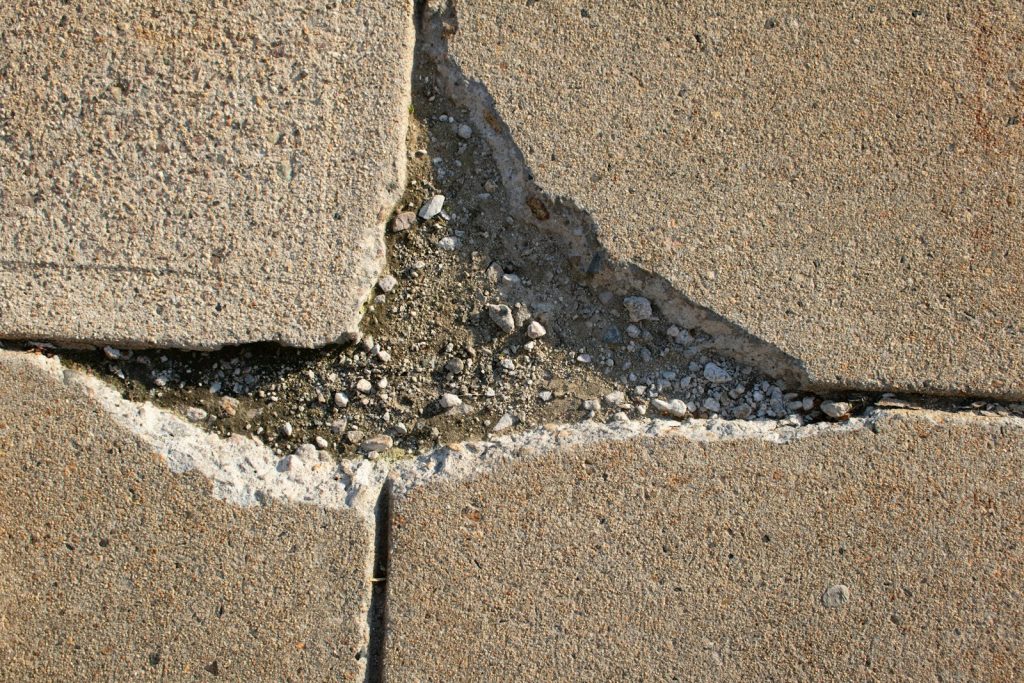
How Liability Works: NYC Administrative Code §7-210
The central rule is Section 7-210 of the New York City Administrative Code. It requires the owner of real property abutting a sidewalk to maintain that sidewalk in a reasonably safe condition, which includes repairing and replacing defective flags and removing snow, ice, dirt and other obstructions. It also makes that owner liable for injuries caused by a failure to do so. In practice, this is what makes most Rego Park sidewalk claims viable: apartment buildings, co-ops, condominiums and commercial owners carry liability insurance, and their insurers handle these claims every day.
The one-, two- and three-family home exception
Section 7-210 does not apply to one-, two- or three-family residential properties that are owner-occupied, in whole or in part, and used exclusively for residential purposes. If you trip in front of an owner-occupied two-family house on a side street off Woodhaven Boulevard, the homeowner generally is not liable under §7-210. Responsibility falls back on the City, which brings in the City’s own notice rules described below. If the home is rented out entirely, is not owner-occupied, or is partly used for a business, the exception may not apply. We check deed records and occupancy facts before deciding who to name, because naming the wrong party can waste months.
Tree roots, tree wells, curbs and pedestrian ramps
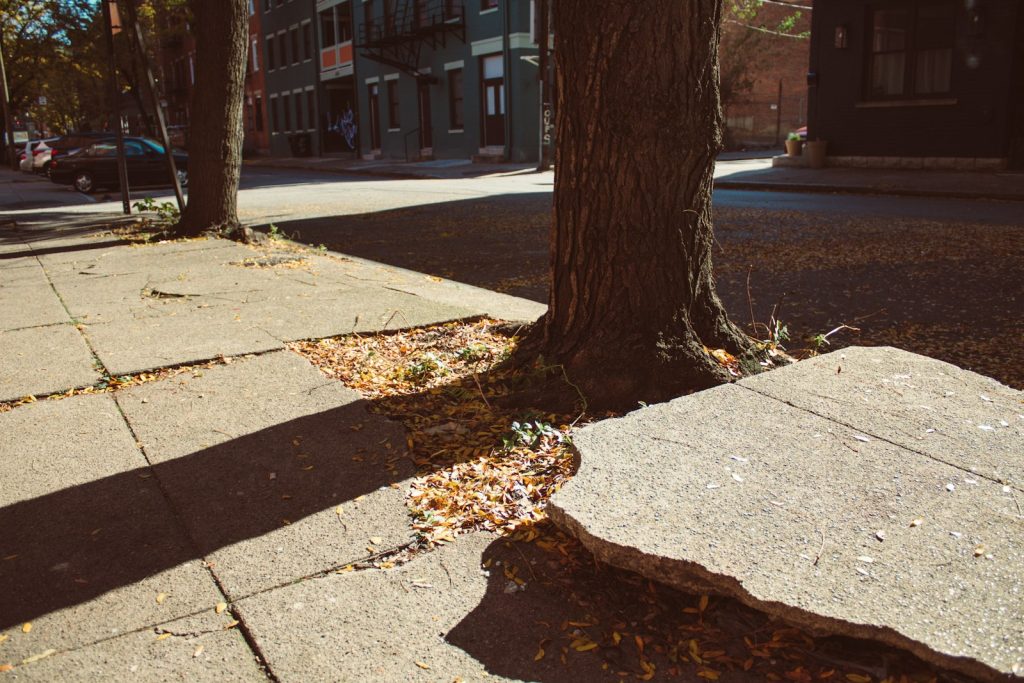
Rego Park has many mature street trees, and lifted flags around them are one of the most common causes of falls we see. New York courts have generally held that when City tree roots push up a sidewalk flag, the abutting owner still bears the §7-210 duty to repair the sidewalk. The tree well itself is different: the Court of Appeals has held that the dirt area around a tree is not part of the “sidewalk” for §7-210 purposes. Courts have likewise treated curbs and, in a number of Appellate Division decisions, pedestrian ramps at corners as outside the abutting owner’s duty. When the defect is in one of those areas, the claim usually lies against the City, and the analysis changes.
Metal covers, gratings and utility plates
Not every hazard on a sidewalk belongs to the property owner. Under the City’s highway rules (34 RCNY §2-07), owners of covers and gratings on a street, such as utility companies and other entities with vaults, manholes or access plates, are responsible for monitoring the condition of those covers and the surrounding area extending 12 inches outward from the edge. A raised Con Edison plate, a loose vault door or a broken grating near a building entrance may make the utility or vault owner a defendant alongside, or instead of, the building owner.
When the City Is Responsible: Prior Written Notice and the 90-Day Notice of Claim
When the City is the right defendant, because of the small-home exception, or because the defect is in a curb, ramp, crosswalk or tree well, two extra hurdles apply. First, under Administrative Code §7-201(c), the City generally cannot be held liable for a sidewalk or street defect unless it received prior written notice of that specific condition and failed to fix it within a reasonable time. The most common source of that notice is a set of maps prepared by the Big Apple Pothole and Sidewalk Protection Committee, which mark defects block by block and are filed with the Department of Transportation. Courts look closely at whether the symbol on the map actually matches the defect that caused the fall. A crack marked a few feet away may not count. There are narrow exceptions, such as when the City itself created the defect through affirmative negligence, for example a botched repair.
Second, you must serve a Notice of Claim within 90 days of the fall under General Municipal Law §50-e, and a lawsuit generally must be started within one year and 90 days. Notices of Claim against the City are filed with the NYC Comptroller. Late notice requires court permission, which is not guaranteed. Because the question of who owns the defect is not always clear in the first few weeks, we often protect clients by serving a timely Notice of Claim on the City while we investigate the private owner, so no door closes by accident.
| Defendant | What you must prove | Deadline |
|---|---|---|
| Abutting owner of a commercial building, co-op, condo or apartment building | A defect existed, the owner created it or had notice of it, and it caused the fall (§7-210) | 3 years to sue (CPLR 214) |
| City of New York (owner-occupied 1–3 family home, curb, ramp, tree well, crosswalk) | Prior written notice of the specific defect (e.g., Big Apple map) or an exception such as affirmative negligence | Notice of Claim within 90 days; suit within 1 year and 90 days |
| Utility or owner of a cover, grating or vault | The cover or the area within 12 inches of it was defective and the owner failed to monitor or repair it | Generally 3 years (shorter if a public entity owns it) |
| MTA / NYC Transit (subway entrance stairs and structures) | Defect in property the authority owns or controls | Notice of Claim within 90 days; suit within 1 year and 90 days |
Snow and Ice on Rego Park Sidewalks
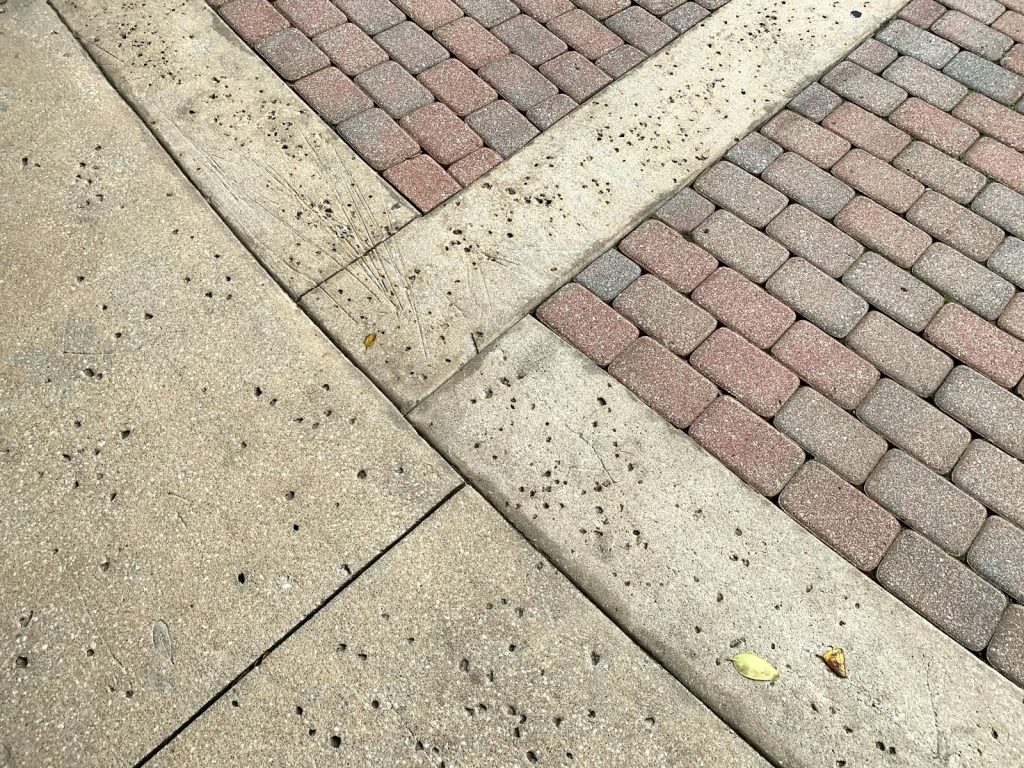
Section 7-210 covers snow and ice as well as broken concrete, and the City’s sanitation rules set how quickly owners must clear sidewalks after snow stops falling. According to the NYC Department of Sanitation, the clock depends on when the snow ends, with as little as four hours to clear during the daytime and longer windows for evening and overnight snowfall. Missing that window does not automatically prove a case, but it is strong evidence that the owner had a reasonable opportunity to act.
Owners and their insurers almost always raise the “storm in progress” defense, which says an owner is not required to clear snow or ice while a storm is still going on, and gets a reasonable time afterward. The defense can be defeated by weather records showing the storm had ended, or by showing that the ice you slipped on was left over from an earlier storm, or was caused by a leaking downspout, a dripping air conditioner or a careless shoveling job that refroze overnight. Large Rego Park buildings typically employ supers and porters to handle sidewalks, and their logs, salt deliveries and staffing records become important evidence.

Evidence That Wins Sidewalk Cases
Sidewalk defects get repaired, and once a flag is replaced the best evidence is gone. Insurers know that, which is why the first two weeks matter so much. If you are able, or if a family member can go back to the spot, here is what we want:
- Photographs from several distances. One wide shot showing the building address and nearest cross street, one medium shot showing the flag in context, and close-ups of the defect.
- A measurement. Put a ruler, tape measure, coin or even a key next to the height difference or hole and photograph it. Courts sometimes dismiss cases involving small height differences as “trivial,” so the precise depth, width and shape of the defect matters, as do surrounding conditions like lighting and pedestrian traffic.
- Your shoes and clothing. Keep them unwashed in a bag.
- Witness names and phone numbers. A doorman, porter or shop owner who saw the fall, or who knows how long the defect has been there, is valuable.
- Medical records from day one. Go to the emergency room or urgent care right away and describe exactly how you fell. Many Rego Park residents are taken to Elmhurst Hospital or Long Island Jewish Forest Hills.
- Nearby cameras. Building lobby, storefront and bodega cameras often record over footage within days or weeks. We send preservation letters immediately.
We also pull records you cannot easily get yourself: DOT violation and permit history for the block, Big Apple maps, 311 complaints about the location, prior lawsuits against the same owner, and deed and occupancy records to settle the §7-210 question.
Comparative Fault: “You Should Have Been Watching Where You Walked”
Every sidewalk defendant argues that the defect was open and obvious and that you should have seen it. In New York that argument does not end a case. Sidewalk and other non-vehicle injury cases are governed by pure comparative fault under CPLR 1411, which means your recovery is reduced by your share of fault but not eliminated. If a jury finds you 25% responsible for not looking down, you still recover 75% of your damages. The 2026 changes that limit recovery for at-fault claimants apply only to motor-vehicle cases, not to sidewalk falls.
What a Sidewalk Injury Claim Can Recover
Sidewalk falls often cause injuries that look minor at first and are not. Wrist and elbow fractures from catching yourself, broken hips in older adults, knee injuries that need surgery, facial and dental injuries, and head injuries from striking the concrete are all common. A claim can include:
- Medical bills, physical therapy, surgery and future treatment
- Lost wages and reduced earning ability
- Pain and suffering, past and future
- Loss of enjoyment of life, such as no longer being able to walk to the stores on 63rd Drive or play with grandchildren
- Household help and care you need during recovery
- A spouse’s claim for loss of services
Unlike a car crash, a sidewalk fall is not covered by no-fault insurance, so the property owner’s liability insurance is usually the source of payment for medical bills and lost income alongside your own health insurance.
How a Sidewalk Accident Lawyer in Rego Park Handles Your Claim
- Pin down the exact location. We identify the block, lot and flag, then confirm ownership and occupancy.
- Protect every deadline. If there is any chance the City or a public authority is involved, we serve a Notice of Claim well inside the 90 days.
- Lock down the evidence. We photograph and measure the defect, send preservation letters to owners and nearby businesses, and request public records.
- Build the medical picture. We make sure your treatment is documented and connected to the fall, including future care.
- Negotiate, then litigate if needed. Many claims settle with the owner’s insurer; if they won’t pay fairly, we file suit in Queens County Supreme Court.
You can read more about attorney Yakov Mushiyev and our broader premises liability practice. If you fell indoors, in a store or on building stairs rather than on the public sidewalk, see our page for a slip and fall accident lawyer in Rego Park, because those cases follow different rules.
Rego Park Sidewalks We Know
Rego Park packs a lot of foot traffic into a small area. Queens Boulevard carries shoppers and commuters past dense apartment frontage between Woodhaven Boulevard and Yellowstone Boulevard, and the stretch around the 63rd Drive–Rego Park M/R station is constantly busy with people heading to the trains and buses. 63rd Drive itself is a neighborhood shopping street lined with food stores, pharmacies and small businesses. Near Junction Boulevard and the Long Island Expressway, the Rego Center shopping complex draws heavy crowds, and the sidewalks connecting it to nearby apartment buildings take constant wear.
Many of the large apartment buildings and co-ops along 63rd Drive, 64th Road, 99th Street, Saunders Street and the side streets off Queens Boulevard date to the mid-twentieth century, and so do some of their sidewalks and vault covers. Street trees planted decades ago have lifted flags across the neighborhood. Learn more about our local work on our Rego Park injury lawyer page.

Directions from Rego Park to Our Office
Yakov Mushiyev & Associates, P.C.
1 Cross Island Plaza, Suite 325
Rosedale, NY 11422
Phone: 718.775.3110
Hours: Monday–Friday, 9:00 a.m.–6:00 p.m.
Home and hospital visits available
By car: From Rego Park, take the Grand Central Parkway or the Van Wyck Expressway (I-678) south to the Belt Parkway east, toward the Cross Island Parkway, and exit toward Rosedale. Our office is in Cross Island Plaza near the Queens–Nassau line. The drive typically takes about 25–40 minutes depending on traffic. Get driving directions from Rego Park.
By transit: Take the LIRR from Forest Hills station to Jamaica, transfer to a Far Rockaway Branch train to Rosedale station, then take a short cab ride. If you are hurt and can’t travel, we will come to your home or hospital room.
Sidewalk Accident Lawyer in Rego Park: Frequently Asked Questions
Can I sue the store in front of which I fell?
Usually the claim is against the building owner, not the tenant, because §7-210 places the sidewalk duty on the owner. A tenant can share responsibility if its lease required it to maintain the sidewalk or if it created the hazard, such as a leaking display or a bad shoveling job.
I fell in front of a two-family house. Who is responsible?
If the house is owner-occupied and used only as a residence, the City is generally responsible instead of the homeowner. That means the 90-day Notice of Claim deadline and the City’s prior written notice rule apply, so call promptly.
The defect was only about an inch high. Do I have a case?
Possibly. New York has no fixed minimum height. Courts look at the defect’s depth, width, shape and surroundings, including lighting and crowding, which is why measured photographs taken soon after the fall are so important.
Does it matter that I fell on a tree root near 63rd Drive?
Yes. A flag lifted by roots is generally still the abutting owner’s responsibility, but a fall inside the tree well itself usually points to the City. The exact spot where your foot caught decides who you sue.
How long do I have to file?
Three years against a private owner under CPLR 214. Against the City or a public authority, a Notice of Claim is due within 90 days and suit within one year and 90 days.
How much does it cost to hire your firm?
Nothing up front. We work on a contingency fee, so there is no fee unless we recover for you, and the first consultation is free.
Talk to a Sidewalk Accident Lawyer in Rego Park Today
If you were hurt on a Rego Park sidewalk, call Yakov Mushiyev & Associates at 718.775.3110 or contact us online for a free consultation. We can meet you at home or in the hospital.
This page provides general information about New York law and is not legal advice. Reading it does not create an attorney-client relationship. Attorney Advertising. Prior results do not guarantee a similar outcome.