
The day you get hurt at work, a file is opened with your name on it. Maybe two. One belongs to a workers’ compensation carrier. Another may belong to the liability insurer of a property owner, a contractor or a driver. Each file is managed by a professional whose job is to control what the claim costs. A workplace accident lawyer in Queens exists to make sure there is someone managing a file on your behalf, too. At Yakov Mushiyev & Associates, P.C., a personal injury firm with its office in Rosedale, we represent injured warehouse workers, building staff, delivery drivers, health aides, retail employees, tradespeople and others hurt on the job across Queens.
This page pulls back the curtain on how insurers evaluate workplace injury claims, and what you can do about each move. If you would rather follow a straightforward step-by-step plan for the first days and weeks after an injury, start with our step-by-step guide for Queens workers hurt on the job.
How a Workplace Accident Lawyer in Queens Levels the Field
Insurance companies handle injury claims every day. Most injured workers handle one in their lifetime. That imbalance is the whole problem. The insurer knows which forms matter, which deadlines are strict, which medical findings move the value of a claim, and which statements can be used later. You are learning all of it while in pain and worried about rent.
Our role is to close that gap. When you work with our firm, we:
- Explain both possible paths: workers’ compensation and any third-party injury claim against someone other than your employer.
- Identify every party and policy that may be responsible.
- Prepare you for medical examinations, recorded statements and testimony.
- Track deadlines across both systems, so nothing lapses while you heal.
- Push back on tactics designed to shrink your claim, with evidence rather than argument.
You can read about our attorneys and approach on our firm’s about page.
Two Insurers, Two Different Agendas
Understanding who is on the other side starts with understanding that there may be two very different insurers involved.
The workers’ compensation carrier pays medical treatment and partial wage replacement for job injuries, without anyone having to prove fault. In exchange, Workers’ Compensation Law section 11 generally prevents you from suing your own employer, except for a “grave injury” as defined in the statute. The text is available on the New York State Senate website. The comp carrier’s cost levers are things like whether the injury is accepted at all, how much treatment is authorized, how long wage benefits last and how the permanent effects are rated.
A liability insurer for a third party enters the picture when someone other than your employer contributed to the injury: a building owner who ignored a broken stair, a contractor who left a hole uncovered, a driver who hit you during a delivery run, or a manufacturer of a defective machine. That insurer’s cost levers are fault, causation and the value of damages, including pain and suffering, which workers’ compensation never pays.
The two insurers sometimes have overlapping interests. A comp carrier that has paid benefits may have a right to be repaid from a third-party recovery. Neither of them is responsible for telling you that a third-party claim exists.
Inside the Comp Carrier’s File: Five Common Moves
Move 1: “Did this really happen at work?”
The first question in many files is whether the injury arose out of and in the course of employment. Late reporting, vague descriptions, or an injury that surfaced days later all invite doubt.
Your counter: Report the injury in writing as soon as possible and keep a copy. Describe the specific task, location and mechanism. Give the names of coworkers who saw it or whom you told. Tell every doctor that the injury happened at work, and how.
Move 2: The insurer’s medical examination
Carriers routinely send injured workers to a doctor of the carrier’s choosing. These are often called independent medical examinations, though the doctor is selected and paid by the insurer. The resulting report may conclude that you have recovered, that your limitations are minor, or that your symptoms come from something else.
Your counter: Treat the exam seriously. Arrive on time, bring a list of your symptoms and treatment, and describe your limitations accurately, neither exaggerating nor minimizing. Afterward, write down how long the exam took and what was actually tested. Your own treating doctors’ detailed records are the most effective response to a thin report.
Move 3: Blaming an old injury
If you ever had back pain, a sports injury or arthritis, expect it to appear in the file. The argument is that your current condition is just the old problem, not the work accident.
Your counter: Be honest with your doctors about prior conditions. Then make sure they address the difference: what you could do before the accident and what you cannot do now. An aggravation of a pre-existing condition can still be a compensable injury.
Move 4: Watching you
Surveillance is a standard tool in disputed claims. An investigator may record you carrying groceries, playing with your kids, or walking to the bus. Social media posts are reviewed, too.
Your counter: Live within the restrictions your doctors give you, consistently. Keep your accounts private and post less while the claim is open. Two minutes of video only hurts if it contradicts what you have told your doctors.
Move 5: Pushing an early return
Wage benefits end when you go back to work. Carriers have an incentive to push for light duty as soon as possible, and employers sometimes offer roles that do not match medical restrictions.
Your counter: Return only when your treating doctor clears you, and get the restrictions in writing. If the job offered does not fit those restrictions, document it and get advice before refusing or accepting.
Inside the Liability Insurer’s File: How Third-Party Claims Get Shrunk
Tactic: “This is just a comp case”
The most effective way to avoid paying a third-party claim is for the injured worker never to realize it exists. Many people assume that because they were working, comp is the only option.
Your counter: Ask, for every workplace injury, who else controlled the place, the equipment or the vehicle involved. On a construction site, Labor Law section 240(1) places responsibility on owners and contractors for certain gravity-related accidents, which is why falls from scaffolds or ladders often support a claim beyond comp. You can read it on the Senate’s Labor Law 240 page. Off construction sites, property owners, maintenance contractors and equipment makers can all be third parties.
Tactic: “You were careless”
Comparative fault reduces a recovery by the injured person’s share of responsibility. Expect the insurer to look for anything you did that contributed: not using a handrail, rushing, ignoring a sign.
Your counter: Facts. Photos of the hazard, the lighting, the missing guard, the absence of warnings. Witness statements about how the work was supposed to be done and the pressure to work fast. For most workplace premises and construction claims, New York’s pure comparative fault rule still applies, so even a share of fault reduces, rather than eliminates, recovery.
Tactic: “Blame the employer”
Third-party insurers often point to the employer, knowing that the worker generally cannot sue the employer directly. If the jury blames the employer, the third party pays less.
Your counter: Build the case around what the third party itself controlled and failed to do: the owner’s duty to maintain the property, the contractor’s duty to provide safety devices, the driver’s duty of care. The employer’s role does not erase those duties.
Tactic: The early, broad authorization
An adjuster may ask you to sign a medical authorization that reaches every record you have ever generated, looking for anything to blame other than the accident.
Your counter: Do not sign broad authorizations without advice. Relevant records will be exchanged through the proper process, limited to what actually matters.
Tactic: Waiting out the clock
Delay is not always deliberate, but it always helps the insurer. Months of polite back-and-forth can run straight into a deadline.
Your counter: Calendar every deadline yourself, and do not treat ongoing talks as a reason to wait. The general limit for third-party injury suits in New York is three years under CPLR 214(5), on the Senate’s CPLR 214 page, and claims against New York City and many public authorities generally require a Notice of Claim within 90 days.
When the Job Is Driving: Different Rules, Different Tactics
Delivery workers, rideshare drivers, home health aides traveling between clients, and anyone else hurt in a vehicle crash while working face a hybrid claim. Workers’ compensation may apply because you were on the job, while New York’s motor vehicle rules, including no-fault and the serious injury threshold, govern any claim against the other driver. Comp and no-fault coordinate with each other, and sorting out which pays first is one of the first things we do.
2026 update: For motor vehicle personal injury actions commenced on or after May 26, 2026, legislation signed in late May 2026 amended CPLR 1411 so a claimant more than 50 percent at fault recovers nothing, and removed the “90/180-day” category from the serious injury definition. These changes affect work-related crash claims against other drivers. Workplace injuries that do not involve a motor vehicle, such as falls, machinery and premises cases, remain under pure comparative fault. See the current text of CPLR 1411.
Expect liability insurers in these cases to argue that the worker was rushing to meet delivery quotas or was distracted by a navigation app. The counter is the same: evidence about what the other driver did. If you were driving passengers for a rideshare company when you were hit, our page for Uber drivers and passengers hurt in Queens explains the insurance layers involved.
Falls at Work: The Claims Adjusters Expect to Win
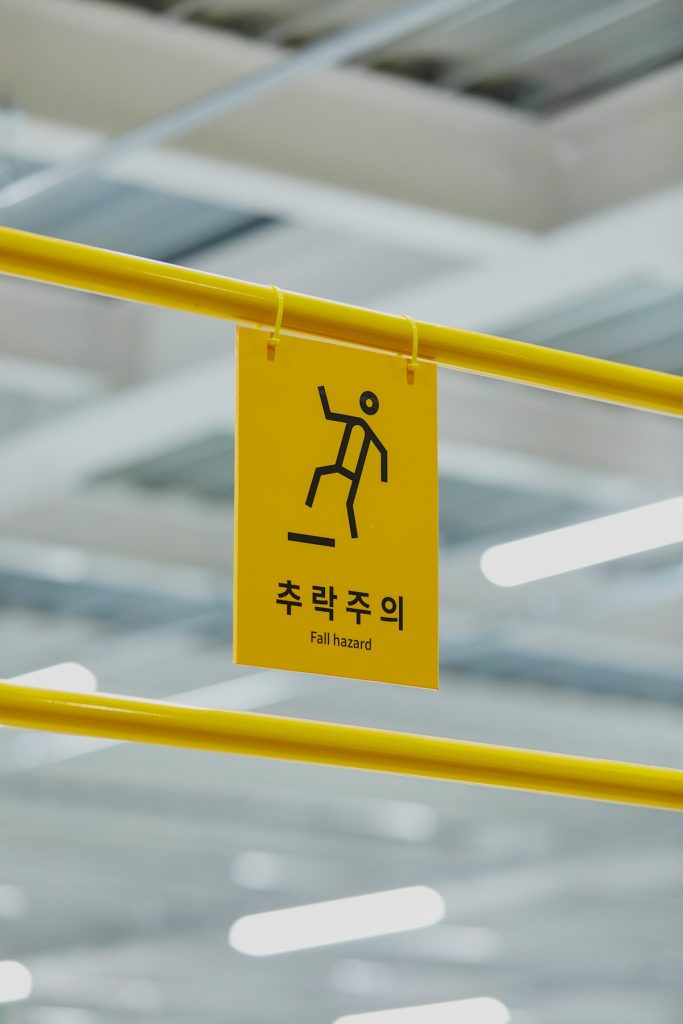
Slips, trips and falls are among the most common workplace injuries, and insurers often treat them as easy to defend: the worker should have looked where they were going. That framing ignores the property owner’s duty to keep the premises reasonably safe. Torn mats in a lobby, a broken loading dock plate, an icy delivery entrance, a cracked sidewalk outside a store, or a poorly lit stairwell in a building where you work can all point to a third party. As with any premises claim, the key question is whether the owner created the hazard or knew or should have known about it. Our page for trip and fall injuries in Queens covers that proof in more depth.
When a workplace accident is fatal, families face a different process: a wrongful death action, generally due within two years of death under EPTL 5-4.1, which is published on the Senate’s EPTL 5-4.1 page. Damages are limited mainly to economic losses, and the estate may also bring a claim for the decedent’s conscious pain and suffering. The Grieving Families Act, which would expand those damages, has been vetoed multiple times, most recently in December 2025.

Three Queens Landmarks Where Thousands of People Go to Work
Roy Wilkins Park
Roy Wilkins Park, in the St. Albans and South Jamaica area at Merrick and Baisley Boulevards, is one of southeast Queens’ largest community parks, named for the longtime civil rights leader. It includes a recreation center, ballfields, a pool and a theater space, and it is busy with programs year-round. That activity depends on maintenance crews, recreation staff, coaches and vendors whose work involves ladders, equipment, wet surfaces and outdoor hazards. The surrounding Merrick Boulevard corridor is lined with stores and offices where retail and building workers face their own risks. The park is also a short drive from our Rosedale office.
Little Neck Bay and the Joe Michaels Mile
The Joe Michaels Mile is a waterfront path in Bayside that runs along Little Neck Bay beside the Cross Island Parkway, popular with runners, cyclists and people fishing or watching the sunset over the water. The path and the parkway next to it require regular upkeep: landscaping, seawall and path repairs, and roadway work zones along the Cross Island. Workers in parkway work zones face fast-moving traffic only feet away, and a crash in a work zone can create both a workers’ compensation claim and a claim against the driver. The Cross Island is also the most direct route from Bayside to our office.
Forest Hills Stadium
Forest Hills Stadium, at the West Side Tennis Club in the Forest Hills Gardens neighborhood, opened in the 1920s and hosted the national tennis championships for decades before the tournament moved to Flushing Meadows. Today it is a well-known outdoor concert venue. Every show depends on stagehands, riggers, security staff, vendors and cleanup crews working long hours, often at night and at height, while loading equipment through narrow residential streets. Event work is fast-paced and physically demanding, and injuries on load-in and load-out days can involve the venue, production companies and equipment suppliers, not just the worker’s employer.

Directions to Our Rosedale Office from Roy Wilkins Park
From Roy Wilkins Park, head southeast on Merrick Boulevard toward Springfield Gardens and Laurelton. Turn south onto Francis Lewis Boulevard and follow it toward Rosedale, near where the Cross Island Parkway meets the Belt Parkway. Follow local streets to 1 Cross Island Plaza, Suite 325. It is one of the shorter trips to our office from anywhere in Queens.
What Adjusters Don’t Volunteer: Workplace Injury FAQs
Does the workers’ comp adjuster work for me?
No. The adjuster works for the insurance carrier that covers your employer. Many adjusters are professional and courteous, but their responsibility is to the carrier, including managing what the claim costs. They are not required to tell you about third-party claims, how to challenge a medical report, or what your claim may be worth. Treat conversations with them as business conversations and keep notes.
Should I give a recorded statement to a third party’s insurer?
Not without advice first. A liability insurer for a property owner, contractor or driver is evaluating whether and how much to pay you. Recorded statements made early, while you are in pain and before all the facts are known, can be quoted later to suggest inconsistencies. You can politely decline and refer the adjuster to your lawyer.
The insurer’s doctor says I’m fine. Is my claim over?
No. A report from a doctor selected by the insurer is one opinion. Your treating physicians’ records, objective test results such as MRIs and nerve studies, and the history of your treatment can all respond to it. Disputes over medical findings are common and can be resolved through the proper process. Keep treating, keep your appointments and tell your doctors about the exam.
Why does the insurer want my old medical records?
Insurers look for prior injuries or conditions that could explain your current symptoms. Some prior records may be relevant, but a request for everything you have ever been treated for is usually broader than necessary. Be truthful about your history with your doctors, and get advice before signing an authorization that reaches years of unrelated care.
Can I be watched or followed while my claim is open?
Yes. Surveillance in public places and review of public social media are common in disputed injury claims. The best protection is consistency: follow your doctors’ restrictions, describe your limitations accurately, and keep social media private and quiet. Video only hurts a claim when it contradicts what you have reported.
I was hurt at work by equipment that malfunctioned. Who could be responsible?
Beyond workers’ compensation, a defective machine or tool can support a claim against the manufacturer, distributor or a company that maintained or modified it. Preserve the equipment if possible, or at least photograph it and record any identifying information like model and serial numbers. Tell your employer in writing that the equipment should be kept, and talk to a lawyer quickly.
Can a workers’ comp carrier take money from my third-party settlement?
Often, yes. A carrier that paid benefits may have a lien on a third-party recovery and usually must consent to a third-party settlement. The lien is typically negotiated as part of finalizing the case. Planning for it from the start helps you understand the net amount you will receive and avoids surprises at the end.
I’m a home health aide hurt at a client’s home. Is there a third-party claim?
Possibly. If a dangerous condition in the home, such as a broken step, loose railing or unsafe flooring, caused the injury, the property owner may be responsible as a third party, depending on the type of property and who controlled the condition. Workers’ compensation would typically cover the job injury. Document the hazard with photos and report the injury to your agency in writing.
How do adjusters decide what a third-party claim is worth?
They weigh the strength of the liability evidence, the severity and permanence of the injury, the medical treatment, lost earnings, and how credible and consistent the injured person appears. They also consider any shared fault and the likely result if the case were tried. Strong documentation on each of those points tends to move the evaluation in your favor.
When should I call a lawyer after a workplace injury?
As early as possible, especially if a third party may be involved or the injury is serious. Early advice helps preserve evidence, meet short deadlines such as the 90-day notice for public entities, and avoid statements or authorizations that can harm the claim. Answers to other general questions are on our FAQ page.
Put a Workplace Accident Lawyer in Queens on Your Side
The insurers have professionals managing your file. You should too. A workplace accident lawyer in Queens at our firm can identify every source of recovery, prepare you for each step the insurers will take, and keep both your comp and third-party claims on track. Call Yakov Mushiyev & Associates, P.C. at 718.775.3110 or contact our office online. We are at 1 Cross Island Plaza, Suite 325, Rosedale, NY 11422. Workers in eastern Queens and near the Nassau line can also start with our Bellerose workplace accident attorney page.
Related reading: A step-by-step plan for Queens workers hurt on the job.
General information, not legal advice. Attorney Advertising. Prior results do not guarantee a similar outcome.