
You were in a Lyft, or hit by one, somewhere in Queens Village. Maybe the driver stopped short on Jamaica Avenue to grab a rider. Maybe someone ran the light at Springfield Boulevard while your driver was glancing at the app. Either way, you need three answers fast: whose insurance pays your bills, what you have to do this month, and whether you have a case for more. This page gives you those answers in order. No filler.
Yakov Mushiyev & Associates, P.C. is a personal injury firm based at 1 Cross Island Plaza in Rosedale, a few minutes south of Queens Village. If you are looking for a Lyft accident lawyer in Queens who is actually nearby, that is us. Consultations are free and available in English, Russian and Spanish. We can meet at your home, at the hospital or by video. You pay no fee unless we win. Call 718.775.3110; phone intake is open 24/7.
Step 1: Know Which Insurance Rules Cover a Lyft Trip in Queens Village
Start here, because most of what you read online about rideshare insurance is wrong for New York City.
Inside the five boroughs, a Lyft car is a for-hire vehicle licensed by the NYC Taxi & Limousine Commission. The driver needs a TLC driver license, the car carries TLC plates, and it must carry commercial for-hire insurance. The TLC sets the minimum coverage. New York State’s separate rideshare law does not reach city trips, because it exempts cities of one million people or more and leaves them to their own regulators.
So for a Lyft trip that starts in Queens Village, these are the TLC minimums for a for-hire car with fewer than eight seats:
| Coverage | TLC minimum (trip starting in NYC) | What it does |
|---|---|---|
| Liability | $100,000 per person / $300,000 per occurrence | Pays injury claims against the Lyft driver when the driver is at fault |
| No-fault (PIP) | $100,000 per person since March 1, 2026 | Pays medical bills, lost earnings and other basic economic loss regardless of fault |
The PIP figure was cut from $200,000 to $100,000 per person on March 1, 2026, under a TLC rule implementing Local Law 90 of 2025. If your crash happened before that date, the policy in force at the time may still control. We check that on every file.
What about Lyft’s own coverage? Lyft may carry additional coverage above the TLC minimums on some trips. Whether it applies, and how much, has to be confirmed from the insurer and the trip record. Anyone who quotes you a company policy number before seeing your documents is guessing.
Queens Village sits right on the Nassau County line. A Lyft ride that starts in Queens falls under TLC minimums. A ride that starts across the line, say from Elmont or Valley Stream, falls under the state rideshare rules instead, with the $1.25 million liability figure that applies to trips starting outside the city in Nassau. Where the trip began can change the whole insurance picture.
That border question is big enough that we wrote a separate guide on it: Lyft accident in Queens Village: Queens trip vs. Nassau trip.
Step 2: Figure Out Where You Fit
Your role in the crash decides where your no-fault benefits come from and who you can pursue beyond that. Find yourself below.
You were riding in the Lyft
Your no-fault application goes to the insurer of the Lyft car, meaning its commercial policy, not your own auto policy. Beyond no-fault, you can pursue whichever driver caused the crash. That may be the other motorist, your Lyft driver, or both. Your own share of fault is rarely an issue when you were sitting in the back seat.
You were walking or biking and a Lyft hit you
Pedestrians and cyclists generally claim no-fault from the vehicle that struck them. Here, that is the Lyft car’s insurer. Your claim for pain and suffering runs against the driver and owner if they were at fault. Fault matters more for you than for a passenger (see Step 4).
You were driving another car
Your no-fault generally comes from your own policy. If the Lyft driver caused the crash, your injury claim runs against that driver and the car’s liability coverage. If it was the other way around and an uninsured or lightly insured driver hit a Lyft you were in, your own supplementary uninsured/underinsured motorist (SUM) coverage, or a household relative’s, may matter. Coverage on TLC vehicles for that situation is far lower than under the state rideshare rule.
You were the Lyft driver
NYC Lyft drivers hurt on the job are generally covered for their own work injuries through the New York Black Car Fund. That is a separate system from a passenger’s claim, and you may also have a claim against another driver who caused the crash.
Step 3: Save the Lyft Evidence Before It Disappears
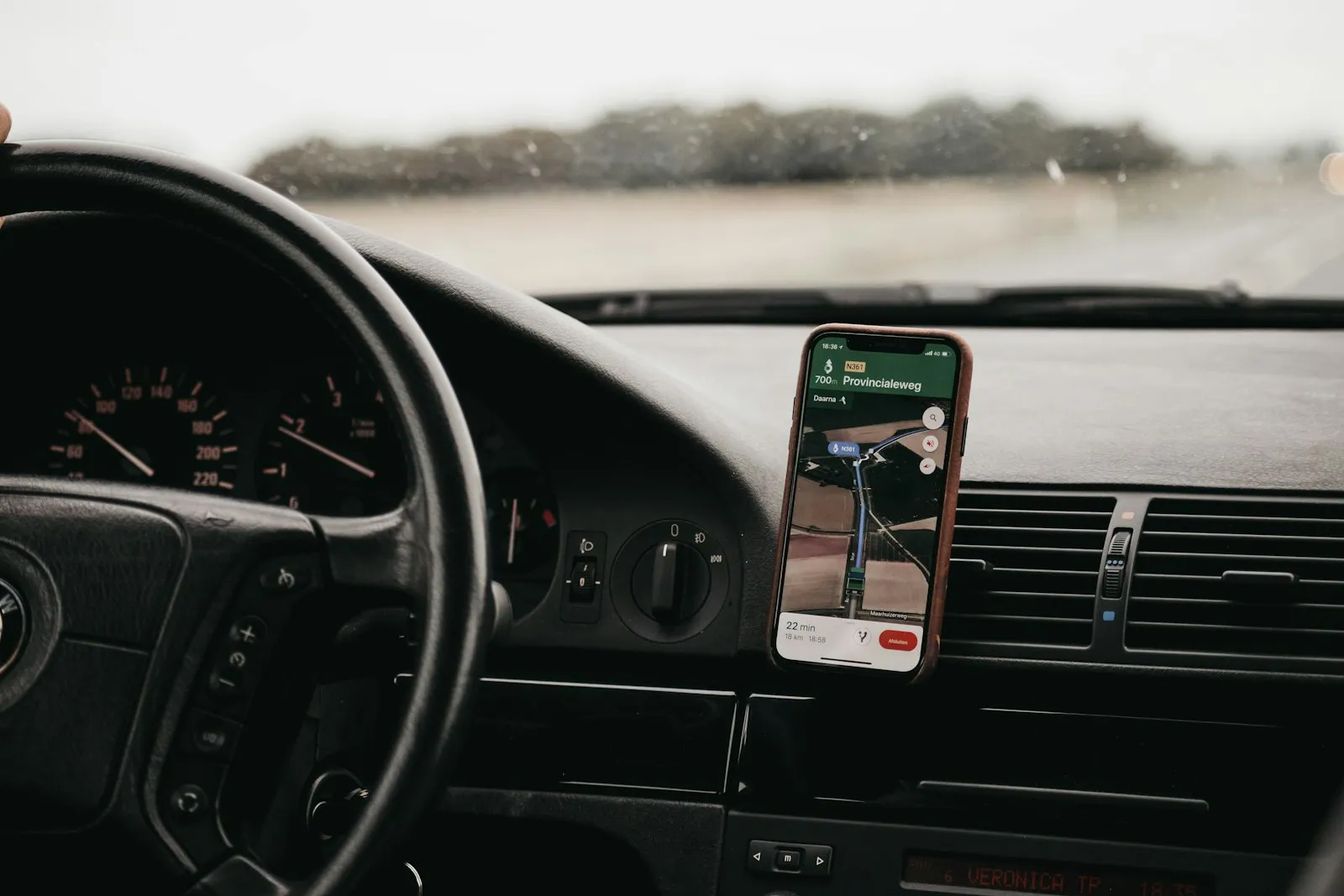
A Lyft crash leaves a digital trail that a cab crash does not. Use it. Do these things today:
- Screenshot the ride receipt. It shows the trip ID, pickup and drop-off points, and times.
- Screenshot the driver details. Name, photo, car and plate as shown in the app.
- Capture the route map. It helps show where the car was and when.
- Report the crash in the Lyft app as well as to police. Keep a copy of anything you submit.
- Do not delete the app or your account. Your trip history lives there.
- Get the police report number before officers leave, and file an MV-104 with the DMV if it applies to you.
- Photograph everything: the cars, the TLC plate, the intersection, your injuries.
One more item matters a lot: the driver’s status at the moment of the crash. Was the app off? Was the driver waiting for a request, heading to a pickup, or carrying a passenger? That status can affect which coverage is in play. We request it formally, but your screenshots give us a head start.
Store and home cameras along Jamaica Avenue and Springfield Boulevard often record over themselves within days. If you saw a camera, tell us right away.
Step 4: Understand the 2026 Changes That Affect Your Claim
New York rewrote several key injury rules in 2026. If you were hurt in a Lyft crash, these are the changes that touch your case.
The serious injury list is shorter
No-fault covers economic loss. To recover for pain and suffering, you generally must show a “serious injury” under Insurance Law § 5102(d). The 2026 budget removed one category, leaving eight:
- Death
- Dismemberment
- Significant disfigurement
- Fracture
- Loss of a fetus
- Permanent loss of use of a body organ, member, function or system
- Permanent consequential limitation of use of a body organ or member
- Significant limitation of use of a body function or system
Fault can now wipe out a claim
For motor-vehicle injury lawsuits commenced on or after May 26, 2026, CPLR 1411(b) applies. If your fault is greater than the defendant’s (or the defendants’ combined), you recover nothing. At 50% or less, your damages are reduced by your share. This applies to suits filed on or after that date regardless of when the crash happened. For a Lyft passenger, this rarely bites. For a pedestrian crossing Hillside Avenue or a cyclist on Jamaica Avenue, it can decide the case.
Under Insurance Law § 5104, the fact-finder must now decide fault before deciding serious injury. There is also a $100,000 cap on non-economic damages for an at-fault claimant who was driving uninsured (with a narrow exception for a lapse under 30 days), was convicted of impaired driving, or was convicted of a felony committed while driving. The cap does not limit economic damages, other people’s claims or wrongful death.
Step 5: Mark These Deadlines
- 30 days: file the no-fault application with the Lyft car’s insurer (or the insurer of the vehicle that hit you).
- 90 days: serve a notice of claim if a City or MTA vehicle, such as a bus, was involved.
- 2 years: wrongful death actions, limited to pecuniary damages.
- 3 years: most personal injury lawsuits, under CPLR 214(5).
The 30-day deadline is the one people miss. Medical bills pile up while the no-fault file sits unopened. We can prepare and send it for you.
Where Lyft Pickups Go Wrong in Queens Village
Queens Village has no subway stop. Riders lean on the LIRR, buses and app cars, and that puts a lot of Lyft pickups on a handful of busy streets. The patterns we watch for:
- Mid-lane stops on Jamaica Avenue. Drivers pull up beside parked cars to meet a rider, then swing back into traffic. Rear-end hits and door-zone strikes on cyclists follow.
- The LIRR station on Springfield Boulevard. Commuters request rides as trains arrive. Cars cluster, stop short and make quick U-turns.
- Left turns off Hillside Avenue. A driver checking the next turn on the app is not watching the crosswalk.
- Angled crossings at Hempstead and Braddock Avenues. Odd sight lines and GPS directions that arrive too late.
- Parkway merges. Airport trips run toward the Cross Island and Grand Central parkways at speed.
Hurt in a yellow or green cab rather than a Lyft? See our Queens Village taxi accident lawyer page. For other injury types, visit our main Queens Village accident lawyer page.
Top Destination: Queens County Farm Museum and the Jamaica Ave / Springfield Blvd Corridors
The Queens County Farm Museum sits on Little Neck Parkway just north of Queens Village, in the Floral Park / Glen Oaks area. It is a historic working farm and one of the last stretches of farmland in New York City. People go for the animals, the fields and seasonal events, and fall weekends draw families in large numbers.
The farm is not near a subway line, so many visitors come by Lyft. Here is how those trips usually play out:
- Approach: cars come up Springfield Boulevard or Braddock Avenue, or exit the Grand Central or Cross Island parkways.
- Drop-off: along Little Neck Parkway near the entrance, where drivers slow suddenly and turn around.
- Pickup: at closing time, many requests land at once. Drivers circle, stop in the roadway, and families with strollers cross to meet them.
Back in the neighborhood, the Jamaica Avenue and Springfield Boulevard corridors are where daily Lyft traffic concentrates: the shopping strip, bus connections and the LIRR station. Trips here are short. Short trips mean more stops at the curb, and more stops mean more chances for a crash.
Why Hire a Lyft Accident Attorney Close to Home
- We are next door. Our Rosedale office is minutes away, and we will come to you if you cannot travel.
- We know the TLC rules. TLC coverage, the March 2026 PIP change and the Nassau border question shape every Lyft file.
- We handle the paperwork. No-fault forms, records requests and insurer calls.
- Three languages. English, Russian and Spanish.
- No fee unless we win.
For how we approach vehicle cases generally, see our car accident practice. You can also review past matters on our settlements page; every case is different, and those results do not predict yours.
Lyft Accident FAQs
Does the $1.25 million rideshare figure for Nassau trips cover my Queens Village Lyft ride?
Not if the trip started in New York City. That figure comes from the state rule, which applies to trips beginning outside the city, such as in Nassau. City trips fall under TLC minimums.
Do I file no-fault with my own insurance company?
If you were a passenger, generally no. You file with the insurer of the Lyft car you were riding in, within 30 days.
Can I sue my Lyft driver?
Yes, if the driver caused or helped cause the crash and your injury meets the serious injury threshold. Claims can also run against another at-fault driver.
How much PIP does a Lyft car carry?
The TLC minimum is $100,000 per person for crashes on or after March 1, 2026.
What if the driver had the app on but no passenger yet?
The driver’s app status can affect which coverage applies. We confirm it from the insurer and the trip record rather than assume.
I was crossing the street and partly at fault. Is my case over?
Not necessarily. Under CPLR 1411(b), if your fault is 50% or less, your recovery is reduced by your share. Only if your fault exceeds the defendant’s do you recover nothing.
Should I give Lyft’s insurer a recorded statement?
Talk to a lawyer first. More general answers are on our FAQ page.
About Queens Village: Local FAQs
Is there a subway in Queens Village?
No. The LIRR’s Queens Village station is the rail link, and buses on Jamaica Avenue, Hillside Avenue and Springfield Boulevard connect to the subway in Jamaica.
Which neighborhoods are next to Queens Village?
Hollis to the west, Cambria Heights and St. Albans to the south, Bellerose to the northeast, and the Nassau County line to the east. Neighbors to the south can see our Rosedale Lyft accident lawyer page.
What ZIP codes does Queens Village use?
Mainly 11427, 11428 and 11429.
Which precinct handles crash reports?
The NYPD’s 105th Precinct.
Which hospitals are nearby?
Long Island Jewish Medical Center in New Hyde Park, just over the Nassau line, and Queens Hospital Center and Jamaica Hospital Medical Center in Jamaica. EMS decides where you go.
Where would my lawsuit be filed?
Usually Queens County Supreme Court in Jamaica. Court information is on the New York State Unified Court System site.
Where is the safest place to get dropped off on Jamaica Avenue?
At the curb, ideally on a side street. Do not exit into a travel lane, and check for bikes before opening the door.

Get a Free Case Review From a Queens Village Lyft Accident Lawyer
Here is what to do next. Call 718.775.3110 or send your details through our contact page. We will look at your Lyft trip record, your injuries and the coverage, then tell you plainly where you stand. If insurance questions come up in the meantime, the Department of Financial Services has general consumer information on auto coverage.
Yakov Mushiyev & Associates, P.C.
1 Cross Island Plaza, Suite 325, Rosedale, NY 11422
Monday–Friday 9 a.m.–6 p.m. · Phone intake 24/7 · English, Russian, Spanish
Attorney Advertising. This is general information about New York law, not legal advice, and reading it does not create an attorney-client relationship. Laws change and every case depends on its own facts. Prior results do not guarantee a similar outcome.