
The legal consequences of an e-bike crash depend heavily on who the injured person was and why they were on the road. A delivery rider working an evening shift on Rockaway Beach Boulevard, a commuter pedaling to the Rockaway Park shuttle station, a visitor cruising toward the boardwalk on a summer Saturday and a pedestrian crossing Beach 116th Street each face a different set of rules, insurers and deadlines. This guide from Yakov Mushiyev & Associates is organized around those four people.
Whichever description fits you, a few principles apply to all. Under VTL § 1242, no one under 16 may operate an e-bike. City rules published by NYC DOT cap e-bikes at 15 mph on city streets and prohibit sidewalk riding. The general limitations period for an injury lawsuit is three years, and New York applies pure comparative fault, so a rider’s own conduct may reduce but does not bar recovery. For an overview of how our firm approaches these matters, see the scooter and e-bike accident practice page.
Delivery workers
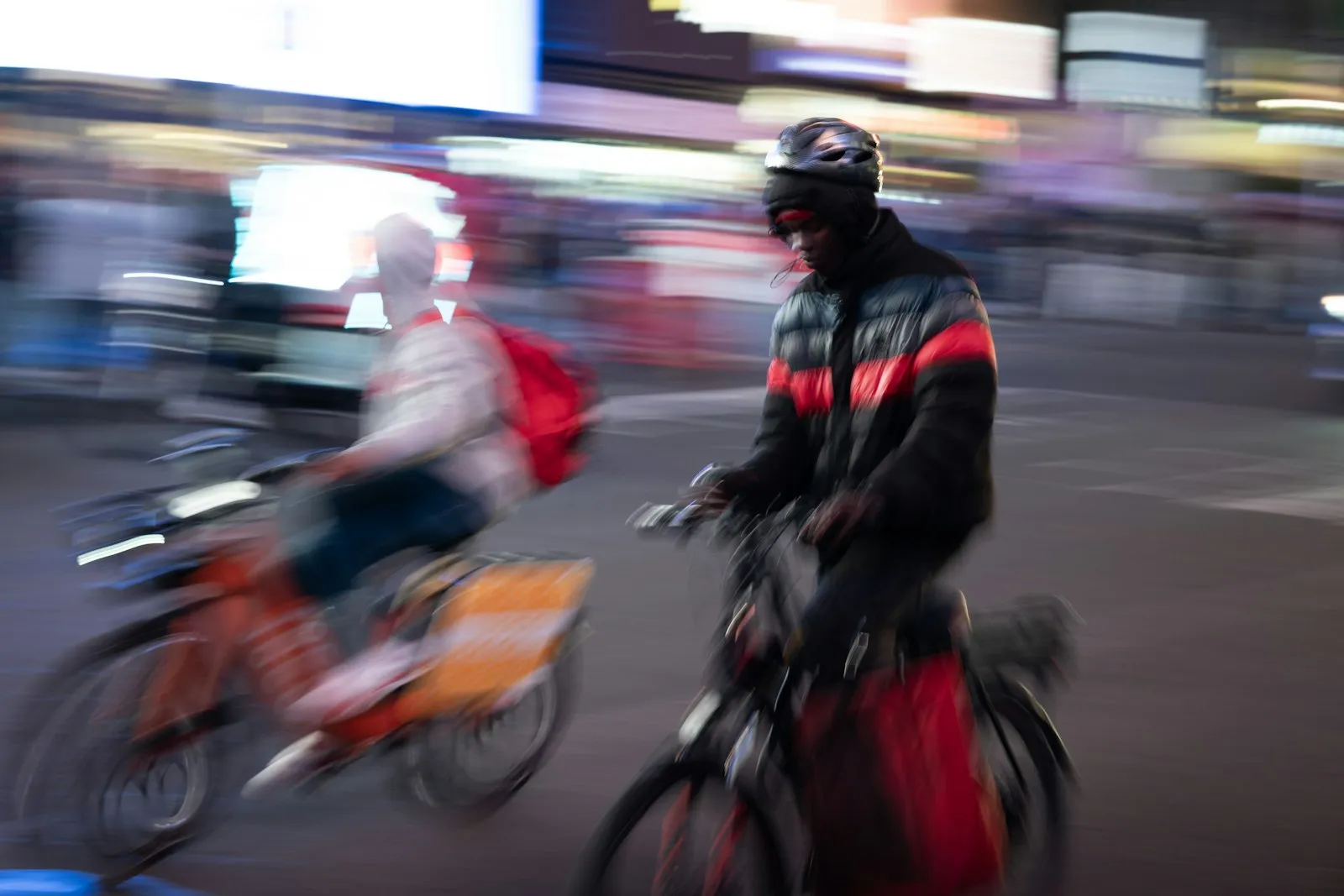
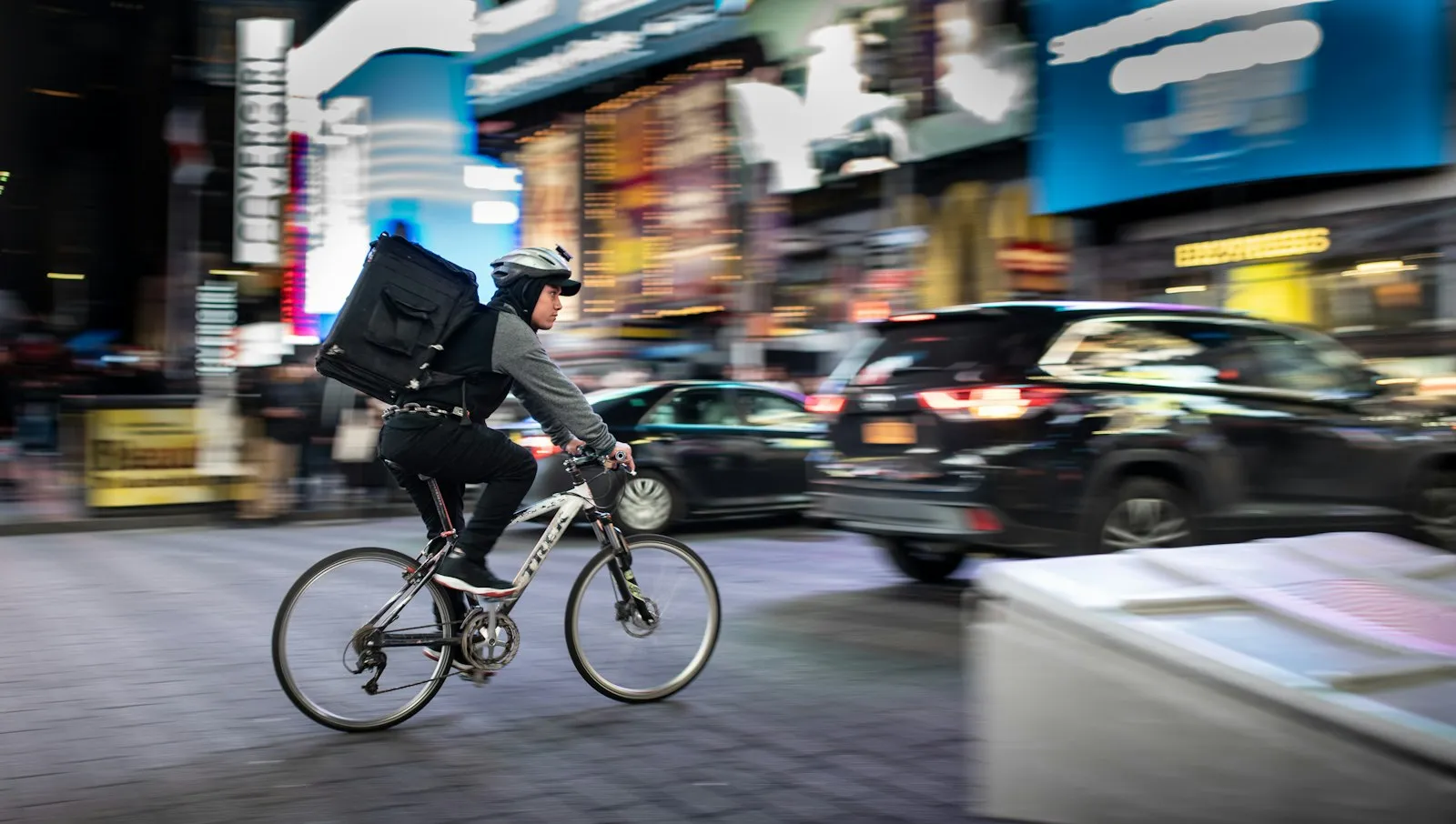
For a rider injured while making deliveries, the threshold question is employment status. An employee is generally entitled to workers’ compensation benefits for injuries suffered on the job, regardless of fault. Many app-based riders, however, are classified as independent contractors, and that classification affects what benefits are available. The New York State Workers’ Compensation Board publishes information for injured workers, and our work injury practice handles these claims.
Work-related benefits are not necessarily the end of the matter. If a negligent driver caused the crash, a separate claim against that driver may also exist, and an e-bike accident attorney will typically evaluate both tracks together so that one does not undercut the other. Delivery riders should also remember that helmets are required for anyone riding for work, and that trip data in the delivery app can establish time, route and speed. Screenshot it before it becomes hard to retrieve. Because lost income is often the largest component of a working rider’s loss, documentation matters; our article on proving inability to work explains what is typically required.
Commuters
A commuter struck by a car on the way to a train or a job is, in most cases, a non-occupant of that car. Because the law does not classify an e-bike as a motor vehicle, the car’s no-fault policy generally pays medical expenses and a portion of lost wages under Insurance Law § 5103. The no-fault application usually has to be filed inside 30 days.
To recover for pain and suffering, the commuter must generally show a serious injury, such as a fracture or a significant limitation of use of a body part. Common injuries in this category include broken wrists and collarbones, head injuries, spinal injuries and facial or dental trauma. If the driver fled, the commuter’s own household auto policy or MVAIC may provide coverage, subject to strict early notice rules.
Commuters often ride the same route daily and may know of a recurring hazard, such as a pothole or a broken bike-lane surface. Where a road defect contributed to a crash, a notice of claim against the city is generally required within 90 days, which is far shorter than the ordinary deadline.
Weekend and recreational riders
Warm-weather riders heading toward the boardwalk encounter a different mix of risks: heavier pedestrian traffic, drivers searching for parking and riders who may be less familiar with a rented or borrowed bike. Two points deserve attention.
First, the class of the bike. Class 3 e-bikes, capable of 25 mph, are permitted only in a city of one million or more, and require a helmet. Riding a borrowed Class 3 bike without one may become a comparative fault argument.
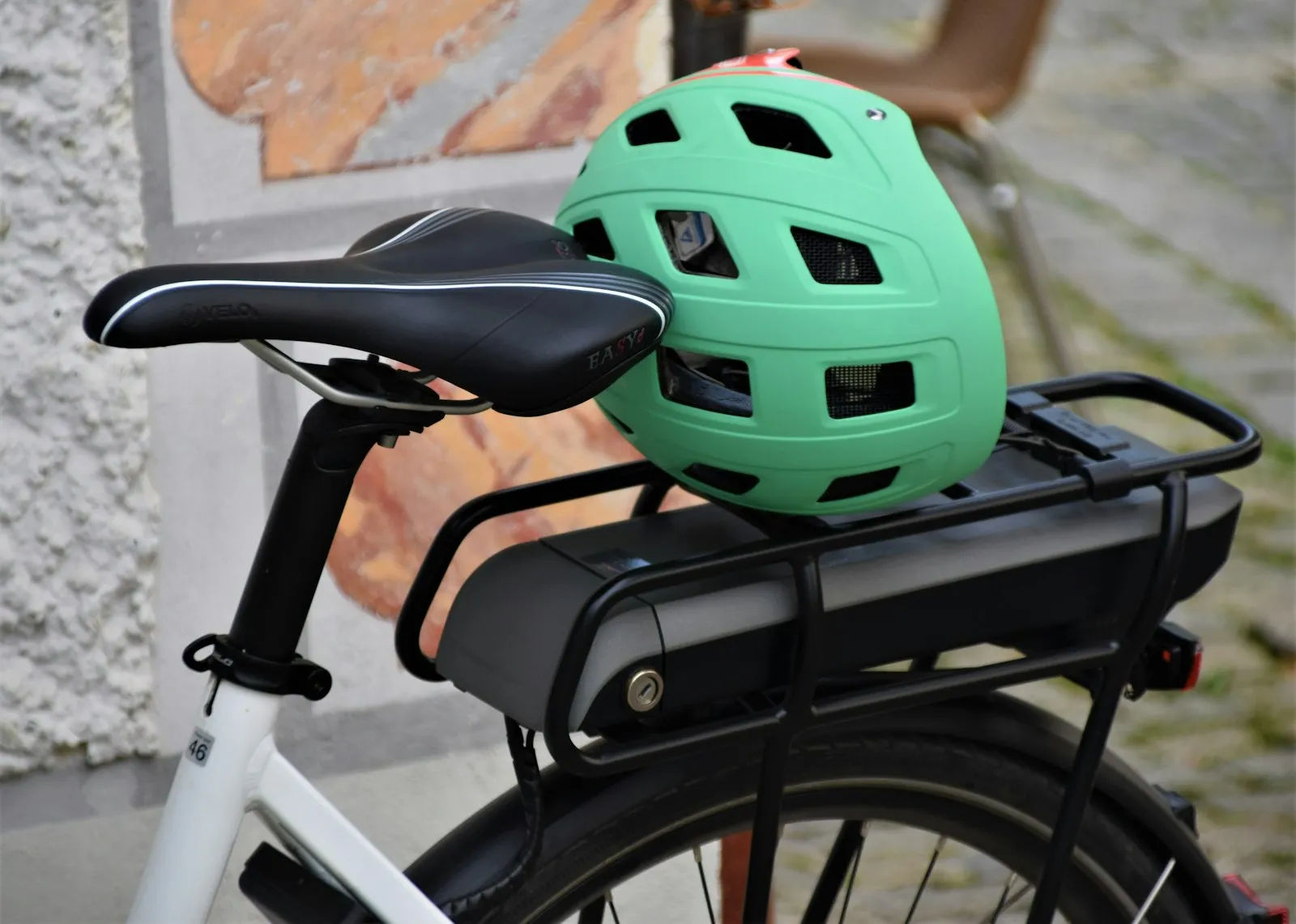
Second, the condition of the equipment. A bike that fails because of a defect, whether a brake, a frame or a battery, can support a product liability claim against its maker or seller. Two safety standards apply in the city under Local Law 39 of 2023: UL 2849 for e-bikes that are sold, leased or rented, and UL 2271 for their batteries. Battery fires are a separate hazard, and the FDNY’s lithium-ion battery guidance addresses safe charging and storage. After any crash involving equipment failure, the bike and battery must be preserved without repair.
Pedestrians struck by e-bikes
Pedestrians occupy a distinct legal position. Because an e-bike is not a motor vehicle, no-fault coverage generally does not apply to the bike that struck them. The claim ordinarily lies against the rider personally. Depending on the facts, a homeowners or renters insurance policy held by the rider may respond, though policies vary, or a business responsible for the rider may bear liability. No payer can be assumed in advance. An electric bike accident lawyer representing a pedestrian must therefore investigate who the rider was, whether the rider was working at the time and what insurance, if any, may be available.
Pedestrians should obtain the rider’s name and contact information, identify witnesses and seek video from nearby businesses promptly. Our pedestrian accident practice covers these claims in more detail, and our bicycle accident page addresses collisions involving conventional bikes.
Elsewhere on the peninsula
We serve the full Rockaway peninsula and the bay. Readers may also consult our pages for an e-bike accident lawyer in Belle Harbor, an e-bike accident lawyer in Breezy Point, an e-bike accident lawyer in Arverne and an e-bike accident lawyer in Broad Channel. Our Queens accident lawyer page addresses the borough generally.
Talking with an e-bike accident lawyer in Rockaway Park
Regardless of which category describes you, attorney Yakov Mushiyev and our team offer a free consultation, charge no fee unless we win, and conduct meetings in English, Russian or Spanish. The firm has recovered over $80 million for injured New Yorkers. To speak with an e-bike accident lawyer in Rockaway Park, call 718.775.3110 or complete the request on our contact page.
Our office is located at 1 Cross Island Plaza, Suite 325, Rosedale, NY 11422. The directions plotted below begin in Rockaway Park. Meetings at home, in the hospital or by video can be arranged for clients unable to travel.
This guide summarizes general legal principles for informational purposes only and should not be relied on as legal advice. Attorney Advertising.