
You might be wondering whether the rules you were or weren’t following at the moment of your crash will sink your claim. It is one of the first things people ask us, and the answer is usually more encouraging than they expect. So let’s start with the rules themselves, the ones New York State and New York City set for e-bikes, and then look at how each of them can shape fault and compensation after a crash in Glendale. And if you’d rather hear it from a Glendale e-bike accident lawyer directly, Yakov Mushiyev & Associates is a phone call away.
Part one: the rules you ride under
What class is your e-bike?
New York sorts e-bikes into three classes under Vehicle and Traffic Law § 102-c. Knowing which one you ride matters, because some rules apply only to certain classes.
| Class | How the motor works | Top assisted speed | Where allowed |
|---|---|---|---|
| Class 1 | Pedal-assist only | 20 mph | Statewide, subject to local rules |
| Class 2 | Throttle | 20 mph | Statewide, subject to local rules |
| Class 3 | Electric assist | 25 mph | Only in a city of 1 million or more, which means New York City |
State rules
Under Vehicle and Traffic Law § 1242, no one under 16 may operate an e-bike. E-bikes generally may use roads with posted speed limits of 30 mph or less. Sidewalks are off-limits unless local law allows riding there, and cities are free to add their own rules on top.
City rules
New York City does add its own. According to NYC DOT:
- E-bikes and e-scooters may not go faster than 15 mph on any city street, whatever the bike can do.
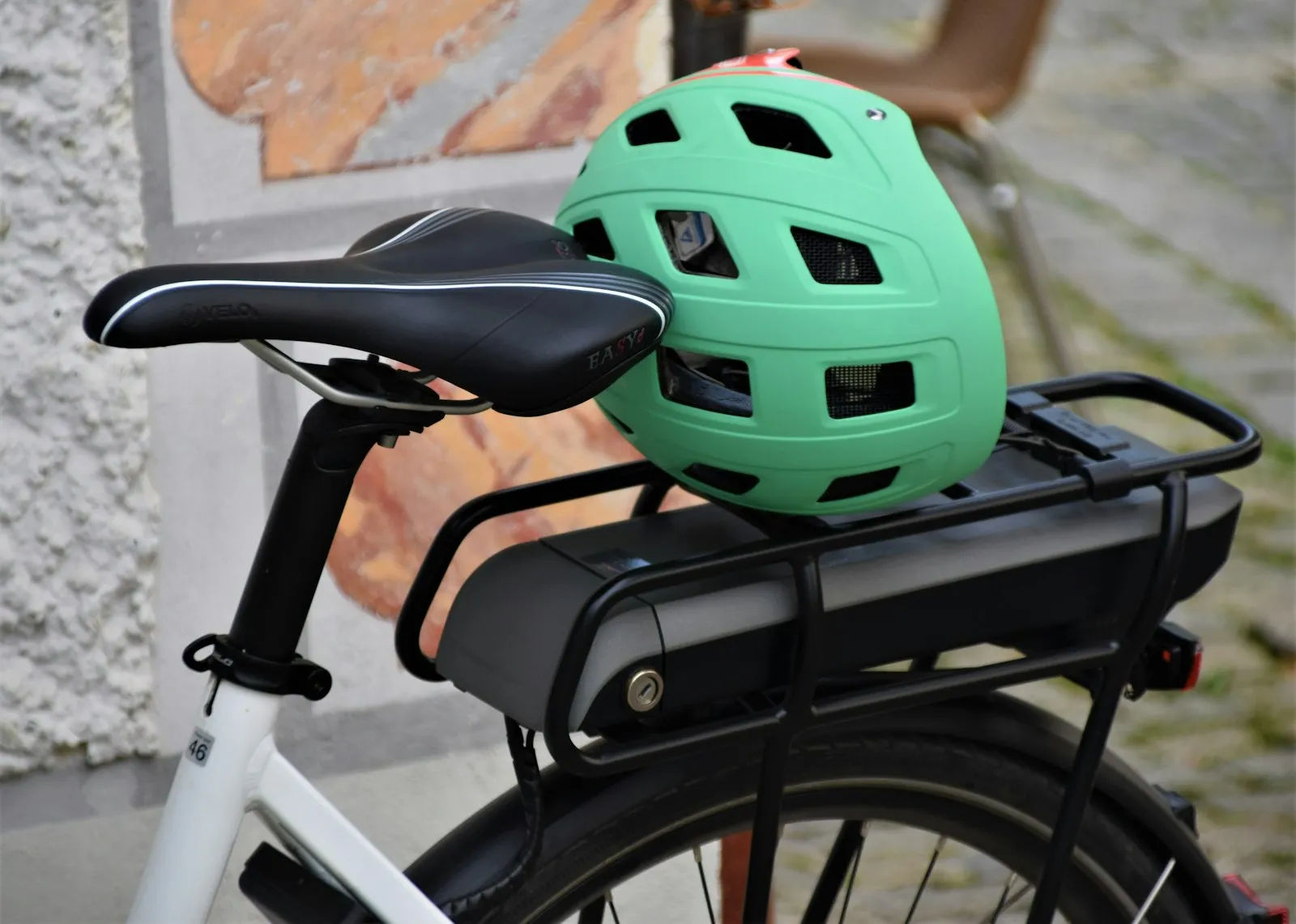
- Helmets are required on Class 3 e-bikes and for anyone riding for work.
- Riders must be at least 16.
- No riding on sidewalks.
- E-bikes belong in bike lanes and on streets.
One more point: an e-bike is not a car
Bicycles with electric assist are excluded from the definition of “motor vehicle” in Vehicle and Traffic Law § 125. That sounds technical, but it changes which insurance applies. A throttle-only, faster moped-style device may be classified differently; our moped and scooter claims page covers that.
Part two: how the rules affect your claim
Here is where it gets reassuring. New York follows pure comparative fault under CPLR § 1411. That means breaking a rule usually doesn’t end your case. It may reduce what you recover in proportion to your share of the blame, and nothing more.

If you were following the rules
Say you were riding along Myrtle Avenue under 15 mph, helmet on, when a driver turned across your path. You are in a strong position. If a car hit you, that car’s no-fault coverage generally pays your medical bills and part of lost wages as a non-occupant, filed generally within 30 days. For pain and suffering against the driver, New York generally requires a “serious injury,” such as a fracture or a significant limitation. Our no-fault guide walks you through it.
If you were over the limit or without a helmet
Maybe you were coming down Cooper Avenue a little faster than 15 mph, or you’d left your helmet at home. The insurer will likely bring that up. It may reduce your recovery. It doesn’t bar it. What matters is how much it actually contributed to the crash, and a driver who ran a stop sign is still responsible for that choice. Our explainer on comparative negligence in New York gives examples.
If you were riding for work
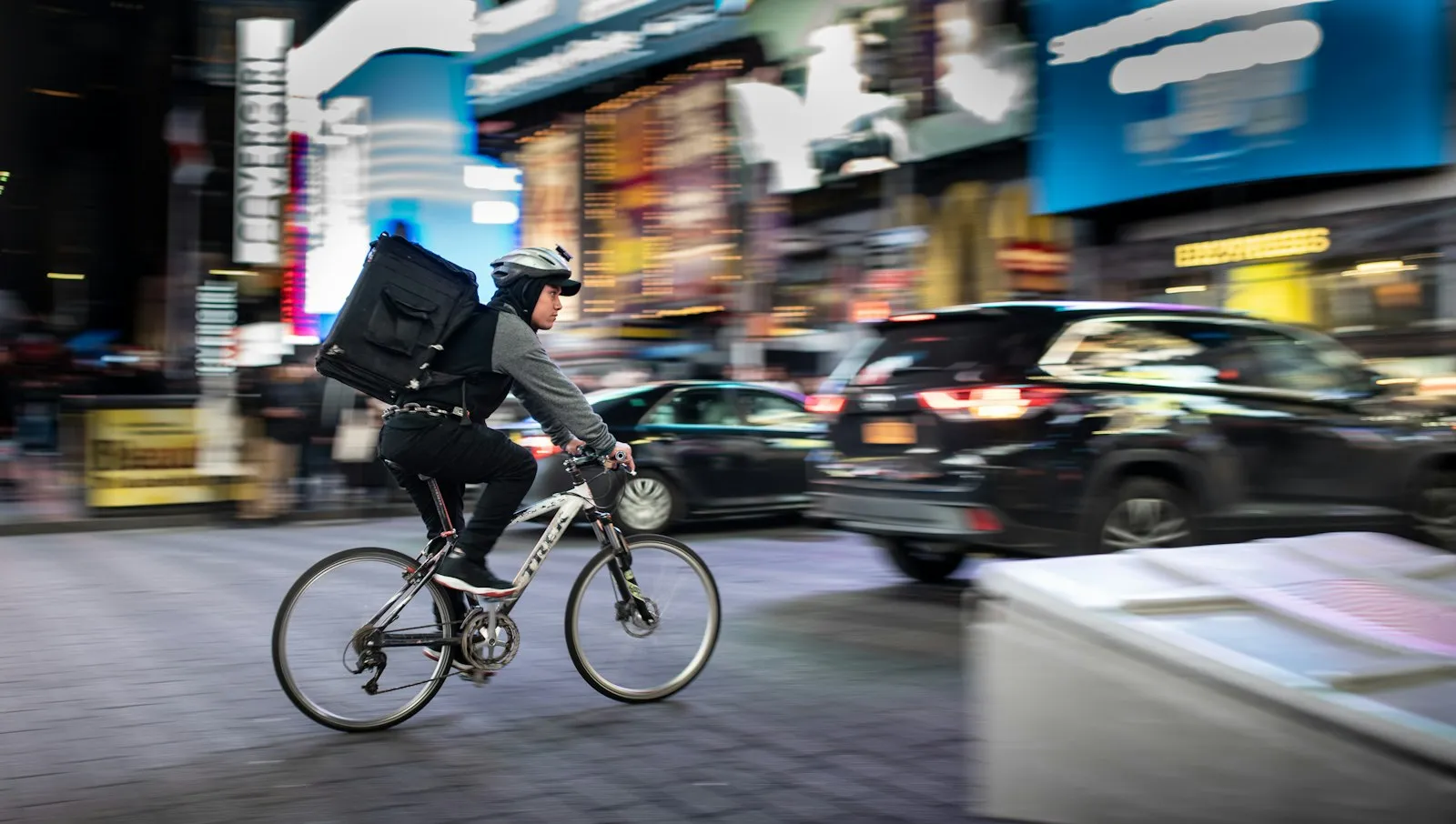
A delivery to The Shops at Atlas Park, maybe. If you’re an employee, workers’ compensation generally covers you. If the app calls you an independent contractor, your benefits may look different. And a careless driver can still be held responsible in a separate claim.
If you were walking and an e-bike hit you
Perhaps you were heading toward the western edge of Forest Park when a rider came off the sidewalk. Since the e-bike isn’t a motor vehicle, no-fault generally doesn’t apply to it. Your claim is generally against the rider and, depending on the facts, possibly the rider’s homeowners or renters insurance or a business responsible for the rider. Policies vary, so no one can promise you a payer in advance. The rider’s sidewalk riding, though, is exactly the kind of rule-breaking that weighs on fault.
If the road or the bike failed you
A pothole or broken pavement can lead to a claim against the city, which generally requires a notice of claim within 90 days. When the bike or its battery was defective, the company that made or sold it may face a product liability claim.
How long you have
You generally have three years to bring a lawsuit, and only 90 days to give notice if the city may be responsible. An e-bike accident lawyer Glendale riders talk to early can protect both deadlines while you focus on healing.
Our office and the drive from Glendale
Yakov Mushiyev & Associates is located at 1 Cross Island Plaza, Suite 325, Rosedale, NY 11422. The map below lays out the route from Glendale, but you’re welcome to meet us at home, in the hospital or over video instead.
We also have pages for riders a little farther out: an e-bike accident lawyer in Ridgewood, an e-bike accident lawyer in Middle Village, and an e-bike accident lawyer in Forest Hills. You can read about the broader Glendale accident lawyer services too, or our general bicycle accident work.
Questions about your own ride?
Attorney Yakov Mushiyev and the team have recovered over $80 million for injured New Yorkers. As a Glendale e-bike accident attorney and electric bike accident lawyer, the firm offers free consultations and charges no fee unless we win, in English, Russian or Spanish. Give us a ring at 718.775.3110, or reach us through the contact form, and tell us what happened. More on our e-bike accident practice is a click away.
The rules and legal points above are summarized for general information only and are not legal advice; how they apply depends on the facts of each crash. Attorney Advertising.