
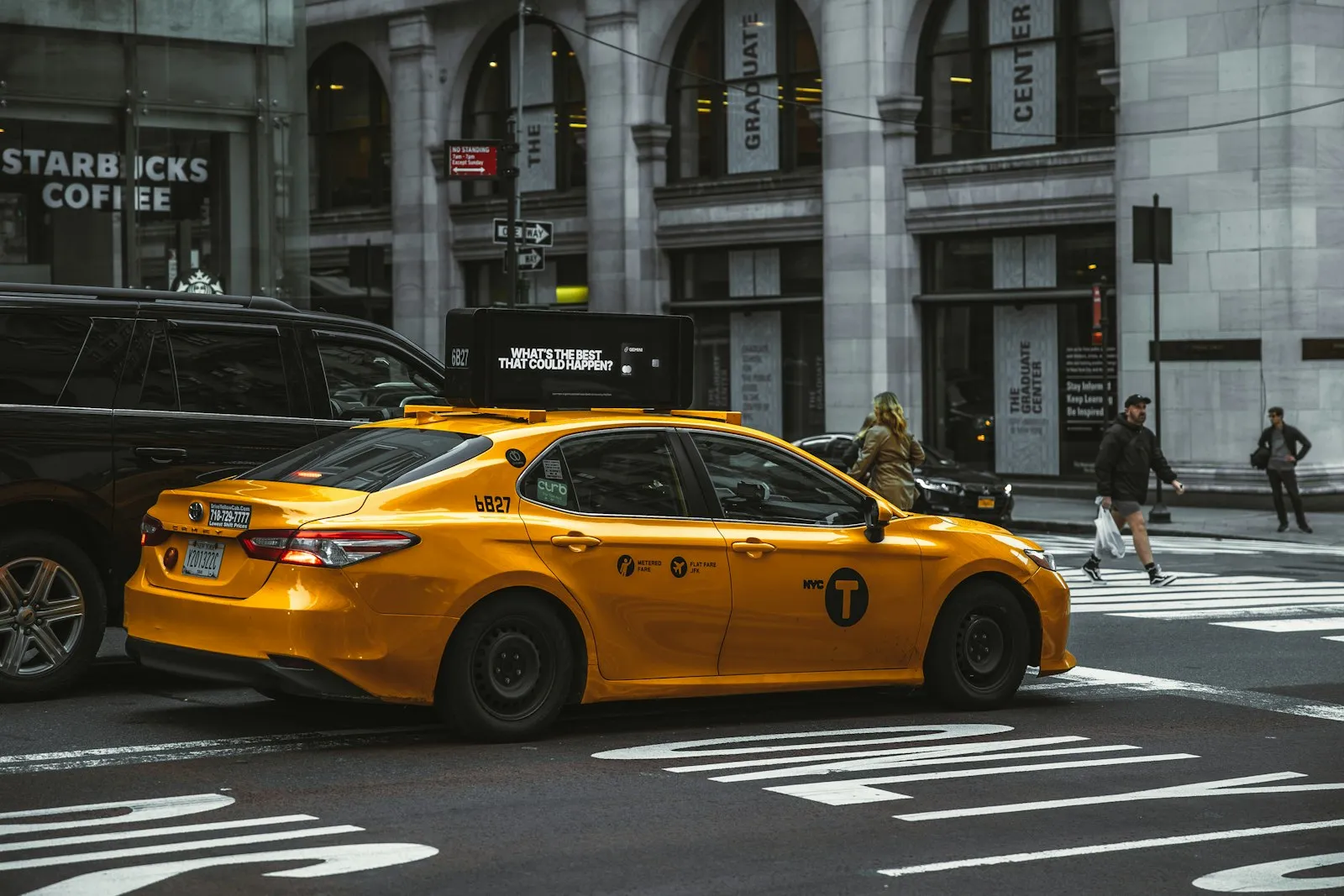
A hypothetical, to start. It is a weekday evening on Queens Boulevard. A woman we will call Maria hails a yellow cab outside the Forest Hills–71st Avenue subway station after a long day in Manhattan. She buckles in, gives an address a few blocks south of Austin Street, and checks her phone. Two lights later, a car making a left turn cuts across the cab’s path. The cab driver brakes hard, but not hard enough. Maria’s shoulder slams into the door, her knee hits the partition, and within a minute there are two drivers arguing on the service road while she sits in the back seat wondering who, exactly, is supposed to pay for the X-rays she is going to need. Maria is not a real client. She is a composite, built from the kinds of questions people in Forest Hills bring to us. But the confusion she feels is real, and it is the reason this page exists.
Yakov Mushiyev & Associates, P.C. represents people hurt in taxi, Boro Taxi, car service and rideshare crashes across Queens. Below, we walk through Maria’s situation one step at a time: who pays her medical bills, when she can sue, which deadlines can quietly end her case, and what changed in New York law in 2026. If you would rather talk it through with a person, call 718.775.3110. Consultations are free and available in English, Russian and Spanish.
Maria’s First Worry: Who Pays My Doctors?
New York is a no-fault state. That phrase confuses people, because it sounds like nobody is ever at fault. What it really means is that your first layer of benefits, called Personal Injury Protection or PIP, pays for medical treatment, lost earnings and other basic economic loss regardless of who caused the crash. The rule lives in Insurance Law § 5102. For an ordinary private car, the state minimum is $50,000 per person.
Because Maria was a passenger, she generally claims PIP from the vehicle she was riding in: the cab. Vehicles licensed by the NYC Taxi and Limousine Commission — yellow cabs, green Boro Taxis, for-hire vehicles including Uber and Lyft, and limousines — carry a higher PIP requirement than private cars. Effective March 1, 2026, the TLC requirement is $100,000 per person, after a TLC rule implementing Local Law 90 of 2025 reduced it from its earlier, higher level.
Had Maria been crossing Queens Boulevard on foot when the cab hit her, the picture would flip: pedestrians and cyclists generally claim PIP from the vehicle that struck them. And if the driver of the other car had been at fault and she had no insurance of her own, the taxi’s coverage would still be her starting point.
The deadline that catches people first
Maria has 30 days from the accident to file her written no-fault application (11 NYCRR 65-1.1). People miss this all the time, usually because they are in pain, waiting to see whether they “really” got hurt, or assuming the cab company will handle it. It will not. The application is the injured person’s job, and late filings invite denials.
When Maria Can Go Beyond No-Fault
No-fault covers economic loss up to the PIP limit. It does not pay for pain, suffering or the loss of the life you had before the crash. To recover those, Maria must sue the at-fault driver or drivers, and to do that she must show a “serious injury” as New York defines it.
That definition changed this year. The 2026 state budget (Chapter 58, Part EE) removed the old time-based category that turned on how many days an injured person was kept from normal activities. Today, Insurance Law § 5102(d) lists eight categories:
- Death
- Dismemberment
- Significant disfigurement
- Fracture
- Loss of a fetus
- Permanent loss of use of a body organ, member, function or system
- Permanent consequential limitation of use of a body organ or member
- Significant limitation of use of a body function or system
Whether Maria’s shoulder and knee injuries fit one of those categories is a medical and legal question that depends on imaging, treatment records and a physician’s findings. That is why consistent care from the first week matters so much: gaps in treatment are the first thing an insurer points to.
In New York, the jury now decides fault before it decides whether the injury is serious enough. Under the 2026 rules, the order of those questions can shape the whole case.
Fault comes first, and it matters more than it used to
Under Insurance Law § 5104, the fact-finder must decide fault before deciding serious injury. And for motor-vehicle injury lawsuits filed on or after May 26, 2026, new CPLR 1411(b) applies: a claimant whose fault is greater than the defendant’s (or the defendants’ combined fault) recovers nothing, while a claimant who is 50% or less at fault has the award reduced proportionally. The rule applies based on when the lawsuit is filed, not when the crash happened (DFS Circular Letter 2026-01).
A back-seat passenger like Maria will rarely share fault. But a driver whose car collided with a cab on Queens Boulevard, or a pedestrian crossing mid-block near Austin Street, may face an argument that they contributed. Under the new rule, that argument is worth fighting carefully.
New § 5104(d) also caps non-economic damages at $100,000 for an at-fault claimant who was driving uninsured (subject to an exception for a lapse of under 30 days that was not the claimant’s own responsibility), was convicted of impaired driving, or was convicted of a felony committed while driving. The cap does not touch economic damages, other people’s claims or wrongful death claims.
Who Is on the Other Side of a Forest Hills Taxi Claim
Maria’s case could involve more than one insurer. A typical list of potentially responsible parties looks like this:
| Party | Why they may matter | What we look at |
|---|---|---|
| The taxi driver | Speed, braking, distraction, a sudden stop for a fare | Trip records, dash camera, witness accounts |
| The medallion owner or fleet | Owns the vehicle and carries the liability policy | TLC licensing and insurance records |
| The other driver | An unsafe turn, a red light, a lane change across the service road | Police report, photos, intersection video |
| A rideshare or base company | When the car was an app-based or car-service vehicle | Whether the driver was on a trip or logged in |
| The City or MTA | If a city vehicle or bus was involved | Notice of claim within 90 days |
For a medallion taxi, TLC rules require liability coverage of at least $100,000 per person and $300,000 per occurrence. Those are minimums; the actual policy may be larger, and other drivers’ policies may add coverage. We do not guess at limits for Uber or Lyft; we find out what applies to the specific trip.
The Clock Running in the Background
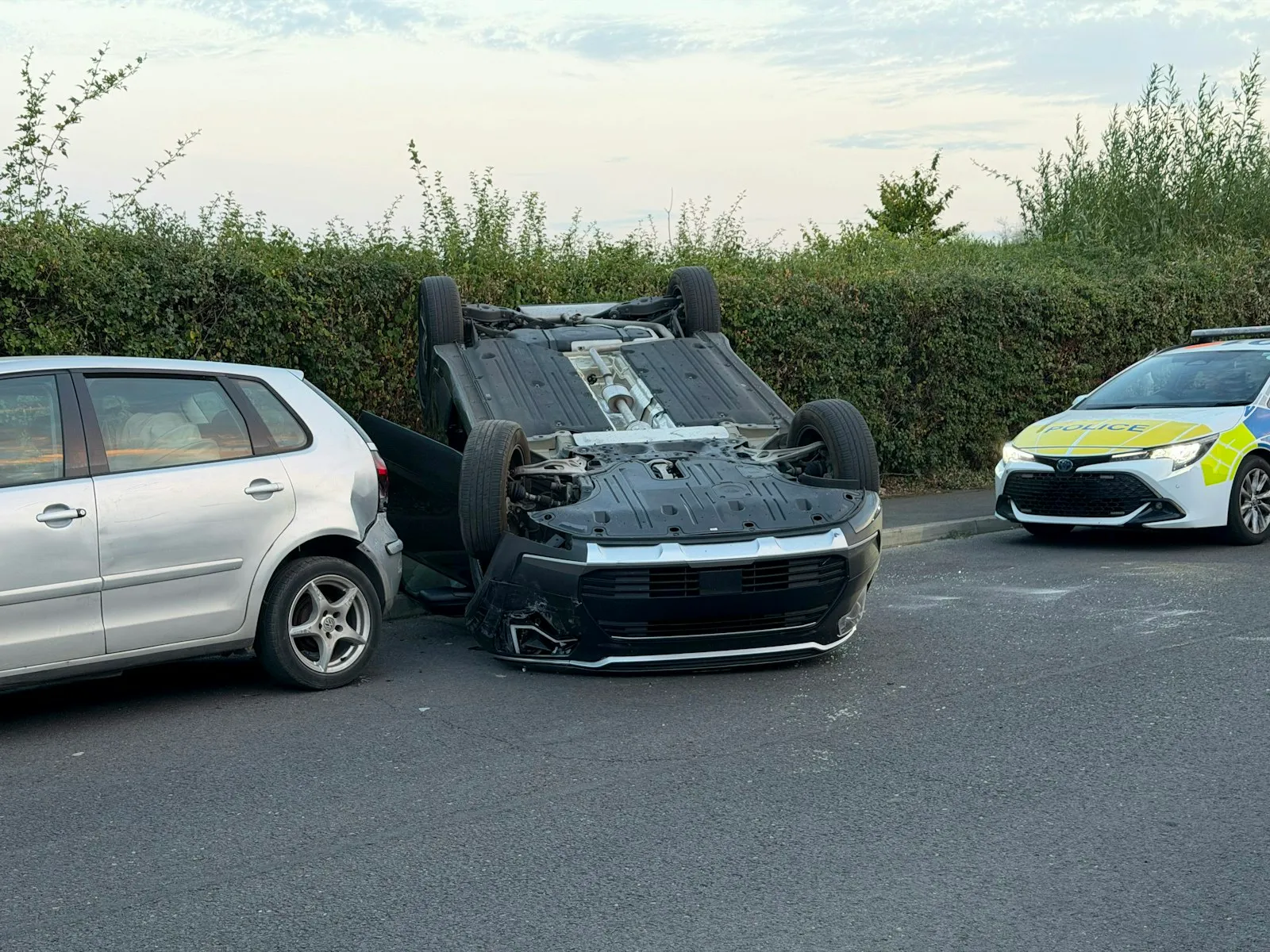
Every taxi case has several deadlines running at once. Missing any one of them can cost benefits or end the case entirely.
- 30 days: file the no-fault (PIP) application.
- 90 days: serve a notice of claim if a New York City or MTA vehicle was involved (General Municipal Law § 50-e).
- 2 years: bring a wrongful death action (EPTL 5-4.1). New York still limits these to pecuniary damages; the Grieving Families Act was vetoed for a fourth time in December 2025.
- 3 years: file a personal injury lawsuit (CPLR 214(5)).
Separately, if anyone was injured, drivers involved in a New York crash may need to file a report with the New York State DMV. Ask us before you write anything down about how the crash happened; a short, accurate report is better than a long, speculative one.
Where Forest Hills Crashes Tend to Happen
Forest Hills packs a lot of traffic into a small space. Queens Boulevard runs straight through it with main lanes and service roads, so cars, cabs and buses constantly merge, turn and cross. The Forest Hills–71st Avenue station, served by the E, F, M and R trains, sends a steady flow of riders up to the corners where cabs and app cars wait. A few blocks south, the Long Island Rail Road stops at Forest Hills station on Station Square, and taxis and car services gather nearby to meet trains.
- Queens Boulevard service roads. Right turns from the main lanes across the service road, and cabs pulling over to pick up, create sideswipe and turning conflicts.
- Austin Street and 71st Avenue. Busy shopping blocks with double-parking, delivery trucks and pedestrians stepping out between cars.
- Woodhaven Boulevard and Yellowstone Boulevard. Wide, fast roads where turning crashes can be severe.
- Grand Central Parkway and Jackie Robinson Parkway. Higher-speed roads at the edges of the neighborhood, used by cabs heading to the airports and to Brooklyn.
- Metropolitan Avenue and Union Turnpike. Through-routes linking Forest Hills with Kew Gardens, Middle Village and beyond.
The City publishes traffic safety data through its Vision Zero data feeds, which can sometimes help us understand an intersection’s layout and history. What wins a case, though, is evidence from your crash: photos, video, witnesses and medical records.
Forest Hills Gardens and Forest Hills Stadium: The Neighborhood’s Top Destinations
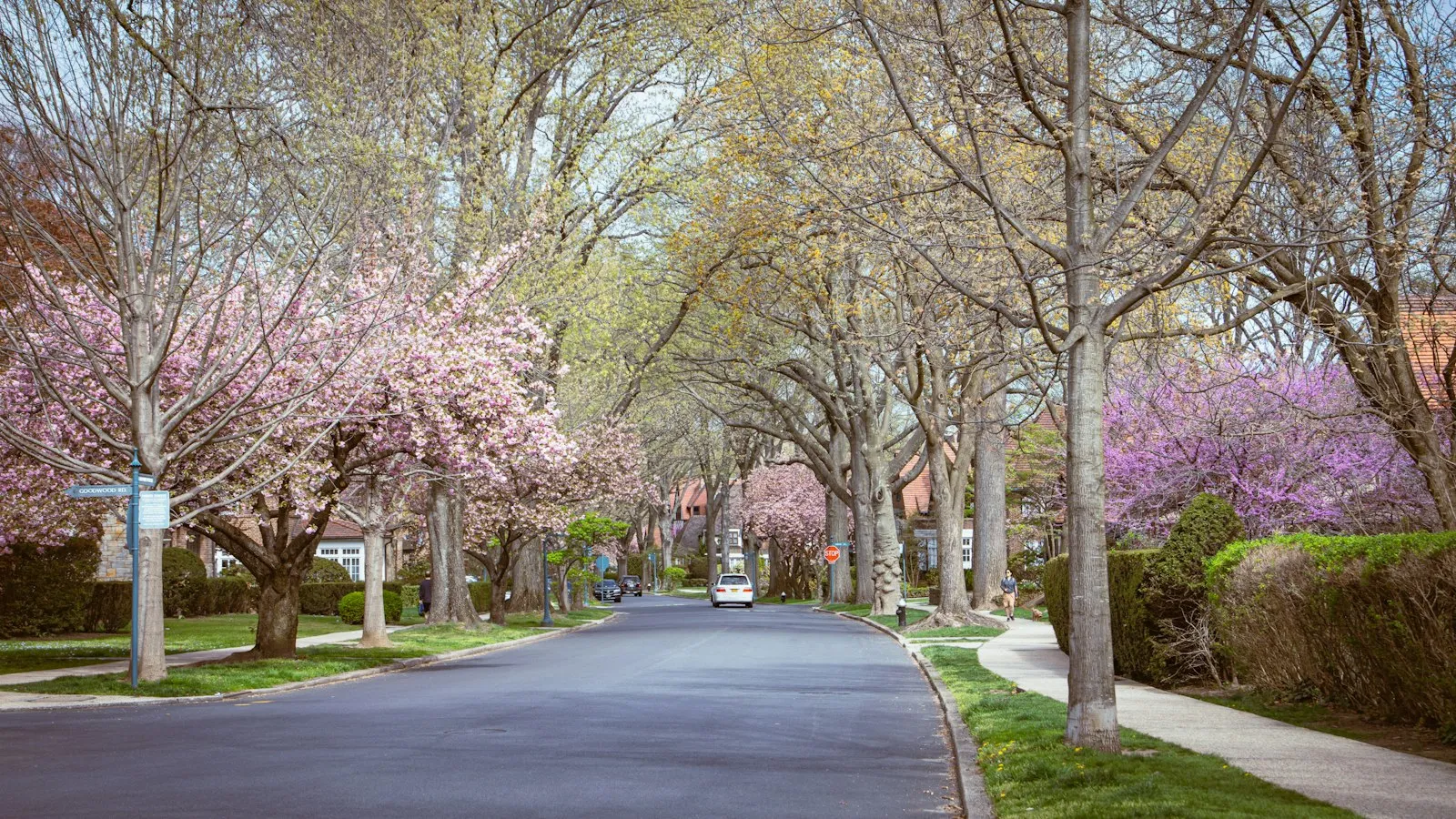
Forest Hills Gardens is the planned community south of the LIRR tracks, laid out in the early twentieth century with Tudor-style homes, curving streets and Station Square as its front door. Its streets are privately maintained, and visitors come to walk them, photograph the architecture and eat around Station Square and Austin Street. Inside the Gardens sits Forest Hills Stadium, the historic tennis stadium of the West Side Tennis Club, which once hosted the U.S. national tennis championships and is now best known as an outdoor concert venue.
On a concert night, the traffic pattern around the Gardens changes completely. Thousands of people arrive on foot from the 71st Avenue subway station and the LIRR, and many leave by taxi, Boro Taxi, Uber or Lyft at the same time. Pickups pile up on Queens Boulevard, Austin Street and the streets around Station Square. Drivers circle, stop suddenly when they spot their passenger, and make U-turns. Pedestrians cross wherever the crowd moves. That combination of tired walkers, hurried drivers and narrow streets is exactly where pickup and drop-off crashes happen.
If you were hurt near the Stadium or Station Square, note where your driver stopped, the app or company name, and whether there was event staff or police directing traffic. Those details can identify the right insurer and the right witnesses. Our blog post on taxi accidents in Forest Hills after concerts and train arrivals goes further into those pickup-zone claims.
What We Would Do for Maria, Step by Step
- Meet her where she is: at home, in the hospital or by video, in English, Russian or Spanish.
- File the no-fault application on time and confirm which insurer owes PIP.
- Request the police report, TLC records, trip data and any nearby video before it is overwritten.
- Coordinate her medical records so the serious-injury question can be answered with evidence.
- Identify every liability policy, from the cab’s owner to the other driver.
- Negotiate, and if the offer is not fair, file suit in Queens County within the deadline.
We work on contingency, so there is no fee unless we win. You can read more about our approach on our car accident practice page, browse past matters on our settlements page, or see broader answers on our FAQ page.
Taxi Accident FAQs
I was a passenger. Whose insurance pays my medical bills?
Generally, a passenger claims no-fault (PIP) benefits from the vehicle they were riding in. For a TLC-licensed vehicle, the required PIP coverage is $100,000 per person as of March 1, 2026.
I was hit by a cab while walking. Is that different?
Yes. Pedestrians and cyclists generally claim PIP from the vehicle that struck them. You may also have a lawsuit against the driver and owner if your injury meets the serious-injury threshold.
Does it matter that I was partly at fault?
For motor-vehicle injury lawsuits filed on or after May 26, 2026, if your share of fault is greater than the defendant’s (or defendants’ combined), you recover nothing. If it is 50% or less, your recovery is reduced by your percentage. No-fault benefits are not affected by fault.
What counts as a “serious injury” now?
The 2026 budget reduced the list to eight categories, including fracture, significant disfigurement, permanent loss of use, permanent consequential limitation, and significant limitation of use of a body function or system. The former time-based category is gone.
How long do I have to sue?
Three years for personal injury under CPLR 214(5), two years for wrongful death, and only 90 days to serve a notice of claim when a City or MTA vehicle is involved. The no-fault application is due within 30 days.
My crash involved an Uber or Lyft. Does this page still apply?
Yes. Rideshare cars in New York City are TLC-licensed for-hire vehicles, so the TLC PIP requirement applies. Which liability coverage applies depends on the trip status, and we confirm that from records rather than assumptions.
Should I talk to the taxi company’s insurer?
You will need to cooperate with your no-fault claim, but you do not have to give a recorded statement about fault to the other side’s liability insurer. Talk to a lawyer first.
About Forest Hills: Local FAQs
What subway and rail lines serve Forest Hills?
The E, F, M and R trains stop at Forest Hills–71st Avenue, and the E and F also stop at 75th Avenue. The Long Island Rail Road’s Forest Hills station is at Station Square.
What is the ZIP code for Forest Hills?
Forest Hills is served mainly by ZIP code 11375.
Which police precinct covers Forest Hills?
The NYPD’s 112th Precinct covers Forest Hills and neighboring Rego Park. If police responded to your crash, the report is generally requested through the responding precinct or NYPD channels.
Is there a hospital in Forest Hills?
Yes. Long Island Jewish Forest Hills, part of Northwell Health, is in the neighborhood. In an emergency, call 911 and go where paramedics take you.
Which court would hear a Forest Hills taxi case?
Forest Hills is in Queens County, so a lawsuit would typically be filed in Queens County Supreme Court in Jamaica. You can find court information at nycourts.gov.
Which neighborhoods border Forest Hills?
Rego Park to the north, Kew Gardens to the east, Middle Village and Glendale to the west, and Forest Park to the south. We also handle taxi crashes in Rego Park and Kew Gardens.
Any tips for parking and traffic around Austin Street?
Expect tight metered parking, double-parked deliveries and heavy foot traffic. On concert nights near the Stadium, agree on a pickup spot with your driver away from the densest crowds, and buckle up even for short trips.
Tell Us Your Story, Not Maria’s
Maria’s evening was made up. Yours was not. Whether you were in the back of a yellow cab on Queens Boulevard, behind the wheel when a Boro Taxi cut across the service road, or crossing near Station Square when an app car pulled in, we will listen, explain your options and tell you honestly what we think. The review is free, and there is no fee unless we win.

- Call 718.775.3110; phone intake is available 24/7.
- Or send us a message through our contact page.
- Office: 1 Cross Island Plaza, Suite 325, Rosedale, NY 11422, open Monday through Friday, 9 to 6.
- Home, hospital and video visits available across Forest Hills and all of Queens.
Attorney Advertising. This is general information about New York law, not legal advice, and reading it does not create an attorney-client relationship. The scenario on this page is hypothetical. Every case depends on its own facts. Prior results do not guarantee a similar outcome.