
Most e-bike claims in New York start with one question: what did the law require of each person at the moment of impact? A driver turning off Junction Boulevard, a rider coming down Roosevelt Avenue near Corona Plaza, a pedestrian stepping off the curb by William F. Moore Park: each was bound by a set of written rules. Working as an e-bike accident lawyer in Corona, attorney Yakov Mushiyev begins every case by lining those rules up against the facts. This guide explains the rules first and then shows how they shape fault and money.
Part One: The Rules That Govern E-Bikes in New York
The three legal classes
New York sorts bicycles with electric assist into three classes under Vehicle and Traffic Law § 102-c:
- Class 1: the motor helps only while the rider pedals, and assistance stops at 20 mph.
- Class 2: a throttle can move the bike without pedaling, again capped at 20 mph.
- Class 3: assistance up to 25 mph, permitted only in a city with a population of one million or more, which in practice means New York City.
The class matters because a device outside these categories, such as a throttle-only machine built to go faster, may be treated as a moped instead. Our overview of moped and scooter claims in NYC covers how that different label changes insurance and liability.
State operating rules
VTL § 1242 sets the statewide baseline. Nobody under 16 may operate an e-bike. Riders may generally use roads posted at 30 mph or less. Sidewalks are off-limits unless a local law permits them, and cities are free to add rules of their own.
New York City’s additional limits
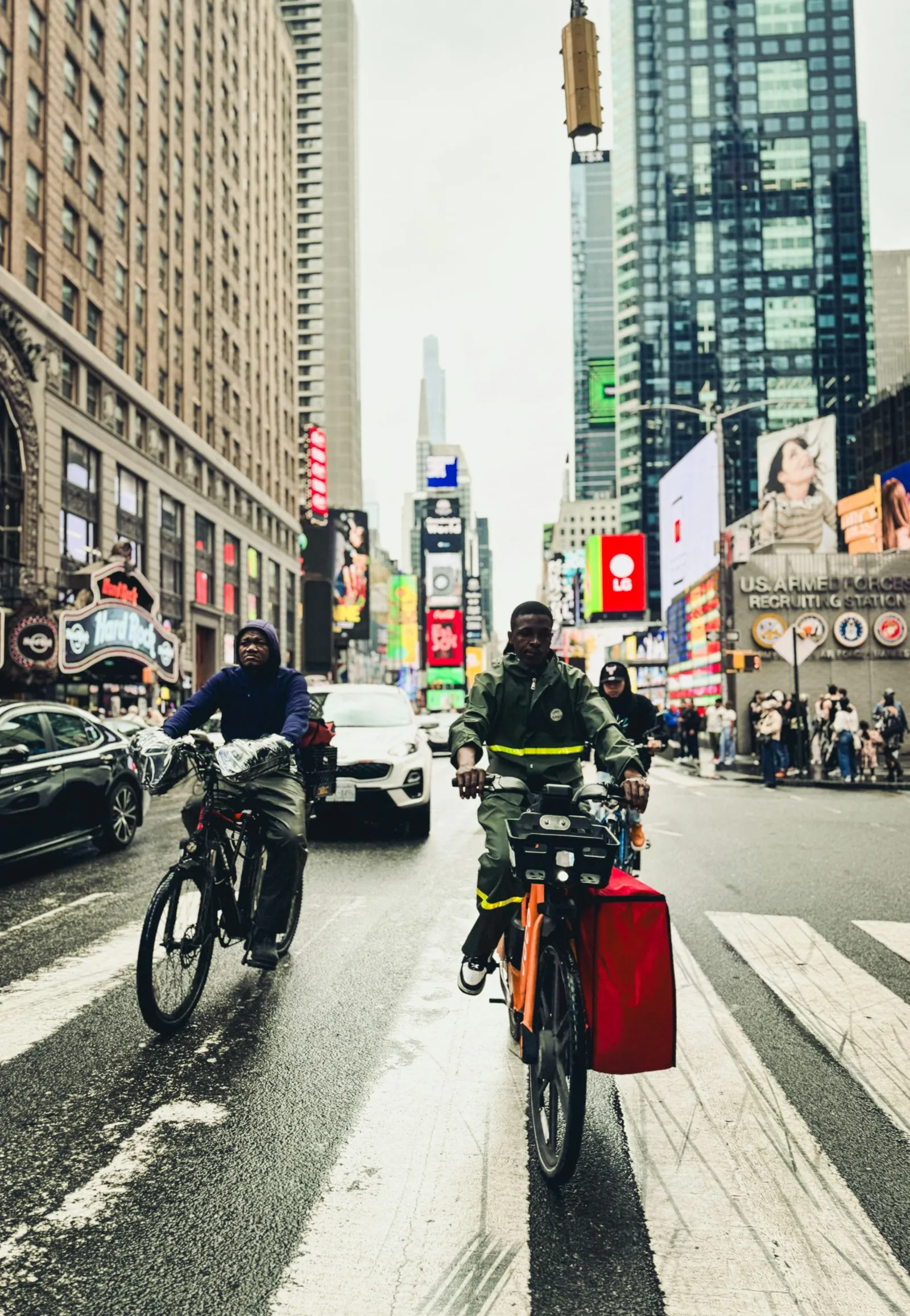
The city has used that power. According to NYC DOT’s e-bike guidance, no e-bike or e-scooter may exceed 15 mph on any city street, regardless of its class. Helmets are mandatory on Class 3 bikes and for anyone riding for work. Riders must be at least 16, sidewalk riding is prohibited, and e-bikes belong in bike lanes and on the street.
Why an e-bike is not a “motor vehicle”
VTL § 125 expressly excludes bicycles with electric assist from the definition of motor vehicle. That single exclusion drives much of what follows, because New York’s no-fault insurance system is built around motor vehicles.
Part Two: How Following or Breaking the Rules Affects a Claim
When the driver broke a rule
Drivers in Corona deal with dense traffic, double-parked trucks and heavy foot traffic around the plaza and the 104th Street corridor. A driver who fails to yield on a turn, drifts into a bike lane, or opens a door into moving traffic has usually violated a duty. On that last point, New York law generally bars opening a car door into traffic unless it is safe to do so (VTL § 1214). A rule violation by the driver is strong evidence of negligence.
When a car strikes an e-bike rider, the rider is generally treated as a non-occupant of that car. Under Insurance Law § 5103, the car’s no-fault coverage generally pays the rider’s medical bills and a portion of lost wages. The application is generally due within 30 days. To recover for pain and suffering from the driver, the rider generally must show a “serious injury,” such as a fracture or a significant limitation of a body function. Our New York no-fault guide walks through the paperwork.
When the rider broke a rule
Insurers study the rider’s conduct closely. Was the bike going faster than 15 mph? Was the rider on the sidewalk? Was a working rider without a helmet? Each of these can be raised to shift blame.
New York answers that with pure comparative fault under CPLR § 1411. A rider’s own mistake may reduce the award in proportion to his or her share of fault, but it does not wipe out the claim. A rider found 30 percent responsible, for example, may still recover the remaining 70 percent. The details are laid out in our explanation of comparative negligence in New York.
When a pedestrian is hit by the e-bike
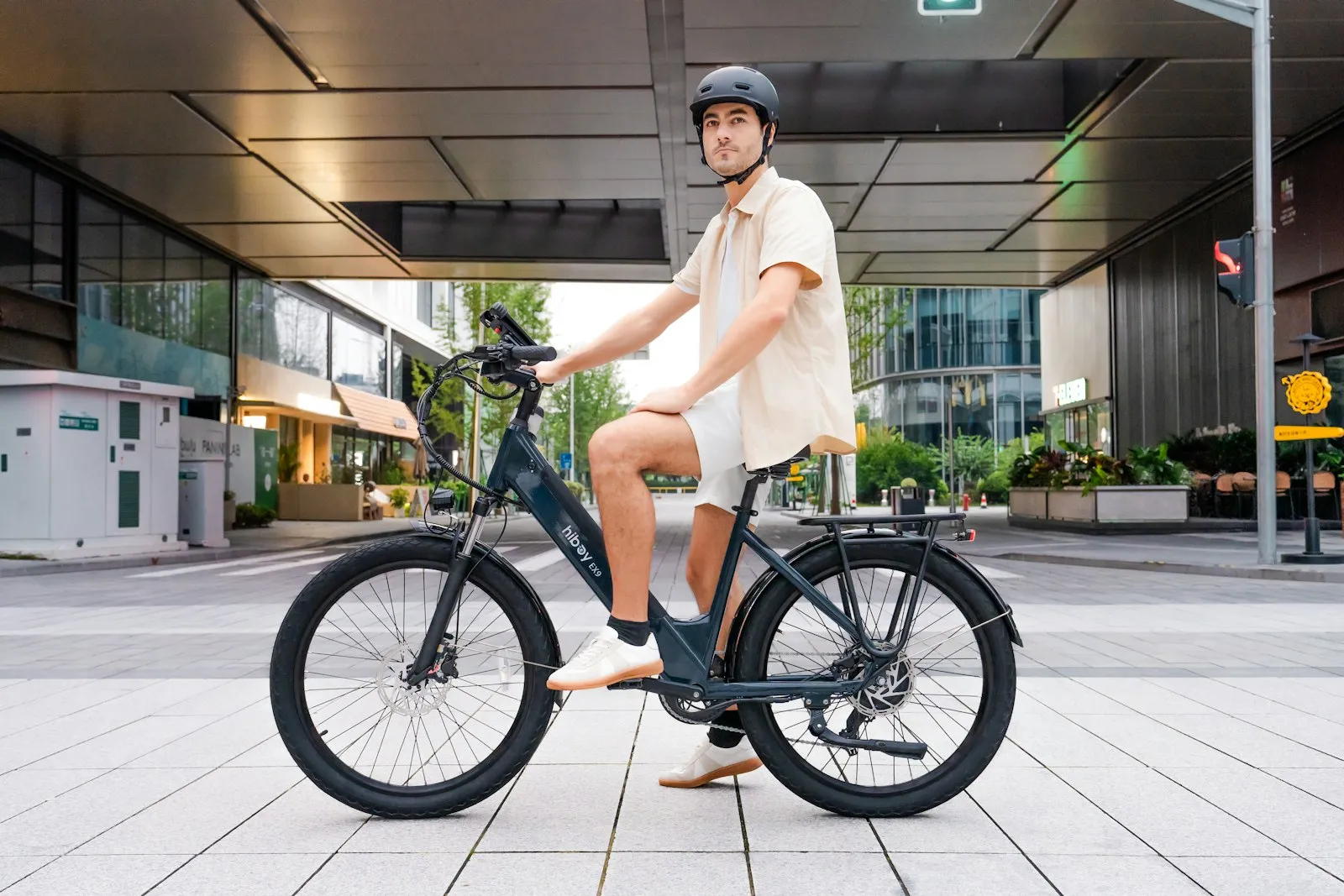
Because the e-bike is not a motor vehicle, no-fault generally does not apply to the bike itself. A pedestrian injured near Flushing Meadows Corona Park by a rider on the path or sidewalk would bring a claim against the rider directly. Depending on the facts, a homeowners or renters policy, or a business responsible for the rider, might also be involved, though policies vary and no single payer can be assumed. Our pedestrian accident practice handles these cases, and a sidewalk-riding violation by the rider is often central to them.
When the rules point to someone else entirely
Sometimes neither the rider nor a driver is primarily at fault. A pothole or a broken bike-lane fixture may point to the city, which generally requires a notice of claim within 90 days. A bike or battery that fails may point to the manufacturer or seller, since NYC law requires e-bikes sold in the city to meet UL 2849 and their batteries UL 2271.
Deadlines the Rules Also Impose
| Step | General time limit |
|---|---|
| No-fault application | Generally within 30 days |
| Notice of claim against the city | 90 days |
| Personal injury lawsuit | Generally 3 years |
Missing any of these can end an otherwise sound case, so the calendar deserves attention in the first week.
Working With an E-Bike Accident Attorney
Whether you call us an electric bike accident lawyer or an e-bike accident attorney, the job is the same: we collect the police report number, request video from Roosevelt Avenue storefronts and buses before it is overwritten, preserve the bike, and gather medical records. Injured New Yorkers have received more than $80 million through our firm’s work. Consultations are free, and there is no fee unless we win. We speak English, Russian and Spanish and can meet at your home, in the hospital or by video. More on the practice area is on our scooter and e-bike accidents page, and cases involving standard bikes are covered under bicycle accidents.

Getting to Our Office
Our office sits at 1 Cross Island Plaza, Suite 325, Rosedale, NY 11422. Use the map below to see the route from Corona to our office.
Neighboring Communities
The same rules apply a few blocks away. Riders west and north of here can read about our work as an e-bike accident lawyer in Jackson Heights, an e-bike accident lawyer in Elmhurst, an e-bike accident lawyer in East Elmhurst and an e-bike accident lawyer in Willets Point. Our broader work in the neighborhood is summarized on the Corona accident lawyer page.
Talk the Rules Through With Us
If you were hurt and are unsure how these rules apply to your crash, call 718.775.3110 or send a message through our contact form. A Corona e-bike accident lawyer from our team will review what happened and explain where you stand.
This page provides general information about New York e-bike law and is not legal advice for any specific situation. Attorney Advertising.