
Downtown Flushing runs on tight margins: narrow curb lanes, double-parked delivery vans, buses pulling in and out, and a steady stream of yellow cabs, green Boro Taxis and app-dispatched cars all trying to reach the same few blocks around Main Street and Roosevelt Avenue. When one of those vehicles hits you, the claim that follows is not an ordinary fender-bender. Taxi and for-hire cases in New York run on their own insurance rules, and several of those rules changed in 2026. Yakov Mushiyev & Associates, P.C. represents people hurt in taxi, Uber, Lyft and livery crashes across Flushing and the rest of Queens. This page lays out the facts that matter, in the order they usually come up.
The Numbers That Actually Matter
You will not find invented crash counts or “average settlement” figures here. What you will find are the figures written into New York law and TLC rules, because those are the ones that decide what a claim can and cannot do. Every injured person in a Flushing taxi crash should know these:
| Rule | Figure | Why it matters |
|---|---|---|
| No-fault application deadline | 30 days from the accident | Miss it and your no-fault medical and wage benefits can be denied. |
| Notice of claim against NYC or the MTA | 90 days | Applies if a city or MTA vehicle was involved, such as a bus. |
| Personal injury lawsuit | 3 years (CPLR 214(5)) | The outer limit for most injury suits. |
| Wrongful death lawsuit | 2 years | Limited to pecuniary (financial) losses under current law. |
| State minimum PIP | $50,000 per person | The baseline no-fault benefit for ordinary vehicles. |
| TLC vehicle PIP | $100,000 per person | Applies to taxis, green cabs, Uber, Lyft and other TLC vehicles since March 1, 2026. |
| Medallion taxi liability minimum | $100,000 per person / $300,000 per occurrence | The floor of the yellow cab’s liability coverage. |
The TLC’s PIP requirement for its licensed vehicles used to be higher; it was cut to $100,000 per person effective March 1, 2026. If someone tells you a cab carries more no-fault coverage than that, they are working from the old rule.
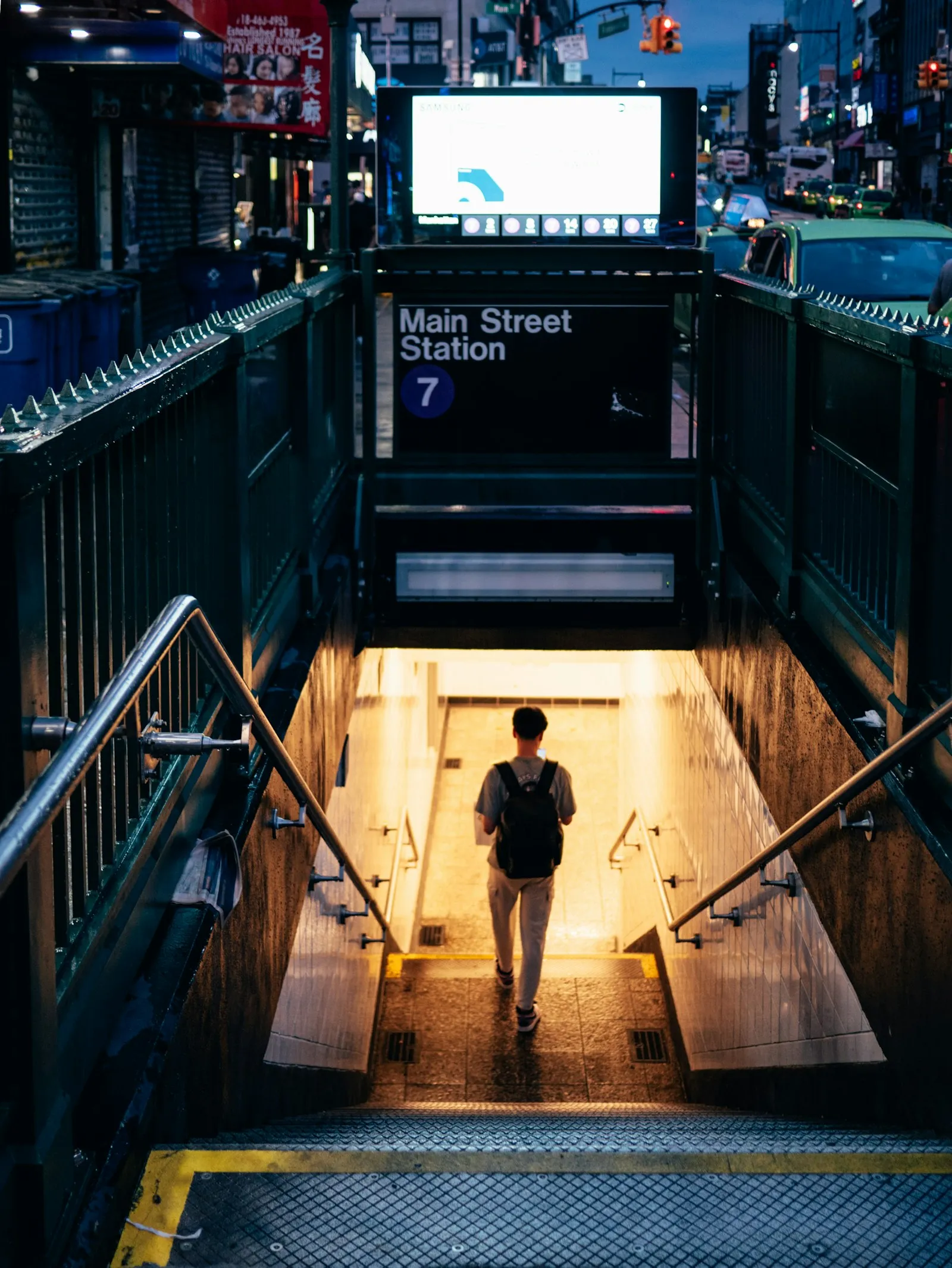
Main Street to the Park: Flushing’s Busiest Destinations
Three places shape most of the for-hire traffic in and around Flushing.
Downtown Flushing and Main Street
Downtown Flushing is one of the busiest commercial centers in Queens. The Flushing–Main Street station is the eastern terminal of the 7 train, and the Long Island Rail Road’s Port Washington Branch stops at its own Flushing–Main Street station a short walk away. Add the bus routes that converge on Main Street, the restaurants, food courts, banks and shops along Main Street, Roosevelt Avenue, 39th Avenue and the surrounding blocks, and you get some of the heaviest pedestrian volume in the borough. People come to shop, eat, commute and run errands, and many of them finish the trip in a cab or app car.
That combination produces predictable conflicts: drivers stopping in travel lanes to pick up or drop off, passengers opening doors into traffic, cars turning across crowded crosswalks, and riders stepping off the curb between parked vehicles to reach a waiting car.
Flushing Meadows Corona Park
West of downtown, across Flushing Creek, sits Flushing Meadows Corona Park, home to the Unisphere, the USTA Billie Jean King National Tennis Center and, next door, Citi Field. On event days, taxis and app cars stack up on the roads around the park while drivers try to reach the Grand Central Parkway, the Van Wyck Expressway and the Whitestone Expressway. Congested ramps, unfamiliar drop-off points and visitors walking between lots and venues are a recipe for low-speed collisions and pedestrian strikes.
Queens Botanical Garden
Queens Botanical Garden sits on Main Street south of downtown. Visitors often arrive by cab or app car and are dropped at the curb on a busy stretch of Main Street, where through-traffic does not expect a vehicle to stop suddenly.
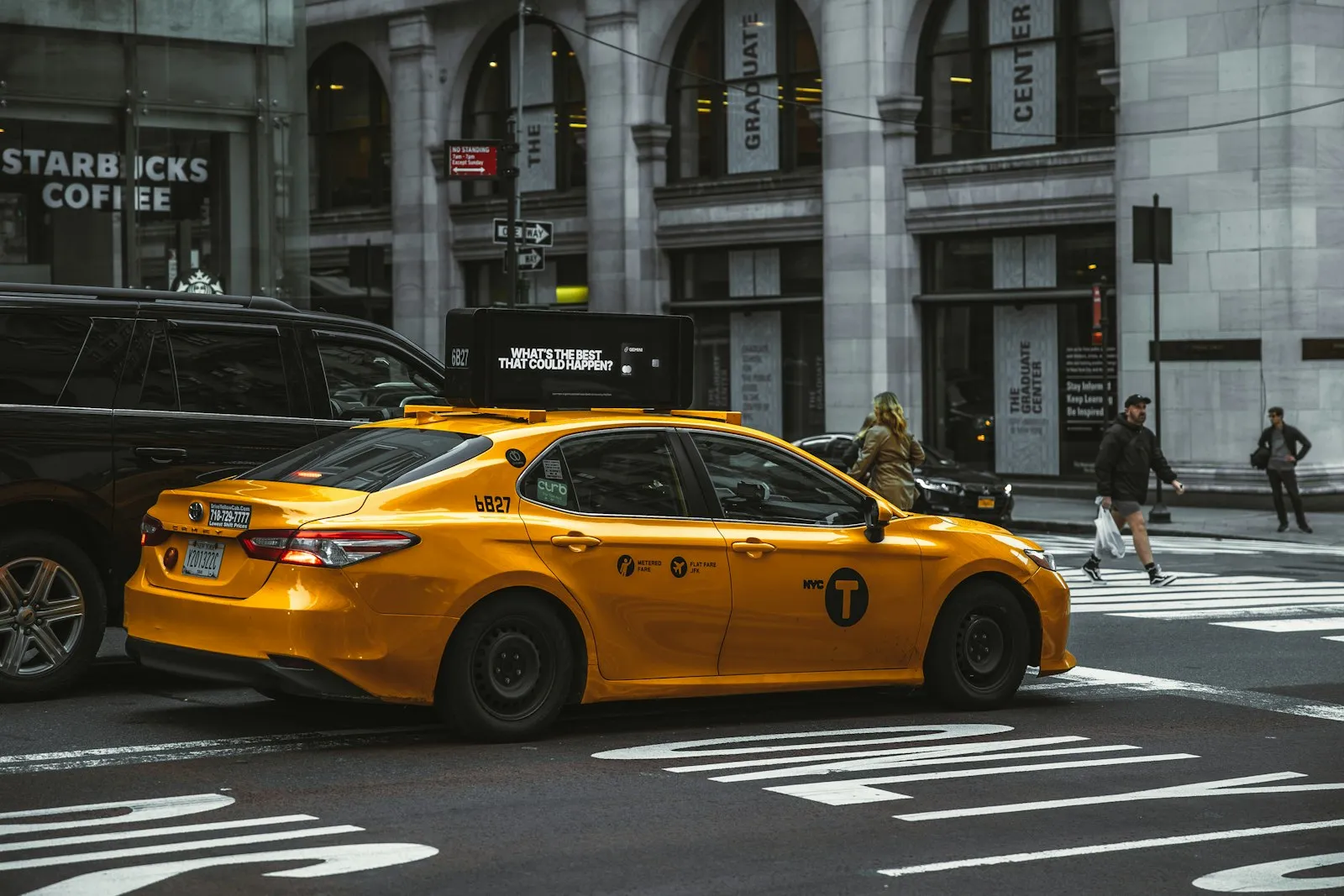
Where the Risk Concentrates
Every taxi crash has its own facts, but the roads around Flushing create a handful of recurring situations we look at closely:
- Main Street and Roosevelt Avenue: heavy foot traffic, turning vehicles and buses competing for the same lanes.
- Northern Boulevard: a wide, fast arterial where cabs change lanes to reach passengers.
- Kissena Boulevard and College Point Boulevard: busy corridors feeding into downtown from the south and north.
- Expressway connections: the Van Wyck, Whitestone Expressway, Long Island Expressway and Grand Central Parkway all sit close by, so cabs heading to and from the airports pass through the area.
- Double-parking and curbside stops: sudden stops for pickups are a common cause of rear-end crashes and “dooring” of cyclists.
Who Pays: Following the Money
New York is a no-fault state. That means the first money for medical bills and lost earnings usually comes from personal injury protection (PIP), regardless of who caused the crash. Which policy pays depends on where you were:
- Passenger in the cab or app car: generally claim PIP from the vehicle you were riding in.
- Pedestrian or cyclist: generally claim PIP from the vehicle that struck you.
- Driver of another car: your own policy’s no-fault coverage typically applies first.
No-fault covers medical expenses, lost earnings and other basic economic loss. It does not pay for pain and suffering. To pursue that, you step outside no-fault and bring a claim against the at-fault driver and, where appropriate, the vehicle’s owner. That claim runs against the liability coverage, which for a medallion taxi has a minimum of $100,000 per person and $300,000 per occurrence. The New York State Department of Financial Services explains the basics of auto insurance and no-fault for consumers.
The headline: no-fault pays the first bills, but only a liability claim can compensate you for pain, suffering and lasting injury, and that claim has to clear New York’s serious injury threshold.
What Changed in 2026, in Plain Terms
Three changes reshape taxi cases filed this year. They apply to lawsuits commenced on or after May 26, 2026, regardless of when the accident happened.
1. A narrower serious injury list
Under Insurance Law 5102(d), you need a “serious injury” to sue for non-economic damages. The 2026 budget removed one of the old categories, leaving eight: death; dismemberment; significant disfigurement; fracture; loss of a fetus; permanent loss of use of a body organ, member, function or system; permanent consequential limitation of use of a body organ or member; and significant limitation of use of a body function or system. Medical documentation now carries even more weight.
2. A fault cutoff at 50 percent
New CPLR 1411(b) says that in motor-vehicle injury actions covered by it, a claimant whose fault is greater than the defendant’s (or the defendants’ combined) recovers nothing. At 50 percent or less, the award is reduced in proportion to the claimant’s share. For a pedestrian who stepped out mid-block on Main Street, or a driver who was also speeding, how fault gets measured can now decide whether there is any recovery at all.
3. Fault first, then injury
Insurance Law 5104 now requires the fact-finder to decide fault before it decides serious injury. It also adds a $100,000 cap on non-economic damages for an at-fault claimant who was driving uninsured (with a narrow exception for a lapse of under 30 days that was not their own doing), was convicted of impaired driving, or was convicted of a felony committed while driving. That cap does not limit economic damages, other people’s claims or wrongful death claims.
How a Flushing Taxi Claim Moves, Step by Step
- Medical care first. Get evaluated promptly, even if you feel shaken rather than hurt. Some injuries show up days later.
- Report the crash. Make sure police respond if anyone is injured. Drivers in New York may also need to file an MV-104 report with the DMV.
- File for no-fault within 30 days. This is the deadline that catches the most people off guard.
- Identify the vehicle and its coverage. Medallion number, TLC license, app trip details and plate all help pin down which insurer is responsible. The NYC Taxi & Limousine Commission licenses these vehicles and drivers.
- Preserve evidence. Storefront and building cameras on busy Flushing blocks may record over footage quickly, so early requests matter.
- Build the injury record. Treatment notes, imaging and specialist opinions tie your condition to one of the eight serious injury categories.
- Negotiate or file suit. If the insurer will not pay fair value, we file in the appropriate court, well within the three-year limit.
Why Flushing Clients Choose Our Firm
- Queens-based. Our office is at 1 Cross Island Plaza in Rosedale, and we handle cases throughout the borough.
- Multilingual consultations. We speak with clients in English, Russian and Spanish.
- We come to you. Home, hospital and video meetings are available if you cannot travel.
- No fee unless we win. You pay no attorney’s fee unless we recover compensation for you.
- Phone intake 24/7. Office hours are Monday to Friday, 9 to 6, but you can reach intake at any hour.
Taxi claims overlap heavily with other vehicle cases, so our car accident practice page is useful background. You can also read about other matters on our settlements page, browse our general FAQ, or return to our Flushing accident lawyers hub. If you were the passenger or pedestrian and want a closer look at whose insurance pays, read our article on taxi accidents in Flushing, Queens. We also serve nearby College Point and Auburndale.
Taxi Accident FAQs
I was a passenger in a Flushing cab. Whose insurance pays my medical bills?
Passengers generally claim no-fault (PIP) benefits from the vehicle they were riding in. For TLC vehicles, the required PIP is $100,000 per person. If your injury meets the serious injury threshold, you may also bring a claim against whichever driver was at fault, including the driver of another vehicle.
A taxi hit me while I was crossing Main Street. What now?
As a pedestrian, you generally claim PIP from the vehicle that struck you. File the no-fault application within 30 days. If your injuries qualify as serious, you may pursue the driver and owner for pain and suffering.
Does it matter if I was partly at fault?
Yes. For motor-vehicle suits commenced on or after May 26, 2026, a claimant whose share of fault is greater than the defendant’s recovers nothing. At 50 percent or less, your recovery is reduced by your share.
How long do I have to sue?
Generally three years from the accident for personal injury, and two years for wrongful death. Claims involving a city or MTA vehicle need a notice of claim within 90 days.
Is an Uber or Lyft crash handled differently from a yellow cab crash?
Uber, Lyft and other for-hire vehicles are TLC-licensed in New York City, so the same $100,000 TLC PIP requirement applies. The liability coverage that stands behind the driver can differ, which is why identifying the vehicle, the driver and the trip status early is important.
What is a “serious injury” now?
Insurance Law 5102(d) now lists eight categories, including fracture, significant disfigurement, permanent consequential limitation of use of a body organ or member, and significant limitation of use of a body function or system. Your doctors’ records are the primary evidence.
What does it cost to hire you?
The consultation is free, and there is no attorney’s fee unless we win your case.
Getting Around Flushing: Local Questions Answered
Which subway and rail lines serve Flushing?
The 7 train ends at Flushing–Main Street, and the LIRR Port Washington Branch stops at its own Flushing–Main Street station. Many bus routes also converge on downtown Flushing.
What neighborhoods border Flushing?
Nearby neighborhoods include College Point and Whitestone to the north, Murray Hill and Auburndale to the east, Fresh Meadows and Kew Gardens Hills to the south, and Corona across Flushing Meadows Corona Park to the west.
Which hospitals are close to downtown Flushing?
NewYork-Presbyterian Queens on Main Street and Flushing Hospital Medical Center on Parsons Boulevard are both in Flushing. In an emergency, call 911 and go where responders take you.
Which police precinct covers Flushing?
The NYPD’s 109th Precinct covers Flushing. A police accident report from the precinct is often a key early document in a taxi claim.
Where would a Flushing injury lawsuit be filed?
Flushing is in Queens County, so many injury cases are filed in Queens County Supreme Court, whose civil courthouse is on Sutphin Boulevard in Jamaica. Court information is available from the New York State Unified Court System.
Any tips for driving or parking downtown?
Expect congestion around Main Street, Roosevelt Avenue and 39th Avenue, especially on weekends. Watch for vehicles stopping suddenly for pickups, check mirrors before opening doors, and give pedestrians extra room at turns.
Get a Free Flushing Taxi Accident Case Review

The 30-day no-fault clock starts the day of the crash, and the 2026 fault rules make early evidence more valuable than ever. Call 718.775.3110 any time, or send us a message for a free case review. We meet in English, Russian or Spanish, at your home, in the hospital, by video, or at our office: Yakov Mushiyev & Associates, P.C., 1 Cross Island Plaza, Suite 325, Rosedale, NY 11422. No fee unless we win.
Attorney Advertising. This is general information about New York law, not legal advice. Reading this page does not create an attorney-client relationship. Every case is different, and the outcome depends on its specific facts. Prior results do not guarantee a similar outcome.