
Holliswood is among the quieter corners of Queens: winding hillside streets, deep lots, and homes set back behind hedges and fences. That quiet has a consequence for dog bite cases. Here, attacks tend to happen on or beside private property rather than in crowded public spaces, and often with no one else watching. The rules below are arranged as a field guide, in short entries, so that a reader who has just been hurt can find the relevant point quickly.
Each entry reflects New York law as it generally applies. None of it replaces a conversation with a Holliswood dog bite lawyer about your specific facts.

Part One: Where Holliswood Bites Occur
Front walks and driveways
Homes with large yards invite a particular risk: the dog that treats the whole lot as territory. Mail carriers, delivery workers and guests approaching a front door enter that territory by necessity. Their presence there is lawful, and a bite on the walkway is fully compensable if the other elements are proven.
Gaps in fences and open gates
A dog that slips through a gap or an unlatched gate onto a winding street can reach a pedestrian in seconds. The owner’s awareness that the dog escaped before, or had to be confined, may be significant.
The Grand Central Parkway service roads
The service roads carry both cars and people on foot. A person who swerves or stumbles to avoid a charging dog may be injured without ever being bitten. Injuries from being knocked down, including fractures, can form part of an animal bite claim even where the teeth never made contact.
Streets near Hillside Avenue
Closer to Hillside Avenue, foot traffic increases and dogs are walked more often in public. There, city leash rules apply with full force. The Health Department’s responsible dog owner guide requires a leash no longer than six feet in public, a license, and rabies vaccination for dogs four months and older.
Part Two: The Rules of Liability
Rule 1: Knowledge is the core question
Under Collier v. Zambito (2004), decided by the New York Court of Appeals, the injured person generally must prove the owner knew or should have known of the dog’s vicious propensities. The bite alone is not enough.
Rule 2: Knowledge can be shown many ways
Prior bites are the clearest proof, but not the only proof. Growling, snapping, lunging, jumping on people, a “Beware of Dog” sign, a chained or muzzled dog, and complaints from neighbors can each support the claim. In a neighborhood of large yards, the chain and the sign are frequently present.
Rule 3: A dangerous-dog finding changes the medical-cost analysis
If a dog has been found “dangerous,” Agriculture & Markets Law § 123 makes the owner strictly liable for the medical costs its attacks cause.
Rule 4: Property owners and landlords can share responsibility
Where the dog lives in a rented house, a landlord who knew of its vicious propensities and had the power to remove it can be liable. A business or property owner that keeps a guard dog may also bear responsibility. The premises liability page addresses related duties of property owners.
Rule 5: Fault is shared, not forfeited
New York applies pure comparative fault. A victim found partly responsible, for example for entering a yard despite a warning, receives compensation reduced by that percentage. The claim is not barred.
Rule 6: Insurance usually pays
Homeowners and renters policies are the usual source of payment. The dog owner is rarely asked to pay from personal funds. Auto no-fault benefits are off the table for a bite. The victim may decline an insurer’s request for a recorded statement until after consulting counsel.
Rule 7: Workers have two potential avenues
A delivery driver, landscaper or home aide bitten on the job generally receives workers’ compensation through the employer and may also pursue a separate claim against the dog owner.
Rule 8: Children warrant particular care
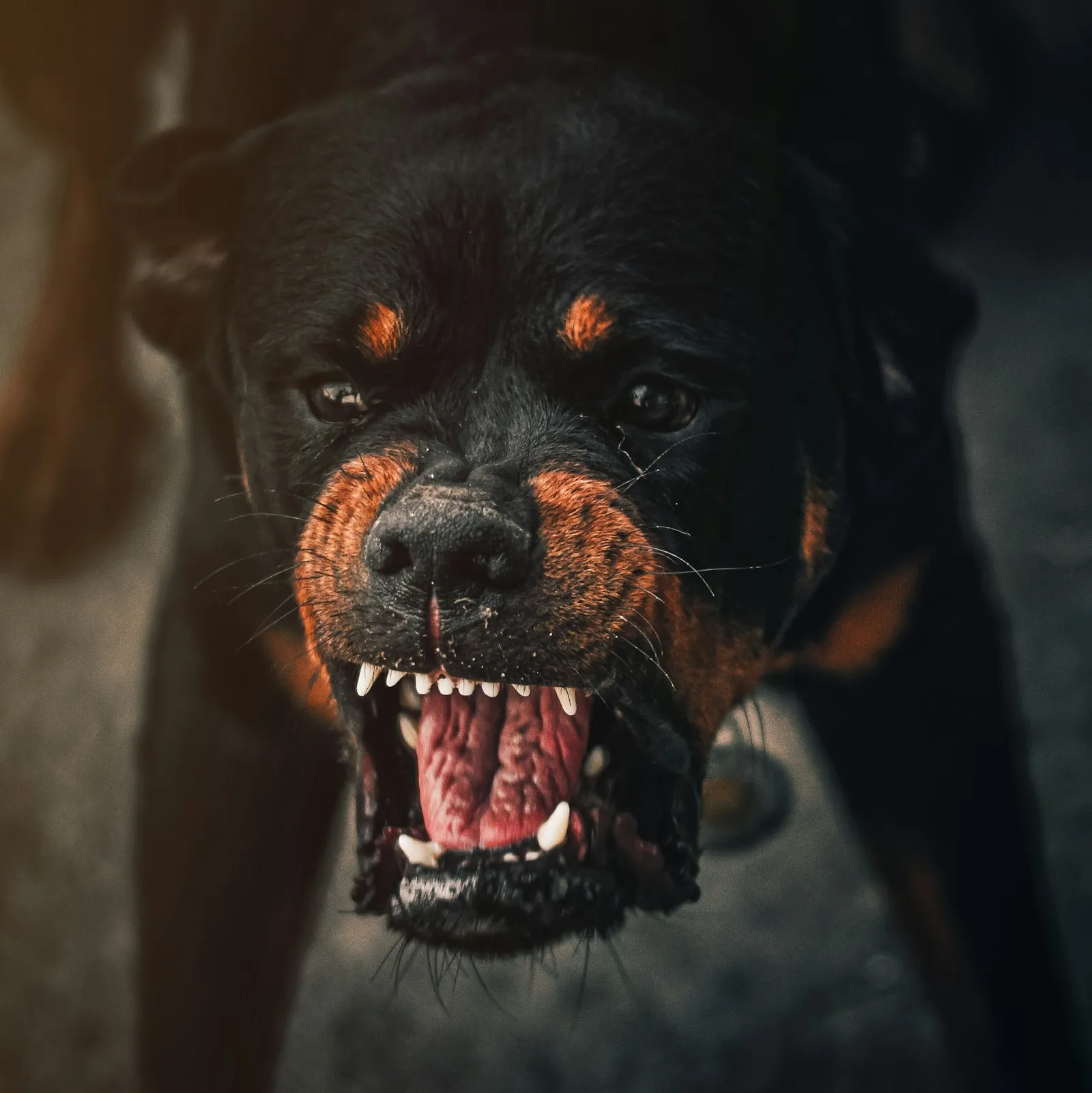
According to the American Veterinary Medical Association, millions of people in the United States are bitten by dogs each year, and about half of the victims are children. Young victims are also especially prone to lasting fear and emotional trauma after an attack. Emotional trauma, counseling and future scar revision are all proper elements of a child’s claim, and the extended filing period for minors gives families time to see how a scar matures before the case is resolved.
Rule 9: Off-leash privileges are narrow
Dogs may be off leash in city parks only in designated areas and during set hours, as listed by NYC Parks. A dog running loose on a residential street enjoys no such privilege.
Part Three: Steps and Deadlines
Seek medical treatment the same day
Bites carry a real risk of infection, and deep punctures, nerve or tendon injury, and scarring may not be apparent at first. Where the dog’s vaccination cannot be confirmed, rabies shots may be recommended.
Identify the owner and the dog
Obtain the owner’s name and address and ask about rabies vaccination. On a quiet street with no witnesses, this may be the only chance to connect the dog to its household.
Report within 24 hours
New York City requires that animal bites be reported to the Health Department within 24 hours, using the NYC Health animal bite report. The report also creates a dated public record.
Photograph the scene, the wound and the property
Record the wound at intervals as it heals. Photograph torn clothing, the gate, the fence, any warning sign and any chain or tether. Private property can change quickly after an incident.
Locate any witness
Even on a secluded block, a neighbor may have seen the dog loose before, or heard it attack. Their name and number should be recorded.
Understand what compensation covers
Recoverable damages can include medical bills, future care such as scar revision, lost wages, pain and suffering, and disfigurement.
Observe the three-year limit
Lawsuits generally must be filed within three years under CPLR § 214.
Note the exception for children
For a minor, the limitations period is generally tolled until age eighteen.
Watch the 90-day notice for public entities
Where city or public housing property is involved, a notice of claim is usually due within 90 days under General Municipal Law § 50-e. This is the shortest deadline in the field and the one most often missed.
Consulting a Dog Bite Lawyer in Holliswood
Yakov Mushiyev & Associates has recovered over $80 million for injured New Yorkers. Consultations are free and representation is on contingency: there is no fee unless we win. We work in English, Russian and Spanish, and we meet clients at home, in the hospital or by video.
The firm can be reached at 718.775.3110; written inquiries may be submitted through the contact page. Further reading is available on our dog bite practice page, the Queens accident lawyer page, our discussion of New York dog bite laws, and our Queens-focused legal overview.
Readers in adjoining neighborhoods may consult the pages for a dog bite lawyer in Hollis Hills, a dog bite lawyer in Jamaica Estates or a dog bite lawyer in Jamaica Hills.
Directions to the office
The firm’s office is at 1 Cross Island Plaza, Suite 325, Rosedale, NY 11422. The route from Holliswood appears on the map that follows.
Attorney Advertising. This field guide presents general legal information for readers in Holliswood and elsewhere in Queens. It is not legal advice, and no attorney-client relationship arises from reading it.