
You got knocked off a scooter. Maybe a car turned across you on Woodhaven Boulevard. Maybe a door swung open on Jamaica Avenue. Maybe a pothole threw you over the handlebars on Cross Bay Boulevard. Whatever happened, the next few days matter more than most people realize. Yakov Mushiyev & Associates, P.C. is a scooter accident lawyer in Queens, working out of Rosedale, and this page tells you exactly what to do, in order, so your claim does not slip away while you are still sore.
Read it once. Then act. Short version: get treated, get the report, keep the scooter, save every photo, and do not give the other side a recorded statement before you talk to a lawyer.
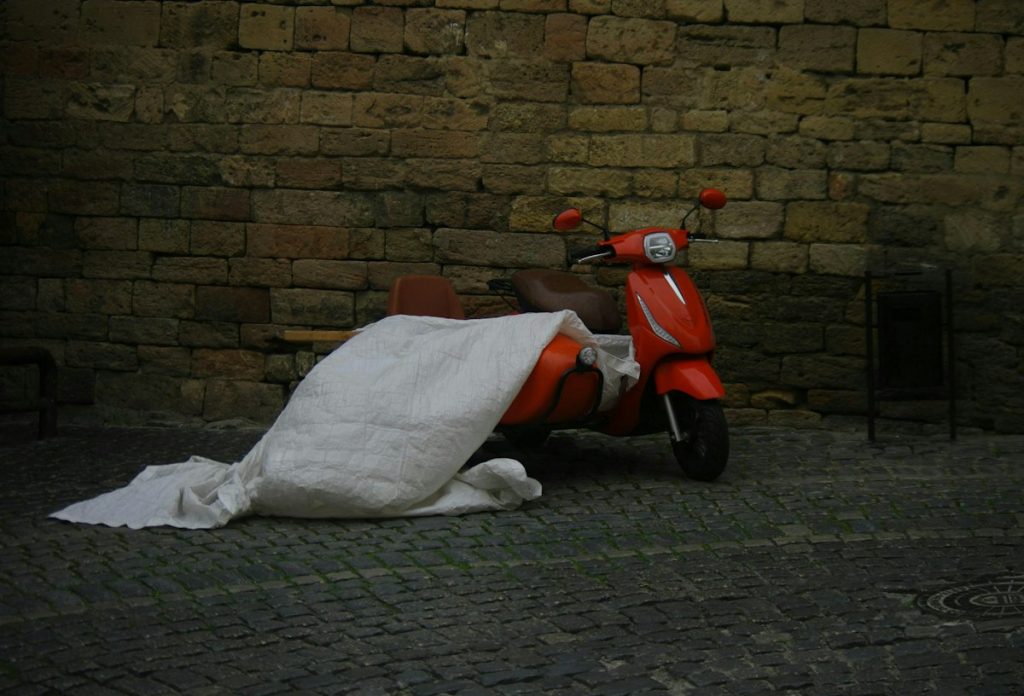
Who We Are and How We Help Injured Scooter Riders
We are a Queens personal injury firm. Our office sits at 1 Cross Island Plaza in Rosedale, right off the Belt and Cross Island Parkways. We handle claims for people hurt on kick scooters, stand-up e-scooters, and seated gas scooters across the borough, from Astoria down to the Rockaways.
Here is what we actually do for you:
- Figure out what kind of vehicle you were riding, because New York treats each one differently.
- Track down every insurance policy that might pay: the driver’s, the vehicle owner’s, your own, and sometimes a fund for uninsured or hit-and-run crashes.
- Send preservation requests for video and data before it is erased.
- Calendar every deadline, including the short ones that apply when a city vehicle or city street is involved.
- Handle every call with adjusters so you can focus on getting better.
Want the broader legal background first? Read our in-depth guide to scooter accident claims in Queens, which walks through the most common misconceptions riders run into. This page is the action plan.
Do This in the First Hour
Adrenaline lies. People walk away from crashes saying they feel fine and wake up the next morning unable to turn their neck. Do not trust the first hour. Use it.
- Call 911. Ask for police and, if you are hurt at all, EMS. A police report creates an official record of who was there.
- Get off the roadway. Move yourself, not the scooter, if you can do it safely. The scooter’s resting position can be evidence.
- Photograph everything. The car, its plate, the driver’s license and insurance card, the street, the signal, the skid marks, your injuries, your torn clothing, your helmet.
- Get names and numbers. Witnesses vanish fast on busy Queens corridors. A bus rider or a bodega worker may be your best witness.
- Say little. Do not apologize. Do not guess at speeds. Stick to facts.
- Go to the ER or urgent care today. A gap between the crash and your first treatment is the first thing an adjuster will point to.
Pin Down Exactly What You Were Riding
“Scooter” is not a legal category. It is a word people use for very different machines, and New York law sorts them into separate boxes. The box you land in changes the insurance, the rules of the road, and sometimes the arguments the other side will make.
Kick scooters
Human-powered, no motor. If a car hits you, the case usually looks a lot like a bicycle or pedestrian crash: the driver owed you due care under Vehicle and Traffic Law §1146, and the question is who failed to take it.
Stand-up electric scooters
Legal in New York under Vehicle and Traffic Law Article 34-D, subject to state and local rules. New York City set a 15 mph speed limit for e-scooters and e-bikes that took effect in late 2025. Expect the insurer to ask how fast you were going. Expect them to check.
Seated gas or electric scooters (mopeds)
Many seated scooters are legally mopeds, also called limited-use motorcycles. Those must be registered and insured. If yours was not, that does not automatically end your case, but it complicates the insurance picture, and you want a lawyer sorting it out before you say anything on the record. Our page on moped crash claims in Queens goes deeper on that category.
Not sure which box you are in? Take clear photos of the scooter, any stickers or VIN plate, and the spec label. Bring the receipt if you have it. We will figure it out.
Find Every Policy That Could Pay
Do not assume there is one insurance company and one check. Scooter crashes often involve layers of coverage, and missing one layer can leave real money on the table.
- No-fault (Personal Injury Protection). New York’s no-fault system pays basic economic loss up to $50,000 per person regardless of fault: medical bills, 80% of lost earnings up to $2,000 a month, and up to $25 a day for other reasonable expenses. Whether a scooter rider can claim it, and through which policy, depends on the vehicles involved and the policies in play. File the application fast; it is generally due within 30 days of the accident.
- The at-fault driver’s bodily injury liability coverage. This is where pain and suffering, and economic loss above no-fault, usually come from.
- The vehicle owner. Under VTL §388, an owner is generally liable for the negligence of someone driving with permission. That matters when the driver borrowed the car or was driving a company van.
- Your own SUM or uninsured motorist coverage. If you own a car, your auto policy may help when the driver who hit you has little or no insurance.
- MVAIC. When there is no other coverage, including many hit-and-run cases, the Motor Vehicle Accident Indemnification Corporation may apply. Its notice rules are strict. Report to police and notify MVAIC as soon as possible.
Clear the serious injury bar
To sue a driver for pain and suffering after a motor vehicle accident, New York requires a “serious injury” under Insurance Law §5102(d). Fractures, significant disfigurement, permanent loss of use, and permanent or significant limitations of a body function are on the list. Economic loss above what no-fault pays can be pursued regardless. That is why your medical records need to be complete and consistent from day one.
2026 update: For motor-vehicle injury lawsuits started on or after May 26, 2026, two rules changed. New York’s revised CPLR 1411 now bars recovery if your share of fault is greater than the defendants’ combined share (more than 50%); at 50% or less, your award is reduced by your percentage. The “90/180-day” category was also removed from the serious-injury definition. If a car was involved in your scooter crash, these changes likely apply.
Watch Every Deadline. Some Are Brutally Short.
The three-year number is the one everybody knows. It is not the one that usually hurts people.
- 30 days: the general window to file a no-fault application.
- 10 days: if anyone was injured, drivers must file a DMV MV-104 accident report within 10 days.
- 90 days: if a city vehicle hit you, such as a Sanitation truck, or if a city-maintained street defect caused your fall, a Notice of Claim is generally due within 90 days under General Municipal Law §50-e. MTA buses fall under transit rules with the same 90-day warning. The lawsuit itself generally must follow within one year and 90 days.
- 3 years: the general statute of limitations for personal injury in New York under CPLR 214(5).
Miss the 90-day notice and a strong case against the city can disappear. Do not wait to “see how you feel.” Call while the clock is still on your side.
Lock Down the Evidence Before It Vanishes
Evidence in a scooter crash is fragile. Much of it lives on other people’s hard drives, and many systems record over themselves on a schedule. Move now.
Keep the scooter exactly as it is
Do not fix it. Do not toss it. Do not sell it for parts. Scrapes, bent stems, a cracked deck, and broken lights tell the story of the impact. If a defect caused the crash, such as a brake failure or a folding mechanism that collapsed, the scooter itself may be the most important piece of evidence in a product claim.
Chase the video
Walk back to the scene or send someone. Note every camera: storefronts, apartment lobbies, gas stations, delivery trucks with dashcams, private doorbell cameras. Ask politely for the footage or at least ask them to save it. We follow up with formal preservation letters.
Save your own data
Screenshot your ride app history if you were on a shared scooter. Save your phone’s location history. Keep texts you sent right after. Keep the helmet. Keep the clothes, unwashed, in a bag.
Start a pain journal
Two minutes a night. What hurt, what you could not do, what you missed. Months from now, that notebook will be more convincing than your memory.
Know the Queens Corridors Where Scooter Riders Get Hit
Every borough has its trouble spots. Queens has wide arterials built for cars, plenty of double-parked delivery vans, and elevated train structures that block sightlines. A few patterns come up again and again:
- Woodhaven and Cross Bay Boulevards: multi-lane traffic, bus lanes, and turning cars crossing the path of riders who are keeping right.
- Jamaica Avenue under the J line: el columns hide riders from turning drivers, and parked cars create door-zone risk.
- Queens Boulevard: service roads, merges, and heavy turning traffic at nearly every major cross street.
- Northern Boulevard and Roosevelt Avenue: dense commercial traffic, frequent double parking, and constant curb activity.
- Rockaway Beach Boulevard: summer beach traffic mixed with riders heading to the ocean.
Where you crashed matters for more than color. It tells us which cameras to chase, which agency maintains the road, and whether a turning or intersection theory applies. Crashes at intersections bring their own right-of-way fights; see our page on Queens intersection accident claims for how those cases are built.
Do Not Hand the Adjuster Your Fault Percentage
The adjuster may call within a day. Friendly voice. “Just need your side of the story.” Here is what is really happening: they are building a fault argument.
Scooter riders hear the same lines. You were going too fast. You were in the wrong lane. You were not wearing a helmet. You should have seen the car. Each of those is an attempt to assign you a percentage of blame, because every point of fault assigned to you reduces what they pay. For motor-vehicle cases started on or after May 26, 2026, crossing the 50% line can wipe out recovery entirely under CPLR 1411.
So:
- Decline a recorded statement until you have spoken with a lawyer.
- Do not sign medical authorizations that give them your entire history.
- Do not estimate your speed. Say you do not know exactly.
- Do not accept a quick check. Once you sign a release, the claim is generally over.
- Do not post about the crash, your injuries, or your weekend plans online.
Get a Scooter Accident Lawyer in Queens Working on Day One
The earlier we start, the more we can protect. Here is what the first stretch typically looks like when you hire us:
- Intake call. We hear what happened, look at your photos, and identify every deadline.
- Coverage sweep. We identify every policy and fund that could apply and get claims opened properly.
- Preservation letters. Video, vehicle data, and records requests go out fast.
- Medical coordination. We make sure your treatment is documented in a way that reflects what you are actually going through.
- Liability build. Scene photos, witness statements, the police report, and any traffic or signal data.
- Negotiation or suit. When the injuries are documented and the picture is clear, we push for a fair resolution, and we file suit when that is what it takes.
Every case is different. A scooter accident lawyer in Queens cannot promise an outcome. What we can promise is that deadlines will not be missed by accident and you will not be negotiating against a trained adjuster alone. Want to know more about who we are? Visit our full list of practice areas.
Ride Smart Near These Three Queens Landmarks
Three places riders know well, and what to watch for on the way.
Neir’s Tavern, Woodhaven
Neir’s Tavern on 78th Street in Woodhaven bills itself as one of the oldest continuously operating bars in New York City, with roots going back to 1829, and film fans know it from scenes in Goodfellas. The neighborhood around it is classic Queens: tight side streets, parked cars on both curbs, and Jamaica Avenue a short ride away under the elevated J train. Riders cutting between Forest Park and Woodhaven Boulevard should watch for drivers hunting for parking and doors opening without warning. At night, the el structure and parked vans can hide a scooter’s headlight from turning drivers. Light up and stay out of the door zone.
The Queens Zoo, Flushing Meadows Corona Park
The Queens Zoo sits inside Flushing Meadows Corona Park in Corona, close to the New York Hall of Science. It focuses on animals of the Americas, and its aviary is housed in a geodesic dome that dates from the 1964 World’s Fair. Families arrive by car, by subway, and increasingly on scooters. The streets that feed the park, including 111th Street and the approaches near the Long Island Expressway and Grand Central Parkway, carry heavy, fast traffic on weekends. Inside the park, slow down around strollers and children. Outside it, assume drivers looking for parking are not looking for you.
Jacob Riis Park, Rockaway
Jacob Riis Park is a beach on the western end of the Rockaway peninsula, part of Gateway National Recreation Area, known for its Art Deco bathhouse and a long boardwalk. On summer weekends, Rockaway Beach Boulevard and the approaches from Cross Bay Boulevard fill with beachgoers in cars, on bikes, and on scooters. Sand on the pavement, sun glare, and drivers distracted by parking lots are a bad mix. Note that crashes inside federal parkland can raise different notice and jurisdiction questions than a crash on a city street, which is one more reason to call early.
Directions to Our Rosedale Office from Woodhaven
From Neir’s Tavern, head over to Woodhaven Boulevard and drive south; it becomes Cross Bay Boulevard. Pick up the Belt Parkway eastbound and follow it past JFK Airport toward the Cross Island Parkway, then exit for Brookville Boulevard in Rosedale. Cross Island Plaza sits just off the exit, and outside rush hour the drive usually takes roughly 20 to 30 minutes.
Fast Answers for Injured Scooter Riders
I feel okay. Do I really need to see a doctor today?
Yes. Concussions, soft-tissue injuries, and some fractures do not announce themselves right away. Getting checked the same day protects your health first. It also protects your claim, because insurers routinely argue that a delay in treatment means the crash did not cause the injury. Tell the provider you were in a scooter crash and describe every spot that hurts, even the minor ones. Follow up with your own doctor within a few days and keep every appointment you are given.
The driver asked me not to call the police. What should I have done?
Call anyway. A driver who wants to keep police out may be uninsured, unlicensed, or worried about something else. Without a report, proving who was involved gets much harder, and some coverage, such as MVAIC for uninsured or hit-and-run crashes, requires a police report. If you already left without one, go to the local precinct and file a report as soon as possible, then bring a copy to your consultation.
I was on a rented or shared scooter. Who do I deal with?
Start by saving the app’s ride record, the scooter’s ID number, and any messages from the company. If a driver hit you, the driver’s insurance is still usually the main target. If the scooter itself malfunctioned, the company that owns or maintains it may share responsibility. Rental agreements often include terms about claims and arbitration, so do not accept anything or click through a claim form until a lawyer has read what you are agreeing to.
I was not wearing a helmet. Does that kill my case?
Not automatically. The other side may argue that a helmet would have reduced a head injury, and that argument can affect damages in some situations. It does not change whether the driver ran a light or turned without looking. Liability and damages are separate questions. Do not volunteer helmet details to an adjuster, but do not lie about it either. Tell your lawyer, and let the lawyer decide how it fits into the case.
I work deliveries on my scooter. Can I recover lost income?
Often, yes. Lost earnings can be part of a claim, whether you are paid hourly, per delivery, or through an app. The challenge is proof. Gather app earnings statements, bank deposits, tax filings, and anything that shows what you were making before the crash. If you were working at the time, workers’ compensation questions may also come up depending on your employment status. Bring everything to the consultation.
The police report gets the facts wrong. Can that be fixed?
Police reports are written quickly, often while you are in an ambulance. Errors happen. Sometimes a supplemental statement can be added, and sometimes the record is corrected through witness statements, video, and testimony later in the case. A report is evidence, not the final word on fault. Do not argue with the officer or the precinct on your own. Note the errors, keep your photos, and let your lawyer address it.
A passenger was riding with me. Do they have a claim too?
Possibly. A passenger hurt in a crash may have claims against whichever drivers or riders were at fault, which can sometimes include the scooter operator. That can create awkward situations between friends or family. Each injured person should understand their own rights. We can explain how the coverage might work, and when conflicts exist, we will tell you directly so everyone gets proper advice.
Will my case go to court?
Many injury claims resolve through negotiation without a trial. Some require a lawsuit to move the insurer, and a smaller number go further. Filing suit does not mean a trial is certain; it often pushes serious negotiations forward. What matters most early is building a record that holds up if the case does go to court, because that is what gives you leverage in settlement talks.
My crash was a few months ago. Is it too late?
Maybe not. The general deadline for a personal injury lawsuit in New York is three years. But shorter deadlines may already be running, especially the 90-day notice for claims against the city or transit authority and the 30-day window for no-fault applications. Late does not always mean lost; there are sometimes ways to seek permission for late notice. Call now, not next month.
How do I get started with your office?
Call 718.775.3110 or use our online contact form. Have your photos, the police report number, insurance information, and medical paperwork ready if you have them. If you do not, that is fine. We will tell you what we need and help you get it. You can also browse answers to common personal injury questions before you call.
Related reading: Scooter Accident Lawyer in Queens: myths insurers count on · scooter accident help for Bellerose riders
Call a Scooter Accident Lawyer in Queens Before the Adjuster Calls You
You do not have to sort this out alone. If you were hurt on a scooter anywhere in Queens, call Yakov Mushiyev & Associates, P.C. at 718.775.3110 or contact us online. Our office is at 1 Cross Island Plaza, Suite 325, in Rosedale. Talk with a scooter accident lawyer in Queens before the deadlines start working against you.
General information, not legal advice. Attorney Advertising. Prior results do not guarantee a similar outcome.