
Insurance companies do not need to win an argument to pay you less. They only need you to believe a handful of things that sound reasonable and happen to be wrong. If you were hurt riding a scooter and are looking for a scooter accident lawyer in Queens, the most useful thing we can do up front is clear away those beliefs. Some are repeated by adjusters. Some are repeated by friends. A few are repeated by riders themselves, usually right before they hand over a recorded statement that hurts their claim.
This page is organized as a series of myths, each followed by the facts as they generally stand under New York law. It covers gas scooters, mopeds, and stand-up electric scooters, because in Queens all three share the same streets, the same potholes, and the same distracted drivers. Where a rule depends on exactly what you were riding, we say so. Where a detail depends on your specific facts, we say that too.
Myth #1: “A Scooter Is a Scooter, So the Rules Are the Same for Everyone”
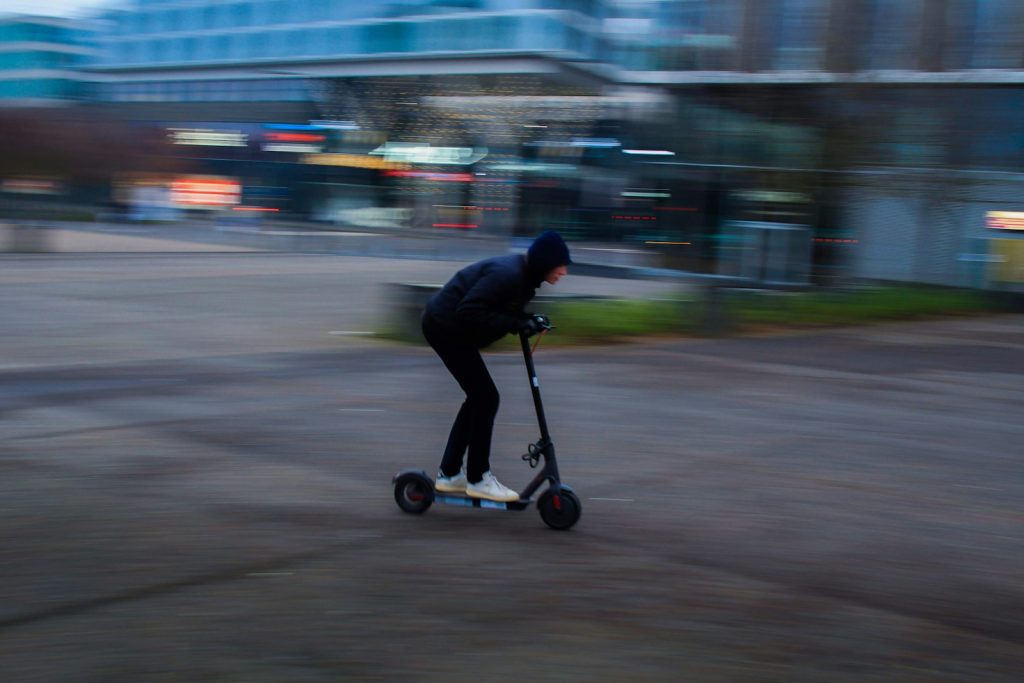
Fact: New York sorts two-wheeled riders into categories, and the category drives almost everything that follows. A stand-up electric scooter is governed by its own article of the Vehicle and Traffic Law (Article 34-D). A seated gas or electric scooter that can reach moped speeds is usually treated as a limited-use motorcycle, which must be registered and insured. A larger scooter may be a motorcycle outright. Each label affects which insurance policies respond, whether a license and registration were required, and how an insurer will try to frame your conduct.
Adjusters know this. A common opening move is to suggest that you were riding an “illegal” vehicle and therefore have no claim. That is rarely the end of the analysis. Even when a rider has a registration or equipment problem, the driver who turned across your path still owed a duty of care, and a violation on your side does not automatically erase the other side’s negligence. What it can do is shift the fight to comparative fault, which is why the classification question should be answered carefully and early rather than conceded on a phone call.
Practically, write down the make and model of your scooter, keep any purchase paperwork, and photograph the spec plate or sticker if one exists. The top speed, motor rating, and whether it has a seat can matter more than you would expect. The City’s own NYC DOT guidance on e-bikes and e-scooters is a useful starting point for understanding the categories.
Myth #2: “If You Were on a Scooter, the Crash Was Probably Your Fault”
Fact: There is no presumption in New York that the smaller vehicle caused the crash. Drivers have a statutory duty under Vehicle and Traffic Law §1146 to exercise due care to avoid colliding with bicyclists, pedestrians, and other vulnerable road users, and the general rules of the road apply to everyone. In our experience reviewing scooter cases, the recurring patterns are not reckless riders. They are drivers making left turns without seeing a narrow profile, parked drivers swinging doors open into traffic, vehicles drifting into bike lanes, and drivers looking at a phone at the exact moment they needed to look at the road. Distraction alone is a large enough problem that we cover it separately on our Queens distracted driving accident page.
The insurer’s version of events will still lean on stereotypes: you were weaving, you were too fast, you came out of nowhere. The answer is evidence, not indignation. Video from storefronts and buses, the angle of impact, the damage to your scooter, the location of debris, and statements from people who watched it happen often tell a story very different from the driver’s.
2026 update: For motor-vehicle personal-injury actions commenced on or after May 26, 2026, New York modified its comparative fault rule (CPLR 1411). If a claimant’s share of fault is greater than the defendants’ combined fault, the claimant recovers nothing; at 50% or less, recovery is reduced by the claimant’s percentage. Because a scooter-versus-car crash will often be litigated as a motor-vehicle case, the fault split now matters more than ever. Read the current text of CPLR 1411.
That update is exactly why the “it was probably your fault” myth is dangerous. Accepting even a vague share of blame in an early conversation can now carry real consequences in a motor-vehicle case. You do not have to argue with anyone. You simply do not have to agree.
Myth #3: “No-Fault Insurance Will Take Care of Everything”
Fact: New York’s no-fault system is real and helpful, but it is narrower than most people assume, and for scooter riders it is often the most complicated part of the claim. No-fault generally pays basic economic loss up to $50,000 per person regardless of who caused the crash: medical bills, 80% of lost earnings up to $2,000 per month, and up to $25 per day for other reasonable expenses. The application is generally due within 30 days of the accident.
The complication is eligibility. Motorcycle operators and passengers are not covered by New York no-fault. Pedestrians and bicyclists struck by a car generally claim no-fault through the car’s insurer. Scooter and moped riders fall somewhere that depends on the vehicles involved and the policies in play, which is why we do not give a one-line answer to “does no-fault cover me?” without looking at the classification of your scooter, the car’s policy, and any policy in your own household.
When no-fault does not apply or runs out, other sources may: your health insurance, the at-fault driver’s liability coverage, and your own supplementary uninsured/underinsured motorist (SUM) coverage if you have an auto policy. None of these is automatic, and each has its own notice requirements. The worst outcome is missing a deadline on a coverage that would have paid while waiting to hear back on one that never would.
- File any potentially applicable no-fault application promptly rather than waiting for someone to tell you whether you qualify.
- Give your health insurer the accident details so claims are not later denied for missing information.
- Notify your own auto carrier if you have a policy, even if you were not in your car.
- Keep every bill, receipt, and explanation of benefits in one place.

Myth #4: “You Can’t Sue Unless You Broke a Bone”
Fact: This one is half true, which is what makes it persuasive. When a case is governed by New York’s no-fault framework, a person must show a “serious injury” under Insurance Law §5102(d) to sue for pain and suffering. A fracture qualifies, but so do significant disfigurement, permanent loss of use of a body organ or member, a permanent consequential limitation, a significant limitation of use of a body function or system, and death. Torn ligaments, herniated discs, and nerve injuries are frequently argued under the limitation categories, which depend heavily on medical documentation and objective testing.
Two more points get lost. First, economic loss above what no-fault pays can be pursued regardless of the threshold. Second, if a particular scooter rider is outside the no-fault system altogether, the threshold analysis may look different. Do not let anyone tell you a soft-tissue injury is “worthless” before a doctor has had a chance to follow it.
Myth #5: “If the Driver Took Off, There’s Nobody to Pay”
Fact: Hit-and-run crashes are common on wide Queens arterials where a driver can disappear into traffic in seconds. Leaving the scene of an injury crash is itself a violation of Vehicle and Traffic Law §600, but the more immediate question is coverage. Depending on your situation, the Motor Vehicle Accident Indemnification Corporation, known as MVAIC, may provide a path when no other insurance is available, and your own SUM or uninsured motorist coverage may also apply. Both carry strict notice requirements: report the crash to police, and notify MVAIC or your carrier as soon as possible, within strict deadlines.
Meanwhile, the search for the driver is often more productive than people expect. A partial plate, a vehicle color, a distinctive dent, and the time of day can be matched against camera footage if someone requests it quickly. Many private systems record over themselves within days.
Myth #6: “There’s a Three-Year Deadline, So There’s No Rush”
Fact: The general statute of limitations for personal injury in New York is three years under CPLR 214(5). That is the outer wall. Several shorter clocks run inside it:
- No-fault applications are generally due within 30 days.
- Claims against New York City or its agencies, including crashes with a City vehicle such as a Sanitation truck, generally require a Notice of Claim within 90 days under General Municipal Law §50-e, with a lawsuit generally due within one year and 90 days.
- Crashes involving an MTA bus fall under transit rules, and the 90-day notice requirement is the key warning.
- Evidence runs on no statute at all. Video, skid marks, and witness memories fade on their own schedule.
A rider who waits a year because “there’s plenty of time” may still be inside the three-year window and yet have lost the City claim, the video, and the witnesses that would have made the case.
Myth #7: “A Pothole Crash Is Just Bad Luck”
Fact: Small wheels are unforgiving. A defect that a car would roll over can throw a scooter rider to the ground, and Queens has no shortage of trenches, raised plates, and broken asphalt. Whether anyone is responsible depends on who owns and maintains that stretch of road, whether a utility or contractor recently dug it up, and whether the owner had notice of the defect. Claims against the City are subject to prior written notice rules and the 90-day Notice of Claim deadline, so a road-defect case is one of the most time-sensitive scooter claims there is.
Photograph the defect with something for scale, such as a shoe or a set of keys, and note the nearest address or light pole number. If a car forced you toward the defect, both theories may be in play at once.
Myth #8: “Bike Lanes Make Queens Streets Safe for Scooters”
Fact: Protected lanes have helped on some corridors, but they do not cover every block, and the most dangerous moments tend to happen where lanes end, cross driveways, or meet turning traffic. Riders we hear from describe the same pressure points again and again:
- Queens Boulevard, where long blocks, service roads, and turning vehicles create conflict points even with a bike lane present.
- Northern Boulevard, with heavy commercial traffic, double-parked delivery vehicles, and frequent left turns through Flushing, Corona, and Jackson Heights.
- Roosevelt Avenue under the elevated tracks, where columns block sightlines and pickups and drop-offs are constant.
- Woodhaven Boulevard and Hillside Avenue, wide roads where drivers carry speed and misjudge a scooter’s approach.
- Jamaica Avenue and Merrick Boulevard, where buses, double-parking, and dense storefronts squeeze riders toward moving traffic.
- Streets around the airports and along Rockaway Boulevard and Conduit Avenue, where drivers moving between highways treat local streets like on-ramps.
Remember, too, that scooters are not permitted on limited-access highways or parkways such as the Van Wyck, the Long Island Expressway, or the Grand Central. If an insurer suggests you were somewhere you were not allowed to be, the exact location, documented with photos and GPS data from your phone, will settle it.
Myth #9: “The Adjuster Just Wants to Hear My Side”
Fact: The other driver’s adjuster works for the other driver’s insurer. A recorded statement is evidence, and casual phrases like “I didn’t see him until the last second” or “I’m feeling a little better” are often quoted back later out of context. You are generally not required to give a recorded statement to the other side’s carrier. Being polite and declining until you have advice is a reasonable choice, not an admission of anything.

What a Scooter Accident Lawyer in Queens Actually Does
Once the myths are out of the way, the work itself is concrete. A lawyer handling a scooter case in Queens typically starts by identifying every possible coverage source and getting the right notices filed on time. Then the focus moves to evidence: requesting the police report and the MV-104 if one was filed, sending preservation letters to businesses with cameras, identifying witnesses, photographing the scooter before it is repaired or discarded, and gathering medical records that document the injury objectively.
From there, the case is built around liability and damages. Liability means proving how the crash happened and who was careless. Damages means showing what the crash cost you, both in dollars and in the ways it changed daily life. For a deeper look at how these claims tend to unfold across the five boroughs, read our overview of NYC scooter and moped accident claims. Riders from eastern Queens can also see our page for scooter crashes in Bellerose, and if your case involves a car and you want the broader picture, our New York car accident attorney overview explains how vehicle claims are structured. If the scooter you were riding was a stand-up electric model, our electric scooter accident guide for Queens goes into that category in more detail.
Consider an illustrative example, not a real case: a rider on a seated scooter is heading east on Northern Boulevard when a driver pulls out of a gas station without looking. The driver’s insurer calls within two days and suggests the scooter “should not have been on the road.” The real questions are what the scooter is legally classified as, whether the gas station’s cameras captured the exit, and which policies respond. Each of those can be answered, but only if someone asks quickly.
Three Queens Landmarks and the Scooter Traffic Around Them
Our office serves riders all over the borough, and the full list of neighborhoods is on our areas we serve page. Three well-known places illustrate how different the riding conditions are from one part of Queens to another.
LaGuardia Airport
LaGuardia sits on Flushing Bay in East Elmhurst, bordered by the Grand Central Parkway and a dense grid of local streets. The airport itself has been extensively rebuilt in recent years, but the roads around it remain some of the busiest in the borough, with taxis, ride-hail vehicles, shuttle vans, and delivery traffic all competing for space on Ditmars Boulevard, Astoria Boulevard, and 94th Street. Many scooter riders who work at or near the airport commute along these streets at shift-change hours, often before dawn or late at night. Low light, drivers hurrying to make a flight, and vehicles cutting across lanes to reach the parkway ramps are a combination that calls for extra caution, and for careful documentation if a crash happens.
Kingsland Homestead
Kingsland Homestead is an eighteenth-century house in Weeping Beech Park in Flushing and serves as the home of the Queens Historical Society. It sits a short distance from downtown Flushing, one of the most crowded commercial districts in the city. Riders heading toward Main Street, Northern Boulevard, or Roosevelt Avenue from this area deal with heavy pedestrian volume, double-parked delivery trucks, buses pulling in and out, and drivers searching for scarce parking. In those conditions, a parked driver opening a door or a car swinging into a curbside spot can take a scooter rider down in an instant. Witnesses are usually plentiful in Flushing, so collecting names and numbers at the scene is especially worthwhile.
The Ralph Bunche House in Kew Gardens
The Ralph Bunche House is a designated New York City landmark on a quiet residential street in Kew Gardens, the longtime home of the diplomat who received the Nobel Peace Prize in 1950. The neighborhood itself feels tucked away, but it sits beside one of the most complicated highway junctions in Queens, where the Van Wyck Expressway, Grand Central Parkway, and Jackie Robinson Parkway meet near Queens Boulevard and Union Turnpike. Scooters cannot use those highways, so riders end up on the surface streets that absorb traffic spilling off the interchange. Drivers leaving the highway often carry highway speed onto local roads, which is a dangerous mismatch for anyone on two small wheels.
Directions to Our Rosedale Office from LaGuardia Airport
From LaGuardia Airport, take the Grand Central Parkway east and follow signs for the Cross Island Parkway south. Stay on the Cross Island as it runs down the eastern edge of Queens toward the Belt Parkway and Southern State junction in Rosedale. Exit for the local streets near Brookville Boulevard; our office is at 1 Cross Island Plaza, Suite 325, just off the parkway. Allow extra time during rush hour, when the Grand Central and Cross Island both slow considerably.
Scooter Crash Questions We Hear Often
Do I need a scooter accident lawyer in Queens if my injuries seem minor?
Not every crash needs a lawyer, but a short consultation can help you avoid mistakes that are hard to undo, such as missing a 30-day no-fault deadline or giving a recorded statement too early. Some injuries, especially to the back, neck, knees, and head, become clearer over days or weeks. Getting checked by a doctor promptly and keeping records protects your options whether or not you ultimately bring a claim.
My scooter was not registered. Can I still bring a claim?
Possibly. A registration or insurance problem on your scooter does not automatically excuse a driver who caused the crash. It can, however, affect which coverage applies to you and give the insurer arguments about comparative fault. These issues depend on how your scooter is classified under New York law, so it is worth having the specifics reviewed rather than assuming the claim is over.
Does no-fault insurance cover scooter riders in New York?
It depends on what you were riding, what struck you, and which policies are involved. Motorcycle operators are not covered by New York no-fault, while pedestrians and bicyclists hit by a car generally are, through the car’s insurer. Scooter riders can fall into different categories. The safest approach is to file any potentially applicable application quickly, within the 30-day window, while coverage is sorted out.
What if a city bus or Sanitation truck hit me?
Claims involving New York City vehicles or MTA buses follow special rules. A Notice of Claim is generally required within 90 days, a lawsuit is generally due within one year and 90 days, and you may be required to attend a 50-h hearing. These deadlines are short and strictly applied, so treat any crash with a public vehicle as urgent.
How long do I have to file a scooter accident lawsuit?
The general deadline for personal injury in New York is three years from the date of the crash. Shorter deadlines can apply, including the 90-day Notice of Claim for City and transit claims and the 30-day no-fault application. Because evidence like video can disappear within days, it is wise to act long before any deadline approaches.
Should I repair my scooter right away?
Hold off if you can. The scooter is evidence. Damage patterns can show where it was struck and how hard, and an insurer may want to inspect it. Photograph it from every angle, including close-ups of scrapes, bent parts, and any spec labels, and keep damaged parts if a repair cannot wait. Save the repair estimate and any receipts.
What evidence should I collect after a scooter crash in Queens?
Photos of the scene, vehicles, your injuries, and road conditions; the driver’s name, plate, and insurance; names and phone numbers of witnesses; and the locations of nearby cameras, such as storefronts, buses, and building entrances. Ask police for the report number. Keep a simple daily journal of pain, missed work, and activities you could not do.
Can I recover if I was partly at fault?
Often, yes, but the rule now depends on the type of case. For motor-vehicle personal-injury actions commenced on or after May 26, 2026, a claimant more than 50% at fault recovers nothing, and a claimant at 50% or less has recovery reduced by their share. Other cases remain under pure comparative fault, where recovery is reduced by your percentage.
What if I crashed because of a pothole and no car was involved?
You may still have a claim against whoever owns or maintains the road, depending on notice and the circumstances. Claims against the City require a Notice of Claim generally within 90 days and are subject to prior written notice rules. Photograph the defect with an object for scale and record the exact location as soon as you can.
Where is your office, and do you meet clients from other parts of Queens?
Our office is at 1 Cross Island Plaza, Suite 325, in Rosedale, just off the Cross Island and Belt Parkways. We work with clients from neighborhoods across Queens, from Astoria and Flushing to Jamaica and the Rockaways. If getting to the office is difficult after an injury, call and we will discuss other ways to meet.
Related: For a full overview of how our firm handles these claims, visit our Scooter Accident Lawyer in Queens page.
Talk With a Scooter Accident Lawyer in Queens
Myths are cheap for insurers and expensive for riders. If you were hurt on a scooter anywhere in the borough, the right next step is a conversation with someone who can look at your actual facts: what you were riding, which policies apply, which deadlines are running, and what evidence still exists. Call Yakov Mushiyev & Associates, P.C. at 718.775.3110, or reach our Rosedale office online to tell us what happened. Our team will listen, explain your options in plain language, and help you decide what comes next as a scooter accident lawyer in Queens should.
General information, not legal advice. Attorney Advertising. Prior results do not guarantee a similar outcome.