
Most scooter crash cases are won or lost in the first two weeks, long before anyone files a lawsuit. If you need a scooter accident lawyer in Bellerose, the most valuable thing that lawyer can do early on is not argue. It is to go find things: the video clip that gets overwritten on a seven-day loop, the scuff mark on the pavement that disappears in the next rainstorm, the delivery driver’s trip log that the company will not hand over unless someone asks for it the right way. This article walks through how we approach a scooter crash in eastern Queens the way an investigator would, piece by piece, and what you can do right now to keep the evidence from slipping away.
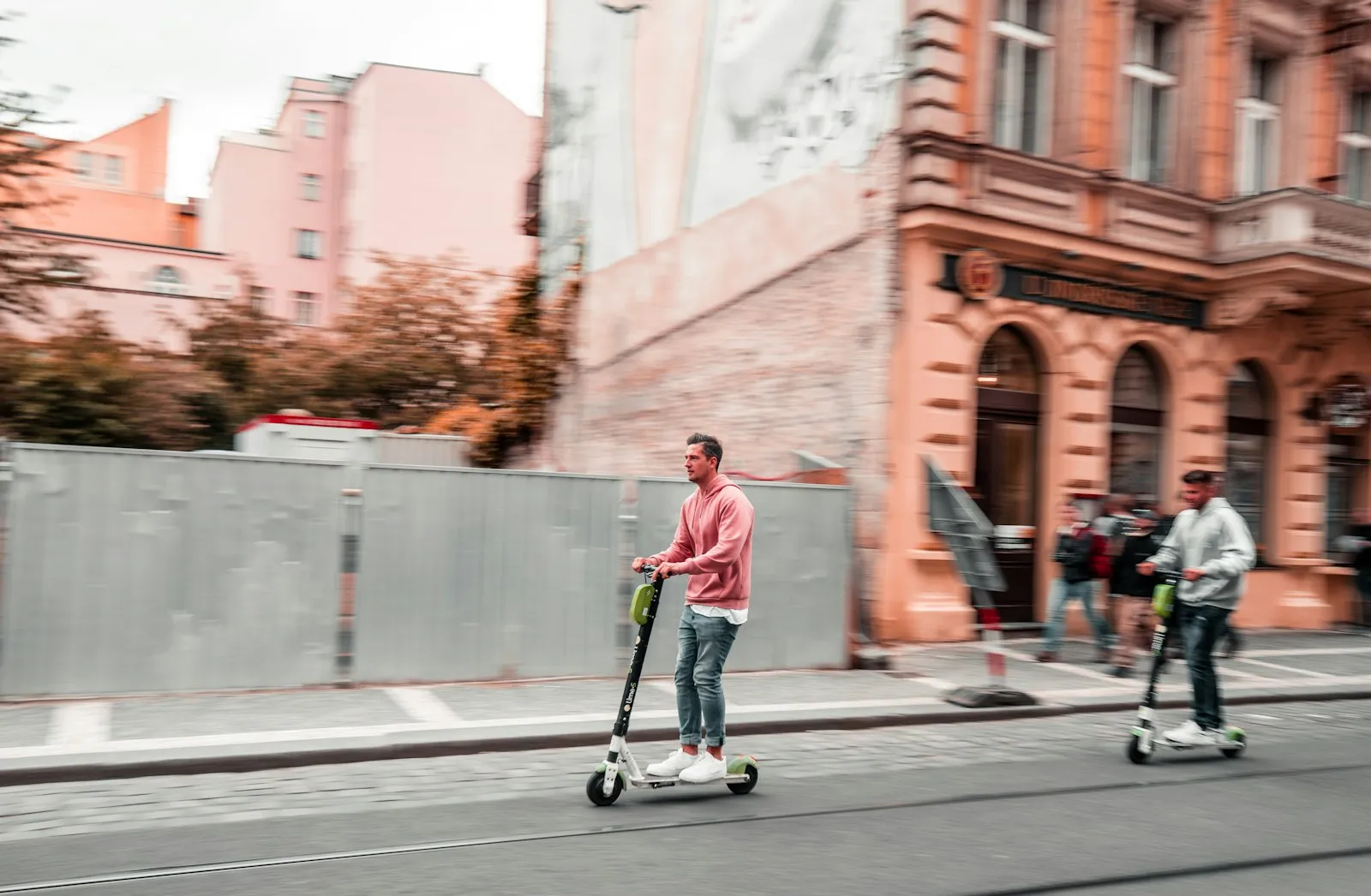
A quick note on terms. “Scooter” covers a lot of ground. It can mean a kid’s kick scooter, an adult folding kick scooter used for the last mile from the LIRR, a stand-up electric scooter, or a seated gas or electric scooter that is really a moped. The evidence work below applies to all of them. If you were on a stand-up electric scooter specifically, our companion piece on electric scooter accidents in Bellerose explains the vocabulary and the e-scooter rules in plain English, and if you were on a seated, plated machine, our moped accident guide is the better fit.
Why Scooter Cases Are Evidence Cases
Scooter riders start every claim at a disadvantage. Drivers and their insurers tend to assume the rider came out of nowhere, was going too fast, was on the sidewalk, or was not paying attention. Juries can share some of those assumptions. Unlike a two-car crash, there is often no second dented bumper to show where the impact happened, and the rider is usually the one who was taken away in an ambulance while the driver stayed behind to give the police the first version of events.
That means the story has to be rebuilt from physical and digital evidence. In our experience, the strongest scooter claims share three features:
- An independent source of truth — video, a disinterested witness, or data that does not depend on anyone’s memory.
- A clear point of impact — where on the road or at the intersection the contact happened, which settles questions about lanes, turns and right of way.
- A documented injury timeline — emergency treatment, follow-up care and imaging that connects the crash to the harm without gaps.
Everything else in this article is about getting those three things before they are gone.
The 72-Hour Window: Evidence That Disappears First
Some evidence has a short shelf life. Here is roughly the order in which it vanishes after a Bellerose scooter crash.
Private surveillance video
Hillside Avenue and Jamaica Avenue are lined with storefronts, gas stations, delis, pharmacies and bank branches, and a large share of them run cameras. Many residential blocks off Braddock Avenue and around the 240s have doorbell cameras on nearly every other porch. The catch is that most consumer and small-business systems record over themselves after a few days to a few weeks. A polite, specific request — date, time window, camera angle — made quickly is often the difference between having the clip and hearing “it’s gone.” When a business is reluctant, a formal preservation letter puts it on notice that the footage matters.
Physical marks on the road
Gouge marks from a scooter deck, tire marks from a braking car, broken plastic and a scattered debris field tell an accident reconstructionist where the impact happened and which way each vehicle was moving. Traffic, street sweeping and rain erase them quickly. Photos taken the same day, with something in the frame for scale and a landmark for location, are gold.
Witness memory
The bus rider who saw it from a window, the crossing guard, the person walking a dog — their memories are sharpest on day one and soften fast. A name and phone number collected at the scene, even by a family member who arrives later, can be tracked down and interviewed while the details are still fresh.
Following the Digital Trail
Modern crashes leave data behind. The trick is knowing who holds it and how to ask.
- Bus cameras. MTA buses run along Hillside and Jamaica Avenues, and many carry onboard cameras that can capture the street around them. If a bus was nearby, that footage is worth requesting quickly. If the bus itself was involved, the clock is even tighter because claims against the MTA and New York City Transit require a Notice of Claim within 90 days.
- Vehicle event data. Many newer cars store speed, braking and throttle information in the seconds around a sudden stop or impact. Commercial vans and trucks often have telematics and dash cameras as well. That data can be preserved, but only if the owner is told to keep it.
- Phone records. If there is reason to believe the driver was texting or on a handheld phone, those records may become relevant. New York’s handheld-phone and texting rules, including VTL §1225-d, give context to that kind of evidence.
- App and trip data. If the driver was working for a delivery or rideshare app, the company typically logs location, speed and timestamps. If you were riding a rented or shared scooter, the operator logs your trip too — which can confirm your route and speed in your favor.
- Your own phone. Fitness apps, map timelines and photos with embedded time and location data can quietly corroborate where you were and when.
The Scooter Is a Witness Too
Do not throw away, repair or sell the scooter. Its damage pattern can show the direction of impact — a bent stem and crushed front wheel tell a different story than a scraped rear fender. If a defect played a role, such as a folding latch that let go, a brake that failed or a battery problem on a powered model, the scooter becomes the central exhibit in a possible product liability claim against the manufacturer or seller. Keep it as is, store it somewhere dry, and photograph it from every side. The same goes for your helmet, shoes and clothing; torn fabric and a cracked helmet shell help show the force involved.

Reading the Road: When the Pavement Is the Defendant
Small wheels and potholes do not mix. A kick scooter wheel can drop into a crack that a car tire would roll right over. Not every scooter crash involves a driver; some are caused by a defective roadway, a raised sidewalk flag, a missing utility cover or a poorly patched trench left by a contractor.
Those cases have their own evidence checklist: photographs of the defect with a measuring tape or a common object for scale, the exact location (house number, nearest pole or hydrant), and any records showing the defect was reported or existed before. The defendant might be the City, a utility, a contractor or an abutting property owner. Under NYC Administrative Code §7-210, owners of most commercial and larger residential properties are responsible for the sidewalk in front of them, while the City may be responsible for sidewalks in front of owner-occupied one-to-three family homes. When the City is involved, a Notice of Claim must be served within 90 days under General Municipal Law §50-e, and the City frequently argues it never had prior written notice of the defect — which is exactly why early record-gathering matters. The NYC Comptroller’s claims page explains the filing process. For a deeper look at defect claims, see our premises liability page.
Evidence Map: What Each Piece Proves
| Evidence | What it can prove | How fast it can disappear |
|---|---|---|
| Storefront and doorbell video | Point of impact, speed, signals, who had the light | Days to a few weeks |
| Road marks and debris photos | Lane position, direction of travel, braking | Hours to days |
| Witness names and statements | Independent account of fault | Memory fades within weeks |
| Vehicle event data and telematics | Driver speed and braking in the final seconds | Can be overwritten or the car repaired |
| Police report (NYPD 105th Precinct) | Parties, insurance, initial observations | Stays on file, but early errors need correcting |
| Medical records and imaging | Injury, cause, severity, future care | Stays on file; gaps in treatment are the risk |
| The scooter, helmet and clothing | Impact direction, force, possible defect | Gone the moment it is discarded or repaired |
The Legal Framework the Evidence Has to Fit
Evidence matters because it has to satisfy specific legal rules. A few that shape scooter cases in New York:
Who pays the medical bills first
Scooters, including e-scooters, are generally not covered by their own no-fault insurance. But if a car, truck or other motor vehicle struck you, the vehicle’s no-fault (PIP) coverage typically pays your medical bills and a portion of lost earnings regardless of fault, up to the basic $50,000 limit. The no-fault application is due within 30 days, so this is one of the first forms we help clients file. The rules sit in Insurance Law §5102, and the Department of Financial Services oversees no-fault carriers. If the driver fled or had no insurance, MVAIC may be the fallback.
The serious injury threshold
To recover for pain and suffering against a driver, you generally must show a “serious injury” as defined in §5102(d) — fractures, significant limitation of use of a body part, permanent loss of use and similar categories. This is where consistent medical documentation, imaging and specialist reports become evidence just as important as any video.
Deadlines
Most personal injury claims must be filed within three years under CPLR 214. Claims involving the City, an MTA bus or other public entity require a Notice of Claim within 90 days and a lawsuit within one year and 90 days. Wrongful death claims have a two-year limit.
Update for 2026: New York enacted motor-vehicle tort reform in late May 2026 that applies to motor-vehicle lawsuits filed on or after its effective date (death cases excluded). Key changes: a plaintiff found more than 50% at fault can no longer recover; the 90/180-day serious-injury category was eliminated; juries now decide fault before serious injury; and pain-and-suffering awards are capped at $100,000 for plaintiffs who were driving uninsured, convicted of impaired driving or committing a felony. Pure comparative fault still applies to non-motor-vehicle cases, such as a scooter crash caused only by a sidewalk defect. In a scooter-versus-car case filed under the new rules, evidence that pushes the driver’s share of fault higher is more valuable than ever.
How Insurers Try to Shift the Blame — and the Evidence That Answers Them
Here is a hypothetical to show how this plays out. A rider on a kick scooter is crossing at a corner on Hillside Avenue with the walk signal when a car turning left cuts across. The driver tells the officer the rider “darted out.” The insurer later argues the rider was in the street, not the crosswalk, and was moving too fast for the conditions. Three pieces of evidence change that story: a pharmacy camera showing the walk signal and the rider’s position in the crosswalk, a road photo with the scooter’s debris inside the painted lines, and the driver’s own vehicle data showing no braking until after impact. None of that proves itself; somebody has to find it, preserve it and connect it.
Common blame-shifting arguments in scooter claims include riding on the sidewalk, riding against traffic, lack of a helmet, excessive speed and riding at night without lights. Some of these may matter legally, some may not, and many are simply wrong on the facts. The answer is always the same: specific, independent evidence.
Your Own Evidence Checklist
If you are able, or if a family member can help, this is what to gather:
- Photos of the scene from several angles, including traffic signals, signs and the road surface.
- The driver’s name, plate, insurance card and, if it was a work vehicle, the company name on the door.
- Names and numbers of anyone who saw it.
- A list of every business and house with a camera facing the street nearby.
- The police incident or report number from the 105th Precinct.
- Every medical record, from the ambulance and emergency room onward. Long Island Jewish Medical Center, right on the Queens–Nassau line, is where many Bellerose crash victims are taken.
- A daily journal of pain, missed work and things you can no longer do.
And a few things to avoid: do not give a recorded statement to the other driver’s insurer before talking to a lawyer, do not post about the crash on social media, and do not let the scooter be repaired or thrown out.
How Our Firm Works a Scooter Case
When you call Yakov Mushiyev & Associates, P.C., the first steps are practical. We send preservation letters to the businesses, vehicle owners and companies likely to hold video or data. We request the police report and correct any errors in it. We help you file the no-fault application on time and, where a public entity is involved, prepare and serve the Notice of Claim. Where the case calls for it, we work with reconstruction professionals and medical experts. We handle Bellerose cases as part of our wider Bellerose personal injury practice, and riders on other light vehicles may also find our Bellerose e-bike accident and Bellerose bicycle accident pages useful.
Consultations are free, and there is no fee unless we win. We meet clients in English, Russian and Spanish, and if you are laid up we can come to your home or hospital room, or meet by video. You can learn more about Yakov Mushiyev or browse common questions on our FAQ page.
Getting to Our Office from Bellerose
Our office is at 1 Cross Island Plaza, Suite 325, Rosedale, NY 11422, open Monday through Friday, 9 to 6. From Bellerose, get on the Cross Island Parkway and head south toward the Belt Parkway; 1 Cross Island Plaza sits right off the Cross Island in Rosedale. The drive usually takes about 15 to 20 minutes depending on traffic. If driving is not realistic after your injury, tell us and we will come to you.
Talk to a Scooter Accident Lawyer in Bellerose Before the Evidence Is Gone
Every day after a crash, another piece of the story is at risk. A short call can start the preservation process today. Call 718.775.3110 or send us a message, and a scooter accident lawyer in Bellerose from our team will review what happened at no cost to you.
Frequently Asked Questions
How long do businesses on Hillside Avenue keep their camera footage?
It varies widely. Many small-business and doorbell systems overwrite footage within a few days to a few weeks. That is why we treat video requests as urgent and send written preservation letters as soon as we are retained.
Does no-fault cover me if I was on a kick scooter and a car hit me?
Generally, yes. A scooter rider struck by a motor vehicle can usually claim no-fault benefits through the vehicle’s insurance, covering medical bills and part of lost wages up to the basic limit. The application must be filed within 30 days, so do not wait.
Can I still bring a claim if I was not wearing a helmet?
Not wearing a helmet does not automatically end a claim. The insurer may argue it affected your injuries, but fault for the crash itself is a separate question. The facts of your case, and the rules that apply to your type of scooter, determine how much it matters.
Which police precinct handles a scooter crash in Bellerose?
Bellerose is covered by the NYPD 105th Precinct in Queens Village. If your crash happened just over the line in Bellerose Village or Floral Park, a Nassau County agency may have responded instead, and different notice rules can apply to Nassau County claims.
What if a pothole, not a driver, caused my scooter crash?
You may have a claim against the City, a utility, a contractor or a property owner, depending on who was responsible for that stretch of road or sidewalk. Claims against the City require a Notice of Claim within 90 days, and proof that the defect existed beforehand is often essential, so photograph it and call early.
This article is general information, not legal advice. Attorney Advertising. Prior results do not guarantee a similar outcome.