
Every good course starts with vocabulary, so let us start there. When people search for an electric scooter accident lawyer in Queens, they are usually trying to answer three questions at once: Was what I was riding legal? Who is responsible for what happened to me? And who pays? Each question has its own set of legal terms, and most of the confusion riders feel after a crash comes from those terms being used loosely, or used strategically, by people who understand them better than the rider does.
This guide works through the subject the way a patient instructor would with a capable student who simply has not studied law. Each section introduces a term, defines it in plain English, and then shows how it applies to someone who was hurt on a stand-up e-scooter on a Queens street. By the end, you should be able to follow any conversation an adjuster starts, and you will know which parts of that conversation deserve a lawyer’s attention.
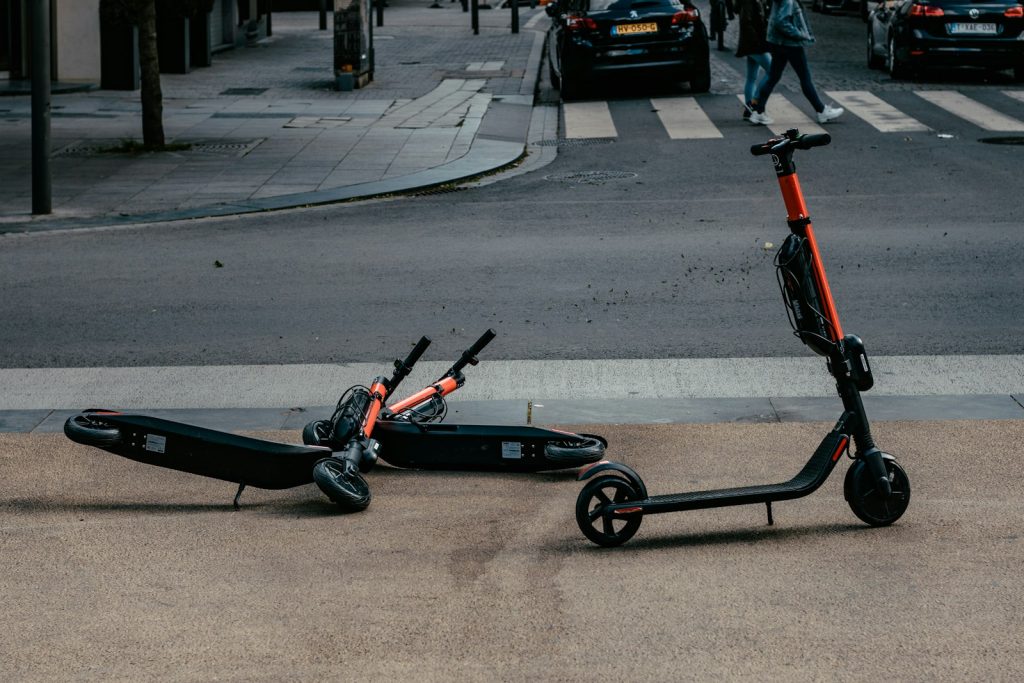
Lesson One: What the Law Means by “Electric Scooter”
Definition. In New York, an “electric scooter” is a specific category of device: a stand-up scooter with handlebars, a floorboard, and an electric motor. It is not the same thing as an e-bike, a moped, or a motorcycle, even though all four can look similar from a car window. Electric scooters are governed by their own provisions of the Vehicle and Traffic Law, in Article 34-D, while bicycles with electric assist are addressed in Article 34-C. Both categories are legal in New York when operated within the rules.
Why it matters. Classification is the hinge on which the rest of a case swings. It determines which traffic rules applied to you, whether registration or insurance was required, and how an insurer will characterize your conduct. A seated scooter that can reach moped speeds, for example, is generally treated as a limited-use motorcycle, which must be registered and insured, and the analysis for that rider looks different. If you rode something that does not fit neatly into one box, write down its make and model and keep the manual. That paperwork often settles a dispute that would otherwise drag on.
Local rules. New York City layers its own rules on top of state law. The City set a 15 mph speed limit for e-bikes and e-scooters, taking effect in late 2025. The City’s NYC DOT page on e-bikes and e-scooters explains where and how these devices may be ridden. Keep in mind that a speed rule cuts both ways: it tells the rider how fast to go, and it gives drivers a reasonable expectation of how fast a scooter will approach.
Lesson Two: Negligence, Broken Into Its Four Parts
Definition. “Negligence” is the legal name for carelessness that causes harm. Lawyers break it into four elements, and a claim generally needs all four:
- Duty: the defendant owed you a legal obligation to act with reasonable care. Drivers owe that duty to everyone on the road, and New York’s Vehicle and Traffic Law §1146 specifically requires drivers to exercise due care to avoid colliding with bicyclists, pedestrians, and other vulnerable users.
- Breach: the defendant failed to meet that standard, for example by turning without looking, opening a door into traffic, or texting while driving.
- Causation: the breach actually caused the crash and your injuries. This is where insurers often argue that something else, such as your speed or a road defect, was the “real” cause.
- Damages: you suffered real losses, such as medical expenses, lost wages, and pain and suffering.
Applied to e-scooters. Picture an illustrative scenario: a driver on 21st Street in Long Island City makes a quick right turn across a scooter rider traveling straight. Duty is easy; every driver owes it. Breach turns on whether the driver checked mirrors and yielded. Causation asks whether the turn, rather than anything the rider did, produced the collision. Damages are proven through medical records and documentation of how the injury affected work and life. Notice how much of that turns on evidence that may exist only briefly, such as traffic camera footage or a witness at a bus stop.
When the car that hit you is rear-ending you at a light, a related doctrine applies: under VTL §1129, courts generally presume the rear driver was negligent unless that driver has a non-negligent explanation. We discuss that pattern in our page on rear-end collisions in Queens.
Lesson Three: Comparative Fault and the Electric Scooter Accident Lawyer in Queens
Definition. “Comparative fault” is the rule that divides responsibility among everyone whose carelessness contributed to an accident. Instead of asking “whose fault was it?” the law asks “how much of the fault belongs to each person?” and expresses the answer as percentages.
How it has traditionally worked. New York has long followed “pure” comparative fault: even a claimant who was mostly at fault could recover something, reduced by their percentage. A rider found 30% responsible would recover 70% of their damages.
2026 update: For motor-vehicle personal-injury actions commenced on or after May 26, 2026, New York modified this rule in CPLR 1411. A claimant whose fault is greater than the defendants’ combined fault (more than 50%) recovers nothing; a claimant at 50% or less has recovery reduced by their share. Cases outside the motor-vehicle category, such as a fall caused purely by a sidewalk defect, remain under pure comparative fault.
Why a student should care. A scooter-versus-car crash will often be litigated as a motor-vehicle case, which means the line between 50% and 51% can now decide whether a rider recovers anything. That makes every fact about speed, lane position, lighting, and helmet use more consequential. It also means that a careless remark to an adjuster, such as “I guess I was going a little fast,” deserves more caution than it once did.
Lesson Four: No-Fault and “Basic Economic Loss”
Definition. “No-fault” is New York’s system for paying certain accident costs quickly, without first deciding who caused the crash. It is set out in Article 51 of the Insurance Law. The benefits it pays are called “basic economic loss”: medical bills, 80% of lost earnings up to $2,000 per month, and up to $25 per day for other reasonable expenses, all up to $50,000 per person. The application is generally due within 30 days of the accident.
The e-scooter wrinkle. Who qualifies for no-fault depends on who you were and what hit you. Pedestrians and bicyclists struck by a car generally claim through the car’s insurer. Motorcycle operators and passengers are not covered at all. E-scooter riders do not fit neatly in either group, and whether a given rider can collect depends on the vehicles involved and the policies in play. A careful lawyer will check the striking vehicle’s policy, any auto policy in your household, and your health coverage before telling you where your bills should go.
Practical takeaway. Do not wait to find out whether you qualify before filing. A late application can be denied on timing alone, while a timely application that turns out to be unnecessary costs you nothing.
Lesson Five: The “Serious Injury” Threshold
Definition. A “threshold” is a minimum requirement a claimant must meet before the law allows a particular kind of recovery. In motor-vehicle cases that fall under the no-fault system, the threshold is “serious injury,” defined in Insurance Law §5102(d). Only a claimant who crosses it may sue for “non-economic loss,” which is the law’s term for pain, suffering, and loss of enjoyment of life.
What counts. The statute lists categories, including a fracture, significant disfigurement, permanent loss of use of a body organ, member, function, or system, a permanent consequential limitation of use, a significant limitation of use of a body function or system, and death. Under the 2026 amendments, the former “90/180-day” category, which covered injuries that prevented a person from performing substantially all of their usual activities for 90 of the first 180 days, was removed from the definition.
Two terms students confuse. “Economic loss” means money: bills, wages, and out-of-pocket costs. “Non-economic loss” means everything else. The threshold limits only the second. Economic loss above what no-fault pays can be pursued regardless of whether you meet the threshold.

Why the medical record matters so much. Courts deciding threshold questions look for objective evidence: imaging, range-of-motion measurements, and a doctor’s explanation connecting the limitation to the crash. E-scooter riders frequently suffer wrist and forearm fractures from bracing a fall, facial and dental injuries, knee and ankle damage, and head injuries. Some of these are obvious on day one. Others, including concussions and ligament tears, may surface over the following weeks. Consistent treatment and honest reporting of symptoms create the kind of record a threshold analysis needs.
Lesson Six: Deadlines, Defined
Statute of limitations. This is the deadline to file a lawsuit. For most personal injury claims in New York, it is three years from the date of the accident under CPLR 214(5). Miss it, and the claim is generally lost no matter how strong it was.
Notice of Claim. This is a formal written notice that must be served on a public entity before you can sue it. Under General Municipal Law §50-e, a Notice of Claim against New York City or its agencies is generally due within 90 days, and the lawsuit itself is generally due within one year and 90 days. Claims involving NYC Transit buses follow similar transit rules. The City may also demand a “50-h hearing,” which is a sworn examination about the incident before a suit is filed.
Applied to e-scooters. If a City vehicle struck you, or if a defect in a City-maintained roadway caused your fall, the 90-day clock is the one that controls. That is a far cry from three years, and it is the most common way a valid scooter claim is lost.
Lesson Seven: Who Can Be a Defendant
Definition. A “defendant” is the person or company a claim is brought against. In e-scooter cases, the list can be longer than people expect:
- The driver whose carelessness caused the crash.
- The vehicle’s owner, under a doctrine called “vicarious liability.” Under Vehicle and Traffic Law §388, an owner is generally responsible for the negligence of someone driving the vehicle with permission. This matters when the driver borrowed a car or was driving a company vehicle.
- An employer, when a driver was working at the time, which is common with delivery and commercial vehicles.
- A property or road owner, when a defect in the road or a curb cut caused the fall, subject to notice rules.
- A manufacturer or seller, under “product liability,” the body of law dealing with defective products. A failed brake, a stem that snapped, or a battery that malfunctioned may support a claim against the companies that made or sold the scooter, depending on the facts.
Why identify them all. Each potential defendant may bring its own insurance policy. A case that looks limited when only the driver is considered may look different once the owner, employer, or manufacturer is part of the analysis.
Lesson Eight: Evidence and the Concept of Spoliation
Definition. “Spoliation” is the destruction or loss of evidence relevant to a legal claim. Courts can respond to spoliation in various ways, but the better path is to prevent it. A “preservation letter” is a written request, sent early, asking a person or business to keep specific evidence, such as camera footage, vehicle data, or maintenance records.
What evidence matters in e-scooter cases.
- The scooter itself, unrepaired, along with photos of its damage.
- Your phone’s GPS or ride-app data showing speed and route.
- Video from storefronts, residential buildings, buses, and dashcams.
- The police report and, where one was required, the driver’s MV-104 accident report.
- Names and contact information for witnesses.
- Medical records beginning with the first visit after the crash.
The lesson is simple: evidence has a shelf life. Much of the work an electric scooter accident lawyer in Queens does in the first weeks is simply making sure the facts survive long enough to be proven.
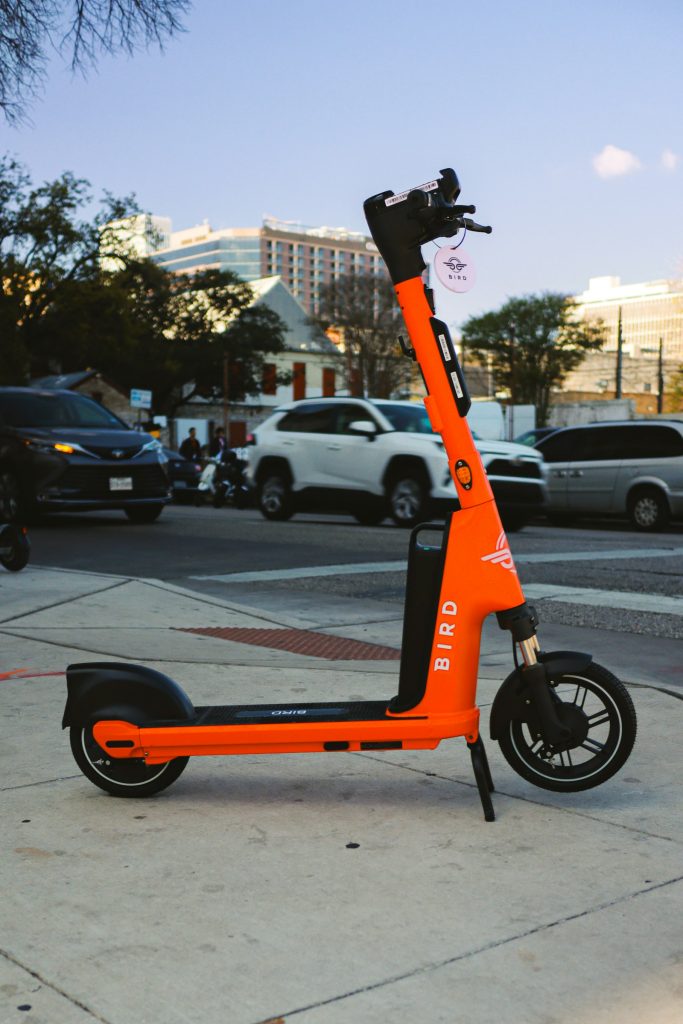
Field Study: Where E-Scooter Crashes Happen in Queens
Theory is only half the course. The other half is geography. Several Queens corridors combine heavy scooter use with conditions that produce collisions:
- Vernon Boulevard and 21st Street in Long Island City and Astoria, where waterfront residents and commuters share the road with trucks serving industrial blocks.
- Jackson Avenue and Queens Plaza, where bridge traffic, bus routes, and elevated train columns crowd every lane.
- Queens Boulevard, with service roads, wide crossings, and frequent turning conflicts.
- Northern Boulevard, a commercial corridor with heavy delivery activity and constant left turns.
- Kissena Boulevard and Main Street near Flushing and Queens College, where students, buses, and dense traffic overlap.
Riders should remember that limited-access highways like the BQE and the Long Island Expressway are off-limits to scooters, so most crashes happen on the surface streets that feed those highways. Drivers coming off a ramp often have not yet adjusted to local speeds.
For a citywide view of how these claims unfold, see our explanation of how scooter and moped claims work in NYC. If you live in eastern Queens, our page for e-scooter riders in Bellerose addresses that area. If your two-wheeler was a seated, faster model, our guide for moped accident claims in Queens covers the registration and insurance issues that come with it. And if the case involves a car or truck, our New York car accident practice page explains the broader framework.
Three Queens Landmarks Along Popular E-Scooter Routes
Every course benefits from a few case studies grounded in real places. These three landmarks draw steady scooter traffic, and each sits in a setting with its own hazards.
Gantry Plaza State Park
Gantry Plaza State Park stretches along the East River waterfront in Long Island City, named for the restored rail gantries that once moved cargo between barges and trains. Its piers and lawns offer some of the best Manhattan skyline views in the city, and the surrounding blocks have filled with residential towers. That growth has brought heavy scooter use for short trips to the subway, the ferry, and local shops. The streets leading to the park, including Center Boulevard, 48th Avenue, and Vernon Boulevard, mix delivery trucks, construction vehicles, rideshare pickups, and pedestrians. Riders should expect sudden door openings and vehicles stopping without warning to load or unload.
Socrates Sculpture Park
Socrates Sculpture Park is an outdoor museum and public park on the East River at Vernon Boulevard and Broadway, on the border of Astoria and Long Island City. Created by artists and community members on a former abandoned waterfront lot, it hosts large-scale sculpture exhibitions, outdoor film screenings, and weekend markets. Event days draw crowds, and Vernon Boulevard becomes a mix of parked cars, people crossing mid-block, and riders heading north toward Astoria Park or south toward Queensbridge. Industrial trucks also use Vernon, and their wide turns and blind spots are a particular risk for someone on a stand-up scooter.
Queens College
Queens College, part of the City University of New York, occupies a large campus along Kissena Boulevard in Flushing, near the Long Island Expressway. Thousands of students, faculty, and staff commute there daily, and e-scooters have become a common way to cover the distance between bus stops, subway connections, and campus gates. Kissena Boulevard and the Expressway service roads carry heavy traffic at class-change times, and drivers exiting the LIE often carry highway speed onto local streets. For students, a crash near campus can also raise questions about missed classes, delayed graduation, and lost work, all of which are part of documenting damages.
Directions to Our Rosedale Office from Gantry Plaza State Park
From Gantry Plaza State Park in Long Island City, head to the Long Island Expressway eastbound via the nearby entrances off Borden Avenue or the Queens-Midtown Tunnel approach. Stay on the LIE east through central Queens until the exit for the Cross Island Parkway south. Follow the Cross Island south along the eastern edge of the borough toward the Belt Parkway and Southern State junction, then exit for the local streets near Brookville Boulevard in Rosedale, where our office sits at 1 Cross Island Plaza.
Office Hours: Common E-Scooter Questions, Answered
When should I contact an electric scooter accident lawyer in Queens?
As soon as you have received medical care and can think clearly. Early contact helps with the parts of a case that expire quickly: the 30-day no-fault application, the 90-day Notice of Claim for City claims, and evidence like video that may be recorded over within days. A consultation does not commit you to anything, and it can prevent mistakes that are difficult to correct later.
Are e-scooters legal to ride in Queens?
Yes. Electric scooters are legal in New York when operated under the rules of Vehicle and Traffic Law Article 34-D and local regulations. New York City set a 15 mph speed limit for e-scooters and e-bikes, taking effect in late 2025. Scooters are not permitted on limited-access highways and parkways, so riders must use surface streets and bike lanes where available.
Will no-fault pay my medical bills after an e-scooter crash?
It depends on the vehicles and policies involved. No-fault rules treat pedestrians, bicyclists, motorcyclists, and vehicle occupants differently, and e-scooter riders do not fall neatly into one group. File any potentially applicable application within 30 days and give your health insurer the accident details while coverage questions are sorted out.
What does “serious injury” mean for an e-scooter rider?
In motor-vehicle cases governed by no-fault, it is a legal threshold, defined in Insurance Law §5102(d), that must be met to recover for pain and suffering. It includes fractures, significant disfigurement, permanent loss of use, and significant or permanent limitations, among other categories. Whether it applies to your case depends on the coverage that governs your claim.
I was not wearing a helmet. Does that end my claim?
Not necessarily. Helmet use is one of many facts an insurer may raise, usually to argue that some injuries would have been less severe. It does not change whether the driver acted carelessly in causing the crash. How helmet use is treated depends on the rider’s age, the vehicle classification, and the specific injuries, so it should be evaluated with your full facts.
What if my rented or shared scooter malfunctioned?
A malfunction may point toward a product liability claim against the manufacturer or seller, or a negligence claim against a company responsible for maintenance. Preserve everything: photos of the scooter, the app records showing your ride, screenshots of any error messages, and the time and location of the crash. Rental agreements may also contain terms that affect your rights, so keep a copy.
How is fault divided between a scooter rider and a driver?
Fault is assigned in percentages based on the evidence. For motor-vehicle personal-injury actions commenced on or after May 26, 2026, a claimant more than 50% at fault recovers nothing, and a claimant at 50% or less has recovery reduced by their share. That is why evidence about speed, lane position, and the driver’s conduct is so important.
Should I talk to the driver’s insurance company?
You may need to give basic information, but you are generally not obligated to provide a recorded statement to the other driver’s insurer. Statements are evidence and can be used to argue fault or minimize injuries. It is reasonable to decline politely until you have had advice about your claim.
How long do I have to bring an e-scooter injury claim?
Generally three years from the accident under New York’s statute of limitations for personal injury. Shorter deadlines can apply: a Notice of Claim against the City or NYC Transit is generally due within 90 days, and no-fault applications are generally due within 30 days. Do not use the three-year deadline as a planning horizon.
Can I meet with your team if I live in western Queens?
Yes. Our office is in Rosedale, but we work with clients from neighborhoods throughout Queens, including Long Island City, Astoria, Sunnyside, and Flushing. If traveling is difficult after an injury, call us and we will discuss options that work for you.
Related: For a full overview of how our firm handles these claims, visit our Electric Scooter Accident Lawyer in Queens page.
Final Lesson: Working With an Electric Scooter Accident Lawyer in Queens
If there is one idea to carry out of this course, it is that the law of e-scooter crashes is learnable, but the deadlines do not wait for you to learn it. Classification, fault, coverage, thresholds, and notice rules all interact, and the order in which you address them matters. You can read more about Yakov Mushiyev & Associates and how our team approaches injury cases. When you are ready to talk about your own crash, call Yakov Mushiyev & Associates, P.C. at 718.775.3110 or send us a message online. Our office is in Rosedale, and we will walk you through each of these terms as they apply to your situation, the way an electric scooter accident lawyer in Queens should.
General information, not legal advice. Attorney Advertising. Prior results do not guarantee a similar outcome.