
On paper, a crash caused by a driver looking at a phone looks like any other car accident: two vehicles, a police report, insurance claims. In practice, it is a different kind of case. The cause of the crash is hidden inside a device, the most important evidence belongs to the other driver, and the defense often depends on that evidence never being examined. If you are searching for a distracted driving accident lawyer in Queens, it helps to understand exactly where these cases part ways with an ordinary collision, and where they follow the same rules.
Yakov Mushiyev & Associates, P.C. represents people injured in crashes throughout Queens from our office in Rosedale. This guide compares distracted driving claims with typical car accident claims, point by point. It is general information, not legal advice about your situation.
The Short Version: What Is the Same and What Is Different
| Issue | Ordinary car crash | Distracted driving crash |
|---|---|---|
| How fault is usually shown | Police report, witnesses, vehicle damage, traffic rules | All of those, plus proof of what the driver was doing on a device or in the cabin |
| Key evidence | Photos, statements, intersection video | Phone and app records, vehicle data, dashcams, employer device policies |
| Who controls the evidence | Often visible to both sides | Largely in the other driver’s or a carrier’s hands |
| Statutes often cited | Right-of-way, following distance, speed rules | Hand-held phone and portable electronic device bans, plus ordinary traffic rules |
| Medical bills at first | No-fault, up to $50,000 per person | Same |
| Pain and suffering | Requires a “serious injury” | Same |
| Lawsuit deadline | Generally 3 years; 90-day notice for public entities | Same |
The bottom half of that table is the part that does not change. The top half is where distracted driving claims are won or lost.
Difference One: The Cause of the Crash Is Often Invisible
In a typical crash, the cause is usually apparent from the physical scene. A driver ran a red light on Northern Boulevard, made an unsafe left turn on Hillside Avenue, or followed too closely on the Van Wyck. The damage, the location and the traffic signals tell much of the story.
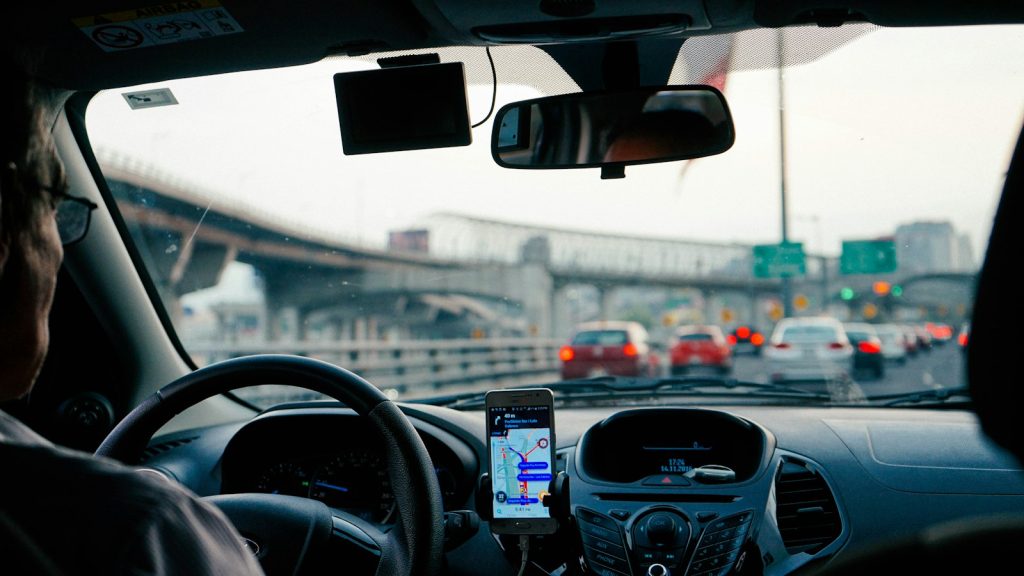
Distraction is different, because distraction leaves no skid marks. The National Highway Traffic Safety Administration describes distraction as anything that takes a driver’s attention away from driving, and safety researchers commonly break it into three kinds: visual (eyes off the road), manual (hands off the wheel) and cognitive (mind off driving). Texting combines all three. So does scrolling through a navigation app, adjusting a touchscreen, eating while steering or turning around to deal with a child in the back seat.
Because the cause is invisible, the other driver’s account of the crash often omits it entirely. “I didn’t see them” or “they came out of nowhere” is a common explanation, and sometimes it is true. Sometimes it is what a driver says when they were looking down at a screen. A distracted driving claim has to fill that gap with evidence.
Difference Two: The Evidence Is Digital and Belongs to Someone Else
In an ordinary crash, most evidence is shared: both sides can photograph the cars, both can talk to witnesses, both can request the police report. In a distracted driving case, the most important evidence sits on the other driver’s phone, in their carrier’s records, in their car’s onboard systems or in their employer’s fleet software. Examples include:
- Cell phone records showing calls, texts and data activity around the time of the crash.
- App and device data, such as timestamps of messages, social media posts or navigation inputs.
- Vehicle event data showing speed, braking and steering in the seconds before impact.
- Dashcam and in-cab camera footage, particularly from commercial vehicles, rideshares and delivery vans.
- Employer records, including dispatch messages and device policies, if the driver was working.
- Witness accounts of the driver holding a phone, looking down or drifting before impact.
This evidence is not obtained automatically. Phone records generally have to be requested through formal discovery once a lawsuit is pending, and courts may limit those requests to a reasonable time window around the crash to protect privacy. Preservation letters sent early, asking the driver, their employer and their insurer to keep relevant data, help prevent it from being lost. This is one of the clearest practical differences: in a distracted driving case, delay can cost you the proof you need most.
Difference Three: Specific Statutes Address Phones and Devices
Every car accident claim draws on the general duty to drive with reasonable care and on the traffic rules in New York’s Vehicle and Traffic Law. Distracted driving claims add statutes written specifically for devices. Vehicle and Traffic Law §1225-c prohibits using a hand-held mobile telephone while a vehicle is in motion, and §1225-d prohibits using a portable electronic device, including texting, browsing and similar activities, while driving.
A ticket or violation of these rules is not the same as a finding of fault in your injury case, and the absence of a ticket does not mean the driver was attentive. But evidence that the driver was violating a device law at the time of the crash can be strong evidence of negligence, and it often shapes how an insurer evaluates the claim.
Other statutes frequently appear alongside the device laws:
- Vehicle and Traffic Law §1146 requires drivers to exercise due care to avoid colliding with pedestrians, bicyclists and others on the road. A driver looking at a phone in a crosswalk area is hard to reconcile with that duty.
- Vehicle and Traffic Law §1129 prohibits following too closely. Distraction is one of the most common reasons a driver fails to stop in time.

Difference Four: Rear-End Crashes Look Different Through a Distraction Lens
Rear-end collisions are the classic distracted driving crash. Traffic slows on Queens Boulevard or the Long Island Expressway, the driver behind is looking at a phone, and the brakes come too late. In an ordinary rear-end case, New York courts generally presume the rear driver was negligent unless that driver offers a non-negligent explanation, such as a sudden, unexpected stop by the lead car.
Distraction evidence matters here because it can defeat those explanations. If the rear driver says the car ahead stopped short, but phone records show a text being typed seconds before impact, the explanation becomes much harder to accept. Our guide for rear-end collision victims in Queens walks through that presumption in more detail.
Difference Five: Distraction Arguments Can Cut Both Ways
In an ordinary crash, the focus is usually on the other driver’s conduct. In distracted driving cases, insurers sometimes turn the same argument around: they ask whether you were on your phone, whether you were wearing earbuds while crossing the street, or whether you were looking at a screen while riding a bike. Expect those questions, and answer them honestly.
This matters more than it used to.
2026 update: For motor-vehicle personal injury actions commenced on or after May 26, 2026, CPLR 1411 applies modified comparative fault: a claimant whose fault is greater than the defendants’ combined fault (more than 50%) recovers nothing, and at 50% or less, recovery is reduced by the claimant’s share. The same changes removed the “90/180-day” category from the serious injury definition in Insurance Law §5102(d). Distraction evidence about either party can therefore affect not only how much is recovered, but whether anything is.
The best protection against a distraction argument aimed at you is your own record. If your phone was in your pocket, your own phone records can help show it. Be cautious about posting on social media after a crash; timestamps on posts can be misread or used out of context.
Difference Six: Distracted Professional Drivers Bring Employers Into the Case
Queens roads carry an enormous volume of professional drivers: delivery vans, rideshare and taxi drivers, contractors, buses. Many of them interact with devices as part of the job, scanning packages, accepting rides, checking routes. When a working driver causes a crash while distracted, the employer or the company that controls the work may share responsibility, and company policies about device use while driving can become evidence.
Public vehicles are a special category. A crash involving a distracted driver of a city vehicle or an MTA bus is subject to Notice of Claim rules, generally within 90 days, along with a lawsuit deadline generally of one year and 90 days. Our page on MTA bus accident claims in Queens explains those rules.
What Stays the Same for a Distracted Driving Accident Lawyer in Queens
For all the differences, a distracted driving case is still a New York motor vehicle case, and the core framework is identical to any other crash:
- No-fault comes first. No-fault benefits under Insurance Law Article 51 pay basic economic loss regardless of fault, up to $50,000 per person, including medical bills, 80% of lost earnings up to $2,000 per month and up to $25 per day for other reasonable expenses. The application is generally due within 30 days of the accident.
- The serious injury threshold applies. To recover pain and suffering, you generally must show a “serious injury” under Insurance Law §5102(d): for example, a fracture, significant disfigurement, a permanent consequential limitation or a significant limitation of use. Proof that the other driver was texting does not lower that bar.
- Owners can be responsible for drivers. Under Vehicle and Traffic Law §388, a vehicle owner is generally vicariously liable for a permissive driver’s negligence.
- Reports are required. If anyone was injured or property damage exceeded $1,000, drivers must file DMV form MV-104 within 10 days.
- The deadline is generally three years for a lawsuit against a private driver, under CPLR 214(5), with much shorter notice deadlines for claims against public entities.
Those rules apply to all the New York car accident cases we handle. What distraction changes is the investigation, not the framework.
Where Distraction Shows Up on Queens Roads
Distraction is most dangerous where traffic changes suddenly. In Queens, that means stop-and-go highways like the Long Island Expressway, the Van Wyck and the BQE, where traffic can go from highway speed to a standstill in seconds. It means wide arterials such as Queens Boulevard, Woodhaven Boulevard and Northern Boulevard, with many lanes, frequent turning vehicles and pedestrians crossing long distances. And it means busy local corridors like Jamaica Avenue, Merrick Boulevard and Main Street in Flushing, where buses pull in and out, double-parked vans block lanes and pedestrians step out between cars.
On the Belt Parkway and the Cross Island Parkway near our office, sudden slowdowns near interchanges and ramps are a frequent setting for distracted rear-end crashes. A driver checking a message at a moment when traffic ahead is braking has very little margin for error.

How the Investigation Differs in Practice
When we take on a crash that may involve distraction, the early steps look different from a routine claim. Preservation letters go out quickly to the other driver, their insurer and, where relevant, their employer. Witnesses are asked specifically what they saw the driver doing in the seconds before impact. Nearby video from businesses and buses is requested before it is overwritten. If a lawsuit is filed, discovery requests target phone records and device data for a focused period around the crash. You can learn more about our approach on our about our firm page, and general answers to common questions on our frequently asked questions page. If your crash happened in eastern Queens, our page for distracted driving victims in Bellerose covers that area.
Three Queens Landmarks Where Attention Matters
Brookville Park in Rosedale
Brookville Park is a large neighborhood park in Rosedale, a short distance from our office, with ball fields, playgrounds, tennis courts and ponds surrounded by trees. It sits along Brookville Boulevard, a road that links the residential streets of southeast Queens with Conduit Avenue and the Belt Parkway. Drivers coming off the highway can carry speed onto Brookville Boulevard, while families walk to the park and children cross to the fields. That transition from highway to neighborhood is exactly where a glance at a phone becomes dangerous. Slow down near the park entrances, especially on weekends and summer evenings.
MoMA PS1
MoMA PS1, in a former public school building on Jackson Avenue in Long Island City, is one of the oldest and best-known contemporary art institutions in the country and an affiliate of the Museum of Modern Art. It sits near the Court Square transit hub, where several subway lines meet, and close to the approaches to the Pulaski Bridge and the Queensboro Bridge. The surrounding streets are full of new high-rise residents, visitors on foot and drivers navigating unfamiliar one-way blocks, often with navigation apps open. Pedestrians crossing Jackson Avenue and 21st Street should expect drivers to be looking at screens, and drivers should mount phones and set routes before moving.
Juniper Valley Park
Juniper Valley Park in Middle Village is one of the largest parks in central Queens, with a running track, ball fields, tennis and handball courts and playgrounds. It is bordered by Juniper Boulevard North and Juniper Boulevard South and lies between residential blocks of Middle Village and Maspeth. Youth leagues, school groups and runners bring a constant flow of pedestrians across the surrounding streets, and parking on game days is tight. Drivers circling for a spot while checking a phone are a real risk to children crossing between parked cars. Dry Harbor Road and Eliot Avenue nearby carry heavier, faster traffic.
Directions to Our Rosedale Office from Brookville Park
Brookville Park is only a few minutes from our office. From the park, head north on Brookville Boulevard toward Conduit Avenue and the Belt Parkway. Cross Island Plaza is just off Brookville Boulevard near the parkway; our office is in Suite 325 of 1 Cross Island Plaza. The map below shows the exact route.
Distracted Driving Claims: Common Questions
How do you prove the other driver was on their phone?
Usually through a combination of evidence: witnesses who saw the driver looking down or holding a phone, the driver’s own statements, dashcam or in-cab video, vehicle data showing no braking before impact, and, once a lawsuit is filed, phone records obtained through discovery. Courts may limit phone record requests to a reasonable window around the crash. Sending preservation letters early helps keep this evidence from being deleted or lost.
Is a distracted driving case worth more than an ordinary car accident case?
Not automatically. Compensation in New York depends on the injuries, their effect on your life, your economic losses and the available insurance, not on the label attached to the crash. What distraction evidence can do is make fault clearer and harder to dispute. Every case is different, and no lawyer can honestly promise a particular outcome.
The driver did not get a ticket for using a phone. Can I still claim distraction?
Yes. A ticket under Vehicle and Traffic Law §1225-c or §1225-d is helpful evidence, but police often do not see device use and may not issue a citation. The civil case is decided on all the evidence, including witnesses, phone records and video. Equally, a ticket alone does not prove the distraction caused the crash; the connection still has to be shown.
What counts as distracted driving besides texting?
Anything that takes a driver’s eyes, hands or attention off driving: reading or typing on a phone, using apps, adjusting a touchscreen or navigation system, eating, grooming, reaching for objects, or turning to deal with passengers. Professional drivers may be distracted by scanners, dispatch screens or ride-hailing apps. Any of these can support a negligence claim if it caused the crash.
Will my own phone records be examined?
They may be, particularly if the other side argues you were distracted too. Under the modified comparative fault rule for motor-vehicle actions commenced on or after May 26, 2026, a claimant more than 50% at fault recovers nothing. If you were not using your phone, your records can actually help confirm that. Answer questions about device use honestly from the start.
Who pays my medical bills after a distracted driving crash?
Generally no-fault insurance first, regardless of who was at fault. It pays up to $50,000 per person in basic economic loss, including medical bills, 80% of lost earnings up to $2,000 per month and up to $25 per day for other reasonable expenses. The application is generally due within 30 days. Claims beyond no-fault go against the at-fault driver.
What if the distracted driver was making deliveries or driving for a rideshare?
Then additional parties and insurance policies may be involved, potentially including the employer or the company the driver works with, depending on the relationship. Rideshare and taxi drivers in New York City are TLC-licensed and must carry commercial insurance. Company device policies and app data may also become evidence.
I was a pedestrian hit by a driver looking at a phone. What rules help me?
Vehicle and Traffic Law §1146 requires drivers to exercise due care to avoid colliding with pedestrians, and the device laws prohibit hand-held phone use while driving. Pedestrians struck by a car generally claim no-fault benefits through that vehicle’s insurer. You may also have a claim for pain and suffering if your injuries meet the serious injury threshold.
How quickly should I act after a distracted driving crash?
Quickly. The no-fault application is generally due within 30 days, MV-104 reports within 10 days when required, and claims involving public vehicles generally require notice within 90 days. Just as important, digital evidence and business surveillance video can disappear quickly. Preservation requests are most effective in the first days and weeks.
Does distraction matter if the crash happened on a highway like the LIE?
Yes, often more. On the Long Island Expressway, the Van Wyck or the BQE, traffic can slow abruptly, and a few seconds of distraction at highway speed can cover a long distance without the driver looking at the road. Highway crashes may have fewer witnesses, so vehicle data, dashcam footage and phone records carry extra weight.
Related: For a full overview of how our firm handles these claims, visit our Distracted Driving Accident Lawyer in Queens page.
Speak With a Distracted Driving Accident Lawyer in Queens
If you were hurt by a driver who was looking at a phone, a screen or anything other than the road, the evidence that proves it may not last long. A distracted driving accident lawyer in Queens can send preservation requests, secure witness accounts and build the claim while you focus on getting better.
Call Yakov Mushiyev & Associates, P.C. at 718.775.3110, or send us a message online. Our office is at 1 Cross Island Plaza, Suite 325, in Rosedale.
General information, not legal advice. Attorney Advertising. Prior results do not guarantee a similar outcome.