
A crash with a tractor-trailer turns ordinary life into a long list of tasks: calls to make, forms to file, records to request, deadlines to meet. Yakov Mushiyev & Associates, P.C. works as a tractor trailer accident lawyer in Queens for people injured in these collisions, and we built this page as a practical, step-by-step guide. Each section is a checklist. The bolded items are the actions that matter most. Work through them in order, and when a step feels like too much, that is the point where our firm takes over.
How Our Firm Helps After a Tractor-Trailer Crash
We are a personal injury firm with offices at 1 Cross Island Plaza in Rosedale, close to the Belt Parkway, the Cross Island Parkway and the truck routes leading to JFK Airport. We represent drivers, passengers, pedestrians and cyclists hurt in crashes with tractor-trailers across Queens, from the Long Island Expressway and the Van Wyck to the industrial blocks of Maspeth, Long Island City and Jamaica.
Here is what we do, step by step, once you hire us:
- Calendar every deadline, from the 30-day no-fault application to the statute of limitations, including any 90-day notice if a public entity is involved.
- Send preservation demands to the motor carrier and other parties for electronic logs, engine data, video and maintenance records.
- Identify all responsible parties and their insurers.
- Coordinate your benefits, including no-fault and, if you were working, workers’ compensation.
- Organize your medical proof so it meets New York’s legal standards.
- Negotiate, and litigate when necessary.
You can see the other kinds of cases we handle on our practice areas page, and read client testimonials about working with our team. Now, the checklists.

Checklist 1: At the Scene
If you are able to act at all, these steps protect both your safety and your claim. If you were taken away by ambulance, skip ahead; a family member or your lawyer can fill in the gaps later.
- Get to safety and call 911. Turn on hazard lights. If your vehicle is in a live lane on the Van Wyck or the LIE and you can move safely, get away from traffic. Report injuries even if they seem minor.
- Accept medical evaluation. Adrenaline hides pain. Crushing forces in truck crashes can cause internal and spinal injuries that do not announce themselves right away.
- Photograph the truck’s identifiers. Capture the company name on the cab door, the USDOT number, the tractor’s license plate, and the trailer’s number and plate, which may be different from the tractor’s.
- Photograph the scene. Take wide shots and close-ups: vehicle positions, damage, skid marks, debris, traffic signals, signs and weather.
- Collect witness information. Names and phone numbers of anyone who stopped. Witnesses leave quickly.
- Exchange information with the driver. Get the driver’s name, license, insurance information and employer. Under Vehicle and Traffic Law §600, a driver involved in an injury crash must stop and exchange information.
- Do not argue about fault. Stick to facts with the police. Do not apologize or speculate.
- Note the road. Commercial vehicles are banned from New York parkways such as the Belt, Cross Island, Grand Central and Jackie Robinson. If the crash happened on a parkway, write that down.
- Look for cameras. Note storefronts, gas stations and homes with cameras that face the road.
Checklist 2: The First 72 Hours
- See a doctor if you were not treated at the scene, and tell the doctor every symptom, including headaches, dizziness, numbness and pain that seems minor.
- Get the police report number and the precinct. You will need it for insurance and, if applicable, for MVAIC.
- Start your DMV report. Drivers must file DMV form MV-104 within 10 days if anyone was injured or killed or property damage exceeds $1,000.
- Notify your own insurer promptly that a crash occurred. Report facts only.
- Do not give a recorded statement to the trucking company’s insurer. Politely decline and refer them to your lawyer.
- Do not repair or scrap your vehicle yet. The damage pattern is evidence. Photograph it thoroughly and talk to a lawyer about whether an inspection is needed first.
- Start a folder. Keep every paper and save every email: discharge instructions, prescriptions, receipts, letters from insurers.
- Stay off social media about the crash and your injuries.
Checklist 3: The First 30 Days
- File your no-fault application. It is generally due within 30 days of the crash. No-fault pays basic economic loss up to $50,000 per person: medical bills, 80% of lost earnings up to $2,000 per month, and up to $25 per day for other reasonable expenses. If you were in a car, it usually goes to the car’s insurer; if you were a pedestrian or cyclist struck by the truck, generally to the truck’s insurer. Motorcycle operators and passengers are not covered by New York no-fault.
- Submit wage documentation if you are missing work: an employer letter, pay stubs, or tax records if you are self-employed.
- Keep a symptom and activity journal. A few lines a day: pain levels, what you could not do, missed events, sleep. It becomes powerful evidence later.
- Follow your treatment plan and attend every appointment, including physical therapy.
- Check your own policy for SUM coverage (supplementary uninsured/underinsured motorist), and give any required notice if the truck’s coverage may not be enough.
- Check for public-entity involvement. If a city vehicle, an MTA bus or public property played any role, a Notice of Claim under General Municipal Law §50-e is generally due within 90 days. Put that date on your calendar now.
- If you were working when the crash happened, report it to your employer and ask about workers’ compensation.

Checklist 4: Identify Every Responsible Party
A tractor-trailer is often a puzzle of separate companies. Work through this list to see who may share responsibility. Whether each one is actually liable depends on the facts.
- The driver, for unsafe driving such as following too closely (Vehicle and Traffic Law §1129), phone use (§1225-c and §1225-d), impairment (§1192), or failing to use due care around pedestrians and cyclists (§1146).
- The motor carrier, which may be responsible for its driver’s negligence on the job and for its own failures in hiring, training, supervision and dispatch.
- The owner of the tractor, which may be a different company from the carrier. Vehicle and Traffic Law §388 generally makes an owner liable for a permissive driver’s negligence.
- The owner of the trailer, which is often a separate leasing company or shipper.
- The shipper or loader, if cargo was overloaded or improperly secured and shifted.
- A maintenance or repair company, if brakes, tires or lights failed because of faulty work.
- Other drivers, if another vehicle contributed to the crash.
Then match each party to the evidence that proves its role:
- Electronic logging device (ELD) records, to check compliance with the FMCSA hours-of-service rules: 11 hours of driving after 10 consecutive hours off, a 14-hour on-duty window, and a 30-minute break after 8 hours of driving.
- Engine control module (ECM) or “black box” data, showing speed, braking and throttle before impact.
- Dashcam footage, both forward-facing and driver-facing.
- Maintenance and inspection records for the tractor and the trailer.
- The driver qualification file: license, history, training and medical certification.
- Dispatch records, bills of lading and delivery schedules.
- Insurance policies for each party. Interstate general freight carriers must carry at least $750,000 in liability coverage under federal rules, more for hazardous materials; that is a minimum, not a cap.
Action item: because some of this evidence can be overwritten or discarded, a lawyer should send preservation (spoliation) letters as early as possible.
Checklist 5: Protect the Value of Your Claim
- Understand the serious injury threshold. To recover pain and suffering after a motor vehicle crash, you must show a “serious injury” under Insurance Law §5102(d), such as a fracture, significant disfigurement, permanent loss of use, a permanent consequential limitation, or a significant limitation of use. Economic loss above no-fault can be pursued regardless.
- Ask your doctors to measure. Objective findings, like range-of-motion measurements and imaging, matter more than general descriptions.
- Avoid gaps in treatment. If you must stop, make sure the reason is written down.
- Attend every insurer-requested examination, and note how long it lasted and what was tested.
- Do not sign releases or broad medical authorizations from the trucking company’s insurer.
- Do not accept an early offer before you know the full extent of your injuries.
- Know the fault rule that applies to you.
2026 update: For motor-vehicle personal injury actions commenced on or after May 26, 2026, CPLR 1411 applies modified comparative fault: if your fault is greater than the defendants’ combined fault (more than 50%), you recover nothing; at 50% or less, your recovery is reduced by your share. The same legislation removed the “90/180-day” category from the serious injury definition. Ask a lawyer how the timing of your lawsuit affects which rules apply.
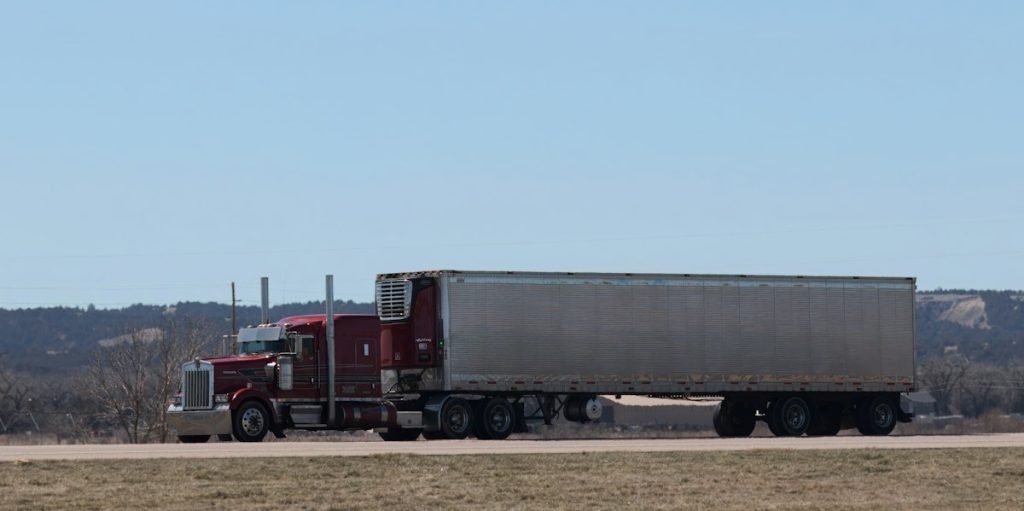
Checklist 6: Working With a Tractor Trailer Accident Lawyer in Queens
When you meet with a tractor trailer accident lawyer in Queens, you will get more out of the first conversation if you come prepared.
- Bring your folder: police report number, photos, insurance cards, the truck’s identifiers, witness contacts and any insurer letters.
- Bring a list of medical providers with approximate dates of visits.
- Bring proof of income and a note of missed work days.
- Write down your questions. Ask about deadlines, who may be responsible, how communication will work, and what the next steps are.
- Be candid about prior injuries. Aggravation of an earlier condition can be part of a claim; surprises later hurt credibility.
Then expect these stages, roughly in this order:
- Investigation and preservation of evidence.
- Benefit coordination: no-fault, health insurance and, if applicable, workers’ compensation. Under Workers’ Compensation Law §11, you generally cannot sue your own employer except for a “grave injury,” but third-party claims against the trucking side are allowed.
- Demand and negotiation once your medical picture is clear.
- Lawsuit, if needed, filed within the general three-year statute of limitations (shorter deadlines apply to public entities).
- Discovery: document exchange, depositions (called examinations before trial in New York), and defense medical exams.
- Resolution: settlement, mediation or trial.
For a look at the insurance tactics you can expect along the way, read our blog breakdown of how tractor-trailer insurers handle claims in Queens. If your crash involved a smaller commercial vehicle, our box truck accident page may be useful, and for side-impact crashes at intersections, see our page for a T-bone accident lawyer in Queens.
Key Deadlines at a Glance
- 10 days: MV-104 report to DMV, when required.
- 30 days: no-fault application (generally).
- 90 days: Notice of Claim against NYC, its agencies, NYC Transit and many public authorities (generally).
- 1 year and 90 days: lawsuit against those public entities (generally).
- 2 years from death: wrongful death action (EPTL 5-4.1).
- 3 years: personal injury lawsuit against private parties (CPLR 214(5)).
- As soon as possible: MVAIC notice for hit-and-run or uninsured situations, which carries strict requirements.
Three Queens Landmarks to Navigate Around Safely
These three Queens destinations sit near major roads and truck routes. Here is what to know about each, and a practical tip for getting there safely.
Queens College
Queens College, a senior college of the City University of New York, occupies a leafy campus in Flushing along Kissena Boulevard, just south of the Long Island Expressway. Thousands of students, faculty and visitors arrive every weekday by car, bus and on foot. The LIE next door is one of the borough’s main truck corridors, and its service roads carry trucks exiting and entering the expressway near the campus. Practical tip: when driving near the LIE service roads, give tractor-trailers extra room on merges and right turns, and watch for students crossing at intersections near the campus gates.
Ridgewood Reservoir in Highland Park
Ridgewood Reservoir, inside Highland Park on the Brooklyn–Queens border, once stored water for the city of Brooklyn. Long since taken out of service, its basins have grown into woodland and wetland habitat, and a path around the rim offers views across both boroughs. The area is bordered by the Jackie Robinson Parkway, where commercial vehicles are banned, and by local streets in Ridgewood and Cypress Hills that carry truck traffic serving nearby industrial areas. Practical tip: if you see a tractor-trailer on the parkway, keep your distance; low overpasses and tight curves are exactly why trucks are prohibited there.
The Jamaica Performing Arts Center
The Jamaica Performing Arts Center, known as JPAC, is a city-owned cultural venue in downtown Jamaica, housed in a restored historic church building near Jamaica Avenue. It hosts concerts, theater, dance and community events. Downtown Jamaica is one of Queens’ busiest transportation hubs, with the LIRR, the AirTrain to JFK, subway lines and dozens of bus routes, plus trucks making deliveries along Jamaica Avenue and the nearby Van Wyck. Practical tip: leave extra time on event nights, use transit when you can, and be especially careful crossing near loading zones where trucks back in.
Directions to Our Rosedale Office from Queens College
From Queens College, take Kissena Boulevard north a short distance to the Long Island Expressway and head east. Exit onto the Cross Island Parkway southbound and follow it toward the Belt Parkway and Rosedale. Our office at 1 Cross Island Plaza, Suite 325, sits near the junction of the two parkways; take the Rosedale exits and use the map below for the final turns. The drive usually takes about 20 to 30 minutes outside rush hour.

Practical Questions After a Tractor-Trailer Crash
Should I move my car after a crash with a tractor-trailer?
Safety comes first. If you can move safely and your vehicle is creating a hazard in a live lane, moving out of traffic may be the right call, ideally after taking a few quick photos of the positions. If anyone is seriously hurt, the vehicles are disabled, or moving would be unsafe, stay put, turn on hazards and wait for police and emergency crews. Never stand between vehicles or in travel lanes on a highway like the Van Wyck or the LIE.
How do I find out which company owns the truck?
Start with what is painted on the vehicle. The cab door usually shows the carrier’s name and USDOT number, and the trailer may display a different company’s name and its own plate. The police report should list the driver, the vehicle and insurance information. If you could not capture these details at the scene, a lawyer can use the report, witness accounts, video and federal carrier registration information to identify the companies involved.
What is a USDOT number?
A USDOT number is an identifier the federal government assigns to motor carriers, and it is commonly displayed on the side of a commercial truck’s cab. It links the truck to a specific registered carrier and its safety and insurance information on file with federal regulators. Photographing it is one of the most useful things you can do at the scene, because it helps identify the responsible company even when the trailer belongs to someone else.
Should I get my car repaired right away?
Wait until the damage has been fully documented. In a tractor-trailer case, crush patterns, the height of impact and paint transfer can help show how the crash happened. Take detailed photos from every angle, and talk with a lawyer about whether an inspection is needed before repairs or a total-loss sale. Your property damage claim can usually move forward on its own track, so documenting the vehicle should not delay getting you back on the road.
Who files the MV-104, me or the police?
Both may file reports, and they are different documents. The police prepare their own collision report. Separately, drivers involved in a crash must file DMV form MV-104 within 10 days if anyone was injured or killed or property damage exceeded $1,000. Do not assume the police report satisfies your obligation. If you are too badly hurt to complete it, ask a family member or your lawyer to help you meet the requirement as soon as possible.
The trailer jackknifed and hit several cars. Does that change anything?
It can. Multi-vehicle crashes mean multiple injured people may be making claims against the same insurance policies, and fault may be divided among several drivers. It also means more potential witnesses and more video sources. Acting quickly matters: preservation letters, early identification of all insurers, and prompt medical documentation help ensure your claim is fully presented. Keep track of which vehicle struck yours and in what order.
Can the trailer be owned by a different company than the truck?
Yes, and it happens often. A carrier may pull a trailer owned by a leasing company, a shipper or another business. Each owner may carry its own insurance and may have its own responsibilities, such as maintaining the trailer’s brakes and lights. That is why it is important to photograph both the tractor’s and the trailer’s plates and markings, and why a lawyer will request ownership and lease records early in the case.
Which medical records should I keep?
Keep everything. That includes ambulance and emergency room records, discharge papers, imaging reports, specialist notes, physical therapy records, prescriptions and receipts, and any work restrictions. Also keep a list of every provider with dates of service. These records support both your no-fault benefits and your claim against the trucking side, especially the serious injury analysis, which depends on objective findings documented over time.
I was walking when a turning tractor-trailer hit me. Who pays my bills?
Pedestrians struck by a vehicle generally claim no-fault benefits through the striking vehicle’s insurer, which in this case would usually be the truck’s policy. Those benefits cover medical bills and a portion of lost wages up to the $50,000 basic limit. Drivers must exercise due care to avoid pedestrians under Vehicle and Traffic Law §1146, and wide right turns by tractor-trailers at Queens intersections are a common danger. A claim for pain and suffering may also be available.
How do I keep track of everything without getting overwhelmed?
Use one folder, physical or digital, and three simple lists: deadlines, providers and expenses. Write a short daily journal entry about your pain and limits. Forward every insurer letter to your lawyer. Once you are represented, your lawyer’s office should handle most of the paperwork and calendar the deadlines for you, so your main jobs are getting medical care, keeping appointments and staying in touch.
Your Next Step: Call a Tractor Trailer Accident Lawyer in Queens
You do not have to work through these checklists alone. If you were hurt in a tractor-trailer crash, a tractor trailer accident lawyer in Queens can take over the deadlines, the evidence and the insurers while you focus on recovery. Call Yakov Mushiyev & Associates, P.C. at 718.775.3110 or contact us online to reach our Rosedale office. If you are just across the city line, visit our page for a tractor trailer accident lawyer in Bellerose.
Related reading: Tractor Trailer Accident Lawyer in Queens: ten insurance tactics and how to respond.
General information, not legal advice. Attorney Advertising. Prior results do not guarantee a similar outcome.