
Within hours of a serious tractor-trailer crash, a file is opened. It has a claim number, a reserve figure, and an adjuster assigned to it. That adjuster may be working for the motor carrier’s liability insurer, a third-party claims administrator, or a self-insured trucking company’s risk department. Whatever the label, the file has one purpose: to resolve your claim for as little as the facts will allow. Anyone looking for a tractor trailer accident lawyer in Queens should understand how that file is built, because the playbook is surprisingly consistent.
This article pulls back the curtain. We walk through how trucking insurers typically evaluate injury claims, the specific tactics used to shrink them, and the practical countermoves available to an injured person. None of this is a secret inside the industry. It is just rarely explained to the people on the receiving end.
Yakov Mushiyev & Associates, P.C. represents people injured in commercial truck crashes throughout Queens from our office in Rosedale. Here is what we want every client to know before the first phone call from an adjuster.
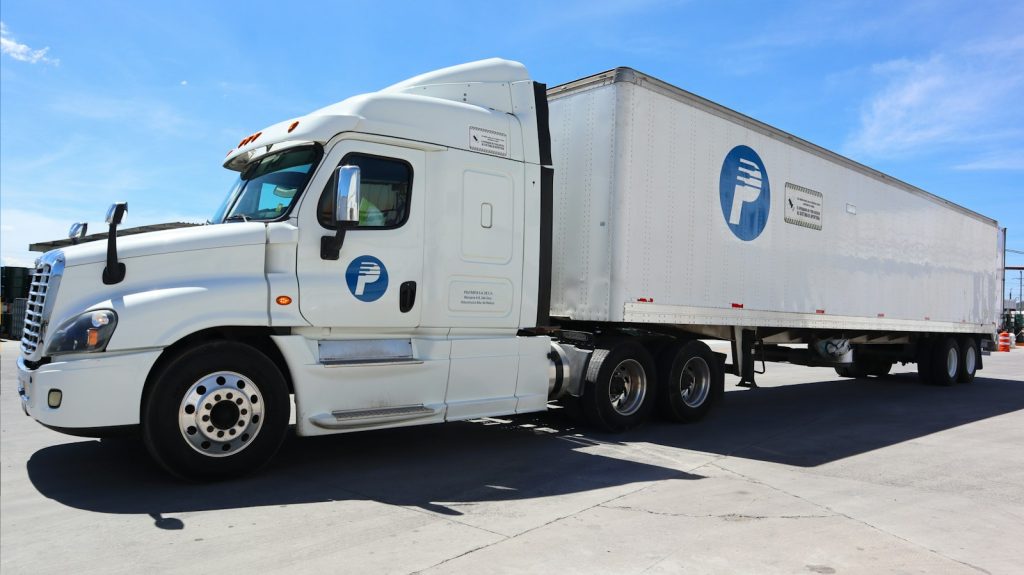
How the Claim File Is Built: What Adjusters Actually Evaluate
Insurers do not value a claim by intuition. Adjusters generally work through a set of factors, often supported by internal guidelines and claims software, to estimate exposure and set a reserve. While each company does it differently, the questions on the checklist tend to look like this:
- Liability: How clear is it that the truck driver was at fault? Is there video? Independent witnesses? A police report that assigns a contributing factor?
- Threshold: In New York, can the claimant meet the “serious injury” requirement needed to recover pain and suffering after a motor vehicle crash?
- Medical specials: What has been billed, what treatment is ongoing, and is surgery recommended?
- Causation: Is there a pre-existing condition, prior accident, or degenerative finding that can be blamed instead?
- Treatment pattern: Were there delays or gaps in care?
- Wage loss: Is lost income documented with pay stubs, tax returns, and employer letters?
- Venue: Where would a lawsuit be tried, and how might a jury there react?
- Representation: Does the claimant have a lawyer who will actually file suit and pursue discovery?
Every tactic described below is designed to move one of those levers in the insurer’s favor. Understanding the lever is the first step in pushing back on it.
Tactic 1: The Fast, Friendly Phone Call
What happens: Within a day or two, sometimes while you are still in the hospital, someone calls. They are polite, sympathetic, and “just need to get your side of the story.” They ask whether you can give a recorded statement.
Why it works for them: A recorded statement given while you are medicated, in pain, and unaware of your full injuries is a goldmine. “I’m doing okay.” “I didn’t see the truck until the last second.” “I was going about the speed of traffic.” Each phrase can later be framed as an admission on liability, causation, or the severity of your injury.
The counter: You are not obligated to give a recorded statement to the trucking company’s insurer. Politely decline and take their name, company, and claim number. Your own insurer is different; you have cooperation duties under your policy for no-fault, but those communications should still be accurate and careful.
Tactic 2: The All-Access Medical Authorization
What happens: The adjuster sends a stack of forms, including a HIPAA authorization that would release your entire medical history, sometimes going back many years, from every provider you have ever seen.
Why it works for them: They are searching for anything that supports a causation defense: an old back complaint, a prior car accident, a chiropractor visit a decade ago. With tractor-trailer impacts, spinal injuries are common, and insurers frequently argue that disc herniations are “degenerative” rather than traumatic.
The counter: Do not sign blanket authorizations for the other side. Any medical records exchanged should be appropriately limited to relevant providers and time frames. In litigation, the scope of medical discovery is governed by court rules, not by the adjuster’s preferences.
Tactic 3: Exploiting the Gap in Treatment
What happens: You skipped physical therapy for three weeks because you went back to work, could not get a ride, or simply felt a little better. Months later, the adjuster’s valuation notes highlight that gap.
Why it works for them: A gap allows the argument that you were healed, or that something else happened during the break to cause your current symptoms. It is one of the most common ways a legitimate claim gets discounted.
The counter: Follow your treatment plan, and if you have to stop, make sure the reason is documented with your providers. If transportation or cost is the barrier, tell your doctor and your lawyer. A gap with a reason is far less damaging than a gap with no explanation.

Tactic 4: The No-Fault Exam and the Benefit Cutoff
What happens: Your no-fault carrier schedules an “independent medical examination” with a doctor it selects. Shortly after, you receive a denial of further treatment based on that doctor’s opinion that you have recovered.
Why it matters: No-fault under Insurance Law Article 51 pays basic economic loss up to $50,000 per person regardless of fault, including medical bills, 80% of lost earnings up to $2,000 per month, and up to $25 per day for other reasonable expenses. A cutoff shifts treatment costs onto you and can create the very gap described in Tactic 3. The same exam reports may later be cited by the trucking insurer to argue you never had a serious injury.
The counter: Attend scheduled exams, since missing them can jeopardize benefits, and be accurate about your symptoms. A denial is not the final word. Denials can be challenged, and your treating doctors’ findings carry weight. Keep your no-fault deadlines in mind as well; the application is generally due within 30 days of the accident.
Tactic 5: Attacking the Serious Injury Threshold
What happens: The defense argues your injury does not meet the definition of “serious injury” under Insurance Law §5102(d), so you cannot recover for pain and suffering at all.
Why it works for them: The threshold is a legal gate. If they can keep you on the wrong side of it, the value of your claim shrinks to economic loss above no-fault. The statute lists categories including fracture, significant disfigurement, permanent loss of use of a body organ or function, permanent consequential limitation, significant limitation of use, and death.
2026 update: For motor-vehicle personal injury actions commenced on or after May 26, 2026, the “90/180-day” category has been removed from the §5102(d) serious injury definition. The same legislation amended CPLR 1411 so that, in these motor-vehicle cases, a claimant found more than 50% at fault recovers nothing, while a claimant at 50% or less has damages reduced by their share. Expect insurers to lean on both changes.
The counter: Objective medical evidence. Imaging, range-of-motion testing with quantified measurements, surgical findings, and treating physician narratives that connect the injury to the crash. Tractor-trailer impacts often produce fractures and documented structural injuries, but the proof still has to be assembled carefully and early.
Tactic 6: Rewriting Fault Around the Blind Spot
What happens: The carrier’s version of the crash shifts the blame: you lingered in the “no-zone,” you cut in after the merge at the Kew Gardens interchange, you braked suddenly on the Long Island Expressway.
Why it works for them: Under CPLR 1411, your share of fault reduces your damages, and after the 2026 amendment, in motor-vehicle cases commenced on or after May 26, 2026, being more than 50% at fault bars recovery entirely. Every percentage point the insurer can push onto you has direct dollar value, and crossing 50% can erase the claim.
The counter: Objective evidence that the carrier cannot spin. Electronic control module data can show speed and braking. Dashcam footage, including the carrier’s own forward-facing camera, can show lane position. Witnesses and nearby business or traffic cameras along routes like Woodhaven Boulevard or Queens Boulevard can fill gaps. Truck drivers have their own duties, including signaling, checking mirrors, and maintaining safe following distance under VTL §1129.
Tactic 7: Controlling the Evidence
What happens: The most important evidence in a tractor-trailer case lives on the carrier’s side: electronic logging device (ELD) records, ECM data, dispatch communications, driver qualification files, drug and alcohol testing records, and maintenance and inspection logs. Without a formal demand, some of it may be lost in the ordinary course of business.
Why it matters: The ELD shows whether the driver complied with FMCSA hours-of-service rules, including the 11-hour driving limit after 10 consecutive hours off duty, the 14-hour on-duty window, and the 30-minute break required after 8 hours of driving. Dispatch records can show schedule pressure. Maintenance logs can reveal ignored brake or tire problems. These records can transform a he-said, she-said case into a documented one.
The counter: A prompt preservation (spoliation) letter to the carrier, the trailer owner, and any other party with relevant records. If evidence is destroyed after a party is on notice, courts can impose sanctions. This is the single most time-sensitive step in most tractor-trailer cases.

Tactic 8: The Coverage Shell Game
What happens: The tractor is owned by one entity, the trailer by another, the driver is classified as an independent contractor, the load was arranged by a broker, and the cargo was packed by a shipper. Each insurer points to the next.
Why it works for them: Confusion delays the claim, and delay wears people down. Each carrier may deny responsibility in the hope that the claimant settles with whoever offers first, often for a fraction of what the full coverage picture would support.
The counter: Identify every party and every policy. Under VTL §388, a vehicle owner can be vicariously liable for a permissive driver’s negligence. Interstate general freight carriers must maintain at least $750,000 in liability coverage under federal rules, and higher for some hazardous materials. Motor carrier registration records, the USDOT number on the cab, and lease agreements are the starting points for unwinding who is responsible.
Tactic 9: Surveillance and Social Media
What happens: In larger claims, insurers sometimes hire investigators to observe claimants in public, and they routinely review public social media.
Why it works for them: A ten-second clip of you carrying groceries or a smiling photo at a family party can be framed as proof you are not really hurt, even if you paid for it with pain later that night.
The counter: Assume you are being watched in public. Stay off social media or lock it down, and do not post about the crash, your injuries, or your activities. Live within your doctors’ restrictions. Honesty is the best defense: describe your limitations accurately to doctors and never overstate them.
Tactic 10: The Early Offer and the Calendar
What happens: A settlement offer arrives early, before an MRI or a surgical consult, accompanied by a release. Or the opposite: the file sits idle, with polite requests for “a few more documents,” as deadlines approach.
Why it works for them: An early release closes the claim before its value is known. Signing a general release generally ends your right to pursue that claim further. Delay works too: the general personal injury statute of limitations is three years under CPLR 214(5), and claims involving city vehicles or MTA buses can require a Notice of Claim within 90 days and a lawsuit within one year and 90 days. Wrongful death claims are generally due within two years.
The counter: Never sign a release before you understand your prognosis and your losses. Calendar every deadline and do not let negotiations run past them. Filing a lawsuit is often what moves a stalled file.
What a Tractor Trailer Accident Lawyer in Queens Does Differently
Seen from the adjuster’s desk, the difference between a represented and an unrepresented claimant is not charm or volume. It is credible pressure on each of the factors listed at the top of this page: preserved liability evidence, documented medical causation, proven wage loss, and a real willingness to litigate. A tractor trailer accident lawyer in Queens should be building that file from the first week, not waiting for the insurer to finish building theirs. That means preservation letters, scene and video canvassing, medical record coordination, coverage investigation, and deadline control. You can read more about how our firm approaches injury cases and browse our frequently asked questions about personal injury claims.
Three Queens Landmarks Near the Truck Routes
Insurance tactics are universal, but crashes happen in specific places. These three Queens landmarks sit near roads where commercial traffic and everyday life overlap.
Neir’s Tavern in Woodhaven
Neir’s Tavern, on 78th Street in Woodhaven, traces its history to 1829 and is often described as one of the oldest bars in New York City. Its long wooden bar has hosted generations of neighborhood regulars, and film fans know it as a location used in the movie Goodfellas. Neir’s sits just off Jamaica Avenue, under the elevated J train, and a short distance from Woodhaven Boulevard, a heavily traveled corridor connecting the Long Island Expressway area to Rockaway-bound traffic. Trucks and buses share Woodhaven Boulevard with commuters, which makes careful driving around its busy intersections important.
King Manor Museum in Rufus King Park
King Manor Museum, inside Rufus King Park in Jamaica, was the home of Rufus King, a signer of the United States Constitution, early U.S. senator from New York, and anti-slavery voice. The historic house museum offers tours and programs about early American history. The park fronts Jamaica Avenue in the heart of downtown Jamaica, close to the Jamaica Center transit hub and busy commercial blocks. With heavy bus traffic, delivery trucks serving storefronts, and the Van Wyck Expressway nearby, the area around King Manor is a place where pedestrians and drivers both need extra awareness.
Astoria Park
Astoria Park stretches along the East River beneath the Hell Gate Bridge and the Robert F. Kennedy Bridge, offering sweeping views of the river and Manhattan. It is home to the Astoria Pool, one of the city’s largest public pools, which hosted Olympic swimming trials in the twentieth century, plus a running track and tennis courts. Because commercial vehicles cannot use the Grand Central Parkway, trucks moving to and from the RFK Bridge rely on local Astoria streets and designated routes, so park visitors should watch for turning trucks nearby.
Directions to Our Rosedale Office from Woodhaven
From Neir’s Tavern in Woodhaven, head east to Woodhaven Boulevard and drive south; the road continues as Cross Bay Boulevard toward Howard Beach. Take the Belt Parkway eastbound, continue past JFK Airport, and exit in the Rosedale area near the Cross Island Parkway interchange. Follow local streets to 1 Cross Island Plaza, Suite 325.
Tractor-Trailer Insurance Claim FAQs
Do I have to give the trucking company’s insurer a recorded statement?
No. You generally have no obligation to give a recorded statement to the other side’s insurer. Adjusters often request one early, when you may be in pain, medicated, or unaware of the full scope of your injuries. Statements made at that stage can be used to argue comparative fault or minimize your injuries. You can decline politely and refer the adjuster to your lawyer.
What is a “reserve” on my claim?
A reserve is the amount an insurer sets aside to cover the expected cost of a claim. Adjusters typically set and adjust reserves based on liability, injuries, medical treatment, wage loss, and litigation risk. It is an internal estimate, not an offer. Strong, well-documented evidence on each of those factors is what tends to influence how an insurer evaluates and negotiates a claim.
Why does the insurer want all of my old medical records?
To look for an alternative explanation for your injuries, such as a prior accident or degenerative condition. That argument is especially common with neck and back injuries. You should not sign broad authorizations for the other side. Relevant records may be exchanged in a properly limited way, and in a lawsuit, the scope of medical discovery is governed by court rules.
My no-fault benefits were cut off after an exam. What can I do?
No-fault insurers can schedule examinations with doctors they choose and may deny further benefits based on those reports. A denial can be challenged, and your treating physicians’ records and opinions matter. Keep attending treatment if your doctors recommend it, and document any reason you cannot. Also remember that a cutoff does not decide your separate claim against the trucking company.
How do insurers use the 2026 fault rule change?
For motor-vehicle personal injury actions commenced on or after May 26, 2026, CPLR 1411 provides that a claimant more than 50% at fault recovers nothing, while a claimant at 50% or less has damages reduced by their share. Insurers have a strong incentive to push blame onto the injured driver. Preserved video, black box data, and ELD logs are often the best response.
What records does the trucking company have that I need?
Commonly: ELD hours-of-service logs, engine control module data, dashcam footage, dispatch and GPS records, maintenance and inspection reports, driver qualification files, and drug and alcohol testing records. A preservation letter should be sent quickly so these records are not lost or overwritten. If the case goes to litigation, they can be demanded in discovery.
Is the first settlement offer usually fair?
There is no rule, but early offers often arrive before key medical information is available, such as MRI results or surgical recommendations. Accepting usually requires signing a release that ends the claim. Before agreeing, it makes sense to understand your prognosis, your future medical needs, your lost income, and the insurance coverage available from all responsible parties.
Can the tractor and trailer have different insurers?
Yes. The tractor and trailer may be owned by different companies, and the driver may be an employee, a leased operator, or an independent contractor. Brokers, shippers, and maintenance contractors may also be involved. Each may carry separate coverage. Identifying every policy is an important part of making sure a claim is evaluated against the full coverage actually available.
What if a drunk truck driver caused my crash?
Driving while intoxicated violates VTL §1192 and is strong evidence of negligence. Commercial drivers are also subject to federal drug and alcohol testing rules, and post-crash testing records can be important. In some cases, a bar that unlawfully served a visibly intoxicated person may face liability under New York’s Dram Shop Act. Our Queens drunk driving accident lawyer page covers those claims.
Where do you meet clients?
Our office is at 1 Cross Island Plaza, Suite 325, in Rosedale, Queens, near the Belt and Cross Island Parkways. We represent people injured in truck crashes across Queens, including on the LIE, Van Wyck, Clearview, and the truck routes around JFK. Call 718.775.3110 to discuss your situation and how we can meet.
Related: For a full overview of how our firm handles these claims, visit our Tractor Trailer Accident Lawyer in Queens page.
Level the Field With a Tractor Trailer Accident Lawyer in Queens
The insurance company started building its file the day of the crash. Yours deserves the same attention. Yakov Mushiyev & Associates, P.C. represents people hurt by tractor-trailers across the borough and in neighboring eastern Queens communities; see our page for a Bellerose tractor-trailer accident attorney. If a smaller commercial vehicle was involved, our page for a delivery truck accident lawyer in Queens explains how those claims differ.
Call Yakov Mushiyev & Associates, P.C. at 718.775.3110 or send us a message online to speak with a tractor trailer accident lawyer in Queens at our Rosedale office.
General information, not legal advice. Attorney Advertising. Prior results do not guarantee a similar outcome.