
Paper doesn’t mean lost. Knowing how to get my case file from my old lawyer starts with calling the former lawyer, then following up with a written request. Older case files may be kept in paper format, and you may need to contact the court or a records office to locate them.
It’s reasonable to expect a former lawyer to explain what happened to your records and how you can obtain them. An older file may take more effort to locate, and some materials in a lawyer’s possession may be treated differently from others. A clear, documented request is a practical place to start.
This guide explains how to request an older paper file, what to include, and how to follow up if the lawyer doesn’t respond. It also covers records that may be excluded or handled differently, so you can pursue the materials you need to understand your case and consider your next steps.
Key Takeaways
- Make your request specific: identify the case and name the documents you need, such as correspondence, medical records, settlement papers, or lien information.
- Some materials may be treated differently from client records, including attorney work product; ask the former lawyer to explain any exclusions or redactions.
- There is no single response period supplied here for every former lawyer. A written follow-up creates a record if your request goes unanswered.
- If you need the file to assess an accident claim or settlement, the documents can help clarify what happened and inform your next steps.
Accessing older paper case files
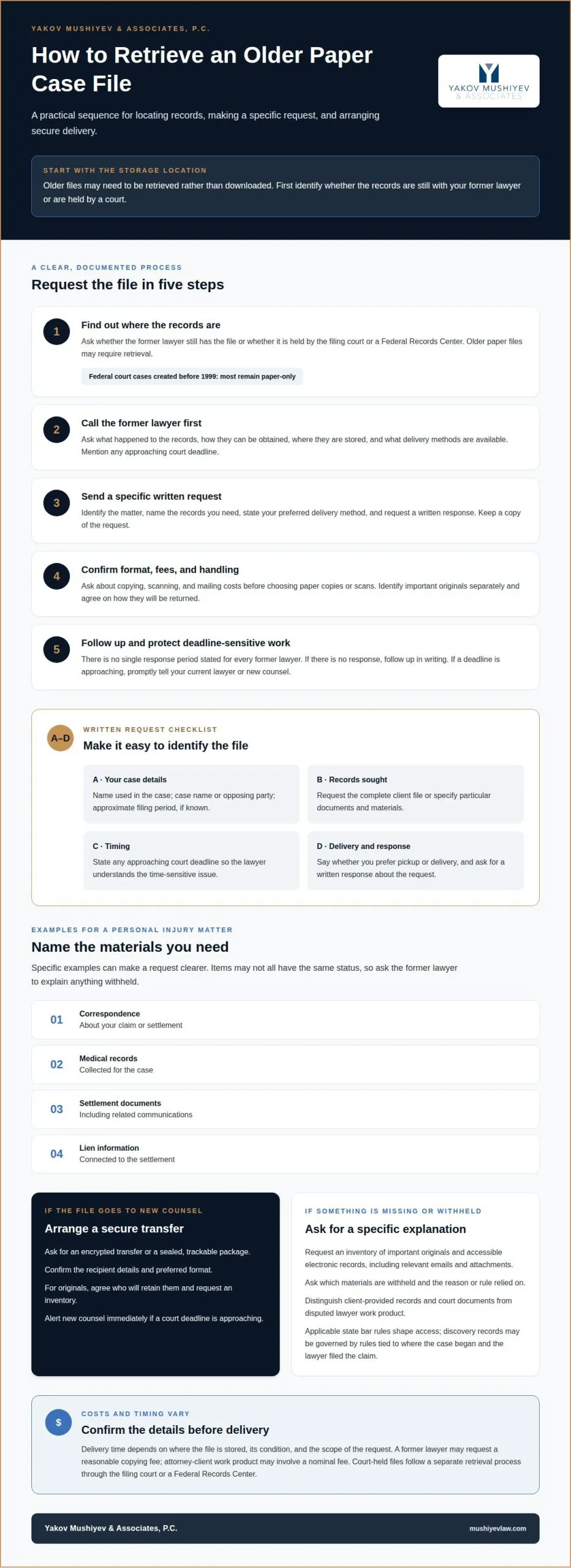
Older paper case files may require retrieval instead of a routine download. Most U.S. federal court cases created before 1999 remain paper-only, accessible through the filing court or a Federal Records Center. If you’re wondering how to get my case file from my old lawyer, first identify whether the records remain with the lawyer or the court.
File Delivery Timing
The time needed to deliver a file depends on where it is stored, its condition, and the scope of your request. Call first, then send a written request that identifies any approaching court deadline. If time is short, tell your current lawyer promptly so they can assess the next steps.
Copying, Scanning, and Mailing Costs
Copying, scanning, and mailing costs cover reproducing or delivering file materials. A former lawyer may request a reasonable copying fee, and attorney-client work product may involve a nominal fee. Ask about charges and delivery methods before choosing paper copies or scans. Court-held files follow a separate retrieval process through the filing court or Federal Records Center.
Written File Request Details
A written file request identifies the matter and the records you want. Include the name you used in the case, the case name or opposing party, and the approximate filing period, if known. Specify items such as correspondence, medical records, settlement documents, and lien information. State any deadline and request a written response. To learn how to get my case file from my old lawyer, start with a specific request you can document.
Secure Transfer to a New Lawyer
Secure transfer means sending case materials to new counsel in a way that protects confidential records. Ask the former lawyer to send the file directly to your new lawyer through an encrypted transfer or a sealed, trackable package. Confirm the recipient details and preferred format. For originals, agree who will retain them and request an inventory. If a court deadline is approaching, alert new counsel immediately and identify the date.
Records excluded from disclosure
A case file can include client records, court materials, and a lawyer’s work product. The applicable state bar rules help determine what the former lawyer must provide.
Original Documents and Electronic Files
Original documents are physical records, while electronic files are digital materials related to the case. They may need different handling, but the format alone doesn’t determine whether a record must be disclosed. Ask for an inventory and identify important originals, such as signed agreements or medical records, separately from copies.
A former lawyer may keep copies after providing your file. For original documents, request their return and agree on a documented delivery method. For electronic records, ask for accessible copies, including relevant emails and attachments. If a document is missing or withheld, ask the lawyer to identify it and explain why. This creates a clearer record than a general request for “everything.”
Lawyer Work Product
Lawyer work product consists of materials created through the lawyer’s work on the case. It may be treated differently from records you supplied, and a former lawyer may require a nominal fee to provide it. Ask which work-product materials are available and whether any portions will be withheld.
Your right to access a file depends on the applicable bar rules. The rules of the state where the lawyer is admitted govern your access rights; discovery records are governed by the rules of the state where the case began and the lawyer filed the claim. These rules can affect what the lawyer provides. If material is excluded, ask for the specific rule or reason rather than treating a general refusal as a complete answer.
If the lawyer withholds material, distinguish disputed work product from client-provided records and court documents. Ask for the available portions first, then seek guidance from a New York lawyer if the disagreement affects your ability to review the case or protect your interests.
What documents and materials must a lawyer give a client when representation ends?
A client file is the collection of records connected to a lawyer’s work on your matter. In states where the former lawyer is admitted, clients have an absolute right to copies of their files or portions, subject to a reasonable copying fee.
The applicable state bar rules shape what access includes. Discovery records are governed by the bar rules of the state where the case began and the lawyer filed the claim. This distinction matters if the lawyer handled a case across state lines or your request focuses on materials obtained through discovery.
For a personal injury matter, make your request specific. You can ask for:
- Correspondence about your claim or settlement.
- Medical records collected for the case.
- Settlement documents and related communications.
- Lien information connected to the settlement.
These examples clarify what you need without assuming every item has the same status. Ask for the complete client file or identify particular documents. If the representation ended after a settlement, you may still request a copy of your case file. State whether you prefer pickup or delivery, and ask for an explanation of any item withheld.
A former lawyer may keep copies after providing the file. The lawyer may also request a nominal fee for attorney-client work product. A retaining lien for unpaid or disputed fees is not permitted in every U.S. jurisdiction, so a fee dispute does not automatically determine whether the file can be withheld. Ask for the basis of any refusal in writing and keep the response with your request.
For a clear record, send your request in writing and name the case, the materials sought, and your preferred delivery method. If the lawyer refuses records you believe you’re entitled to receive, preserve your messages and seek guidance about the rules governing the lawyer and case. A focused request can help distinguish ordinary client records from disputed work product or fee issues.
How long does a former lawyer have to provide a client’s case file?
The time a former lawyer takes to locate and deliver records depends on the applicable professional rules and practical details, such as paper storage, file size, and disputed fees. No exact deadline applies across every situation described here.
Start by calling the former lawyer, then send a written request. Identify the case and the materials you need, and ask when they expect to provide them. A focused request for settlement records may be easier to process than a demand for every document from a lengthy matter. Ask whether the file is stored electronically or on paper.
Keep a clear timeline. Save your request, note when you sent it, and retain replies or unanswered follow-ups. If the lawyer doesn’t respond, send a trackable written follow-up and contact the firm’s managing attorney, if applicable. Explain why you need the records, especially if a new lawyer needs them to review your case.
An approaching court deadline makes the request more urgent, but it does not change the applicable rules. Tell your current lawyer about the deadline immediately and identify the missing records. For example, if you need a medical record or settlement document to prepare a filing, name that item rather than waiting for the entire file. Your lawyer can assess the deadline and determine the next procedural steps.
If communication fails, ask the state bar whether it can help you obtain the file. Keep copies of your written requests and messages. A fee dispute can complicate access, and rules about withholding a file vary by jurisdiction. Get guidance on the applicable rules before assuming payment resolves the issue.
If missing records are obstructing a review of your accident claim, get help reviewing your accident case and discuss what information may be needed to assess it.
Yakov Mushiyev & Associates, P.C
Yakov Mushiyev & Associates, P.C. can help you understand how missing case records relate to an accident claim. If you need a former lawyer’s file to review a car, truck, motorcycle, slip-and-fall, or pedestrian accident matter, those records may clarify the claim’s history, evidence, and settlement discussions.
Bring the documents you have, such as correspondence, medical records, or settlement papers. The firm can discuss its personal injury legal representation and whether it fits your situation. A file-access dispute by itself is different from seeking representation for an injury claim, so explain what happened and what guidance you need.
Contact Yakov Mushiyev & Associates, P.C. to discuss your accident-related case and available records.
Use your records to move forward
Knowing how to get my case file from my old lawyer is only the starting point. Next, consider what the records mean for your injury claim and what questions remain. A file can help frame that review, but it doesn’t replace a legal assessment of responsibility, injuries, and the claim’s history.
If your matter involves a car accident, truck accident, or slip and fall, Yakov Mushiyev & Associates, P.C. provides legal representation for those injury claims. The firm can discuss how the records relate to your situation and whether its representation fits your needs. Bring the documents you already have and explain what remains unresolved.
You don’t have to make every decision at once. Start with a clear conversation about your accident claim and the next steps available to you. Contact Yakov Mushiyev & Associates, P.C. to discuss your situation and move forward with greater clarity.
Frequently Asked Questions
How do I formally request my case file from a former lawyer?
Call the former lawyer first, then send a written request that clearly identifies your case and the records you want. Keep a dated copy and proof of delivery. If you’re in Rosedale, Rochdale, or elsewhere in Queens, a lawyer reviewing an accident claim may help identify which records are most useful. This general information isn’t legal advice for your specific case.
Can a lawyer withhold a case file over unpaid fees or a disputed bill?
It depends on the rules governing the lawyer and case. A retaining lien over a file for unpaid or disputed fees isn’t permitted in every U.S. jurisdiction. Ask the former lawyer to explain the fee dispute and identify in writing which records are being withheld. A state bar may help with file access. This general information isn’t legal advice for your specific case.