
Bayside sits close to the city line. Drive east on Northern Boulevard past Douglaston and Little Neck and you are in Nassau County within minutes, and Lyft cars cross that line all day in both directions. Most riders never think about it. But if one of those rides ends in a crash, a quiet question becomes important: where did the trip start? In New York, the answer can change which insurance rules apply to a Lyft. This article works through that question calmly, one piece at a time, for anyone hurt in a Lyft accident in Bayside.
The Short Answer First
A Lyft trip that starts in Queens falls under New York City’s TLC insurance minimums. A Lyft trip that starts in Nassau County falls under New York State’s rideshare rules instead. Same app, same kind of car, possibly a very different coverage picture.
Everything else in this article explains why that is, what stays the same either way, and how to prove where your ride began. If you would rather skip ahead to the bigger picture, our Bayside Lyft accident lawyer page covers the full claim from start to finish.
Why Does New York City Have Its Own Lyft Rules?
Inside the five boroughs, Lyft cars are for-hire vehicles licensed by the NYC Taxi and Limousine Commission. The driver holds a TLC driver license, the car has TLC plates, and the owner carries commercial for-hire insurance. The TLC sets the minimum amounts that insurance must provide.
New York State also has a rideshare law for transportation network companies such as Lyft. It requires $1.25 million in liability coverage while a passenger is aboard, but only on trips that start outside New York City, such as rides from Nassau or Westchester. The state law exempts cities of one million or more people, which leaves New York City to the TLC.
So there are two systems side by side, and Bayside is near the seam between them.
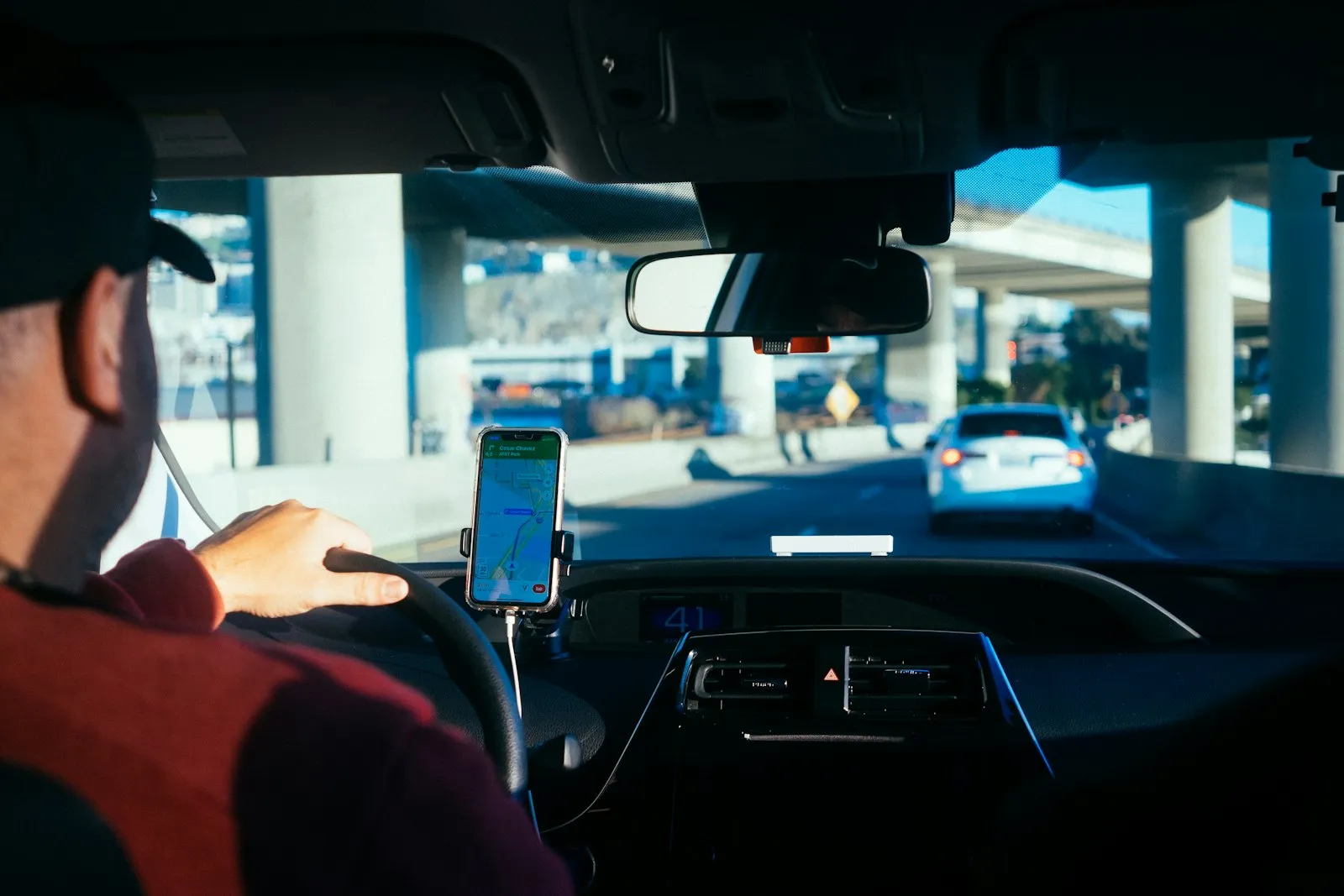
Two Hypothetical Rides to Bell Boulevard
The easiest way to see the difference is with two made-up trips. These are hypothetical examples, not real cases, and they leave out details that would matter in real life.
Hypothetical Ride A: A rider requests a Lyft from a home in Oakland Gardens to dinner on Bell Boulevard. On the way, another driver runs a light and hits the Lyft. The trip started in Queens.
Hypothetical Ride B: A different rider requests a Lyft from Great Neck, in Nassau County, to the same restaurant. The same crash happens at the same corner in Bayside. The trip started outside New York City.
| Question | Hypothetical Ride A (starts in Queens) | Hypothetical Ride B (starts in Nassau) |
|---|---|---|
| Which rules set the minimum coverage? | TLC minimums | State rideshare rules |
| Liability minimum | $100,000 per person / $300,000 per occurrence | $1.25 million while a passenger is aboard, under the state rule for trips outside NYC |
| PIP (no-fault) minimum | $100,000 per person since March 1, 2026 | Confirm from the policy |
| Who gets the no-fault application? | Insurer of the Lyft you rode in | Insurer of the Lyft you rode in |
| Can Lyft coverage above the minimum apply? | Possibly; must be confirmed from the insurer and trip record | Confirm from the insurer and trip record |
Notice what the crash location does not decide. Both crashes happened in Bayside. What differs is where each trip began. That is why your trip receipt is one of the most important documents in a Bayside Lyft case.
What Stays the Same Wherever the Ride Began?
A lot. The starting point affects coverage amounts, but most of New York’s injury rules are state law and follow you either way.
No-fault still comes first
New York is a no-fault state. Personal Injury Protection pays medical bills, part of lost earnings and other basic economic loss regardless of who caused the crash. A Lyft passenger applies to the insurer of the Lyft car, and a pedestrian or cyclist applies to the insurer of the car that struck them. The application is due within 30 days of the accident. The Department of Financial Services publishes consumer guidance on how no-fault works.
The serious injury threshold
To recover pain and suffering, your injury must fit one of the categories in Insurance Law 5102(d). Since the 2026 budget there are eight: death; dismemberment; significant disfigurement; fracture; loss of a fetus; permanent loss of use of a body organ, member, function or system; permanent consequential limitation of use of a body organ or member; and significant limitation of use of a body function or system. A higher policy limit does not lower this bar.
The 2026 fault rule
For motor-vehicle injury lawsuits filed on or after May 26, 2026, new CPLR 1411(b) bars recovery for a claimant whose fault is greater than the defendant’s, or the defendants’ combined; at 50% or less, the award is reduced proportionally. It applies whatever the accident date. Passengers are rarely affected, since they were not driving. Pedestrians, cyclists and drivers are.
The deadlines
- 30 days: no-fault application.
- 90 days: notice of claim if a New York City or MTA vehicle was involved.
- 2 years: wrongful death lawsuit, pecuniary damages only.
- 3 years: personal injury lawsuit under CPLR 214(5).
How Do You Prove Where the Trip Started?
The Lyft app already knows. Your job is to make sure that record survives. Take these steps in order:
- Open the ride in your Lyft history and screenshot the receipt, including the pickup address, start time, end time and route map.
- Screenshot the trip ID, driver name and plate as the app shows them.
- Report the crash in the app and save a copy of your report.
- Get a police report number at the scene. The app report does not replace it.
- Keep the app installed and your account open until your case is over.
- Write down anything the driver said about the trip, such as where they were coming from or whether they had another rider waiting.
The driver’s status also matters: offline, waiting for a request, on the way to a pickup, or carrying a passenger. If you were a pedestrian or another driver, you will not have the receipt, so the driver’s status and the trip record have to be requested. That is one reason to call a lawyer early.
What If the Other Driver Caused It and Has Little Insurance?
This is where the starting point can matter most. Uninsured and underinsured motorist coverage on TLC vehicles in New York City is far lower than under the state rideshare rule. On a Queens-start trip where a lightly insured driver hit your Lyft, your own supplementary uninsured/underinsured motorist (SUM) coverage, or that of a relative in your household, may become important. Check your own auto policy and keep a copy handy. We review every policy that might apply, not only the Lyft car’s.
Where Do Bayside Lyft Rides Cross the County Line?
A few routes carry most of the cross-county traffic through and around Bayside:
- Northern Boulevard runs east from Bayside through Douglaston and Little Neck and into Great Neck in Nassau. Many short Nassau-to-Bayside trips use it.
- The Long Island Expressway crosses the southern part of the area and continues into Nassau.
- The Cross Island Parkway follows the shore of Little Neck Bay and links with the Clearview Expressway and the Throgs Neck Bridge, so it carries rides between Queens, the Bronx and Long Island.
- The LIRR Port Washington Branch runs from Bayside station east toward Great Neck, and some riders take a Lyft the last stretch from a station on either side of the line.

Fort Totten Park and the Bell Boulevard Restaurant Strip
Two Bayside destinations draw riders from both sides of the county line. Fort Totten Park, at the neighborhood’s northern tip where Little Neck Bay meets the East River, is a former Army post now run by NYC Parks. Visitors come for the historic fort, events and the water views toward the Throgs Neck Bridge. The park lies at the end of local streets, so Lyft drop-offs and pickups gather near the entrance, and drivers turn around there to head back toward the Cross Island Parkway. Riders stepping out while other cars maneuver is the main hazard.
The Bell Boulevard restaurant strip near the Bayside LIRR station is the neighborhood’s best-known place for dinner and drinks. Visitors from Great Neck and other Nassau towns often ride in by Lyft and ride home the same way. Late at night, cars stop mid-block for pickups, riders cross between parked cars, and doors open toward the bike lane. For a crash on a return trip, remember the rule above: a ride that starts on Bell Boulevard is a New York City trip, even if it is headed to Nassau.
Lyft Accident FAQs: Where Your Ride Started
My Lyft started in Great Neck but crashed in Bayside. Which rules apply?
A trip that starts in Nassau generally falls under the state rideshare rules, not the TLC minimums, even if the crash happens in Queens. The trip record confirms the starting point.
My ride started on Bell Boulevard and was going to Nassau. Does the destination matter?
The TLC minimums apply to trips that start in New York City, so a ride from Bell Boulevard is treated as a city trip regardless of where it was headed.
Does a bigger policy mean my case is worth more?
Not by itself. A policy limit is a ceiling on what an insurer may pay, not a measure of your claim. Your injuries, treatment, losses and fault decide the value.
I was a pedestrian hit by a Lyft. How do I find out where its trip began?
You will not have the receipt, so the trip data has to be requested from the driver, the insurer or Lyft. A lawyer can send preservation requests before the records are hard to get.
I was driving for Lyft when I got hurt. Is this article about me?
Partly. Lyft drivers in New York City are generally covered for their own work injuries through the New York Black Car Fund, which is separate from a passenger’s claim. A claim against another at-fault driver may also be possible.
What if my crash happened before March 1, 2026?
For a Queens-start trip, the PIP requirement was cut from $200,000 to $100,000 on that date. A crash before it may still fall under the policy then in force.
Bayside Neighborhood FAQs
How close is Bayside to Nassau County?
Very close. Douglaston and Little Neck sit between Bayside and the county line, and Great Neck lies just beyond it.
Can you take the train from Bayside to Great Neck?
Yes. The LIRR Port Washington Branch runs from Bayside station through Douglaston and Little Neck to Great Neck.
What ZIP codes does Bayside use?
Mainly 11360 and 11361. Neighboring Oakland Gardens uses 11364.
Where would a Bayside injury lawsuit be filed?
Bayside is in Queens County, so injury suits are typically filed in Queens County Supreme Court in Jamaica. Court information is at nycourts.gov.
Is Fort Totten Park open to the public?
Yes. It is a public park run by NYC Parks, on Bayside’s northern waterfront off the Cross Island Parkway.
Which neighborhoods border Bayside to the west and south?
Whitestone and Auburndale are to the west, and Oakland Gardens and Fresh Meadows are to the south. We also handle Lyft accident claims in Fresh Meadows.
Fort Totten Park on the Map
Not Sure Where Your Ride Started? Let Us Check
Sorting out which rules apply is part of our free case review. Call 718.775.3110 any time, day or night, or contact us online. Our office is at 1 Cross Island Plaza, Suite 325, Rosedale, NY 11422, open Monday through Friday, 9 to 6. We can meet at your home, in the hospital or by video, in English, Russian or Spanish, and there is no fee unless we win.

Hurt in a yellow or green cab instead? See our Bayside taxi accident page. For the rest of our local services, visit our Bayside accident lawyer hub, read about our car accident practice, or browse our frequently asked questions.
Attorney Advertising. This is general information about New York law, not legal advice, and reading it does not create an attorney-client relationship. Every case depends on its own facts. Prior results do not guarantee a similar outcome.