
A personal injury settlement may not all go to the injured person. Subrogation rights are the rights of a third party, often a health insurer, to seek repayment from money recovered in a claim. Understanding what subrogation rights are in a personal injury case matters because a repayment claim can reduce what remains after settlement.
It’s reasonable to expect compensation to help cover the harm caused by an injury. But if an insurer paid accident-related medical bills, it may seek reimbursement from a settlement, depending on the coverage terms and rules that apply.
This article explains how subrogation works in New York personal injury cases, which health coverage rules may apply, and how repayment claims can affect settlement funds. You’ll also learn why identifying the plan and reviewing its claim can matter before settlement money is distributed.
Key Takeaways
- A health insurer or other payer may seek repayment for accident-related medical bills from a personal injury recovery, which can affect the amount you keep.
- Whether a health plan is self-funded or fully insured can affect which rules govern its repayment claim. According to U.S. Congress, the Employee Retirement Income Security Act of 1974 governs many employer-sponsored health insurance plans.
- If settlement funds are limited, the amount a plan seeks to recover may be negotiable, depending on the claim and circumstances.
- Review repayment claims before settlement funds are distributed, and make sure the claimed payments match the medical expenses paid on your behalf.
What Is Subrogation in Personal Injury Claims?
Subrogation allows an insurer to seek repayment for medical expenses it paid when an injured person recovers compensation from someone responsible. Understanding subrogation rights in a personal injury case also means knowing that attorney fees and costs do not automatically erase a lien. The plan terms and applicable rules determine whether a reduction applies.
Insurance Reimbursement After a Settlement
Insurance reimbursement after settlement means a health insurance company seeks repayment from the funds recovered for medical bills it previously paid. That claim matters because the settlement amount isn’t necessarily the amount the injured person keeps. For example, in a New York slip-and-fall case, an insurer paid $50,000 in medical bills, while the injured person received a $260,000 settlement. The insurer’s repayment claim must be addressed as the settlement is resolved.
Reimbursement From Settlements and Verdicts
Reimbursement from a settlement or verdict is a payer’s attempt to recover covered medical expenses from compensation obtained from the responsible party. A settlement resolves a claim by agreement, while a verdict follows a court’s decision. If the injured person later recovers compensation, the insurer may assert a repayment claim under the applicable coverage terms. That claim can reduce the funds available for other losses.
Reducing Reimbursement When Funds Are Insufficient
When recovery funds cannot cover both the injured person’s losses and a repayment claim, the amount sought may be negotiated based on the circumstances. An attorney can review the insurer’s payment records, compare them with accident-related medical bills, and challenge entries that do not match. Insurers may agree to reduce claims, but a reduction is not automatic. Plan terms, payments made, available settlement funds, and applicable rules all matter. Resolving the claim before distribution helps establish what remains for the injured person.
Exceptions for ERISA plans, workers’ compensation, Medicare, and Medicaid
Private health insurance, Medicare, Medicaid, VA benefits, and workers’ compensation may all seek repayment for injury-related medical expenses. The program that paid the bills and the rules governing its coverage shape the subrogation claim.
According to U.S. Congress, the Employee Retirement Income Security Act of 1974 governs many employer-sponsored health insurance plans. A self-funded employer plan uses the employer’s money to fund coverage, rather than insurance-company funds. ERISA-governed plans often seek full reimbursement, even where state rules limit recovery. A reduction is not guaranteed, even when an attorney requests one. Plan type therefore matters when assessing a claim.
Medicare, Medicaid, VA benefits, and workers’ compensation can also involve repayment claims after an injury recovery. For example, workers’ compensation may pay medical bills and other benefits while an injured worker seeks compensation from a driver. Medicare or Medicaid may pay accident-related expenses and then assert a claim connected to those payments. These programs follow different rules from private coverage, so the payer’s identity can affect how repayment is handled.
A personal injury claim may take months or years to resolve. During treatment, unpaid medical bills can go to collections, even while liability claims remain unresolved. Meanwhile, a health plan may receive contractual discounts from a medical provider. Those negotiated rates can reduce the amount paid for care, and the discount is passed on to the injured person. Keeping payment records helps clarify which expenses a payer actually covered.
Because these rules can affect both ongoing care and settlement funds, legal review can help identify the payer, plan type, and asserted claim. Get help with an injury claim when reimbursement demands complicate a Queens case.
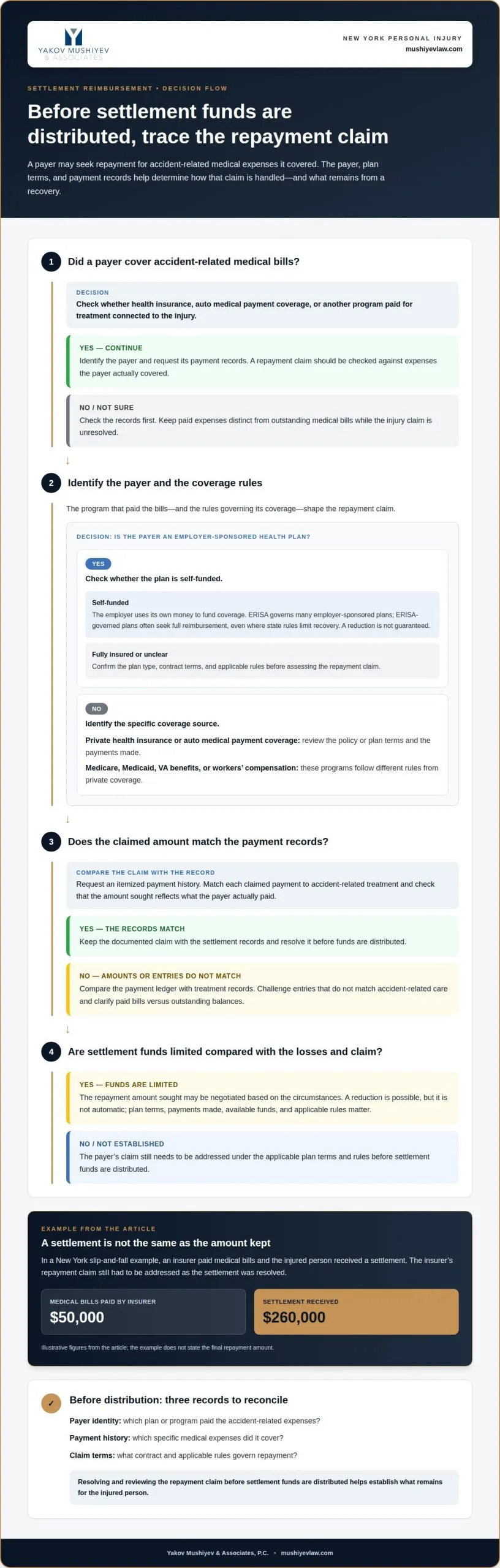
How health insurance subrogation works in New York personal injury cases
In New York, health insurance subrogation usually depends on the plan contract and the medical payments made. After an injury claim resolves, the insurer may seek repayment from the recovery for covered accident-related care.
Health Insurance and Medical Payment Coverage
Health insurance and automobile medical payment coverage can pay treatment expenses before a lawsuit or settlement concludes. The source of coverage matters because each policy or plan sets its own payment and recovery terms. After a Queens collision, for example, an injured person may submit treatment bills to health insurance or auto medical payment coverage.
Those payments can help keep care moving while fault remains disputed. The insurer’s records identify the medical expenses it paid, while the plan terms describe any repayment claim. A personal injury attorney can compare the payment ledger with accident-related treatment records and identify charges that may not belong in the claim. Accurate records help distinguish paid bills from outstanding balances.
Reimbursement From Personal Injury Settlements
Reimbursement from a personal injury settlement occurs when a health plan seeks repayment for covered expenses from funds recovered from the responsible party. The insurer’s claim depends on the applicable contract and the payments it made. Compare the amount sought with the plan’s records and treatment connected to the accident.
A lawyer can notify the insurer about the injury claim, request an itemized payment history, and review the asserted balance before settlement distribution. An insurer may require cooperation with its recovery efforts; failing to cooperate may leave the injured person responsible for amounts paid. If the at-fault party has no insurance, the insurer may pursue a claim directly against that party.
That payment record gives the insurer a specific basis to assert reimbursement, but it does not replace a review of the plan terms or the care provided.
How subrogation affects personal injury settlements
A subrogation claim can reduce the settlement funds left for an injured person. Before distributing a recovery, carefully review the claim and its basis.
Settlement Distribution and Subrogation Liens
A subrogation lien is a payer’s claim to recover covered payments from a personal injury settlement. Its amount can affect the funds available for medical expenses and other losses. In a car accident claim, the insurer’s subrogation clause and payment records help establish what it seeks to recover. The claim may be negotiable, and an insurer may agree to reduce it based on the circumstances.
A useful review compares the claimed payments with the care related to the accident and the coverage terms. Any mismatch can affect the amount demanded. The injured person’s attorney can address the claim as part of resolving the settlement, rather than treating the gross settlement as money ready for distribution.
Distributing Funds Before Paying a Lien
Distributing settlement funds before addressing a lien leaves the reimbursement claim unresolved. Settlement funds may need to be reviewed for subrogation claims before distribution to the client. That order matters: a settlement may resolve the claim against the responsible party, but it does not by itself settle the insurer’s separate repayment demand.
If funds have already been distributed, the unpaid claim still needs attention. The insurer may pursue repayment under the applicable coverage terms, so promptly identifying the claimant, payment history, and lien amount is important. Written notice may follow an agreement between insurers after settlement, making clear records valuable.
For a Queens injury settlement, get help reviewing a settlement claim before funds are distributed. A focused review can clarify the asserted lien and its effect on recovery.
Yakov Mushiyev & Associates, P.C.
Yakov Mushiyev & Associates, P.C. helps injured people understand how insurance repayment claims may affect a New York personal injury recovery. If an insurer asserts a subrogation claim after a car accident, truck accident, motorcycle accident, or slip and fall, legal representation can help clarify the payments claimed, applicable coverage terms, and potential effect on settlement funds.
These demands can complicate an already difficult recovery. A focused review can help you understand what the insurer seeks to recover and how the claim relates to your injury case. The firm represents people injured in these accidents and helps them pursue personal injury claims.
Contact Yakov Mushiyev & Associates, P.C. to discuss your injury claim and repayment concerns.
Protect Your Recovery Before Taking the Next Step
A settlement can shape your financial recovery long after negotiations end. Before agreeing to final terms or authorizing distribution, understand the obligations that may affect the funds and the records behind them. A clear picture can help you make an informed decision about what comes next.
Understanding what subrogation rights mean in a personal injury case can help you ask focused questions about repayment demands and their impact. The agreement, coverage, payment history, and settlement terms all matter. The right approach depends on how those details fit together in your claim.
If a repayment demand is complicating your next move, speak with Yakov Mushiyev & Associates, P.C. The firm represents people injured in car accidents, truck accidents, and slip and fall incidents. Contact the firm to discuss your injury claim and take your next step with greater clarity.
Frequently Asked Questions
What Is Subrogation?
Subrogation is a payer’s effort to recover money it paid for an injury from a recovery connected to that injury. For example, after a Queens collision, a health plan may seek repayment for treatment it covered. The plan terms and payment records help identify what it is claiming. This claim is separate from deciding who caused the accident or what other losses the injured person experienced.
Can You Negotiate the Payoff of a Subrogation Claim?
Yes, a subrogation claim may be negotiable, and the payer may agree to reduce it based on the circumstances. But an insurer does not have to accept a lower payoff. Negotiations can address whether each listed payment relates to the injury, whether the plan allows recovery, and how the claim affects the settlement available for the injured person’s losses.
Does Subrogation Apply to Government Health Insurance Programs?
Yes. Medicare and Medicaid may seek repayment for accident-related medical payments, and VA benefits or workers’ compensation payments may also lead to recovery claims. The specific program matters because its rules differ from those of a private health plan. For a Queens injury, identifying which program paid each bill helps separate its potential claim from other coverage and medical expenses.
How Can You Protect Your Rights Regarding Subrogation Claims?
Keep insurer letters, benefit statements, medical bills, and settlement communications together, then compare claimed payments with treatment related to the accident. Request an itemized payment history and the plan language supporting recovery. In Rosedale or elsewhere in Queens, an attorney can review disputed entries and communicate with the payer before settlement funds are distributed. Avoid agreeing to a payoff without understanding its basis.
Subrogation: What If the At-Fault Party Doesn’t Have Insurance?
Lack of insurance does not necessarily end a payer’s recovery effort. An insurer may bring a subrogation claim directly against the at-fault person. That possibility is separate from whether the injured person can collect compensation. The payer’s contract, payments, and recovery rights still matter. Keep any notice about a direct claim and share it with the attorney handling the injury matter.
What Is California’s “Made Whole Doctrine”?
California’s Made Whole Doctrine allows an injured person to argue that an insurer should not receive reimbursement until the settlement makes the person whole. It is a California rule, so do not assume it governs a Queens claim. The applicable plan and state rules matter. These FAQ answers provide general information, not legal advice for your specific case.