
What if arbitration changes who decides your injury case, and whether a jury ever hears it? If you’re recovering from an accident and asking what is arbitration in an injury lawsuit, it’s reasonable to want a clear answer before agreeing to anything. Arbitration can refer to different processes, and its outcome may be binding or nonbinding depending on the applicable rules and agreement.
That distinction matters. Arbitration may affect how your claim is decided and whether you can later ask a court for a trial. Taking part doesn’t always mean giving up every option, but the rules can depend on the type of claim and the terms involved.
This guide explains arbitration in plain English, compares it with mediation and trial, and outlines what to check before signing an agreement or participating in a hearing. You’ll learn why it’s important to clarify who chooses the arbitrator, what evidence you can present, and whether a decision can be challenged. If you’re considering arbitration after a car, construction, pedestrian, motorcycle, truck, or slip-and-fall accident in Queens, understanding the specific agreement and claim can help you make a more informed decision.
Key Takeaways
- To understand what arbitration means for an injury lawsuit, identify who will decide the dispute and whether the decision can bind you.
- Before participating, review the governing agreement and confirm which claims, parties, and evidence are included.
- The hearing format, document exchange, schedule, and timing of a decision depend on the applicable rules and forum.
- Clarify whether arbitration is proposed, required by a signed term, or part of a specific court or insurance procedure.
- Keep the arbitration proposal, signed documents, and claim correspondence. Identify whether the dispute concerns no-fault benefits, liability, or another issue.
What Is Arbitration in an Injury Lawsuit?
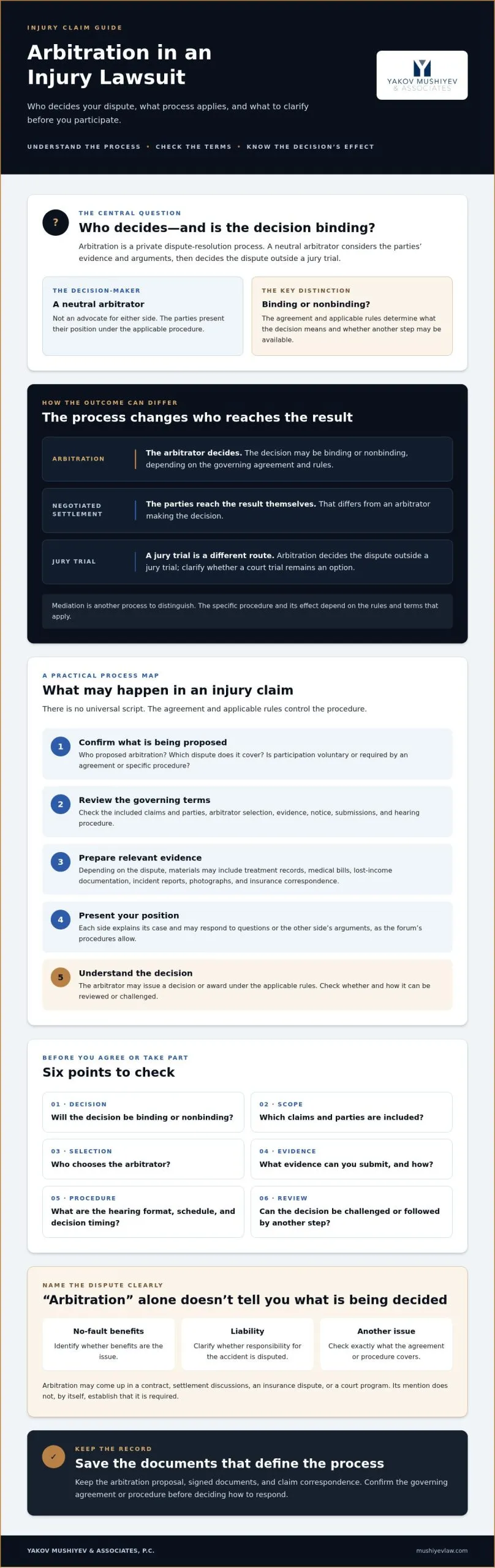
Arbitration is a private dispute-resolution process in which a neutral arbitrator considers the parties’ evidence and arguments, then decides the dispute outside a jury trial. Unlike a negotiated settlement, the arbitrator makes the decision; the parties don’t reach the result themselves. If you’re asking what is arbitration in an injury lawsuit, the key question is whether the decision will be binding or nonbinding. The governing agreement and applicable rules determine its effect.
Arbitration isn’t automatic just because an insurer, attorney, or opposing party brings it up. First, find out why it’s being proposed and whether a signed agreement, insurance procedure, or court program applies. For general background on arbitration in U.S. law, see Arbitration in the United States.
For a brief overview of arbitration in a personal injury case, watch this video:
Who takes part, and what does the arbitrator do?
The parties are the people or organizations involved in the dispute, such as an injured person and an insurer or another party. Each may have an attorney. The arbitrator is the neutral decision-maker, not an advocate for either side. Depending on the procedure, the parties may present relevant documents, testimony, and arguments for the arbitrator to consider. The format and evidence rules can vary, so don’t assume every arbitration works like a courtroom trial.
If arbitration is binding, the decision generally controls the dispute, subject to the rules that apply. Nonbinding arbitration may allow another step after the decision, but the available options depend on the governing procedure. Clarify this before you participate or sign anything.
Why might arbitration come up after an injury?
Arbitration may be mentioned in a contract, during settlement discussions, in an insurance dispute, or through a court program. The word alone doesn’t tell you what’s being decided. Ask who proposed arbitration, which claim it covers, and what document or procedure governs it.
That distinction matters in a New York injury case. A dispute about no-fault benefits, responsibility for an accident, or a proposed settlement may involve different processes. Reviewing the broader New York personal injury claim process can help you identify where arbitration fits and what to clarify before deciding how to respond.
How Does Arbitration Work in an Injury Claim?
Arbitration doesn’t follow one universal script. The steps below are a general guide, not a promise about how a particular New York claim will proceed. The arbitration agreement and applicable rules control the procedure, including who selects the arbitrator, what evidence may be submitted, how the hearing is conducted, and whether or how a decision can be reviewed.
- Confirm the process. Find out who proposed arbitration, which dispute it covers, and whether participation is voluntary or required under an agreement or specific procedure.
- Review the governing terms. Check which claims and parties are included, who chooses the arbitrator, and what the procedure says about evidence, notice, submissions, and the hearing.
- Prepare relevant evidence. Depending on the dispute, this may include treatment records, medical bills, employment or lost-income documentation, incident reports, photographs, and insurance correspondence. Organize materials with legal guidance and follow the applicable submission requirements.
- Attend and present your position. Each side explains its case and may respond to questions or the other side’s arguments, as the forum’s procedures allow.
- Receive the decision. The arbitrator may issue a decision or award in the form and under the terms set by the applicable rules.
What happens before the arbitration hearing?
Before preparing your case, identify the dispute being submitted and review how the arbitrator will be selected. Confirm whether you agreed to arbitration or whether another process requires it. Then check the actual agreement or rules for notice requirements, deadlines, document exchange, and hearing procedures. Don’t assume that a procedure used in another case applies to yours.
Gather records that help explain both the injury and its effects. Depending on the claim, that could include medical and employment records, documentation of expenses or missed work, incident details, and insurance communications. An attorney familiar with your injury claim can help assess what is relevant and how to present it.
What happens during and after the hearing?
The hearing may involve presentations, documents, testimony, or questions, but its format depends on the agreement and forum. For example, the American Arbitration Association (AAA) publishes information about its arbitration services and procedures. Check the rules that govern your case rather than assuming another provider’s process applies.
After considering the material presented, the arbitrator may issue an award or decision. Its timing, effect, and any available review options depend on the applicable procedure. If you’re unsure how a proposal or agreement affects your New York accident claim, consider discussing the specific documents and dispute with a New York injury lawyer.
Arbitration vs. Mediation, Settlement, and Trial: What Is Different?
These processes may all help resolve a dispute, but they give decision-making power to different people. If you’re considering what is arbitration in an injury lawsuit, focus on who decides the outcome, whether everyone must agree, and what effect the result may have.
| Process | Who facilitates or decides? | Is agreement needed? | Can the result bind? |
|---|---|---|---|
| Arbitration | A neutral arbitrator decides after considering the parties’ positions and evidence. | Participation may follow an agreement or an applicable procedure. | It may be binding or nonbinding, depending on the governing terms and rules. |
| Mediation | A neutral mediator helps the parties negotiate but generally doesn’t decide the dispute. | The parties must agree to a settlement. | A mediated discussion alone doesn’t resolve the claim; an accepted settlement may bind under its terms. |
| Settlement | The parties negotiate directly or with help from their representatives. | Yes. The parties must reach agreement. | An accepted settlement can resolve the claims covered by its terms. |
| Trial | A judge or jury decides disputed issues in court. | The parties don’t need to agree on the verdict. | The court enters a judgment, subject to applicable review procedures. |
Mediation is a facilitated negotiation, not a private trial. The mediator helps the parties explore possible terms but generally can’t impose an outcome. Arbitration is different: the arbitrator decides the dispute. Neither process is automatically faster, less expensive, or fairer for every injury claim.
Does arbitration mean you give up a jury trial?
It may affect whether a dispute goes to a jury. An enforceable agreement or applicable procedure can direct certain claims to arbitration, but don’t assume a clause covers every claim or applies in every circumstance. The wording, parties, and type of dispute matter. Before signing an arbitration agreement or waiving a jury trial, have a New York injury attorney review the precise language and explain what rights may be affected. Any right to appeal or challenge an arbitration decision also depends on the governing agreement and law.
Is New York no-fault arbitration the same as injury lawsuit arbitration?
No. New York no-fault arbitration generally concerns eligible disputes over first-party benefits sought from an injured person’s own auto insurer under a separate statutory and administrative framework. A third-party bodily-injury claim, by contrast, seeks damages from another responsible party. The no-fault process addresses its covered benefits dispute; an award doesn’t automatically decide a separate negligence lawsuit or determine damages in that case. Identify which claim is being arbitrated before drawing conclusions about what the process will resolve.
What Should You Check Before Agreeing to Injury-Claim Arbitration?
Before accepting an arbitration proposal, find out what it actually requires. Asking what is arbitration in an injury lawsuit is only the starting point; the agreement’s scope and effect matter just as much. Don’t sign or waive rights based only on an insurer’s verbal explanation. Request the relevant written terms and review them before responding.
Questions to ask about the agreement and process
Use these questions to identify what you’re being asked to accept:
- Why is arbitration being proposed? Is it optional, required by a signed agreement, or part of a specific court or insurance procedure?
- What exactly is included? Confirm which claims and parties are covered, what issues the arbitrator can decide, and what remedies may be considered.
- Who selects the arbitrator? Ask how the decision-maker is chosen and what process applies if there’s a concern about neutrality or a conflict of interest.
- How will the case be presented? Clarify which evidence may be submitted, whether there will be a hearing, what format it may use, and whether confidentiality terms apply.
- What happens after the decision? Check whether the result is binding, what review or challenge options may exist, and which rules govern any deadlines. Confirm the requirements in the actual agreement or applicable rules rather than relying on a general description.
These details can determine whether arbitration addresses one narrow issue or a larger part of your claim. Have a New York injury attorney review the precise language before you agree to it or give up a right.
How does the injury claim affect the decision?
The claim’s facts matter. Consider whether treatment is ongoing, how the injury affects work and daily life, whether responsibility for the accident is disputed, and what records support your position. Medical documentation, expense records, employment information, and evidence of how the incident happened may all be relevant, depending on the dispute and its rules.
There’s no reliable generic formula for deciding whether arbitration fits a particular injury claim. The potential value of the claim and the strength of the evidence require an individual assessment. If your case involves a collision, you can also review this car accident legal guidance for Queens.
Before you commit, get advice about the agreement and the claim it covers. Discuss your New York injury claim and arbitration documents with a lawyer who can help you understand the terms before you decide.
Next Steps for Arbitration in Your New York Injury Case
Before responding to an arbitration proposal, preserve the paperwork and identify what dispute is actually being considered. A disagreement over no-fault benefits is different from a claim about who caused an accident or what bodily-injury damages may be owed. The answer to what is arbitration in an injury lawsuit depends on the specific claim, documents, forum, and rules that apply.
Keep copies of the arbitration proposal, any signed agreement or clause, insurance and claim correspondence, and notices you receive. Note any dates listed in the documents, then verify what they require under the applicable rules. Don’t assume a date is unimportant or that a verbal explanation covers every term.
Prepare for a conversation with an attorney
Organize the information so you can get focused guidance. Bring the arbitration clause or proposal, insurance correspondence, and any notices. A short timeline can make the history easier to review:
- When and how the injury happened
- Treatment received and whether care is ongoing
- Important claim communications and responses
- Upcoming dates listed in a notice or agreement
Also write down your concerns. You might want to know whether a decision could bind you, what review options may exist, which evidence can be considered, and how the process addresses ongoing effects of the injury. Identifying these questions early helps keep the discussion focused on your circumstances.
Get advice before making a consequential decision
Legal guidance should account for the exact documents, type of claim, forum, and current New York rules. An attorney can review how the proposed process may affect your injury claim instead of relying on a generic description of arbitration. If you were hurt in a fall, learn more about slip-and-fall representation in Rosedale and Rochdale.
For injured people in Queens, Rosedale, and Rochdale, Yakov Mushiyev & Associates, P.C. represents clients in accident-related injury matters. Bring your questions and documents for a discussion of your claim and the choices in front of you. You don’t need to make a consequential decision based only on an unfamiliar legal term.
Request a complimentary initial assessment to discuss your New York injury claim.
Understand Your Options Before You Decide
Knowing what is arbitration in an injury lawsuit can help you ask the right questions, but the effect depends on the specific claim, agreement, and New York rules. Arbitration gives a neutral decision-maker authority to resolve a dispute, while mediation helps parties negotiate and a trial puts disputed issues before a judge or jury. Before you agree, confirm which claims are covered, whether the decision may bind you, what evidence and procedures apply, and what review options may be available.
Don’t rely on a verbal summary when your rights may be affected. Preserve the proposal, signed documents, claim correspondence, and notices, and get advice tailored to your circumstances. Yakov Mushiyev & Associates, P.C. represents people injured in motor vehicle, construction, and premises incidents in Rosedale, Rochdale, and Queens.
If you’re unsure how an arbitration proposal could affect your injury claim, request a complimentary initial assessment. A clearer understanding of your options can help you take your next step with greater confidence.
Frequently Asked Questions
Is arbitration binding in an injury lawsuit?
It can be binding or nonbinding, depending on the agreement and rules governing the arbitration. A binding award generally resolves the dispute, with limited options to challenge it. Some mandatory, nonbinding arbitration procedures may allow a party who isn’t in default to request a new trial within 30 days of the award. Don’t assume that option applies to your case. Check the specific procedure and current rules before relying on it.
Can I refuse arbitration in a personal injury case?
Whether you can refuse depends on why arbitration is being proposed. It may be voluntary, required by a signed agreement, or part of a specific court or insurance procedure. Ask who is proposing it and which claim it covers. Review the actual documents before responding; an insurer’s verbal explanation alone may not establish your obligations. A New York injury attorney can assess how the terms apply to your circumstances.
How is arbitration different from mediation in an injury claim?
In arbitration, a neutral arbitrator considers the parties’ positions and makes a decision under the applicable procedure. In mediation, a neutral mediator helps the parties negotiate but generally doesn’t decide the dispute. A mediator can help explore settlement terms, but the parties must agree to resolve the claim. Arbitration may produce a binding or nonbinding result, depending on the governing agreement and rules.
Does arbitration mean I cannot have a jury trial?
Not automatically. A valid agreement or applicable procedure may direct a covered dispute to arbitration instead of a jury trial, but the exact wording and circumstances matter. A clause may not cover every claim or party, and its enforceability depends on the applicable law. Before signing or waiving a jury trial, have a New York injury attorney review the document and explain how it may affect your rights.
Is New York no-fault arbitration the same as arbitration in a personal injury lawsuit?
No. New York no-fault arbitration concerns eligible disputes over first-party benefits sought from an injured person’s own auto insurer. A third-party injury lawsuit generally concerns responsibility for an accident and damages claimed from another party. These processes address different issues under different procedures. A no-fault arbitration award doesn’t automatically resolve a separate negligence claim, so identify exactly which dispute is being submitted.
What happens if I disagree with an arbitration decision?
Your options depend on whether the decision is binding, the agreement, and the rules governing the process. Some binding awards have limited grounds for challenge. In certain mandatory, nonbinding arbitrations, a party who isn’t in default may demand a new trial within 30 days of the award. Don’t assume that deadline or remedy applies to every arbitration. Review the notice and current rules promptly with a lawyer.
Should I have a lawyer review an arbitration agreement before signing?
Yes. Before signing, ask a lawyer to explain which claims and parties are covered, who selects the arbitrator, what evidence and procedures apply, whether the decision may bind you, and what review options exist. The effect depends on the document and your specific injury claim. Yakov Mushiyev & Associates, P.C. represents injured people in Queens, including Rosedale and Rochdale, in accident-related matters.