
A low offer or delayed response isn’t automatically proof of bad faith. The signs of an insurance company acting in bad faith are more likely to emerge through a documented pattern, such as repeated requests for the same records, shifting explanations, ignored evidence, or pressure to settle before you understand your injuries and the policy. When you’re already dealing with pain and uncertainty, those tactics can make it harder to protect your claim.
Your concerns deserve attention, but a disputed claim isn’t necessarily misconduct. New York applies a demanding standard, so the insurer’s conduct and the records behind it matter. This article explains which claim-handling behaviors may raise concern, what communications and documents to preserve, and how to respond carefully. You’ll also learn how a bad-faith concern differs from an ordinary disagreement over coverage or claim value, and when legal guidance may help, particularly after a serious injury, a dispute over fault, or pressure to accept a quick settlement. These steps can help injured people in Rosedale, Rochdale, and elsewhere in Queens keep a clearer record while they consider what to do next.
Key Takeaways
- Look for patterns in an insurer’s communication, investigation, and settlement conduct. A single delay or low offer doesn’t prove bad faith.
- The signs of an insurance company acting in bad faith may include shifting explanations, ignored evidence, or repeated unexplained delays. Document what happened and when.
- Compare the insurer’s stated reason with your policy, claim records, and available evidence to help distinguish concerning conduct from a legitimate dispute.
- Keep claim documents and communications, and respond calmly and factually to reasonable requests rather than overlooking or concealing information.
- Consider speaking with a New York injury lawyer if you’re seriously hurt, fault is disputed, or you’re pressured to settle before you understand your claim.
What Are Signs of an Insurance Company Acting in Bad Faith?
Unexplained delays and confusing messages from an insurer can leave injured people unsure what is happening to a claim or what to do next. That uncertainty is stressful, especially when medical needs and other losses demand attention. Record troubling interactions, but remember that one difficult exchange doesn’t automatically mean the insurer has acted unlawfully.
Bad faith is potentially improper claim handling assessed in light of the policy, the insurer’s obligations, and applicable law. The Insurance bad faith overview describes general examples, but it isn’t a guide to New York law. The legal analysis here can depend on the claim’s context and specific facts. The signs of an insurance company acting in bad faith may point to a larger pattern, but they aren’t proof by themselves.
For additional background, this video discusses elements that may be considered in a bad-faith claim:
Which insurer behaviors may raise a red flag?
Pay attention to repeated, unexplained delays, explanations that change without a clear reason, or an investigation that appears to overlook relevant records or other evidence. These are concerns to document, not automatic proof of misconduct. Context matters: a delay may have an explanation, and an insurer may need more information to evaluate a claim.
Ask the insurer to explain its position and reasons in writing. If it denies the claim or offers less than you requested, compare that explanation with the relevant policy language and evidence you submitted. Keep dated copies of letters, emails, forms, and notes from calls. Include what you sent, when you sent it, and how the insurer responded. A clear record can help show whether the insurer’s actions and explanations were consistent.
Does a denied or undervalued claim automatically mean bad faith?
No. An insurer may dispute whether coverage applies, who was responsible, whether an injury or loss was caused by the incident, or how much the claim is worth. Those disagreements can be legitimate depending on the policy and evidence. A disappointing outcome alone doesn’t establish bad faith.
The question is not only what decision the insurer made, but how it reached and communicated that decision. New York’s legal framework and any available remedy depend on the claim type, policy terms, and documented conduct. A lawyer can review those details before you conclude whether the handling warrants further action.
How Can You Recognize a Pattern of Bad-Faith Claim Handling?
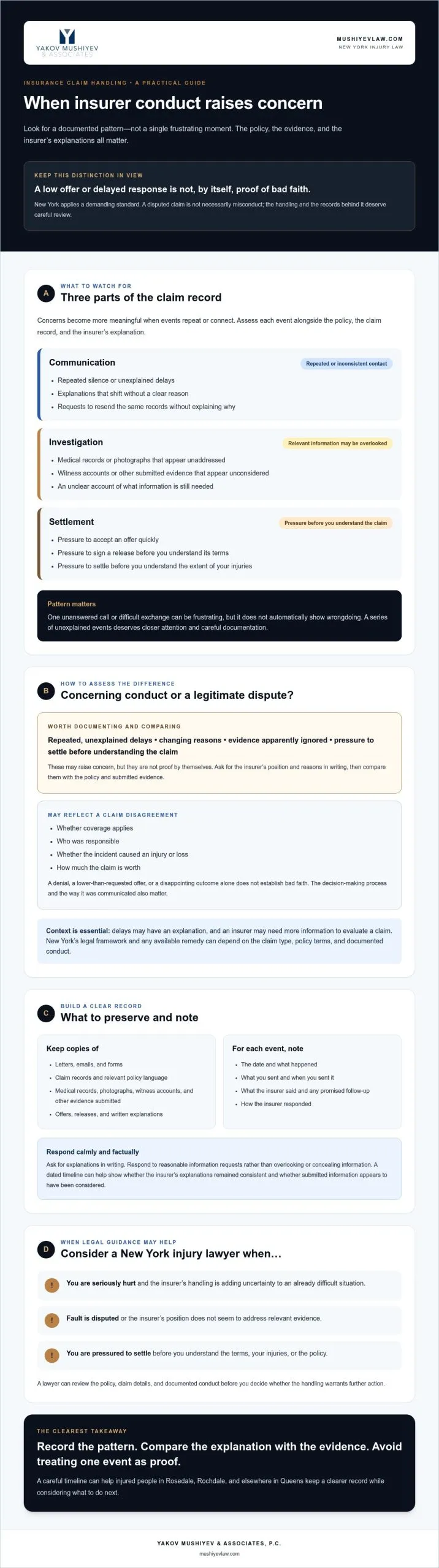
One unanswered call can be frustrating. A series of unexplained delays, shifting reasons, overlooked evidence, and pressure to settle deserves closer attention. The signs of an insurance company acting in bad faith are best assessed as a pattern, with each event considered alongside the policy, the claim record, and the insurer’s explanations.
Organize what you observe in three areas:
- Communication: repeated silence, inconsistent explanations, or requests to resend records without explaining why they’re needed.
- Investigation: relevant medical records, photographs, witness accounts, or other submitted information that appears to go unaddressed.
- Settlement: pressure to accept an offer or sign a release before you understand the terms or the extent of your injuries.
For each event, note the date, what happened, and what the insurer said. Don’t treat any single event as proof of wrongdoing. A timeline can show how the claim was handled over time, whether explanations remained consistent, and whether relevant information appears to have been considered.
Delays, silence, and shifting explanations
A reasonable investigation may take time, particularly if information is missing or disputed. The concern is unexplained inactivity or a changing account of what the insurer needs or why it is delaying a decision. Record contact dates, promised follow-ups, and each explanation. If the insurer asks again for records you already sent, reply in writing with the submission date, attach or identify the prior submission if appropriate, and ask what remains outstanding.
Keep your response factual, and save your message and any reply. That record may help clarify whether the repeated request reflects a processing issue, a genuine information gap, or a continuing pattern that warrants further questions.
A weak investigation or pressure to settle
Note unanswered questions about evidence or records that appear relevant to the claim. For example, if you submitted treatment information and the insurer’s explanation doesn’t address it, ask whether it was received and considered. A quick settlement offer or request for a release isn’t automatically unlawful, but signing can affect your rights. Keep the offer documents and related communications, and seek advice before signing terms you don’t understand.
If you believe the insurer’s conduct warrants regulatory attention, the New York State Department of Financial Services accepts consumer complaints through its insurance complaint portal. A complaint is not, by itself, a legal finding of bad faith. For help understanding how insurer conduct may affect an injury claim after a New York accident, consider speaking with counsel about New York injury claim guidance.
Bad Faith or a Legitimate Dispute? How to Assess the Difference
A claim can end in a denial, a disputed amount, or a disagreement about responsibility without the insurer acting in bad faith. Coverage may depend on policy wording, liability may be contested, and the value of an injury claim may be subject to debate. Compare the reason for the decision with the available evidence and the way the insurer handled the claim.
The signs of an insurance company acting in bad faith don’t establish a legal violation on their own. Use this comparison to organize questions, not as a substitute for reviewing the specific claim:
| Situation | What it may look like | Evidence that may clarify it |
|---|---|---|
| Ordinary disagreement | The insurer disputes coverage under a policy term, who caused the incident, whether the incident caused an injury, or the amount of loss. | The policy, denial or offer explanation, claim records, and evidence about fault, causation, or losses. |
| Concerning conduct | The insurer’s reasons appear to shift, relevant submitted information goes unaddressed, or explanations conflict with the claim file. | Dated letters and emails, call notes, proof of submitted records, and a timeline of changing explanations. |
| Unclear facts | The reason for a decision is vague, or it’s difficult to tell whether a document was reviewed. | A written request for clarification, copies of submitted materials, and the insurer’s response. |
Why claim type and policy language matter
A first-party claim is made by a policyholder to their own insurer under their policy. A third-party claim is brought by an injured person against another party’s insurer. These relationships differ, and the policy language, claim record, and applicable legal rules may affect how each situation is assessed. Don’t assume one bad-faith test applies to every claim. New York statutory law and case law require case-specific review.
What evidence can help distinguish the two?
Start with the insurer’s stated reason. Compare it with the relevant policy terms and the information you provided, such as medical records, photographs, or other claim documents. Then review later communications: did the explanation stay consistent, and did the insurer address information that could affect its decision?
A chronology can make the record easier to assess. List key dates, what you submitted, what the insurer said, and any follow-up. That sequence may help counsel determine whether the issue is a legitimate dispute, a communication breakdown, or conduct that merits closer legal review. Evidence informs that assessment, but it doesn’t guarantee a legal finding or recovery.
What Should You Do If You Suspect Bad Faith in New York?
If an insurer’s handling of your injury claim feels inconsistent or unfair, focus first on creating a reliable record. The signs of an insurance company acting in bad faith can be difficult to assess while a claim is still unfolding. A clear, factual file can help you and a lawyer evaluate what happened without relying on assumptions about an adjuster’s intent.
Build a clear claim-handling timeline
Keep records in one secure, organized place. Save the policy, claim letters, denial notices, medical records, bills, emails, portal messages, and settlement offers. For phone calls, note the date, the person’s name, the main points discussed, any requested documents, and promised follow-up. Keep notes neutral: record what was said and done, not what you suspect motivated it.
Use this checklist to protect the record and communicate carefully:
- Preserve documents. Keep copies of your policy, claim correspondence, medical records, bills, and supporting materials. Retain the original files when possible.
- Build a dated timeline. Log calls, emails, requests, submissions, explanations, and promised responses. Save proof of when you sent requested information.
- Write calmly and factually. Ask for unclear decisions or repeated document requests to be explained in writing. Correct mistakes and respond truthfully to legitimate requests.
- Review before signing. Keep settlement communications and releases. Don’t sign a document you don’t understand; ask questions and get advice about its terms first.
- Seek case-specific guidance. Have a qualified lawyer review the claim record, policy terms, and relevant time limits as soon as practical.
Don’t conceal relevant facts or ignore reasonable requests. If you’re unsure what the insurer is asking for, request clarification in writing and keep your response. Filing or considering a complaint doesn’t replace checking the deadlines that may apply to your particular claim. Don’t assume a general deadline applies to every policy or legal issue; ask counsel to verify time limits promptly.
Get New York legal guidance before escalating
An injury attorney can review the policy and claim communications, assess what evidence was submitted, and consider whether the dispute involves your own insurer or another party’s insurer. That context matters. For an overview of the broader process, see the New York personal injury claim process. If the dispute follows a motor vehicle injury, car accident legal guidance in Queens may offer relevant context.
If you have an injury claim in Rosedale, Rochdale, or elsewhere in Queens and need help understanding your next steps, discuss your injury claim with counsel.
When Should You Speak With an Injury Lawyer About an Insurer?
Consider speaking with an injury lawyer if you’re seriously hurt, the insurer’s position is unclear, fault is disputed, or you’re being pressed to accept a settlement before you understand its terms or the extent of your injuries. The signs of an insurance company acting in bad faith can raise important questions, but a lawyer can assess the claim file and explain what the facts may support under New York law. A denial or low offer alone doesn’t establish misconduct.
Counsel may review insurer communications, relevant policy language, medical and incident records, and whether the claim is against your own insurer or another party’s insurer. That review can help distinguish an ordinary dispute over coverage, responsibility, or value from handling that may warrant closer investigation. It doesn’t guarantee a particular finding or outcome.
What to bring to an initial case discussion
You don’t need to have every document ready to ask questions. Gather what you can, and note what’s missing. Useful materials may include:
- Your insurance policy, if available, and the claim number.
- Denial, reservation-of-rights, or other claim letters, along with settlement offers and related communications.
- A dated contact log showing calls, requests, documents submitted, and promised follow-ups.
- Relevant medical records and bills, repair estimates, wage-loss information, and incident records, depending on the injury and claim.
Before the discussion, write down the insurer’s stated reasons for its decision and any questions you have about those reasons. Ask which deadlines may apply and have them verified for your specific claim. Time limits can depend on the policy, claim type, and legal issue, so don’t rely on a general estimate.
How an attorney can help you evaluate next steps
A lawyer can organize the record, compare the insurer’s explanations with the policy and submitted evidence, and discuss possible next steps. Those options depend on the facts. A review doesn’t mean a lawsuit is necessary, and it can’t promise a particular recovery. If your concern follows a premises injury, learn more about slip-and-fall representation in Queens.
Yakov Mushiyev & Associates, P.C. represents people injured in New York, including in car, truck, motorcycle, pedestrian, construction, and slip-and-fall incidents. If you’re unsure how an insurer’s conduct affects your injury claim, you can contact the firm to discuss your New York injury claim. A measured review can help you understand the issues and make informed decisions without assuming the insurer acted improperly.
Protect Your Injury Claim With a Clear Next Step
A difficult claim decision doesn’t automatically mean bad faith. The signs of an insurance company acting in bad faith are more meaningful when they form a documented pattern, such as unexplained delays, shifting explanations, or relevant evidence left unaddressed. Keep communications and claim records organized, compare the insurer’s reasons with the policy and submitted information, and avoid signing settlement documents you don’t understand.
New York law can depend on the claim type, policy terms, and specific facts. A lawyer can review the file and help you understand whether the insurer’s conduct appears to be an ordinary dispute or warrants further investigation. Yakov Mushiyev & Associates, P.C. represents New York accident victims in motor vehicle, construction, and premises-liability injury claims. The firm can discuss how an insurer’s actions may affect your injury claim, without promising a particular outcome.
If you’re in Rosedale, Rochdale, or elsewhere in Queens and want to understand your options, contact Yakov Mushiyev & Associates, P.C. to discuss your injury claim. A careful review can help you move forward with greater clarity and confidence.
Frequently Asked Questions
What are the most common signs of an insurance company acting in bad faith?
Common signs of an insurance company acting in bad faith may include repeated unexplained delays, inconsistent reasons for a decision, failure to address relevant evidence you submitted, or pressure to accept unclear settlement terms. These are warning signs, not automatic proof of misconduct. The policy, claim type, full record, and New York law all matter. Preserve communications and documents, then seek individualized legal guidance before drawing conclusions about the insurer’s conduct.
Can an insurance company deny a claim without acting in bad faith?
Yes. An insurer may deny a claim because of a genuine dispute about coverage, liability, causation, policy exclusions, or the available evidence. Disagreeing with the decision doesn’t, by itself, establish bad faith. Review the written denial alongside the relevant policy language and claim records. Keep copies of communications and submitted evidence. A lawyer can assess the specific facts and explain whether the insurer’s reasoning and handling raise further concerns under New York law.
How long can an insurance company take to investigate a claim in New York?
There isn’t one investigation timeline that applies to every claim and circumstance. The timing may depend on the claim type, policy terms, information needed, and applicable New York requirements. Record when you submitted documents and contacted the insurer, and request a written status update if you’re unsure what remains outstanding. Keep the response. If delays seem unexplained or a deadline may be approaching, seek prompt legal review and have any specific time limits verified.
What should I do if an insurance adjuster keeps delaying my claim?
Keep a dated log of calls and messages, save letters and emails, and retain proof of documents you submitted. Ask the adjuster in writing to identify outstanding items and explain the status of the investigation. Keep your communication calm and factual, and save the response. A delay alone doesn’t prove bad faith. If the insurer remains unresponsive or the delay affects your injury claim, an attorney can review the record and discuss possible next steps under New York law.
Does a low settlement offer prove an insurer is acting in bad faith?
No. A low offer may reflect a dispute about liability, damages, medical evidence, or policy limits. The surrounding claim handling may still deserve review, but the amount alone doesn’t establish bad faith. Compare the offer and the insurer’s explanation with your records and the policy. Don’t sign a release until you understand its terms and how it may affect your rights. Consider case-specific legal advice, especially if your injuries or future treatment remain uncertain.
Can I sue an insurance company for bad faith in New York?
Whether a legal claim or remedy may be available depends on your relationship to the insurer, the policy, the conduct at issue, and current New York law. Insurance Law § 2601 addresses unfair claim settlement practices, but it doesn’t give individuals a private right to sue solely for a violation of that section. Other legal theories may depend on the circumstances. Ask a New York attorney to review the complete record and verify the applicable standard before deciding how to proceed.
What evidence should I keep if I suspect an insurer is mishandling my claim?
Preserve your policy, claim forms, denial letters, settlement offers, emails, portal messages, and relevant medical or repair records. Keep a dated log of calls, submissions, and responses, and organize copies by date while retaining originals when possible. Don’t edit records or speculate about an adjuster’s motives in your notes. A clear timeline can help an attorney assess what happened and compare the insurer’s explanations with the documents and evidence in your file.
Should I hire a lawyer if an insurance company delays or denies my injury claim?
Legal advice may help if the insurer’s explanations keep changing, submitted evidence goes unaddressed, a release is unclear, or the dispute is affecting an injury claim. A lawyer can review the policy and claim file, explain possible options, and help identify time limits that should be checked promptly. No outcome can be guaranteed. If your injury happened in Rosedale, Rochdale, or elsewhere in Queens, bring the relevant records to an initial discussion so counsel can assess your situation.