
Filing a car accident claim in Nassau County starts with a few practical decisions: which insurer to contact, what evidence to provide, and how to respond if an inspection or estimate slows things down. A claim can be reported and still leave your car sitting unrepaired if damage isn’t documented or you pursue a coverage route that doesn’t fit your situation.
It’s understandable to want a clear answer and a repair date after a crash. The next steps depend on your coverage, who may be responsible, and whether anyone was injured. A vehicle-damage claim also involves different questions from an injury claim, so don’t assume one process resolves both.
This guide explains how to document the damage, consider possible claim routes, communicate with insurers, and move repairs forward. It also covers choosing a repair shop, asking about rental coverage, and responding to a possible total-loss decision. If someone was injured or fault is disputed, you may need to address those issues alongside the repair process.
Key Takeaways
- Before filing a car accident claim in Nassau County, photograph vehicle damage and crash-scene details when it’s safe, and keep your records organized.
- When you contact an insurer, stick to verified facts, request a claim number, and ask which documents or inspections it requires.
- Compare using your own collision coverage with pursuing the other driver’s liability coverage. Policy terms and fault can affect which route fits.
- An initial repair estimate may miss hidden damage. Ask the repair shop how it documents additional damage and submits estimate supplements.
- Injuries, disputed fault, denied coverage, or pressure to settle may call for legal guidance. Routine repair questions alone may not.
After a Nassau County crash, what should you do before filing a repair claim?
First, check for injuries and move to a safe place if you can. Contact emergency services when needed and follow responders’ instructions. Deal with safety before insurance paperwork. Once the scene is safe, document what happened before vehicles are moved or repairs begin, if you can do so safely. These records can help you describe the damage and support filing a car accident claim in Nassau County.
Exchange names, contact information, driver’s license and vehicle details, and insurance company and policy information. Note witnesses’ names and contact details, too. Stick to what you observed. Don’t guess about fault or agree to a version of events you can’t verify.
This video discusses a separate decision that may come up later in a claim: how to think about a first settlement offer.
What evidence should you collect at the scene?
When it’s safe, take wide photos showing vehicle positions and the surrounding scene, then close-ups of visible damage. Capture road conditions, signs or signals, debris, and identifying details such as license plates. Don’t step into traffic or another unsafe area to take a photo. Before leaving, record:
- The date, approximate location, weather, and road conditions.
- Names and contact details for drivers and witnesses, along with vehicle and insurer information.
- Any incident or report details provided by responding officers.
Keep receipts and records for towing, storage, and temporary transportation. They can help you track expenses and answer questions from the insurer. If you’re unsure what coverage may apply, review your policy and consult these automobile insurance basics for general terminology. Your policy terms determine your coverage.
Which crash report and local agency information matters?
Find out which police department or other agency responded based on the exact crash location. In Nassau County, the responsible agency and report process can depend on where the collision happened. Ask the responding agency how to request the report and whether you’re eligible to obtain it. You can also check current report instructions with the New York State DMV. Requirements and deadlines can depend on the circumstances, so verify current rules with an official source.
A crash report records information gathered at the scene. It is not a final ruling on who is legally at fault. Keep your own photos, notes, and documents, too. They may help clarify questions as the claim proceeds.
How to open a car accident repair claim in Nassau County?
Start by checking your policy and promptly notifying the insurer that may handle the vehicle damage. Depending on your coverage and the circumstances, that could be your own insurer or the other driver’s insurer. Provide the crash date and location, the vehicles involved, a factual description of what happened, and the damage you’ve observed. Ask what documents, photos, or inspections are needed before repairs proceed.
Don’t assume the other driver’s insurer will approve repairs immediately. It may investigate whether its policyholder was responsible and what coverage applies before responding to your property-damage claim. Keep a dated record of when you reported the crash, what you submitted, and what the insurer says it still needs. Filing a car accident claim in Nassau County is easier to track when you keep a paper trail from the first call.
Should you contact your own insurer or the other driver’s insurer?
Your collision coverage may provide a route through your own policy, subject to its terms, deductible, and applicable conditions. A claim against the other driver’s property-damage liability coverage depends on liability and available coverage, so that insurer may need time to investigate. Ask each insurer how inspections work, whether you must pay a deductible, how reimbursement is handled, and whether your insurer may seek recovery from another party through subrogation. Compare the actual policy terms and processes rather than choosing based on assumptions.
What should you say and keep when reporting the claim?
Describe what you know, not what you’re guessing. If you don’t know a vehicle’s speed or aren’t sure who had the right of way, say so rather than speculating. Report any symptoms honestly, and update the appropriate insurer if circumstances change. Property damage, bodily injury, and New York No-Fault benefits are distinct issues. No-Fault generally concerns eligible injury-related expenses, not vehicle repairs. The current filing deadline for No-Fault benefits is 30 days after the crash, so verify the applicable requirements promptly with your insurer or an authoritative New York source.
A claim number is the insurer’s reference for tracking your report, documents, and follow-up communications. Save it with the adjuster’s name and contact details, written messages, estimates, inspection information, and copies of everything you submit. Ask the insurer to confirm key instructions in writing. Before authorizing repair work, review New York DMV guidance on consumer rights in auto repair, including estimates and work authorization.
If the crash also caused injuries or led to a dispute over responsibility, the repair claim may be only one part of the problem. You can review car accident legal representation and confirm directly whether the firm handles your Nassau County matter and the type of claim involved.
Which repair claim route fits your coverage and accident circumstances?
The right route depends on your policy, available coverage, and whether responsibility for the crash is disputed. Your own collision coverage and another driver’s property-damage liability coverage are separate options, not interchangeable promises of payment. As you consider filing a car accident claim in Nassau County, ask each insurer how its process applies to your specific circumstances.
| Possible route | What to consider |
|---|---|
| Your collision coverage | Check whether your policy covers the damage, what deductible may apply, and whether the insurer needs to inspect the vehicle or approve an estimate before repairs. |
| Other driver’s liability coverage | The insurer may investigate fault, policy coverage, and damage before deciding how to respond. Ask what evidence it needs and whether its review could affect repair timing. |
| Coverage or liability dispute | Preserve photos, estimates, correspondence, and other records. Request the insurer’s position and reasons in writing, then review your policy and available options. |
What changes when you use your own collision coverage?
If collision coverage applies, making a claim through your own policy may provide a route to address repairs while responsibility is still being investigated. Confirm the deductible, inspection requirements, estimate process, and whether you need authorization before work begins. Ask whether your insurer may later seek recovery from another party and how that could affect reimbursement. Coverage and payment depend on the policy language and circumstances, so get the details directly from your insurer.
Rental reimbursement is a separate coverage question. Check whether your policy includes it, what limits or conditions apply, and whether the insurer requires advance approval. If you’re pursuing the other driver’s insurer, ask whether rental expenses can be considered and what documentation it expects. Don’t assume a rental will be covered simply because your car is being repaired.
What if the other driver’s insurer disputes fault or coverage?
An investigation can affect whether and when the other insurer addresses vehicle damage, but don’t assume what its conclusion will be. Keep supporting records, including the crash report, photos, estimates, and relevant communications. Ask for a written explanation if the insurer disputes responsibility or coverage, and check your own policy for options while the issue remains unresolved. If you believe an insurer has handled a complaint improperly, the New York Department of Financial Services explains how to file an insurance complaint.
No-Fault coverage generally concerns eligible injury-related expenses, not vehicle repairs. An injury claim may proceed separately from a repair claim, with its own evidence and requirements. Don’t treat a repair estimate or insurer decision as resolving an injury matter. For related injury-claim context, see this Queens car accident claim guide.
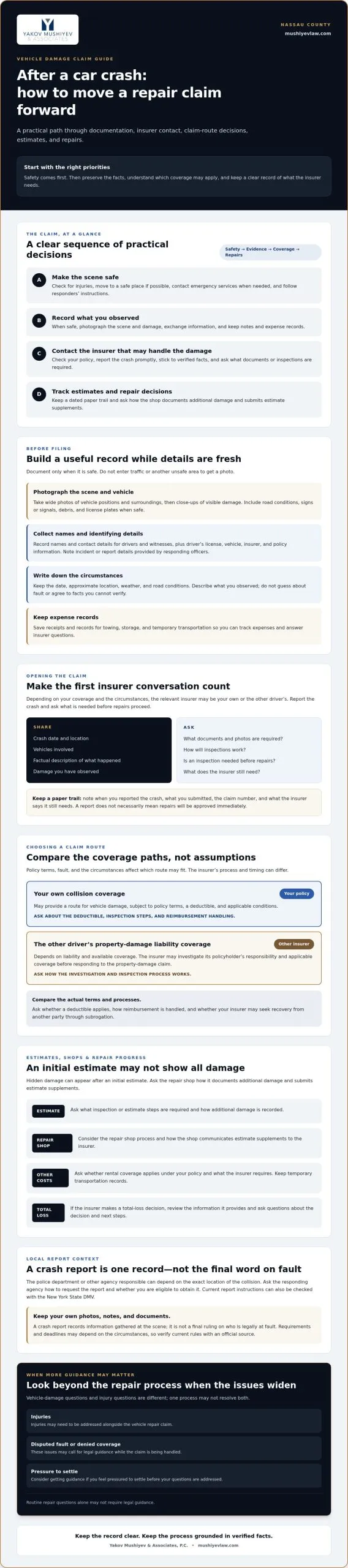
How do estimates, inspections, repair shops, and total-loss decisions work?
After you report damage, the insurer may arrange an inspection or ask for photos, then prepare an estimate based on the damage it can assess. The process varies by insurer, policy, and claim route. Before authorizing work, ask what the estimate covers, whether the insurer needs to inspect the car, and what approval steps apply. Check current New York guidance on choosing a repair shop and insurer steering rather than relying on assumptions.
An estimate is a starting point, not proof that every repair need has been identified. Damage hidden beneath a bumper or other parts may become visible only during disassembly. Ask the repair facility how it documents newly discovered damage and sends a supplement, a request to revise the estimate, to the insurer for review.
How should you compare an insurer estimate with a repair-shop estimate?
Compare the estimates line by line. Check which parts and labor are listed, what visible damage is included, and whether any work is excluded, pending inspection, or subject to approval. If the shop finds additional damage, ask it to photograph and describe the findings and communicate them to the insurer before proceeding with disputed work. Get explanations in writing, especially if you’re asked to pay out of pocket or approve work that differs from the insurer’s estimate.
What should you check before authorizing repairs or accepting a total-loss decision?
Read the written estimate and authorization documents before signing. Confirm the deductible, payment arrangements, and the work you’re agreeing to. New York DMV guidance on consumer rights in auto repair can help you understand estimates and repair authorizations. Keep copies of signed documents and communications. Don’t assume the insurer’s estimate automatically authorizes the shop to begin all repairs.
If the insurer considers the vehicle a total loss, ask for its written explanation and review the valuation information it relied on, including details about your vehicle’s condition and equipment. The decision can depend on the policy, vehicle facts, and applicable rules. Don’t rely on a universal formula or deadline. Verify the process and any response requirements with the insurer and current New York sources before accepting an offer or signing documents.
Repair questions may be routine, but an injury or a serious dispute about who caused the crash can raise separate legal concerns. If you’re facing either issue, you can discuss your car accident circumstances with the firm and confirm whether it handles your Nassau County matter and the type of claim involved.
When should you get legal guidance for a Nassau County car accident claim?
A routine repair estimate or insurer inspection doesn’t automatically mean you need a lawyer. Legal guidance may be more relevant if someone was injured or the repair issue is tied to a wider dispute about responsibility, coverage, or an injury claim. While filing a car accident claim in Nassau County, consider asking for help if the insurer denies coverage, the drivers’ accounts conflict, the vehicle’s value is disputed, or available insurance may not cover the loss.
Take care if an insurer asks you to sign a release or settlement document. Understand what it covers and whether it could affect other parts of your claim before agreeing. If you’re uncertain, seek advice promptly. General information can explain common claim issues, but it can’t determine your rights or the best course of action in a specific case.
Which warning signs justify asking an attorney about the claim?
Pay attention to pressure to settle before you understand the damage or any injury, disagreements about fault, or a denial you can’t reconcile with your policy or the evidence. Serious vehicle damage may also lead to a disputed valuation or questions about whether available coverage is sufficient. These are reasons to ask questions, not proof that a particular legal outcome is available.
Yakov Mushiyev & Associates, P.C. represents people in New York accident-related injury matters, including car accidents, with a local focus in Rosedale and Rochdale, Queens. Confirm directly whether the firm handles your Nassau County location and whether it can represent you in a property-damage-only matter. For broader context on injury claims, see the firm’s New York personal injury claim process guide.
What information should you bring to an initial case assessment?
Organize records that show what happened and how the claim has progressed. Useful documents may include the crash report, scene and vehicle photos, your policy information, insurer correspondence, repair estimates, and repair or towing records. If you also have an injury claim, bring relevant medical documentation. Ask in advance what materials are useful and whether the firm handles your location and type of issue.
If you’re considering an initial assessment, contact the firm to ask whether it can review your circumstances, whether it handles Nassau County matters and property-damage or injury claims, and what fees and scope of representation would apply. Clear answers can help you decide whether legal guidance fits your situation.
Move forward with a clear plan for your claim
Filing a car accident claim in Nassau County is easier to manage when you know which coverage route you’re pursuing, keep a record of insurer decisions, and review estimates before authorizing repairs. If new damage appears or the insurer disputes fault, ask for the reasoning and next steps in writing. A clear record can help you decide what to address next.
Repair disputes don’t always require legal help. But injuries, a denied claim, disputed liability, or pressure to sign a settlement can raise issues beyond fixing your vehicle. Yakov Mushiyev & Associates, P.C. represents people in car accident matters. The firm has a local focus in Rosedale and Rochdale, Queens. Confirm directly whether it handles your Nassau County matter and whether it can address your injury or property-damage issue.
Contact Yakov Mushiyev & Associates, P.C. to discuss your accident and ask whether the firm can help with your Nassau County claim, including the matter’s scope and any applicable fees. Clear information can help you decide on a practical next step.
Frequently Asked Questions
How do I file a car accident claim in Nassau County?
Start by making sure everyone is safe, then notify the insurer that may cover the vehicle damage. Share verified crash details, request a claim number, and ask what documents, photos, or inspections it requires. Keep copies of your policy information, communications, estimates, and receipts. The responding agency and crash-report process can depend on where the collision occurred, so confirm report access and applicable requirements with that agency or the New York State DMV.
Should I file a repair claim with my insurance or the other driver’s insurer?
Either route may be relevant, depending on your collision coverage, the other driver’s liability coverage, and whether fault is disputed. Your own policy may involve a deductible and its own inspection process. The other insurer may investigate responsibility and coverage before addressing damage. Ask about estimates, rental reimbursement, deductibles, and possible recovery from another party. Compare the actual policy terms and claim procedures rather than assuming either route guarantees faster repairs or payment.
Can I choose my own repair shop after a car accident in New York?
Before selecting a shop, check your policy and ask the insurer whether it has inspection, estimate, or repair-network procedures that affect the claim. Don’t assume a recommended shop is your only option or that every shop’s estimate will be approved automatically. New York repair rules and insurer practices can change, so verify current guidance with the New York State Department of Motor Vehicles and get authorization requirements in writing before work begins.
How long does an accident insurance claim take to repair a car?
There’s no reliable single timeline. The process can depend on how quickly the vehicle is inspected, whether the insurer needs more information, parts availability, shop scheduling, and whether additional damage is discovered. A liability or coverage investigation can also affect when an insurer responds. Ask the adjuster what steps remain and whether you can proceed with repairs. Request updates in writing, and keep the shop informed about pending approvals.
What happens if the repair estimate misses hidden damage?
Ask the repair shop to document the newly discovered damage with photos and a written description, then contact the insurer about a supplemental estimate before proceeding with disputed work. An initial estimate may reflect only damage visible during the first inspection. Compare the supplement with the original estimate and ask for written explanations of any items the insurer excludes or doesn’t approve. Keep copies of estimates, approvals, and repair invoices.
Does New York no-fault insurance pay to repair my car?
No. New York No-Fault coverage generally addresses eligible injury-related expenses, not damage to your vehicle. Vehicle repairs are usually considered under collision coverage or another driver’s property-damage liability coverage, depending on the circumstances and policy terms. No-Fault benefits have separate procedures and deadlines, so check with your insurer promptly if anyone was hurt. Don’t treat an injury-benefit claim as a substitute for reporting vehicle damage through the appropriate property-damage route.
What should I do if the insurer declares my car a total loss?
Ask for the decision and valuation explanation in writing. Review the vehicle details used, including its condition and equipment, and flag any inaccurate information with supporting records such as service documents or photos. Ask how the insurer calculated its offer and what policy terms apply before signing paperwork or accepting payment. Total-loss handling depends on the facts, coverage, and applicable rules, so verify the current process and any response requirements with the insurer.
Should I speak with a lawyer about a car repair claim?
Legal guidance may be useful if the crash involved an injury, fault is disputed, coverage is denied, the vehicle’s value is contested, or you’re pressured to sign a release. Routine repair questions alone may not require a lawyer. Yakov Mushiyev & Associates, P.C. represents people in accident-related injury matters, including car accidents, and has a local focus in Rosedale and Rochdale, Queens. Confirm directly whether the firm handles your Nassau County location and whether it can address your injury or property-damage issue.