
A call from your health insurer after an accident doesn’t mean you must give a recorded statement on the spot. You may be wondering why your health insurance company is contacting you after your accident: it may be asking about the crash, your injuries, or medical expenses, or seeking reimbursement for bills it paid if you later receive a settlement. Ask what the call concerns before deciding how to respond.
It’s understandable to feel wary when an insurer wants details while you’re dealing with an injury. Be cautious about giving a recorded account or signing a broad medical authorization before you understand what it covers. This article explains why your health insurer may be calling, what its questions could mean for an injury claim, and how to respond without sharing more than you intend. It also explains when legal representation may help protect your interests.
Key Takeaways
- Find out whether the call concerns medical bills, accident details, or possible reimbursement before deciding how to respond.
- Pause before discussing fault, giving a recorded statement, signing a medical release, or accepting a settlement.
- Keep a clear record of treatment, expenses, appointments, and missed work to help document how the accident affected you.
- Careful answers matter: details about the incident or your injuries could shape how an insurer evaluates a claim.
1. Early settlement offers
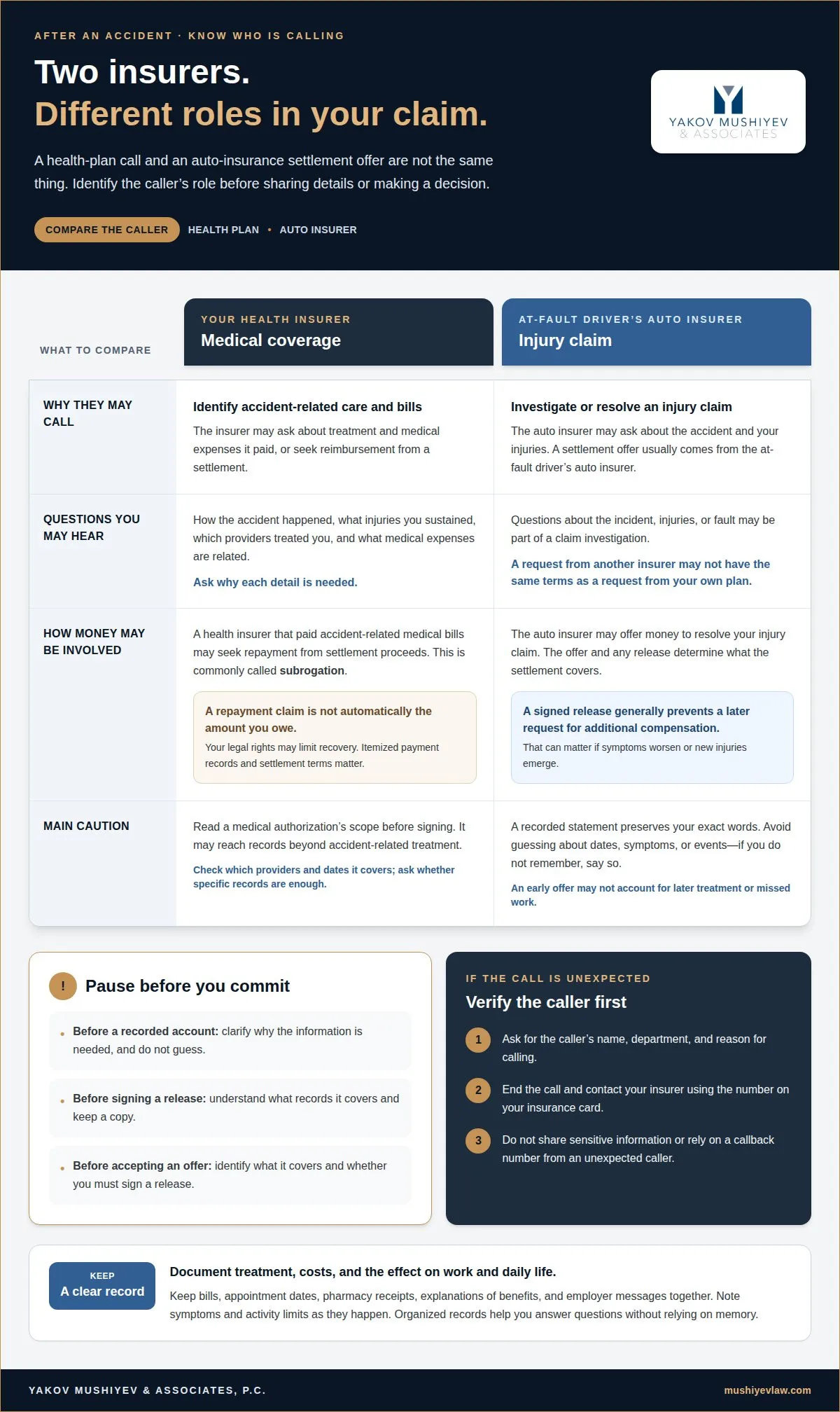
A health insurer may call to identify accident-related treatment and medical bills it paid. A settlement offer usually comes from the at-fault driver’s auto insurer, not your health plan. Keep the roles separate: your health insurer may seek repayment from a settlement, while the auto insurer may offer money to resolve your injury claim.
Early offers can be tempting when medical expenses are mounting. But an offer made before your injuries are fully understood may not account for later treatment or missed work. Whiplash, back injuries, concussions, and soft-tissue damage can take days or weeks to become fully apparent after an accident. For example, accepting an offer before a concussion diagnosis could leave future care unaccounted for.
Before accepting, identify what the settlement covers and whether you must sign a release. A signed release generally prevents you from seeking additional compensation later, even if symptoms worsen or new injuries emerge. Don’t admit fault or accept an offer before understanding its effect on your claim. A personal injury attorney can review the proposed terms and the documented impact of your injuries.
Can health insurance require repayment from an auto insurance settlement? A health insurer that paid accident-related medical bills may have a right to seek reimbursement from settlement proceeds. Your legal rights may limit how much it can recover, so don’t assume the full amount claimed is automatically owed.
What is subrogation and how does it affect an accident settlement? Subrogation is the commonly used term for a health insurer’s effort to recover medical costs it paid from a settlement. Repayment can reduce the amount you keep, making the insurer’s itemized payment records and the settlement terms important.
How can you verify that a health insurance call is legitimate? Ask for the caller’s name, department, and reason for calling, then end the call and contact the insurer using the number on your insurance card. Don’t share sensitive information or rely on a callback number provided by an unexpected caller.
2. Recorded statements and claim investigations
A health insurer may ask how the accident happened, what injuries you sustained, and which providers treated you. It may also ask about related medical expenses or fault. These questions can help identify accident-related bills and determine whether another insurer may be involved. Ask the caller to explain why each detail is needed before answering.
A recorded statement preserves your exact words, so avoid guessing about dates, symptoms, or events. If you don’t remember, say so. The rules can differ based on your state, policy, and whether the caller represents your own insurer or another party’s insurer. Don’t assume a request from the other driver’s insurer has the same terms as a request from your health plan.
Medical authorizations deserve the same care. A release may allow access to records beyond treatment connected to the accident. Read its scope before signing, including which providers and dates it covers. Ask whether the insurer needs specific records rather than a broad release. Keep a copy of every authorization and note when you sent it.
How do health insurance rules differ from auto insurance requirements by state? State laws and policy terms can affect what cooperation or information is required. The caller’s role matters too: a request from your own insurer differs from one made by another driver’s insurer.
Why does health insurance investigate an accident or ask how injuries happened? The insurer may be trying to identify accident-related treatment and expenses or determine whether another party’s coverage is involved. The questions alone don’t establish how a claim will be handled.
Can a health insurer deny or delay medical claims after an accident? A request for information is not itself a denial. Ask what information is needed and request a written explanation if a medical claim is denied or delayed. If questions from an auto insurer may affect your injury claim, car accident legal representation can help you understand the request before responding.
3. Documenting injuries, expenses, and missed work
A clear record connects each accident-related expense to your treatment and recovery. Keep medical bills, appointment dates, pharmacy receipts, and explanations of benefits together. For example, note whether a bill is paid, outstanding, or under review. That record helps you answer questions about treatment costs without relying on memory.
Track your care as it happens. Save discharge papers, referral notes, and follow-up instructions from each provider. Write down symptoms and how they affect daily tasks, such as driving, lifting, or sleeping. If pain changes after an appointment, record the date and describe the change plainly. These details can help show how your condition developed over time.
- Keep invoices and payment notices from doctors, hospitals, and pharmacies.
- Record appointment dates, missed visits, and the reason for any gap.
- Save employer communications about missed shifts or changed duties.
- Maintain a dated log of symptoms and limits on everyday activities.
Missed work deserves its own paper trail. Record the dates and hours you could not work, along with any duties you could not perform after returning. Keep pay records and employer messages that document the absence or adjustment. For instance, if a back injury prevents lifting at work, note the restriction and when it began. Avoid estimating lost time later, when schedules and details may be harder to recall.
How does coordination of benefits work after a car accident? Coordination of benefits describes how insurers determine which coverage handles a medical expense and how payments are recorded. Compare provider bills, health-plan explanations of benefits, and auto-claim payment notices by service date. This makes duplicate charges, remaining balances, or bills assigned to the wrong claim easier to identify.
Organize records by date and keep copies before sending anything to an insurer. A simple folder for medical care, expenses, and employment records can make a call easier to handle. If a statement conflicts with a bill or appointment record, refer to the dated document rather than guessing. Consistent records give a clearer account of your injuries, costs, and work disruption.
4. Questions and statements that may affect a claim
An insurer’s questions can shape how it records your account of an accident. It may ask what happened, what injuries followed, what medical expenses arose, and who was at fault. Answer based on what you personally remember. If you’re unsure whether an event happened before or after impact, say so instead of guessing.
Be precise about the difference between what you saw and what you assume. For example, describe a wet floor you observed, but don’t guess who caused it or how long it had been there. Insurers may use information to argue that an injured person caused a fall and deny a claim. A mistaken detail about the hazard or your actions could therefore become important.
- Ask the caller to repeat a question if its wording is unclear.
- Correct a mistaken premise calmly, then state what you know firsthand.
- Don’t estimate speed, distance, timing, or fault if you can’t recall it.
- Write down the caller’s name, the date, and the information requested.
Keep the same care online. Adjusters and defense teams check social media, so avoid posting about the accident, your injuries, or activities during recovery. A photo or short update may lack the context needed to explain when it was taken or how you felt afterward. Preserve relevant records privately instead of debating fault in comments.
If an insurer asks for a recorded account, don’t let pressure turn uncertainty into a guess. Ask what the statement is for and request time to understand the request. Saying “I don’t remember” is more accurate than filling gaps with assumptions. Keep copies of messages and note any follow-up deadlines the insurer gives you.
If questions about fault or a recorded statement could affect your injury claim, get legal guidance before responding. A careful review can help you distinguish routine questions from requests that may have consequences for your claim.
Yakov Mushiyev & Associates, P.C.
Yakov Mushiyev & Associates, P.C. can help you assess how insurer questions, medical-payment records, and settlement discussions may affect an accident claim. If you’re unsure how to respond, have received a reimbursement request, or are weighing an offer, legal guidance can help you understand the issues before taking action. Once you’re represented, insurers generally communicate through your attorney rather than contacting you directly.
The firm represents people injured in car, truck, and motorcycle accidents, as well as slip-and-fall incidents. Its role is to help protect your interests as the claim develops, including when an insurer’s questions raise concerns about fault, injuries, or expenses.
If you’d like to discuss your accident and the insurer’s contact, contact Yakov Mushiyev & Associates, P.C.
Take the Next Step With Confidence
Your next move can be measured, not rushed. Before responding to another request, decide what you need clarified and keep a record of the communication. If the insurer’s questions leave you uncertain about your rights or the effect on an injury claim, legal guidance can help you make an informed decision.
If you’re asking why your health insurance company is contacting you after your accident, focus on what the caller wants and how the request relates to your treatment or claim. Yakov Mushiyev & Associates, P.C. represents people in car, truck, and slip-and-fall injury matters in New York, including Rosedale, Rochdale, and Queens. The firm can help you assess insurer communications and understand how they fit into the broader claim.
You don’t have to resolve every question alone. Contact Yakov Mushiyev & Associates, P.C to discuss your situation and consider a clear path forward. Take the next step when you’re ready, with your concerns and priorities at the center.
Frequently Asked Questions
These answers provide general information, not legal advice about your specific case. Consult a lawyer for guidance tailored to your circumstances.
Do You Have to Answer Their Calls?
You don’t necessarily have to answer an unexpected call immediately. If you’re asking, “Why is my health insurance company contacting me after my accident?” first identify who is calling and what they need. Letting a call go to voicemail gives you time to confirm the caller. If you’re a policyholder, review your policy’s cooperation terms before deciding how to respond.
The Insurance Company Keeps Calling Me After My Accident, Should I Answer?
You can return a call after confirming who contacted you and what information they need. Note the caller’s name, insurer, claim reference, and requested follow-up. If repeated calls concern the same issue, ask what remains outstanding and how to provide it in writing. That creates a clearer record than trying to reconstruct several phone conversations later.
Who Is an Insurance Adjuster, Really?
An insurance adjuster is a claims representative who gathers information and evaluates an insurer’s claim. The adjuster may contact you for details, documents, or clarification, but represents the insurer, not you. For example, ask which company the adjuster works for and which claim they’re handling. Knowing the adjuster’s role helps you understand whose interests the conversation serves.
Why Are They Calling So Often?
Repeated calls may mean the insurer still needs information, is following up on an earlier request, or wants to discuss the claim. Don’t assume the frequency alone proves anything about your case. Keep a dated call log with the caller’s name and stated reason. If messages conflict, refer to the log and ask the insurer to clarify its current request.
What Information Can a Health Insurer Request After an Accident?
Understanding why your health insurance company is contacting you after your accident starts with identifying its request. A health insurer may ask about the accident, your injuries, treatment, medical expenses, and who may have been responsible. For instance, it could ask for a treatment date or provider’s name. Before sharing records, understand what the request covers and whether it concerns accident-related care.
Should I Give My Health Insurer a Recorded Statement After an Accident?
Don’t agree to a recorded statement until you understand who is asking and why. A request from your own health insurer differs from one made by another party’s insurer, and policy terms may matter. Ask whether written answers will suffice and what topics the recording will cover. For an accident in Rosedale, Rochdale, or Queens, consult a New York lawyer for case-specific guidance.