
A bus accident claim in New York rarely moves in a single step from injury to payment. It passes through a sequence of stages, and the order of those stages depends on one question above all: who operates the bus? A claim against a public transit authority follows a formal notice process with short deadlines, while a claim involving a private charter or tour company moves through commercial insurance on a different clock. This article explains each stage in turn, what typically happens during it, and why it matters for the eventual outcome.
Why the Operator Shapes Everything That Follows
Most city buses in New York City are run by two public entities: MTA New York City Transit and MTA Bus Company. Other buses on the road are operated by private companies, including charter, tour and coach lines, and school buses in the city are often run by private contractors.
The distinction matters because public authorities are protected by statutory notice requirements that private companies are not. A passenger injured on an MTA bus and a passenger injured on a private coach may have suffered identical injuries, yet the first must satisfy a 90-day notice rule while the second generally has the ordinary three-year window under CPLR § 214. Identifying the operator correctly is therefore the first task, not a detail to sort out later.
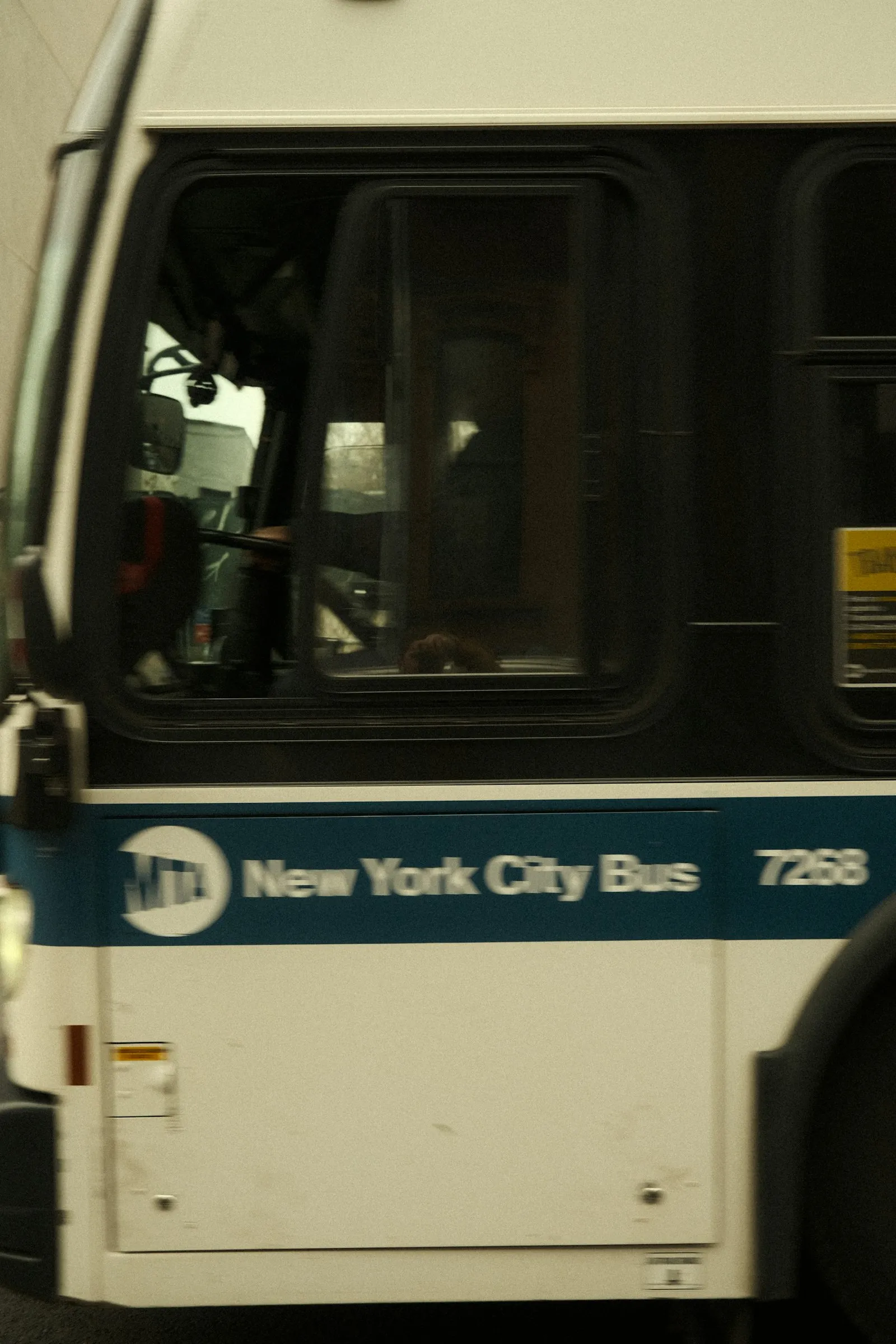
Clues usually appear on the bus itself: lettering on the side, a route number, a fleet number near the door, or a company name on a charter vehicle. A photograph taken at the scene, a transfer or fare record, and the police report can all help confirm it.
Stage One: Medical Care and No-Fault Benefits
The earliest money in most bus cases comes not from the bus operator’s liability but from no-fault insurance, which pays certain medical expenses and lost earnings regardless of who caused the crash. The rules for who pays depend on where the injured person was.
- Passengers on the bus. Under Insurance Law § 5103, a bus occupant (other than the bus’s operator, owner or employees) generally looks first to their own household’s auto policy for no-fault benefits. If no household policy exists, the bus’s insurer pays.
- Pedestrians struck by a bus. A pedestrian is a non-occupant and generally receives no-fault benefits from the bus.
This often surprises passengers, who reasonably assume the bus company would pay their initial bills. No-fault applications carry their own short deadlines, so they belong among the first things done. Our guide to no-fault claims in New York explains the forms in detail.
Consistent treatment during this stage also lays the groundwork for everything that comes later. Records created in the first weeks frequently become the most persuasive evidence of how serious the injury was.
Stage Two: The Notice of Claim for Public Buses
If the bus belongs to a public authority, the next stage is formal written notice. Claims against the New York City Transit Authority are governed by Public Authorities Law § 1212, and claims against the MTA by Public Authorities Law § 1276. Both generally require:
- a notice of claim served within 90 days of the incident, prepared in compliance with General Municipal Law § 50-e;
- a 30-day waiting period after the notice before a lawsuit may be started;
- a lawsuit filed within 1 year and 90 days, with wrongful death claims following a different timeline.
People often ask how to file a claim against the MTA as though it were a single form. In practice, it is a legal document that must describe the time, place and manner of the incident and the injuries claimed, and it must be served properly on the correct entity within the deadline. Errors in the operator’s name, the location or the description can create disputes that are difficult to repair later. For background on the authority itself, see the MTA’s website, and for a fuller discussion of MTA cases, our page on MTA bus accident claims.
Stage Three: Sworn Questioning
After a notice of claim is served on a public entity, the entity may require the claimant to answer questions under oath about the claim. For municipalities this is often called a 50-h examination, after General Municipal Law § 50-h, and transit authorities may similarly require sworn questioning.
The examination is usually conducted by a lawyer for the authority, with a court reporter present. Questions cover how the incident happened, the injuries, medical treatment, work history and prior injuries. The transcript can be used later, so accuracy and consistency matter far more than speed. Preparation with counsel beforehand is standard practice. Our explainer on what a 50-h hearing is describes the format more fully.
Stage Three, Alternate Route: Private Buses and Their Insurers
When the bus belongs to a private charter, tour or coach company, the notice-of-claim steps above generally do not apply. These companies carry commercial insurance, and the claim is typically presented to that insurer, with standard deadlines governing any lawsuit.
Private intercity and charter buses add another layer of potential evidence. Federal hours-of-service rules for passenger-carrying commercial drivers generally prohibit driving more than 10 hours after 8 consecutive hours off duty, and prohibit driving after 15 hours on duty. The FMCSA’s summary of these rules lays them out. Where driver fatigue is suspected, duty records can become central. Coach and commuter bus claims on Long Island are discussed in our page on NICE Bus, school bus and coach claims.
Stage Four: Establishing Who Was at Fault
Whether the operator is public or private, a bus accident claim for pain and suffering generally requires proof that someone was negligent. Several legal principles guide that inquiry.
The duty owed to passengers
Buses are common carriers. In Bethel v. New York City Transit Authority, New York’s Court of Appeals held that common carriers owe passengers a duty of reasonable care under the circumstances.
Sudden stops and jolts
Many passenger injuries come from abrupt braking or lurching. Courts generally require proof that the movement was “unusual and violent,” meaning more than the ordinary starts and stops every rider expects. Testimony from other passengers, video and the nature of the injuries can all bear on this. Because onboard and street video may not be kept indefinitely, a prompt request to preserve it is often one of the more valuable early steps.
The employer’s responsibility
Employers are generally responsible for their employees’ negligence on the job, so a driver’s careless conduct is ordinarily attributed to the operator. Our article on how bus driver negligence is proven examines the evidence in depth.
Other parties
A second motorist may share fault, for instance by cutting in front of a bus and forcing a hard stop. When more than one party contributed, each may bear a portion of responsibility, and identifying all of them early helps ensure that no source of recovery is overlooked before deadlines pass. In school bus cases, a contractor, a driver, another motorist and sometimes a school district or the City may be involved.
Stage Five: Negotiation and the Bus Accident Settlement
Most cases are resolved through negotiation rather than trial, although negotiation may happen before a lawsuit is filed or while one is pending. The typical sequence looks like this:
- Treatment reaches a stable point. Settling before the full extent of an injury is known risks accepting less than the injury warrants, because a release usually ends the claim permanently.
- A demand package is assembled. It gathers medical records, bills, proof of lost earnings, photographs, witness statements and an explanation of liability.
- The insurer or authority evaluates it. It will review the records, may request an examination by its own doctor, and will test the liability evidence.
- Offers and counteroffers are exchanged. This can take several rounds.
- Agreement and release. Once terms are accepted, the injured person signs a release, and payment follows.
If negotiation does not produce a fair result, the case proceeds in court, through stages such as discovery, depositions and, possibly, trial. Our overview of how an injury lawsuit works in New York describes that process, which is broadly similar for bus cases.
What Influences the Value of a Settlement
There is no formula that converts an injury into a figure, and any article promising one should be read skeptically. What can be said is which factors tend to carry weight:
- The nature and permanence of the injury. Fractures, surgery, and lasting limitations generally weigh more heavily than injuries that resolve quickly.
- The serious-injury threshold. In motor vehicle cases, a claim for pain and suffering generally must meet the serious-injury definition in Insurance Law § 5102(d).
- The quality of the medical record. Consistent treatment and clear documentation strengthen a claim; gaps weaken it.
- Lost earnings and future care. Time away from work and treatment that will be needed later both factor in.
- The strength of the liability evidence. Video, witnesses and driver records can shift negotiations considerably.
- Shared fault. Under CPLR § 1411, New York applies pure comparative fault, so a claimant’s recovery is reduced by their share of fault but not barred.
- The parties and coverage involved. More than one responsible party can broaden the available sources of payment.
Our article on bus accident injuries and passenger claims discusses the injuries themselves in greater detail.

A Realistic View of the Timeline
Because cases differ so much, any honest description of timing has to be stated in terms of milestones rather than months. The fixed points are the legal deadlines: the 90-day notice of claim for public operators, the 30-day waiting period, the 1-year-and-90-day lawsuit deadline against the authorities, and the three-year deadline for most claims against private parties. Wrongful death claims are generally brought by the estate’s personal representative and follow their own timeline, often 2 years from death. For children, deadlines are generally paused until age 18, although notice rules for public entities deserve prompt attention regardless.
Between those fixed points, the pace is driven by medical recovery, the complexity of liability and the willingness of the other side to negotiate. A case involving a clear rear-end collision and a fully healed injury may resolve sooner than one involving disputed fault and ongoing treatment.
How Our Firm Approaches These Cases
Yakov Mushiyev & Associates handles bus cases against the MTA, private carriers and school bus contractors throughout Queens and New York City. Our work at each stage is to identify the operator, protect the deadlines, prepare clients for sworn questioning, assemble the evidence, and negotiate from a well-documented position. Over the years, the firm has recovered more than $80 million on behalf of injured New Yorkers. There’s no charge to talk with us, and no fee at all unless the case succeeds.
We meet clients at home, in the hospital or by video, and we speak English, Russian and Spanish. More information is available on our bus accident practice page and in our New York bus accident claims guide. To discuss a specific situation, use our contact form.
Questions People Ask About the Claim Process
How long do I have to start a bus accident claim against the MTA?
A notice of claim is generally due within 90 days, followed by a 30-day waiting period, and a lawsuit generally must be filed within 1 year and 90 days. Wrongful death claims follow a different timeline.
Who pays my medical bills right after the accident?
Passengers generally look first to their own household’s auto policy for no-fault benefits; if there is none, the bus’s insurer pays. Pedestrians struck by a bus generally receive no-fault benefits from the bus.
Does a hard stop on a bus support a claim?
It can, but courts generally require proof that the movement was “unusual and violent,” beyond the ordinary starts and stops of bus travel. Witnesses and video can be important.
What is the difference between a public and a private bus case?
Public authorities generally require a notice of claim within 90 days and may demand sworn questioning. Private charter, tour and coach companies carry commercial insurance, and standard deadlines apply.
Will my bus accident settlement be reduced if I was partly at fault?
Under New York’s pure comparative fault rule, your recovery is reduced by your share of fault, but you are not barred from recovering.
Visit Yakov Mushiyev & Associates
Our office is at 1 Cross Island Plaza, Suite 325, Rosedale, NY 11422, just off the Cross Island Parkway on the Queens–Nassau border. If you can’t come to us, we’ll come to you: at home, in the hospital or by video.

Talk to a Queens bus accident lawyer today
Yakov Mushiyev & Associates has recovered over $80 million for injured New Yorkers across the five boroughs and Nassau County. Consultations are free, available in English, Russian and Spanish, and there is no fee unless we win.
Call 718.775.3110 or contact us online for a free case review.
This article is general information, not legal advice. Every case is different. Attorney Advertising.