
Distracted driving crashes rarely look dramatic in the moment. There is no squeal of brakes, because the driver never saw what was ahead. To show how these cases actually unfold, and what a Distracted Driving Accident Lawyer in Bellerose does at each turn, we are going to follow one crash from the instant of impact to the filing of a lawsuit. The people and details below are invented. The law and the process are real.
Here’s a hypothetical. Everything about “Dana” and the other driver in this story is made up for illustration. It is not a real client, a real case, or a real result.
5:40 p.m.: A Red Light on Hillside Avenue
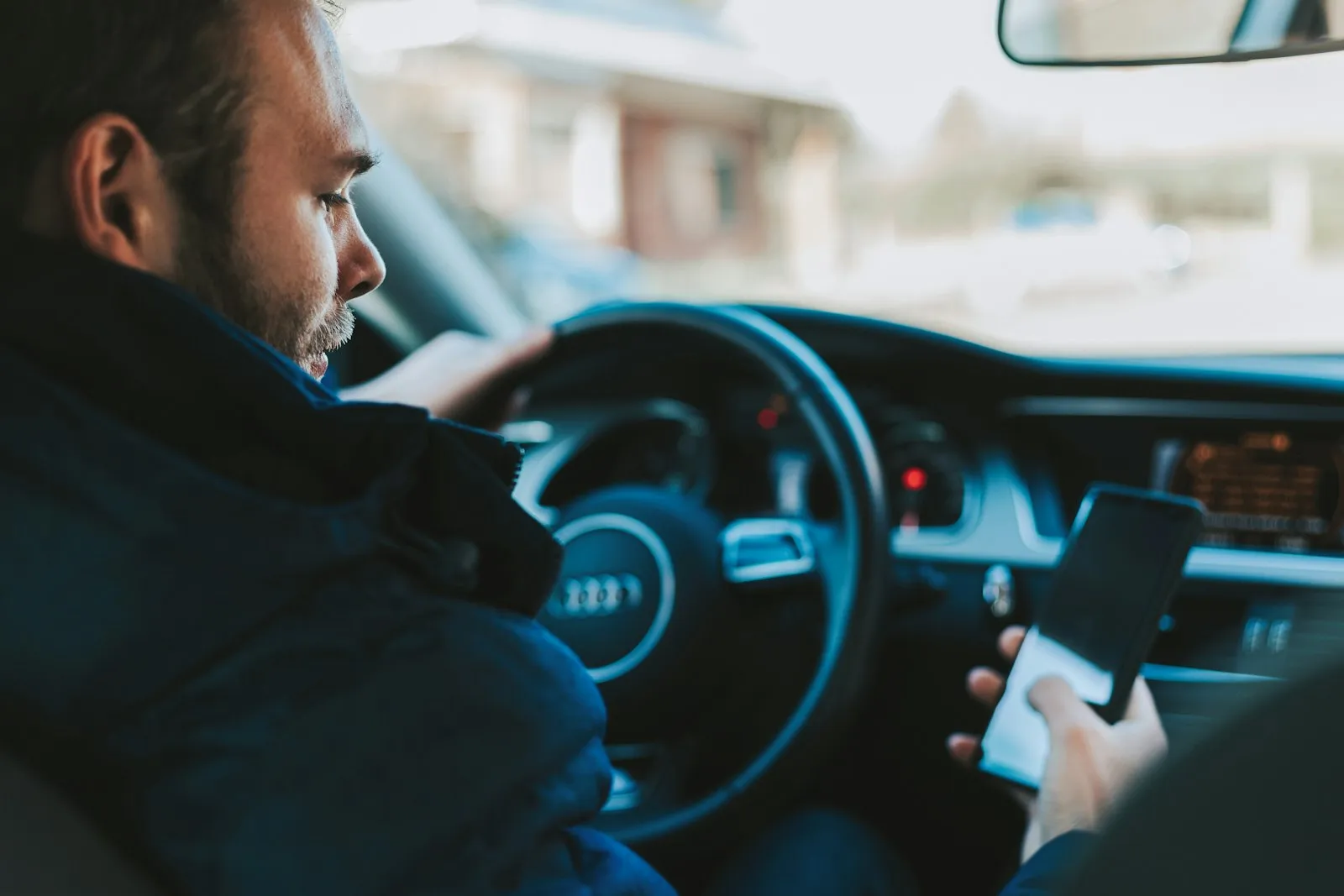
Dana is driving home from work on a weekday evening in late fall. It is already dark. She is heading east on Hillside Avenue in Bellerose, a few blocks from the Nassau line, and the light ahead turns red. She stops. Behind her, a driver in an SUV is looking down at his phone, thumbing through a message thread. He looks up too late. The SUV hits Dana’s car from behind at a speed that is not highway-fast, but is far faster than anyone should hit a stopped car.
Dana’s head snaps forward and back. Her lower back seizes. The SUV driver gets out, apologizes, and says he “just didn’t see the light change.” He never mentions his phone.
What the law says at this moment
New York bans using a handheld mobile phone while driving under Vehicle and Traffic Law §1225-c, and bans using portable electronic devices, including texting, under VTL §1225-d. A violation does not automatically win a civil case, but it is powerful evidence that the driver was negligent. There is also a long-standing rule in New York that a driver who strikes a stopped vehicle from behind is presumed negligent unless he can give a good, non-negligent explanation.
5:55 p.m.: The Scene, the Police and the Phone
Dana calls 911. Officers from the NYPD’s 105th Precinct, which covers Bellerose, arrive and take information from both drivers. Dana is shaken, but she does three smart things while she waits:
- She photographs both cars, the intersection and the traffic signal.
- She asks a pedestrian who saw the crash for his name and phone number. He tells her the SUV driver “was looking down the whole time.”
- She notices a store with a camera above its door and writes down the name.
She also does one thing many people do: she tells the officer she is “okay, just sore.” That is honest in the moment, but it ends up in the report. Adrenaline is real, and it is one reason we tell people never to downplay pain at a crash scene.
That Night: The Emergency Room
By 9 p.m., Dana cannot turn her head. Her partner drives her to Long Island Jewish Medical Center in New Hyde Park, right on the Queens–Nassau line. The ER doctors examine her, order imaging, diagnose a neck and back strain, give her medication and tell her to follow up with her own doctor. They note that her symptoms began after a rear-end collision.
That note matters. Under New York’s no-fault law, Dana’s own car insurance pays her medical bills and part of her lost wages regardless of who caused the crash. But to sue the distracted driver for pain and suffering, she will need to prove a “serious injury” under Insurance Law §5102(d). Consistent medical records that start the same day are the foundation for that.
Days 2 to 10: Paperwork, Pain and a Phone Call
The pain in Dana’s back gets worse, not better. Her doctor refers her for an MRI and physical therapy. She misses work. Meanwhile, two important things happen.
The no-fault clock
Dana has 30 days to file her no-fault application with her own insurer. Basic no-fault coverage in New York is $50,000 for medical bills and lost earnings. If she misses the deadline, she risks losing benefits she paid for.
The adjuster’s call
An adjuster from the SUV driver’s insurance company calls. He is friendly. He asks whether Dana would agree to a recorded statement “just to get the facts down,” and asks how she is feeling. He mentions that the police report says she was “okay.” This is the moment Dana calls a lawyer.
Week 2: Proving the Phone Was in His Hand
The SUV driver’s insurer will likely accept that he rear-ended Dana. What it may fight is how badly she was hurt. Still, proving distraction matters. It strengthens fault, undercuts any story about sudden stops, and makes a jury far less sympathetic to the defense. Here is the evidence a Distracted Driving Accident Lawyer in Bellerose would work to gather:
| Evidence | What it can show | Why speed matters |
|---|---|---|
| Storefront or doorbell video | The driver’s head down, no braking before impact | Often recorded over within days or weeks |
| Witness statement | “He was looking down the whole time” | Memories fade and contact details get lost |
| Phone records | Texts, calls or data use at the moment of the crash | Obtained through legal process in litigation |
| Vehicle event data | Speed and braking in the seconds before impact | Can be overwritten or lost if the car is repaired or scrapped |
| Police report and ticket | Any summons for phone use or following too closely | Usually available, but often incomplete |
In Dana’s hypothetical, her lawyer sends a preservation letter to the store with the camera and to the SUV driver’s insurer, demanding that the vehicle and its data be preserved. The witness is interviewed and his statement is written down while it is fresh. Later, in a lawsuit, the lawyer can seek the driver’s phone records for the minutes around the crash.
Month 1: Who Else Is Responsible?
While reviewing the case, Dana’s lawyer learns that the SUV is registered to a small business, and the driver was heading to a job site. That opens new doors. In New York, a vehicle’s owner can generally be held responsible for the negligence of a permitted driver, and an employer may be responsible for an employee driving on the job. Each may have its own insurance policy. If the driver had been working a delivery app shift, the app company’s coverage could come into play as well.
Distraction is not always a phone, either. GPS screens, eating, reaching for something on the floor, and even a dashboard touchscreen can all take a driver’s eyes off the road. The legal question is the same: was the driver paying the attention a reasonable driver would?
Months 2 to 4: The Serious Injury Question
Dana’s MRI shows a disc injury in her lower back. Physical therapy helps, but she still cannot lift her young child without pain and has lost range of motion. Her doctors document the limitation with measurements, not just words. Under New York law, categories of serious injury include a significant limitation of use of a body function or system and a permanent consequential limitation of use of a body organ or member, along with fractures and other listed injuries.
Update for 2026: New York’s 2026 motor-vehicle tort reform, signed in late May 2026, applies to motor-vehicle lawsuits filed on or after its effective date (excluding death cases). It switches to modified comparative fault, so a plaintiff more than 50% at fault recovers nothing; eliminates the 90/180-day serious-injury category; requires juries to decide fault before serious injury; and caps pain-and-suffering damages at $100,000 for plaintiffs who were driving uninsured, convicted of impaired driving, or committing a felony. If Dana’s case were filed under these rules, she could no longer rely on the 90/180-day category and would need to fit another category.
Comparative fault matters too. The defense might argue Dana stopped suddenly. Under CPLR 1411, any share of fault assigned to her would reduce her recovery. That is exactly why the video and the witness are so valuable.
Month 6 and Beyond: Negotiation or Lawsuit
With treatment records, imaging, evidence of distraction and a clear picture of lost wages, Dana’s lawyer presents a demand to the insurers. If they will not offer fair value, a lawsuit is filed in Queens County Supreme Court, at 88-11 Sutphin Boulevard in Jamaica. The general deadline to sue is three years from the crash under CPLR 214, but nobody should wait that long. Most of the important evidence in Dana’s story was saved in the first two weeks.
What Dana’s Story Teaches About Distracted Driving Claims
- Never tell police or an adjuster you are “fine.” Say you will see a doctor.
- Get witness names and note any cameras before you leave the scene.
- Get medical care the same day and keep going to follow-up appointments.
- File your no-fault application within 30 days.
- Do not give a recorded statement to the other driver’s insurer without advice.
- Call a lawyer early, while video and phone evidence can still be preserved.
At Yakov Mushiyev & Associates, P.C., consultations are free and there is no fee unless we win. We consult in English, Russian and Spanish and can meet at home, in the hospital or by video. Learn more on our Bellerose personal injury lawyer page and our Bellerose car accident lawyer page. Because so many phone-related crashes are rear-end impacts, our rear-end collision Q&A for Bellerose goes deeper on that topic, and our car accident practice page covers the bigger picture. For safety data on distraction, see NHTSA and New York City’s Vision Zero program.

Getting to Our Office From Bellerose
We are at 1 Cross Island Plaza, Suite 325, Rosedale, NY 11422, open Monday through Friday from 9 a.m. to 6 p.m. From Bellerose, take the Cross Island Parkway south toward the Belt Parkway. 1 Cross Island Plaza sits right off the Cross Island in Rosedale, roughly a 15 to 20 minute drive depending on traffic. If a neck or back injury makes driving hard, we will come to you or meet by video.
Call 718.775.3110 or reach us online to schedule your free consultation.
Frequently Asked Questions
How can I prove the other driver was on their phone?
Common sources include witness statements, video from nearby businesses or doorbell cameras, the police report, any summons issued for phone use, and the driver’s phone records, which can be sought through legal process once a lawsuit is filed. Acting quickly gives you the best chance of preserving this evidence.
Does a ticket for texting mean I automatically win?
No. A ticket under VTL §1225-c or §1225-d is strong evidence of negligence, but you still have to show the distraction caused the crash, and in a motor-vehicle case you must meet New York’s serious injury threshold to recover for pain and suffering.
Which precinct handles crashes in Bellerose?
The NYPD’s 105th Precinct in Queens Village covers Bellerose. Crashes just across the line in Bellerose Village, Floral Park or New Hyde Park are generally handled by Nassau County police.
I was hit while walking on Jamaica Avenue by a driver looking at a phone. What applies?
Pedestrians struck by a vehicle are generally covered by no-fault, typically through a household auto policy or the striking vehicle’s policy. You can also bring a claim against the distracted driver if your injury meets the serious injury threshold. See our pedestrian resources or call us to talk it through.
How much does it cost to talk to your firm?
Nothing. The consultation is free, and we work on a contingency basis, so there is no fee unless we win. We consult in English, Russian and Spanish.
This article is general information, not legal advice. Attorney Advertising. Prior results do not guarantee a similar outcome.