
A friend or family connection doesn’t automatically prevent an injury claim. If you’re asking what happens if you were injured by a friend or family member’s driving, the claim may involve the driver’s auto insurance and, depending on the circumstances, other applicable coverage. Filing a claim doesn’t necessarily mean you’re suing your loved one or asking them to pay personally.
It’s understandable to worry that pursuing compensation could strain a relationship, especially while you’re dealing with injuries and uncertainty. But you shouldn’t have to choose between protecting your health and getting clear answers about how the crash affected you. Insurance may cover claims arising from a driver’s negligence, but available coverage depends on the policy, who owned and drove the car, and the facts of the collision.
This article explains how passenger claims and insurance coverage may work when a friend or relative was behind the wheel, what can complicate recovery, and how to approach the process carefully. You’ll also learn what information can help clarify your options while keeping the focus on the claim, not blame.
Key Takeaways
- Identify who owned the vehicle, who was driving, and where you were seated to help clarify which insurance policies may apply.
- A claim can be handled through insurance without necessarily becoming a lawsuit against someone you care about.
- Keep records of your injuries, treatment, expenses, missed work, and communications so the impact of the crash is documented.
- Policy terms, household relationships, permission to use the car, and the circumstances of the collision can affect passenger coverage.
What Happens If Someone Else Is Driving My Car or I’m Hurt as a Passenger?
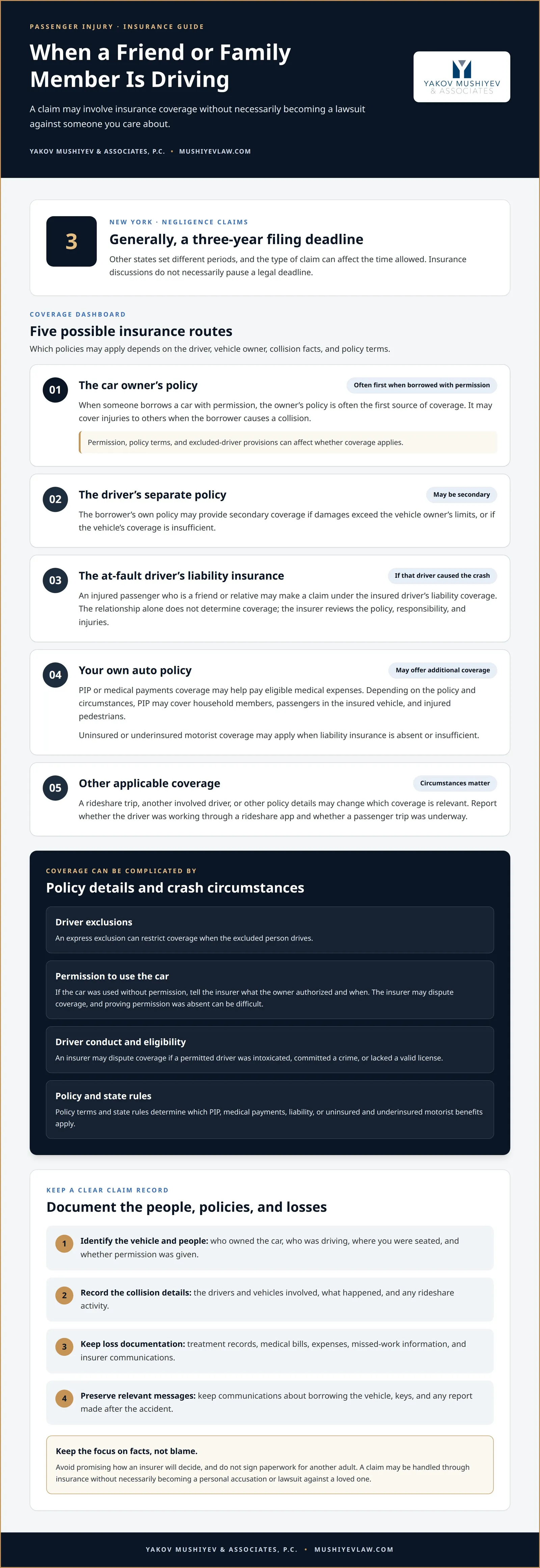
Coverage depends on who owned and drove the car and which policies apply. After a crash, a passenger may have more than one insurance option.
Coverage for a Friend or Family Member Driving
When someone borrows your car with permission, the owner’s policy is often the first source of coverage. The driver’s separate policy may provide secondary coverage if damages exceed the owner’s limits. This means an injured passenger’s claim may involve the vehicle’s liability coverage before the driver’s own policy.
For example, if a relative borrows your car and causes a collision, the vehicle’s policy may cover injuries to others. Permission, policy terms, and excluded-driver provisions can affect which coverage applies. The driver’s policy may also matter if the vehicle’s coverage is insufficient.
Passenger Coverage and Driver Liability
Liability insurance may cover injuries to others when an insured driver causes a crash. An injured passenger who is a friend or relative can make a claim under the driver’s liability coverage. The relationship alone doesn’t determine coverage. The insurer reviews the policy, the driver’s responsibility, and the passenger’s injuries.
If another driver caused the collision, that driver’s insurance may cover the passenger’s damages. The passenger’s own auto policy may also be relevant, especially if the at-fault driver is uninsured or underinsured. Keep details about the drivers and vehicles, along with insurer communications.
PIP and Uninsured Motorist Options
Personal Injury Protection (PIP) and medical payments coverage may help pay eligible medical expenses. Uninsured or underinsured motorist coverage may apply when liability insurance is absent or insufficient. Depending on the policy and circumstances, PIP may cover household members, passengers in the insured vehicle, and injured pedestrians.
Policy terms and state rules determine which benefits apply. Review the policies for PIP, medical payments, and uninsured or underinsured motorist provisions. These coverages may offer another way to address medical costs after a crash.
Driver Exclusions and Passenger Compensation
An express driver exclusion can restrict coverage when the excluded person drives. An insurer may also dispute coverage if a permitted driver was intoxicated, committed a crime, or lacked a valid license. These circumstances can complicate a passenger’s claim and raise questions about which policy may respond.
An injured passenger may seek compensation for medical bills, lost wages, and pain and suffering through applicable liability coverage. Treatment records, bills, and missed-work documentation can help show these losses. Keep those records and insurer communications organized for claim review.
Protecting personal relationships during an insurance claim
A car accident claim can feel personal when the driver is a friend or relative. Keep conversations focused on the facts: who drove, who owned the vehicle, whether permission was given, and what happened. You can pursue an insurance claim without treating it as a personal accusation. The insurer evaluates the reported circumstances and applicable liability coverage.
Permission matters. When someone borrows a car with the owner’s consent, the owner’s policy may apply, and the borrower’s separate policy may also matter. If the driver was excluded, policy terms can change the coverage analysis. Share accurate information about who regularly uses the vehicle and any household relationship, rather than making assumptions for the owner or driver.
If someone used the car without permission, tell the insurer exactly what the owner authorized and when. The insurer may dispute coverage, and proving that permission was absent can be difficult. Preserve messages about borrowing the vehicle, the keys, and any report made after the accident. The owner may still need to explain the incident to their insurer, even while disputing that permission was given.
A rideshare vehicle adds another detail to report. Record whether the driver was working through a rideshare app and whether a passenger trip was underway. Keep trip receipts, messages, and the driver’s and vehicle’s details. Don’t assume the driver’s personal car insurance is the only relevant policy. Disclose the rideshare activity so coverage questions can be assessed accurately.
Premium effects depend on the owner’s driving history, the accident, and the policy. More than one minor accident may be needed to affect premiums, but no single outcome applies to every situation. To protect relationships, avoid promising how an insurer will decide, keep a factual record of expenses and communications, and don’t sign paperwork for another adult. For help assessing the insurance issues after a car accident claim, get legal guidance before accepting a settlement or making statements on someone else’s behalf.
Injury claims involving a friend or family member driving
If you’re asking, “What if I was injured by a friend or family member’s driving?” the claim can focus on insurance and documented losses, not blame between people who know each other. Deadlines and evidence still matter.
Injury Claim Filing Deadlines
A filing deadline sets how long an injured person has to bring a lawsuit. The limit depends on the state and type of claim. In New York, negligence claims generally have a three-year deadline. Other states set different periods, and the type of claim can also affect the time allowed.
Don’t assume insurance discussions pause a legal deadline. If you were hurt in a crash, identify where it happened and promptly establish which filing period applies. Missing the deadline can jeopardize a claim, even while an insurer reviews medical records or discusses payment.
Steps After an Accident
After a car accident involving someone you know, prioritize medical attention and create a clear record of what happened. Call the police, document the scene if possible, and collect information about the driver and vehicle. Keep treatment records, medical expenses, missed-work details, and insurer communications together.
Stick to what you personally observed. Don’t speak for another injured adult without authority, and don’t sign paperwork you don’t understand. If someone asks you to sign documents or has already retained a lawyer, tell your own legal team. These steps preserve facts without requiring you to accuse a friend or relative.
Deciding Whether to Consult a Lawyer
A personal injury lawyer can help clarify which insurance policy may apply, what evidence supports the claim, and whether damages may exceed available coverage. A lawyer can also review insurer communications and explain how to protect your interests when the driver is a friend or family member.
Asking what if you were injured by a friend or family member’s driving doesn’t mean you’re committing to a lawsuit. The insurer may handle the claim, while policy limits, household exclusions, and accident evidence shape your options. Consider legal guidance if the insurer disputes responsibility, requests a recorded statement, or offers paperwork before your medical picture is clear.
Does the driver’s liability insurance cover passengers who are friends or family members?
An at-fault driver’s liability insurance may cover an injured passenger’s claim, including when the passenger is the driver’s friend or relative. The relationship alone doesn’t decide coverage. The insurer considers the policy language, the driver’s responsibility, the passenger’s injuries, and any exclusions. A Queens passenger should also consider whether another policy could apply if the driver’s liability limits don’t cover all documented losses.
Household status can raise a separate policy question. Some policies define insured people or relatives in ways that affect a household member’s claim. Review the policy’s definitions and exclusions alongside the accident facts. For example, a relative who lives with the driver may be treated differently from a visiting friend. That distinction can affect the insurer’s coverage analysis, but it doesn’t remove the need to assess the claim itself.
Other coverage may also be relevant. Depending on the circumstances, medical expenses could involve PIP, the driver’s insurance, the passenger’s own auto insurance, or the at-fault driver’s liability coverage. Uninsured or underinsured motorist coverage may offer another potential source if the responsible driver has no insurance or insufficient coverage. The policies held by the passenger, driver, and vehicle owner can all matter.
Keep the claim focused on evidence rather than the personal relationship. Medical records, bills, missed-work information, and insurer communications help document the passenger’s losses. A claim does not necessarily mean a lawsuit will be filed. If exclusions, household status, or available limits create uncertainty, get help reviewing your passenger injury claim before accepting a settlement. That review can help you understand the documents and coverage issues before making a decision.
Yakov Mushiyev & Associates, P.C.
Yakov Mushiyev & Associates, P.C. can help you understand your options after a crash involving someone you know. The firm represents people injured in car accidents and can guide you through injury claims, insurance coverage, and insurer communications. If the driver’s insurer disputes responsibility, raises household exclusions, or offers a settlement before your losses are clear, legal support can help you assess the claim and protect your interests.
Seeking advice doesn’t have to be a personal attack on your friend or family member. The focus is on the evidence, applicable policies, and the harm you suffered. Contact Yakov Mushiyev & Associates, P.C. to discuss your situation.
Take the Next Step With Confidence
If you’re asking, “What if I was injured by a friend or family member’s driving?” remember that seeking clarity doesn’t have to define your relationship. Your next step can simply be a conversation about your concerns, your recovery, and what you want to happen next. You can set boundaries around who receives information and keep decisions grounded in your own needs.
Before moving forward, consider what remains uncertain: whether you feel pressured to respond to an insurer, whether a document is clear, or whether you’re ready to discuss your options. You don’t have to resolve every question at once. A thoughtful conversation can help you decide what to do without making assumptions about the outcome or the people involved.
For a measured discussion of your situation, connect with Yakov Mushiyev & Associates, P.C. Take the next step at your own pace, with your interests in view.
Frequently Asked Questions
When Will the Owner Be Held Liable?
A vehicle owner may face liability if they knowingly let an impaired, intoxicated, or unlicensed person drive. The owner’s knowledge and the circumstances of the loan matter. In some states, a family-purpose rule may also apply when an owner provides a vehicle for a household member’s use and that person causes a crash. The rules depend on state law and the facts.
Can I Ask About an Injury Claim If a Friend or Family Member Was Driving?
Yes. A friend or family relationship doesn’t, by itself, prevent you from asking about an injury claim. If you were hurt by someone you know, you can seek information about available insurance and how a claim could affect you. For injured people in Rosedale, Rochdale, and Queens, a discussion can clarify your options without requiring you to decide immediately whether to pursue a lawsuit.
Can You Bring a Claim Against Your Spouse or Parent?
Possibly, but state laws and policy exclusions can affect claims against spouses or parents. In Georgia, Harris v. Harris recognized that interspousal immunity does not apply when its purposes are absent, including when marital harmony is no longer at risk and collusion is not a concern. In Donegan v. Davis, parental immunity barred an unemancipated minor’s simple negligence claim against a parent.
Does Insurance Follow the Car or the Driver?
Often, the vehicle’s policy is the first coverage considered when someone drives with permission, but the driver’s own policy may also apply. For example, if a borrowed car’s coverage cannot meet all covered losses, the borrower’s policy may provide secondary coverage. Policy language, household provisions, and driver exclusions can change which insurer responds, so both the car and driver policies matter.
Does It Depend on What Type of Accident or Who Is at Fault?
Yes. The cause of the crash and each driver’s share of fault can affect which liability policies pay. In California, comparative fault allows a jury to assign fault percentages based on evidence. For example, if two drivers each bear 50% fault, their insurers may each be responsible for their share of an injured passenger’s damages, subject to applicable policy limits.
What If There Isn’t Enough Insurance?
If the at-fault driver’s liability coverage is insufficient, your own uninsured or underinsured motorist coverage may be another possible source. Depending on the policies and circumstances, PIP or medical payments coverage may also help with medical expenses. Review available policies before agreeing to a settlement, because accepting one can affect other claims. These FAQ responses are general information, not legal advice for your specific case.