
Most of the proof in a Lyft crash case lives on a phone. The receipt, the trip ID, the route, the driver’s name and plate: it is all there the moment the car stops, and it is easy to lose once the app moves on to the next ride. This checklist is for riders, pedestrians and drivers involved in a Lyft accident in Auburndale, Queens. Work through it in order, and keep it short. If you want help with any step, call Mushiyev Law at 718.775.3110.
Why the App Record Carries So Much Weight
A yellow-cab crash leaves a medallion number and maybe a meter receipt. A Lyft crash leaves a digital file. In New York City, Lyft cars are TLC-licensed for-hire vehicles with TLC plates and commercial for-hire insurance, and the app records who was driving, where, and when. That record answers three questions every insurer will ask:
- Were you in this car? The receipt and trip ID prove you were a passenger, which decides where your no-fault claim goes.
- Which car and driver? The name and plate shown in the app identify the vehicle and its insurer.
- What was happening on the trip? Times, route and driver status help show how the crash happened and which coverage applies.
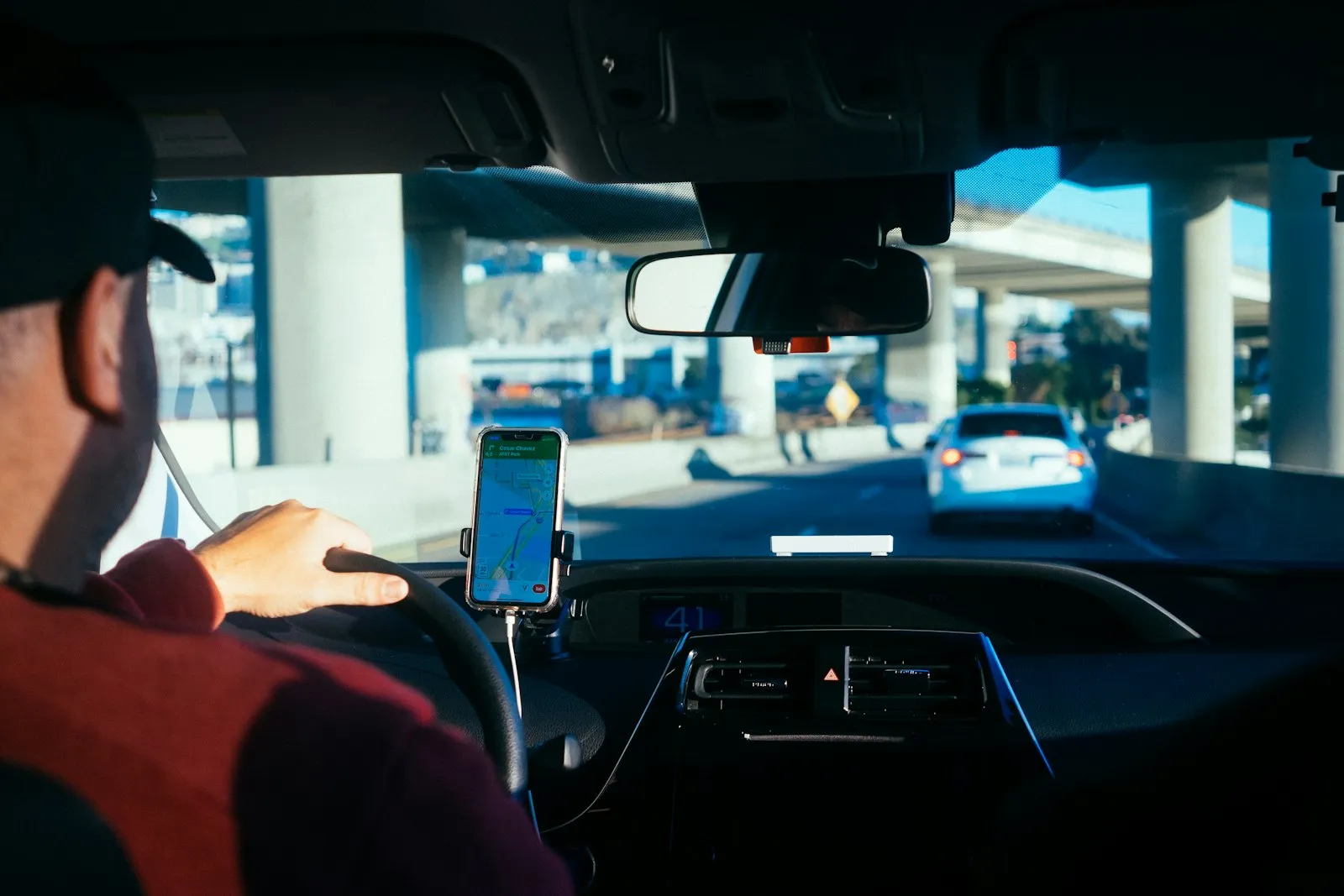
The Screenshot Checklist, Step by Step
In the first hour (once you are safe)
- Call 911 if anyone is hurt. Medical care comes before screenshots.
- Screenshot the active trip screen: driver name, photo, car model and plate.
- Screenshot the map showing where the car was when the trip stopped.
- Photograph the car’s TLC plate yourself and compare it to the app.
- Get the police report number before officers leave.
Within 24 hours
- Open the ride history and screenshot the receipt and the trip ID.
- Capture the start time, end time and route, including any cancellation or early end.
- Report the crash inside the Lyft app and screenshot the safety report you submit.
- Save any messages with Lyft support as screenshots, not just in the app.
- Back the screenshots up to email or cloud storage.
Within the first week
- Keep the app installed. Do not delete it or the account.
- Write down what you remember: the street, the light, what the driver said.
- Start your no-fault application. It is due within 30 days of the crash.
- Where required, file a report with the New York DMV (form MV-104).
Driver Status: The Detail Riders Rarely Think About
Whether you were in the car or struck by it, the driver’s app status at the moment of impact is part of the record. It can affect which coverage is in play and how it gets confirmed.
| Driver’s status | What to look for | Who usually holds the proof |
|---|---|---|
| App off | No active trip; car may still have TLC plates | The driver, the insurer, police report |
| Waiting for a request | Driver logged in, no rider assigned | Lyft’s records, obtained through the claim |
| En route to a pickup | A rider assigned; you may be that rider waiting at the curb | Your app and Lyft’s records |
| Passenger aboard | Your receipt and trip ID | Your phone first, then Lyft’s records |
Lyft may carry additional coverage above the TLC minimums on some trips; whether it applies, and how much, has to be confirmed from the insurer and the trip record. Your screenshots are the starting point for that request.

Off the Phone: Physical Evidence to Collect
- Vehicle photos from several angles before anything is moved or towed.
- The street: lane markings, signals, stop signs, parked cars blocking the curb.
- Your injuries, photographed that day and again as bruising develops.
- Witnesses: names and phone numbers. People waiting at a station often see the whole thing.
- Cameras: note homes, shops and buses facing the spot. Footage is often recorded over quickly.
- Medical paperwork: discharge sheets, prescriptions, referrals and receipts.
How Each Record Feeds Your Claim
Evidence is only useful if it supports a specific step. Here is where each piece goes.
- No-fault (PIP). Passengers apply to the insurer of the Lyft car they were in; pedestrians and cyclists apply to the insurer of the vehicle that hit them. TLC vehicles must carry $100,000 per person in PIP since March 1, 2026. Your receipt proves which car you were in.
- Serious injury. To claim pain and suffering, your injury must fit one of the eight categories in Insurance Law § 5102(d) after the 2026 budget, including fractures and significant limitation of use of a body function or system. Medical records do this work.
- Fault. Under Insurance Law § 5104, fault is decided before serious injury. Under CPLR 1411(b), in motor-vehicle suits filed on or after May 26, 2026, a claimant more at fault than the defendants recovers nothing. Passengers are rarely at fault; pedestrians, cyclists and drivers need strong scene evidence.
- Liability limits. The TLC minimum for a Lyft car is $100,000 per person / $300,000 per occurrence. If another driver caused the crash and is underinsured, your own SUM coverage may matter.
Screenshots take a minute. Rebuilding a trip record months later can take far longer, and some details may never come back.
Five Common Mistakes With Lyft Evidence
- Rating or tipping first. Finishing the post-ride screens can move the trip out of view. Screenshot before you tap anything.
- Cropping the screenshot. Keep the full screen, including the phone’s clock and date at the top.
- Relying on memory for the plate. Photograph the TLC plate on the car itself and compare it with the app.
- Treating the app report as the police report. Lyft’s safety report is not a substitute for calling police.
- Deleting the app or switching accounts. Keep the same account active until your claim is resolved.
None of these mistakes ends a claim, but each one adds a step later. A few extra seconds at the scene saves weeks of back-and-forth with insurers.
A Hypothetical: The Station Pickup That Went Wrong
This is a hypothetical example, not a real client or case. A rider steps off a train at Auburndale and requests a Lyft. The driver, en route to the pickup, stops short on a narrow street and is rear-ended. A second rider, already aboard on a different trip in that car, is hurt.
- The rider aboard needs the receipt and trip ID to file no-fault against the Lyft car’s policy within 30 days.
- The rider waiting at the curb was not in either car; if not struck, they are a witness, and their app shows the driver was heading to them.
- The rear driver’s insurer will look at whether the Lyft car stopped suddenly. Scene photos and witnesses help sort out fault.
Top Destinations: Auburndale Station, Kissena Park and Flushing Meadows Corona Park
Auburndale LIRR station sits on the Port Washington Branch between Broadway and Bayside and is the neighborhood’s main rail link toward Manhattan. Lyft requests spike as trains arrive, so drivers converge on small residential streets, and riders often walk into the roadway to find their car. If a crash happens during a pickup, screenshot the “en route” screen before you cancel anything.
Kissena Park, just west of Auburndale, draws walkers, cyclists and ball players to its lake, fields and the Kissena Velodrome. Drop-offs at the park edges put car doors and bikes in the same space. A door crash during drop-off is still a Lyft trip record; the trip’s end time and location are evidence.
Flushing Meadows Corona Park, home to the Unisphere, the Queens Museum and the USTA Billie Jean King National Tennis Center, with Citi Field next door, is a short Lyft ride west. On US Open and game days, pickup areas are crowded and drivers circle for pins. Note the exact spot you were picked up, since the map pin and the actual curb are not always the same.
Lyft Accident FAQs
I forgot to screenshot the trip. Is my claim lost?
No. The ride history usually still shows the receipt, and the trip record can be requested through the claim. Screenshot what you can now and keep the app installed.
Is reporting in the app enough?
No. Report the crash to police as well. The in-app report and the police report serve different purposes, and you want both.
Does the large state rideshare limit apply to my Auburndale trip?
Generally no. New York City is exempt from that state law, so trips starting here follow the TLC minimums. The $1.25 million state figure applies to trips that start outside NYC, for example in Nassau.
I drive for Lyft and got hurt. Is this checklist for me?
Partly. Save the same trip details. Your own work injuries are generally covered through the New York Black Car Fund, separate from any passenger’s claim. A claim against another at-fault driver may also be possible.
How long do I have to sue?
Generally 3 years for personal injury and 2 years for wrongful death. If a New York City or MTA vehicle was involved, a notice of claim is due within 90 days.
I was walking and a Lyft car hit me. Whose app record matters?
The driver’s. You will not have a receipt, so your photos of the car and its TLC plate, the police report and witness names do the identifying. Your no-fault claim goes to the insurer of the car that struck you, and because fault decides so much under the 2026 rules, scene evidence matters even more for pedestrians.
Should I talk to the other driver’s insurer?
Not before getting advice, and never in a recorded statement. Share your screenshots with your lawyer first.
About Auburndale: Local FAQs
Is Auburndale part of Flushing?
It is its own neighborhood, but much of it uses the 11358 ZIP code with a Flushing mailing address. Flushing is to the west, Bayside to the east and Fresh Meadows to the south.
Which train line stops in Auburndale?
The LIRR Port Washington Branch, at Auburndale station. For the subway, riders take a local bus to Flushing–Main Street, the end of the 7 line.
Which streets see the most traffic?
Northern Boulevard, Francis Lewis Boulevard and Utopia Parkway, plus the Clearview Expressway and its service roads. The Long Island Expressway runs to the south.
Where would an ambulance likely take me?
Nearby options include NewYork-Presbyterian Queens and Flushing Hospital Medical Center, both in Flushing. Responders decide based on your condition.
Where would my lawsuit be filed?
Usually Queens County Supreme Court in Jamaica, since Auburndale is in Queens County. See nycourts.gov for court information.

Bring Your Screenshots: Free Case Review
For the full picture of coverage, deadlines and how we handle these claims, see our Lyft accident lawyer Auburndale page. If a yellow or green cab was involved instead, our Auburndale taxi accident page covers that. Crash just over the line? We also handle Lyft accidents in Fresh Meadows and across our Queens accident lawyer service area, as part of our car accident practice. You can review the kinds of matters we handle on our settlements page.
Call 718.775.3110 any time, or contact us online. Consultations are free, in English, Russian or Spanish, at home, in the hospital, by video or at our office. No fee unless we win.
Yakov Mushiyev & Associates, P.C.
1 Cross Island Plaza, Suite 325, Rosedale, NY 11422
Mon–Fri 9–6 · Phone intake 24/7
Attorney Advertising. This is general information about New York law, not legal advice, and reading it does not create an attorney-client relationship. Laws change and every case depends on its own facts. Prior results do not guarantee a similar outcome.