
Your phone already knows more about your Lyft crash than you will remember tomorrow morning. It knows the exact pickup time, the route, the driver’s name, the plate and the trip ID. The problem is that most people close the app, get an Uber home from the urgent care, and never look at that ride again until an insurance adjuster asks for it weeks later. In Long Island City, where a single evening can mean three or four app rides between Court Square, the waterfront and Manhattan, that trip can get buried fast. This guide is the screenshot checklist we wish every rider had saved before the crash.
Hypothetical example: a rider requests a Lyft from a tower on Center Boulevard to a dinner in Midtown. Near the Queens Midtown Tunnel approach, another driver merges into the Lyft. The rider feels fine, says so, and heads on. Two days later her shoulder will not lift past chest height. Everything she now needs to prove the ride happened, who was driving and when, is sitting in her phone. The question is whether she captures it before it gets harder to find.
Why the App Record Matters So Much
A yellow-cab crash leaves a medallion number and maybe a paper receipt. A Lyft crash leaves a full digital trail: an in-app ride receipt, a trip ID, the driver name and plate the app showed you, start and end times, the route, any in-app safety report, and the driver’s status in the app. That trail answers the first questions any insurer asks: were you really in this car, and when?
In New York City, a Lyft is a TLC-licensed for-hire vehicle. The driver needs a TLC driver license, the car carries TLC plates, and it carries commercial for-hire insurance. The NYC Taxi and Limousine Commission sets the coverage floor. Your screenshots are how you connect yourself to that policy.

The 60-Second Screenshot Checklist
Once you are safe and anyone hurt has help, open the Lyft app and work through this list. It takes about a minute.
- The ride receipt. Open your ride history, tap the trip and capture the whole receipt, scrolling if you need to.
- The trip ID. If it shows, get it in a screenshot. It is the fastest way for an insurer to find the ride.
- Driver name, photo and plate. Capture what the app displayed, then compare it with the actual TLC plate on the car.
- Start time, end time and route map. These place the car at the crash location at a specific minute.
- Your in-app safety report. Report the crash in the app as well as to police, then screenshot the confirmation.
- Messages with the driver. Any in-app chat about pickup spots or delays can help explain where the car was and why.
Then do two things that sound obvious but get skipped: email the screenshots to yourself or back them up to the cloud, and do not delete the Lyft app, even if you swear you will never use it again. For more on the company’s own reporting tools, see Lyft’s safety page.
Screenshot first, sort it out later. A picture of the receipt taken in the back of an ambulance beats a perfect memory reconstructed three weeks on.
Driver Status: The Detail Riders Never Think About
Lyft tracks what the driver was doing in the app at every moment. If you were the passenger, the answer is simple: you were aboard. But if a Lyft car hit you while you were walking, biking or driving, the driver’s status at the moment of impact is part of the evidence picture, and it is something a lawyer will want to pin down from the trip records.
| Driver status in the app | What it tells you |
|---|---|
| App off | The driver was not working a Lyft trip at that moment |
| Waiting for a request | Logged in and available, but no rider matched yet |
| En route to pickup | Matched with a rider and driving to the pin |
| Passenger aboard | A trip was in progress |
You will not see another person’s driver status in your own app, which is why it usually has to be requested. Note what you can see yourself: TLC plates, a phone mounted on the dash, a rider in the back seat.
Off the Phone: What Else to Capture at the Scene
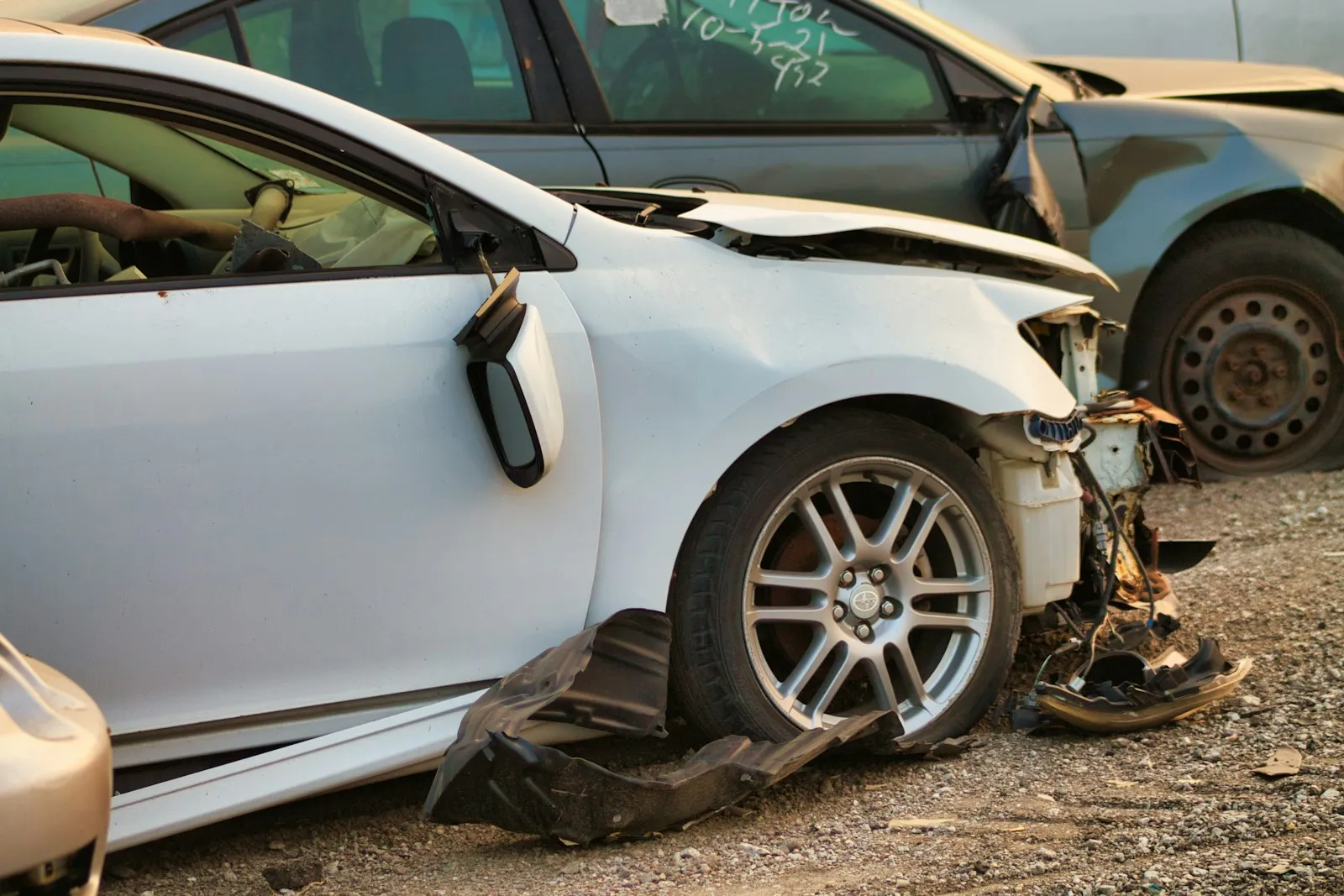
- Photos of every vehicle from several angles, including the TLC plates
- A wide shot showing the street signs, so a later reader knows it was, say, Jackson Avenue and not a side street
- Visible injuries, then again over the following days
- Names and numbers of witnesses
- Cameras on nearby buildings, lobbies and storefronts, which are common in LIC’s newer towers
- The police officer’s name and the report number
If you were driving one of the cars, the New York DMV has its own accident-reporting form (MV-104), separate from the police report.
Where Those Screenshots Go: The 30-Day No-Fault Clock
New York is a no-fault state. Personal Injury Protection (PIP) pays medical bills, lost earnings and other basic economic loss regardless of who caused the crash. As a Lyft passenger, you file the no-fault application with the insurer of the car you were riding in, which is the Lyft car’s commercial policy. Pedestrians and cyclists file with the insurer of the vehicle that struck them. Either way, the application is due within 30 days of the accident.
This is where the receipt pays off. The application asks which vehicle you were in and when; a screenshot answers both. TLC for-hire vehicles must carry PIP of $100,000 per person since March 1, 2026 (cut from the earlier requirement under a TLC rule implementing Local Law 90 of 2025), and liability coverage of at least $100,000 per person and $300,000 per occurrence. Lyft may carry additional coverage above the TLC minimums on some trips; whether it applies, and how much, has to be confirmed from the insurer and the trip record.
One twist for riders coming into LIC: a trip that starts in Nassau or Westchester falls under the state rideshare rules instead of the TLC minimums, and those rules require $1.25 million in liability coverage while a passenger is aboard on rides starting outside NYC. Your receipt’s pickup address is what proves where the trip began.
How Screenshots Hold Up Under the 2026 Fault Rules
For motor-vehicle injury lawsuits filed on or after May 26, 2026, New York now has the fact-finder decide fault before deciding whether you have a serious injury. Under new CPLR 1411(b), a claimant who is more at fault than the defendant (or defendants combined) recovers nothing; at 50% or less, the award is reduced proportionally. Passengers rarely share fault, but pedestrians, cyclists and drivers can. A timestamped route map, the pickup pin and the driver’s messages can help show where the car was supposed to be and what it was doing.
To sue for pain and suffering, you also need a “serious injury” under Insurance Law § 5102(d). The 2026 budget removed the old category based on days of missed activity, leaving eight: death, dismemberment, significant disfigurement, fracture, loss of a fetus, permanent loss of use, permanent consequential limitation, and significant limitation of use. Medical records do most of the work there, which is why prompt treatment matters. The general deadline to file an injury lawsuit is 3 years under CPLR 214(5).
Pickup Hot Zones: Gantry Plaza State Park, the Pepsi-Cola Sign and MoMA PS1
On a clear evening, the Hunters Point waterfront is one of the busiest places in Queens to request a ride. Gantry Plaza State Park lines the East River with restored railroad gantries, piers and lawns looking straight at Midtown, and the red Pepsi-Cola sign at its north end is the backdrop for countless photos. Visitors come for the skyline, the sunsets and a walk along the water.

The Lyft pattern here is predictable. Riders drop pins on Center Boulevard and the short side streets leading to the river. Drivers circle, stop in the travel lane while riders look for the right plate, and pull away quickly once the door closes. A few blocks inland, MoMA PS1, the contemporary art space affiliated with the Museum of Modern Art, occupies a former public school building on Jackson Avenue near Court Square. Pickups there compete with buses, delivery trucks and people heading to the subway.
Two screenshot tips for these spots: capture the pickup pin location in the app, since it shows where the driver was told to stop, and note which side of the car you exited from. Street-side exits into a passing bike or car are a familiar pattern near both destinations.
Mistakes That Make the Record Harder to Use
- Deleting the app or the account
- Rating the driver or writing a comment about the crash before talking to a lawyer
- Posting crash photos or “I’m fine!” updates on social media
- Accepting an in-app credit and assuming that settles anything
- Waiting past the 30-day no-fault window because the receipt “is in there somewhere”

Want the bigger picture on coverage, the 2026 changes and how we handle these claims? Visit our Lyft accident lawyer in Long Island City page. Hurt in a yellow or green cab instead? See our Long Island City taxi accident page.
Lyft Accident Screenshot FAQs
I forgot to screenshot anything. Is my claim over?
No. Ride history usually stays in the app, and trip records can be requested. Screenshots just make the early steps faster and cleaner.
Do I report the crash to Lyft or to the police?
Both. Report it in the Lyft app and to police, and keep confirmation of each.
Which insurer gets my no-fault application?
Passengers file with the insurer of the Lyft car they were in. Pedestrians and cyclists file with the insurer of the vehicle that struck them. The deadline is 30 days.
Does it matter that my ride started in Nassau?
It can. Trips starting in NYC fall under TLC minimums; trips starting in Nassau or Westchester fall under the state rideshare rules. Your receipt shows the pickup address.
My Lyft driver was hurt too. Is that the same claim?
No. NYC Lyft drivers’ own work injuries generally go through the New York Black Car Fund, separate from a passenger’s claim.
How long do I have to sue?
Generally three years for personal injury and two years for wrongful death. Claims involving a city or MTA vehicle need a notice of claim within 90 days.
About Long Island City: Local FAQs
Which bridges and tunnels link LIC to Manhattan?
The Queensboro Bridge lands at Queens Plaza, and the Queens Midtown Tunnel opens near Hunters Point, where the Long Island Expressway begins. The Pulaski Bridge connects LIC to Greenpoint, Brooklyn.
Can I get to the waterfront without a car?
Yes. The 7 stops at Vernon Blvd–Jackson Av and Hunters Point Av, the LIRR serves Hunters Point Avenue, and NYC Ferry serves the Hunters Point waterfront.
Are there other parks along the water?
Hunters Point South Park continues the waterfront south of Gantry Plaza State Park.
Which hospitals are closest?
Mount Sinai Queens in neighboring Astoria and NYC Health + Hospitals/Elmhurst are among the nearby options. In an emergency, call 911 and go where EMS takes you.
Which court handles Queens injury cases?
Many are filed in Queens County Supreme Court on Sutphin Boulevard in Jamaica; venue depends on the parties. See the New York State Unified Court System for general information.
What is the best time to avoid traffic?
Bridge and tunnel approaches back up at rush hour, and waterfront streets get busy around sunset on nice days. Midday weekday rides tend to move more smoothly.
Send Us Your Screenshots. The Review Is Free
Bring whatever you captured, or nothing at all, and we will take it from there. Call 718.775.3110, day or night, or contact us online for a free case review in English, Russian or Spanish, at our office, your home, the hospital or by video. There is no fee unless we win. Browse our injury FAQ, our car accident practice, the Long Island City accident lawyer hub, or our Sunnyside Lyft accident page next door.

Yakov Mushiyev & Associates, P.C.
1 Cross Island Plaza, Suite 325, Rosedale, NY 11422
Phone: 718.775.3110
Monday–Friday, 9 a.m.–6 p.m. · Phone intake 24/7
Attorney Advertising. This is general information about New York law, not legal advice, and reading it does not create an attorney-client relationship. Laws change, and every case depends on its own facts. Prior results do not guarantee a similar outcome.