
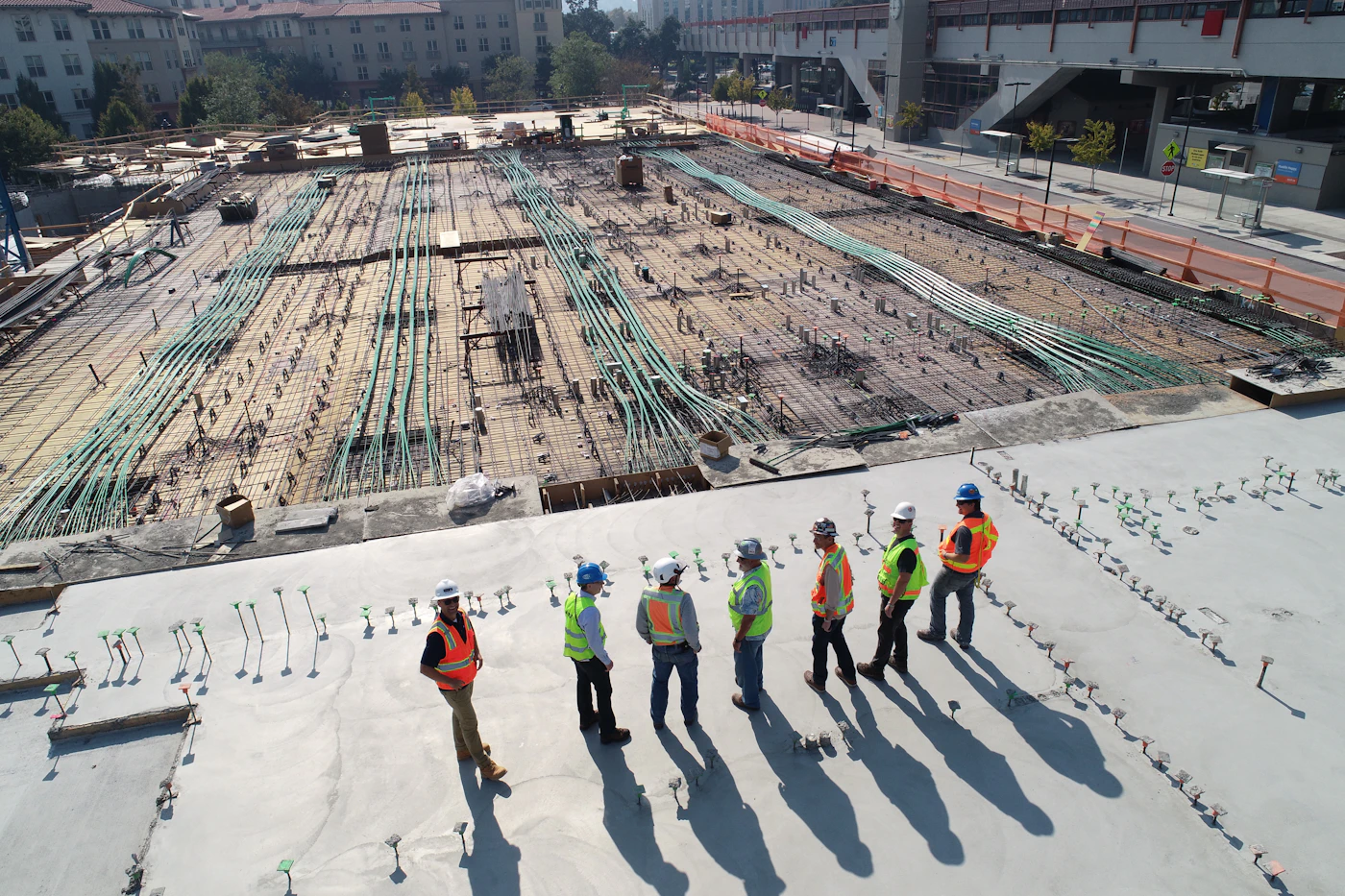
Manhattan builds upward. Supertall towers rise in Midtown and Hudson Yards, older buildings are gutted and rebuilt, façades are repaired under sidewalk sheds on nearly every block, and street work never stops. That density puts construction workers and the public in constant proximity to height, heavy loads and moving equipment. When someone is hurt, the first question is often the hardest: with dozens of companies on one site, who is actually responsible? This guide explains who’s who on a Manhattan job, the safety rules that apply, and how injured workers and pedestrians recover compensation.

Who’s who on a Manhattan construction site
| Role | What they do | Why it matters in a claim |
|---|---|---|
| Owner / developer | Owns the property and hires the builders | Has nondelegable duties under Labor Law §§ 240(1) and 241(6) |
| Construction manager or general contractor | Runs and coordinates the project | Usually liable under the Labor Law alongside the owner |
| Subcontractors | Perform specific trades: steel, concrete, façade, electrical | May be liable as an agent of the owner or GC, or for their own negligence |
| Site safety manager | Oversees safety compliance on major projects | Their logs and inspections are key evidence |
| Equipment and crane companies | Supply and maintain hoists, cranes, scaffolds | May be liable for defective or poorly maintained equipment |
| Your employer | Pays your wages | Generally protected from suit by workers’ comp, except for grave injuries |
Common Manhattan construction accidents
- Falls from scaffolds, ladders, floor edges and unprotected openings
- Materials and tools falling from upper floors
- Crane, hoist and rigging failures
- Sidewalk shed and suspended scaffold collapses
- Demolition accidents and structural collapses
- Electrocution and burns
- Trench and excavation collapses
- Struck-by injuries from equipment and vehicles

New York’s Scaffold Law
Labor Law § 240(1) requires owners and contractors to provide proper safety devices against gravity-related hazards: scaffolds, ladders, harnesses, hoists and secured loads. When a violation is a proximate cause of a worker’s injury, the owner and contractor can be held liable even if they did not supervise the work, and the worker’s own comparative negligence generally does not reduce the recovery. Our guide to the five questions in a Labor Law 240 case walks through the details.
Industrial Code violations under § 241(6)
Labor Law § 241(6) requires compliance with specific Industrial Code rules (12 NYCRR Part 23) covering tripping and slipping hazards, falling-object protection, demolition, excavation, power tools, and more. The worker must identify a specific rule that was violated. Comparative fault can reduce the recovery. Labor Law § 200 adds a general duty to provide a safe workplace where a party controlled the work or knew of a dangerous condition.
NYC’s own construction safety rules
New York City adds its own layer of safety requirements through the NYC Construction Codes and the Department of Buildings. These include site safety training requirements for many workers on larger sites, site safety managers and plans for major buildings, permits and inspections for scaffolds, sidewalk sheds and cranes, and rules for protecting the public around construction. DOB violations, stop-work orders and incident reports can be powerful evidence in an injury case.

Workers’ comp plus a third-party lawsuit
An injured worker usually receives workers’ compensation for medical care and part of lost wages through the Workers’ Compensation Board. Workers’ comp does not pay for pain and suffering, and its wage benefits are capped. A third-party lawsuit against the owner, general contractor and others can recover full lost earnings, including union wages, overtime and benefits, plus future losses and pain and suffering. The comp carrier usually has a lien on part of the third-party recovery, which is negotiated at the end.
Pedestrians hurt by construction
Manhattan pedestrians walk under construction every day: sidewalk sheds, scaffolds, hoists over the sidewalk, and closed lanes that push people into the street. Façade inspection programs mean many buildings keep sheds up for long periods. When debris falls, a shed collapses, a sidewalk is left broken, or a temporary walkway is unsafe, pedestrians can bring negligence claims against the owner, contractors and others. If a public entity is involved, a notice of claim within 90 days under GML § 50-e is generally required.

Deadlines and evidence
- Report the injury to your employer in writing, generally within 30 days.
- File for workers’ comp, generally within 2 years.
- File a third-party lawsuit, generally within 3 years under CPLR 214.
- File a notice of claim within 90 days if a public entity owns the site or is involved.
Evidence to gather and preserve includes DOB permits and violations, site safety logs, incident reports, OSHA findings under OSHA construction standards, photographs and video, witness names, the equipment involved, and your pay records.
How defendants fight Manhattan construction claims
Large Manhattan projects are insured by sophisticated carriers and defended by experienced lawyers. Expect them to argue that the work was “routine maintenance” rather than construction, that the injury did not involve an elevation-related risk, that proper safety devices were available and the worker chose not to use them, or that the worker was the sole proximate cause of the accident. They may try to shift blame to a subcontractor or argue the injury was pre-existing. Many of these defenses turn on facts that can be proven or disproven with early investigation: the scope of the contract, the condition of the equipment, what safety devices were actually on site, what instructions were given, and what coworkers saw.
Contracts and indemnity: why so many companies get involved
Construction contracts often require subcontractors to indemnify the owner and general contractor and to name them as additional insureds on their policies. That means a single injury claim can involve several insurance companies arguing about who pays. For an injured worker, this can actually help: it often means more coverage is available. But it also means the case requires a lawyer who understands how construction insurance and indemnity work, so the claim is brought against every party that can be held responsible.
Injuries and damages
Construction accidents in Manhattan often involve falls from significant heights or heavy objects falling from above. Injuries include spinal fractures and cord injuries, traumatic brain injuries, multiple fractures, crush injuries and amputations. Damages can include past and future lost earnings, lifetime medical and care costs, pain and suffering, loss of enjoyment of life, and a spouse’s claim. Families who lose a loved one may bring wrongful death claims, generally within two years.

What to do after a construction injury
- Get medical care and tell every provider it was a work injury.
- Report the injury in writing and keep a copy.
- Write down the names of the GC, subcontractors, foreman and witnesses.
- Photograph the site, equipment and your injuries if you can.
- Do not sign statements for any company or insurer.
- Talk to a lawyer before speaking with the owner’s or GC’s insurer.
Our firm
Yakov Mushiyev & Associates represents injured construction workers and pedestrians in Manhattan, Queens, Brooklyn and Long Island from our office at 1 Cross Island Plaza, Suite 325 in Rosedale. Attorney Yakov Mushiyev, admitted in 2014 and a member of the New York State Trial Lawyers Association, works directly with clients in English, Russian, Bukhori and Hebrew. The firm’s past results include $3,100,000 for a construction fall in Queens. Prior results do not guarantee a similar outcome.
Related pages: New York crane accidents, Manhattan construction workers’ rights, scaffolding accidents, and Long Island construction accidents.

Frequently asked questions
I’m a union member. Does that change anything?
Union workers have the same Labor Law rights. Union records often help prove wages and benefits for damages.
My employer says I can’t sue. Is that true?
You generally cannot sue your employer, but you can usually sue the owner, general contractor and other companies on the site.
I was hurt by falling debris while walking past a building. Who pays?
Usually the property owner, the contractors performing the work, or both, through their liability insurance. Report the incident, photograph the site and the shed or scaffold, and get medical care right away.
I was injured on a renovation inside an apartment. Is that covered?
Often yes. Interior renovations and alterations can be covered construction work under the Labor Law, depending on the scope of the job.
What does it cost?
Nothing up front. We work on a contingency fee, so there is no attorney’s fee unless we recover for you.
Talk to a Manhattan construction accident attorney
The companies on the site have lawyers already. Call 718.775.3110 or contact us online.
General information, not legal advice. Attorney Advertising. Prior results do not guarantee a similar outcome.